
When planning an international adventure, understanding the sheer scale of a destination is paramount. The question of “How large is Japan compared to California?” goes beyond a simple geographical fact; it’s a critical inquiry that profoundly influences travel logistics, itinerary pacing, and the overall experience of exploring either remarkable locale. While the two regions share some superficial similarities in terms of their long coastlines and mountainous interiors, their actual dimensions and the way their landmass is utilized lead to vastly different travel landscapes.
A Tale of Two Geographies: Initial Scale Comparison
At first glance, the land area figures might surprise some travelers. California, a single state within the United States, spans approximately 423,970 square kilometers (163,695 square miles). Japan, an island nation comprised of thousands of islands, with four main ones (Honshu, Hokkaido, Kyushu, and Shikoku), covers a total area of about 377,975 square kilometers (145,937 square miles). This means Japan is, in fact, slightly smaller than California, by roughly 10%.

This numerical comparison, however, only tells part of the story. The geographical composition and population distribution within these landmasses create distinct travel realities. California boasts expansive deserts, vast agricultural valleys, and sprawling mountain ranges, leading to a largely car-dependent travel culture, especially outside its major urban centers. Japan, on the other hand, is intensely mountainous, with only about 18% of its land being habitable or arable. This concentrates its massive population into densely packed urban corridors and coastal plains, fostering an unparalleled public transportation system that redefines long-distance travel. For the traveler, this fundamental difference in land use and population density is far more impactful than the slight variance in total square mileage.
Navigating Vastness: Travel Implications in California
Traveling through California means embracing significant distances. The state’s immense size translates into a diverse array of climates, ecosystems, and cultural zones, each requiring considerable travel time to reach.
Diverse Landscapes and Regions
California is often described as a country within a state, and its diverse geography fully supports this claim. From the rugged coastline stretching along the Pacific Ocean to the towering peaks of the Sierra Nevada mountains, the arid expanse of the Mojave Desert and Death Valley, to the fertile Central Valley, the state offers an incredible spectrum of natural beauty. Travelers can surf in Malibu, hike among giant sequoias in Yosemite National Park, explore wine country in Napa Valley, and ski in Lake Tahoe – often within the same week, but not without substantial travel.
Sprawling Distances and Transportation
The most significant implication for travelers in California is the necessity of covering long distances. A road trip is the quintessential California experience, allowing visitors to appreciate the changing scenery. Driving from Los Angeles in the south to San Francisco in the north, for instance, is an approximate 6 to 8-hour journey on Interstate 5 or a much longer, scenic drive along Highway 1. Even within the massive Los Angeles metropolitan area, commutes can span hours.
For those with limited time, domestic flights are often the only practical way to traverse the state quickly, connecting major hubs like Los Angeles International Airport (LAX), San Francisco International Airport (SFO), or San Diego International Airport (SAN). Public transportation is generally robust within major cities but largely inadequate for inter-city or inter-regional travel, making a rental car an almost essential item for truly exploring the state’s diverse offerings.
Planning a California Itinerary
When crafting a California itinerary, travelers must account for travel days between destinations. Attempting to see too much in a short period will result in more time spent in transit than experiencing the attractions. It’s often more rewarding to select a specific region (e.g., Southern California with Los Angeles and San Diego, or Northern California with San Francisco and the Redwood National Park) or focus on a themed trip (e.g., national parks loop, coastal road trip) rather than trying to cover the entire state in a single, short visit. A two-week trip might allow for a comprehensive north-to-south drive with several key stops, while a shorter trip of a week might best be dedicated to one half of the state.
Exploring an Archipelago: Travel Implications in Japan
Despite being slightly smaller in total area, Japan’s unique geography and infrastructure allow for remarkably efficient and diverse travel experiences. The mountainous terrain and island layout dictate a different approach to exploration.
Island Nation Topography
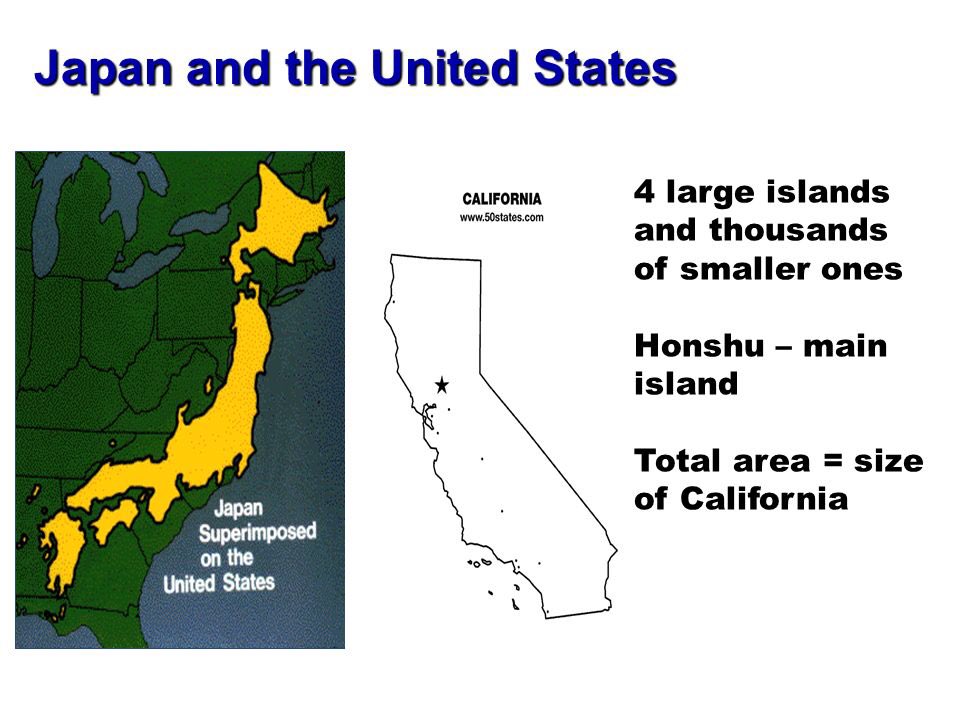
Japan’s landmass is characterized by its dramatic mountain ranges, which cover over 70% of the country, leaving limited flatland for development. This has led to highly concentrated urban centers, primarily along the coasts and in valleys. The four main islands each offer distinct regional cultures and natural beauty. Honshu is the largest and most populous, home to major cities like Tokyo, Kyoto, and Osaka. Hokkaido to the north is vast and wild, known for its pristine nature and winter sports. Kyushu to the southwest offers volcanic landscapes and hot springs, while Shikoku is famous for its ancient pilgrimage routes.
Efficient Public Transportation and Connectivity
The unparalleled efficiency of Japan’s public transportation system is a game-changer for travelers. The Shinkansen, or bullet train, is the backbone of inter-city travel, connecting major metropolitan areas at speeds up to 320 km/h (200 mph). A journey from Tokyo to Kyoto, roughly 500 kilometers (310 miles), takes just over two hours, making it feasible to visit multiple cities within a single day. The extensive and punctual railway network, supplemented by local buses and subways, means that renting a car is often unnecessary and sometimes even a hindrance, especially in crowded urban centers.
For reaching more remote areas or smaller islands, an efficient network of domestic flights, ferries, and local buses fills the gaps. The Japan Rail Pass is an exceptionally popular and cost-effective option for foreign tourists, allowing unlimited travel on most JR trains, including the Shinkansen, for a set period.
Crafting a Japan Journey
Planning a trip to Japan often revolves around leveraging its public transport. Travelers can easily combine vibrant urban experiences in Tokyo and Osaka with cultural immersion in Kyoto or a relaxing retreat to a hot spring town (onsen) like Hakone, all within a week or ten days. A two-week itinerary could comfortably include exploring a distinct region like Kansai (covering Kyoto, Osaka, and Nara) and venturing further north to Tohoku or west to Hiroshima, without feeling rushed. The focus shifts from covering vast stretches of land to efficiently navigating dense networks to uncover diverse experiences.
Beyond Square Miles: Experiential Differences for Travelers
The statistical comparison of land area between Japan and California only scratches the surface of what travelers will encounter. The true distinction lies in the human footprint on these geographies.
Population Density and Urbanization
Japan’s relatively smaller but intensely populated landmass leads to an extreme level of urbanization and population density, particularly along the Pacific coast of Honshu. Cities like Tokyo and Osaka are sprawling mega-regions, offering endless layers of exploration, from futuristic districts to ancient temples nestled amongst skyscrapers. This density means that while green spaces exist, the predominant experience is one of vibrant, highly organized urban life, with efficient services and myriad entertainment options at every turn.
California, despite having large metropolitan areas like Los Angeles and the San Francisco Bay Area, still maintains vast stretches of sparsely populated land. Its cities tend to be more spread out, and the transition from urban to natural landscapes can be more abrupt, with opportunities for solitude and expansive views just a few hours’ drive from major hubs.
Accessibility and Infrastructure
The differing geographies and population distributions have shaped fundamentally different infrastructures. Japan’s emphasis on public transport makes virtually every corner of the country accessible, even remote villages often have a small train station or bus service. This connectivity allows travelers to delve deep into local cultures and natural beauty without the need for private vehicles.
California’s infrastructure is built around the automobile. While major highways are excellent, reaching many of its stunning natural parks or charming small towns often requires personal transport. This can be an advantage for those who enjoy the freedom of the open road but a logistical challenge for international visitors unfamiliar with driving on the right or navigating vast, sometimes remote, areas.

Regional Exploration vs. Cross-Country Traversal
Ultimately, the size comparison dictates different travel philosophies. In California, a multi-region trip often feels like a mini cross-country journey, demanding careful time management and an appreciation for the vastness of the landscape. It’s an experience of epic road trips, where the journey between destinations is as much a part of the adventure as the destinations themselves.
In Japan, the slightly smaller but more densely packed and efficiently connected geography encourages deep regional exploration. Travelers can seamlessly transition from the hyper-modernity of Tokyo to the serene temples of Kyoto or the snowy landscapes of Hokkaido, experiencing a rapid succession of diverse environments and cultures. The compact nature, facilitated by high-speed rail, means that one can experience a surprising amount of diversity in a relatively short timeframe, focusing more on the immersion within each place rather than the arduous travel between them.
LifeOutOfTheBox is a participant in the Amazon Services LLC Associates Program, an affiliate advertising program designed to provide a means for sites to earn advertising fees by advertising and linking to Amazon.com. Amazon, the Amazon logo, AmazonSupply, and the AmazonSupply logo are trademarks of Amazon.com, Inc. or its affiliates. As an Amazon Associate we earn affiliate commissions from qualifying purchases.