
Navigating the landscape of employment benefits in California can be complex, especially when it comes to understanding your rights regarding paid sick leave. As a state renowned for its progressive labor laws, California has established robust protections to ensure workers can take time off for illness or care without fear of financial repercussions. This commitment to employee well-being significantly shapes the lifestyle for millions, providing a crucial safety net that supports health and stability. For anyone working or considering employment in the Golden State, understanding the intricacies of paid sick leave is not just a legal necessity but a cornerstone of informed living and effective work-life management.

Understanding California’s Paid Sick Leave Law
At the heart of California’s paid sick leave policy is the Healthy Workplaces, Healthy Families Act of 2014, often referred to as AB 1522, which came into effect in July 2015 and has seen subsequent amendments. This landmark legislation guarantees that nearly all employees in the state have the right to accrue and use paid sick leave, fundamentally altering the employer-employee dynamic by prioritizing public health and personal well-being. The law ensures that workers can address personal or family health needs without sacrificing their income, a provision that greatly enhances peace of mind and contributes to a healthier, more resilient workforce across diverse industries. It represents a statewide minimum standard, meaning local jurisdictions may implement more generous policies, but no employer can offer less than the state mandates.
The Basics: Accrual and Usage
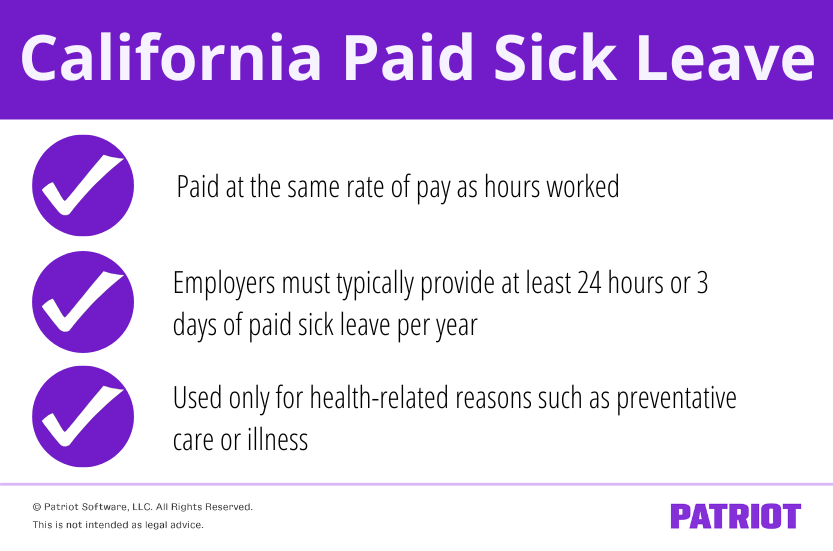
Under the Healthy Workplaces, Healthy Families Act of 2014, employees accrue paid sick leave at a rate of no less than one hour for every 30 hours worked. This accrual begins on the first day of employment, though employers may enforce a waiting period of up to 90 days before an employee can actually use their accrued time. This ensures a baseline of commitment from the employee before the benefit becomes available. Once eligible, employees can use their sick hours for various reasons, detailed further below. The law mandates that employers must allow employees to use at least 24 hours, or three days, of accrued paid sick leave per year. This “use it or lose it” concept generally does not apply to accrued sick time, as the law requires unused sick leave to carry over to the following year. However, employers can cap the total amount of sick leave an employee can accrue and, separately, the amount they can use in a benefit year. These caps are critical to understand as they define the practical limits of the benefit.
Minimum Requirements Across the State
While the state law establishes a robust minimum, it’s crucial for individuals to be aware that various cities and counties within California have enacted their own paid sick leave ordinances. These local laws often provide more generous benefits than the state minimum, offering higher accrual rates, larger usage caps, or broader definitions of eligible family members. For instance, cities like San Francisco, Los Angeles, and Oakland have their own specific ordinances that supersede state law if they offer greater benefits to employees. This patchwork of regulations means that an employee’s exact sick leave entitlement can vary significantly depending on their geographic work location. It is incumbent upon both employees and employers to research and comply with the most generous applicable law – whether state or local – to ensure full compliance and proper benefit allocation. This complexity underscores the importance of staying informed about local ordinances that could provide enhanced protections and benefits.
Who Is Covered By The Law?
The scope of California’s paid sick leave law is remarkably broad, designed to protect the vast majority of the state’s workforce. Understanding who qualifies for these benefits is essential for both employees seeking to exercise their rights and employers striving for compliance. The expansive nature of the law reflects a societal commitment to a healthier workforce and public, recognizing that sick employees should not be forced to choose between their health and their livelihood. This inclusivity is a defining characteristic of California’s approach to worker protections, emphasizing that basic benefits should extend to nearly everyone contributing to the state’s economy.
Employee Eligibility
Generally, any employee who works for the same employer for 30 or more days within a year in California is eligible for paid sick leave. This includes full-time, part-time, temporary, and seasonal employees. The law covers a wide array of employment arrangements, ensuring that even those in less traditional roles can benefit from these protections. The key determinant is the regularity and duration of employment, not the classification of the role itself. This broad definition ensures that workers in various sectors, from retail to tech, agricultural to hospitality, can accrue and utilize sick time. The intent is to create a level playing field, where essential health protections are universally accessible to those who contribute to the state’s economic fabric, fostering a more stable and supportive work environment for all.
Exemptions and Special Cases
While the law’s coverage is extensive, there are a few specific exemptions. Certain categories of employees are not covered, including:
- Employees covered by a valid collective bargaining agreement that explicitly provides for paid sick days, along with certain other conditions.
- Providers of in-home supportive services (IHSS) or waiver personal care services (WPCS) who are covered by a different set of rules and accrual rates.
- Individuals employed in certain roles by air carriers who already receive paid time off at least equivalent to the state’s sick leave requirements.
- Independent contractors, as they are not classified as employees.
It’s critical for individuals to correctly ascertain their employment status and the specific terms of their contracts or collective bargaining agreements to understand their eligibility. For employers, correctly identifying exempt categories is crucial for compliance, as misclassification can lead to significant penalties. Additionally, specific rules apply to public sector employees, though many are covered by similar or more generous provisions under their respective governmental employers. These exemptions are narrowly defined, underscoring the law’s general principle of broad coverage for the majority of California workers.

Calculating and Utilizing Your Sick Time
Understanding the mechanics of how paid sick leave accrues and how it can be used is vital for effective personal planning and employer compliance. The system is designed to provide flexibility while maintaining clear boundaries, enabling employees to manage unexpected health issues or care responsibilities without undue stress. This structured approach to sick leave is a cornerstone of California’s progressive labor environment, promoting a lifestyle where health and family needs are recognized as legitimate reasons for absence.
Accrual Caps and Carryover Rules
As established, employees accrue paid sick leave at a minimum rate of one hour for every 30 hours worked. While employers must allow unused sick leave to carry over from one year to the next, they are permitted to set reasonable caps on both accrual and usage. The maximum accrual cap an employer can impose is 80 hours (or 10 days), meaning an employee cannot accumulate more than this amount of sick leave at any given time. Separately, employers can limit the amount of sick leave an employee can use in a single benefit year to 24 hours (or three days). It’s important to differentiate between these two caps: the accrual cap limits how much time an employee can build up, while the usage cap dictates how much of that accrued time can be taken in a specific year. Even if an employee has accrued 80 hours, an employer can still limit their usage to 24 hours within that year. This nuanced system provides a balance between providing a safety net and managing potential operational impacts for businesses.
Permissible Reasons for Using Sick Leave
The Healthy Workplaces, Healthy Families Act of 2014 specifies several permissible reasons for which employees can use their accrued paid sick leave. These reasons extend beyond an individual’s own illness, recognizing the broader responsibilities many workers carry. Employees can use paid sick leave for:
- Their own medical care: This includes diagnosis, care, or treatment of an existing health condition, or preventive care.
- Care for a family member: This covers diagnosis, care, or treatment of an existing health condition of, or preventive care for, a family member. The definition of “family member” is broad and includes a child, spouse, parent, grandparent, grandchild, sibling, or registered domestic partner.
- Addressing issues related to domestic violence, sexual assault, or stalking: An employee who is a victim of domestic violence, sexual assault, or stalking can use sick leave to obtain medical attention, psychological counseling, or to seek services from a shelter or similar organization, or to participate in safety planning.
Employers cannot require an employee to find a replacement worker as a condition for using paid sick leave. When an employee requests to use sick leave, they are not required to disclose the specific nature of the illness or the details of the domestic violence, sexual assault, or stalking. They simply need to state that the leave is for a permissible reason.
Employer Responsibilities and Employee Rights
The effectiveness of California’s paid sick leave law hinges on clear responsibilities for employers and robust protections for employees. These provisions are designed to ensure fair implementation and prevent any form of retaliation against workers exercising their legal rights. A transparent and equitable system for sick leave contributes significantly to a positive work environment, aligning with the lifestyle values of dignity and respect in the workplace.
Notification and Documentation
Employers in California have several key responsibilities regarding paid sick leave. They must provide employees with written notice of their paid sick leave rights, typically included in a workplace poster and individualized notice at the time of hire or with the annual wage theft notice. Employers are also required to show on an employee’s wage statement (or in a separate written notice provided with the paycheck) the amount of paid sick leave available. This transparency allows employees to track their accrued time effectively. While employers can ask for reasonable documentation for an absence, particularly if the leave extends beyond a few days, they generally cannot require medical certification for the initial use of sick time or for absences of three days or less. Furthermore, employers cannot delay payment of sick leave or require an employee to explain the precise nature of the illness or details of personal circumstances. The focus is on facilitating legitimate use of the benefit, not creating unnecessary barriers.
Anti-Retaliation Protections
One of the most critical aspects of California’s paid sick leave law is its strong anti-retaliation provisions. Employers are prohibited from discriminating or retaliating against an employee for requesting or using accrued paid sick days, or for filing a complaint about paid sick leave violations. This means an employer cannot fire, suspend, deny a promotion to, or otherwise penalize an employee simply because they exercised their right to take sick leave. If an employee believes they have been retaliated against, they have the right to file a complaint with the Labor Commissioner’s Office. These protections are vital for empowering employees to use their sick leave benefits without fear of negative consequences, reinforcing the state’s commitment to worker welfare and maintaining a just and equitable workplace. The law also establishes a rebuttable presumption of unlawful retaliation if an employer takes an adverse action against an employee within 90 days of the employee exercising certain rights under the paid sick leave law.
Impact on California Living and Work-Life Balance
The availability of paid sick leave in California extends far beyond a mere employment benefit; it profoundly impacts the daily lives and overall work-life balance for residents. For individuals, knowing they can take time off to recover from illness, care for a sick child, or address personal safety concerns without losing pay provides an invaluable sense of security and stability. This reduces financial stress during vulnerable times, allowing people to prioritize their health and family needs, which is a fundamental aspect of a healthy lifestyle. It means fewer tough choices between earning a paycheck and seeking necessary medical attention, fostering a healthier and more productive populace.
From a broader societal perspective, robust paid sick leave policies contribute to public health by encouraging sick individuals to stay home and prevent the spread of illness. This is particularly crucial in dense urban environments and for front-line workers, where contagious diseases can rapidly disseminate. By promoting a culture where sick individuals are not penalized for prioritizing public health, California’s law helps to maintain a more resilient and functional economy. The legal framework ensures that the state’s vibrant workforce can maintain its health, care for its families, and address personal crises with the assurance that their jobs and livelihoods are protected. This commitment to worker well-being is a defining characteristic of the California lifestyle, offering a model for how progressive labor policies can contribute to a more equitable and stable society.
LifeOutOfTheBox is a participant in the Amazon Services LLC Associates Program, an affiliate advertising program designed to provide a means for sites to earn advertising fees by advertising and linking to Amazon.com. Amazon, the Amazon logo, AmazonSupply, and the AmazonSupply logo are trademarks of Amazon.com, Inc. or its affiliates. As an Amazon Associate we earn affiliate commissions from qualifying purchases.