
Understanding property taxes in California is crucial for anyone considering a real estate investment, owning a home, or even planning a lengthy stay in the Golden State. Far from being a simple, one-size-fits-all calculation, California’s property tax system is a complex interplay of base rates, local adjustments, and specific exemptions. This guide aims to demystify the process, offering clarity on what influences your annual tax bill and how to estimate potential costs.
The Foundation: Proposition 13
The bedrock of California property taxation is Proposition 13, a landmark initiative passed in 1978. This initiative fundamentally reshaped how property is assessed for tax purposes, introducing two key tenets:

Assessed Value Limitations
- Base Year Value: Proposition 13 established that property taxes are calculated based on the property’s value at the time of its last change in ownership or new construction, as of March 1, 1975. This “base year value” is then adjusted annually by a Consumer Price Index (CPI) increase, capped at a maximum of 2% per year. This means that properties owned for a long time, especially since before 1978, often have significantly lower assessed values compared to their current market worth.
- Reassessment Upon Sale or New Construction: The primary trigger for a property’s reassessment to current market value is a “change in ownership.” This typically occurs when a property is sold or transferred. Similarly, significant new construction can also lead to a reassessment of the added value.
Tax Rate Cap
- 1% Maximum Rate: Proposition 13 also capped the maximum property tax rate at 1% of the assessed value. This rate applies statewide to all taxable property. However, this 1% is the base rate and does not include any special assessments or voter-approved local bonds.
Beyond the Base: Local Levies and Special Assessments
While the 1% rate from Proposition 13 forms the core of the property tax, the actual amount paid by homeowners is often higher due to additional local levies. These are typically used to fund essential local services.
Voter-Approved Bonds and Special Taxes
- Funding Local Services: Cities, counties, and special districts throughout California can, with voter approval, impose additional taxes and assessments. These can fund a variety of services, including schools, parks, libraries, fire departments, and public safety initiatives.
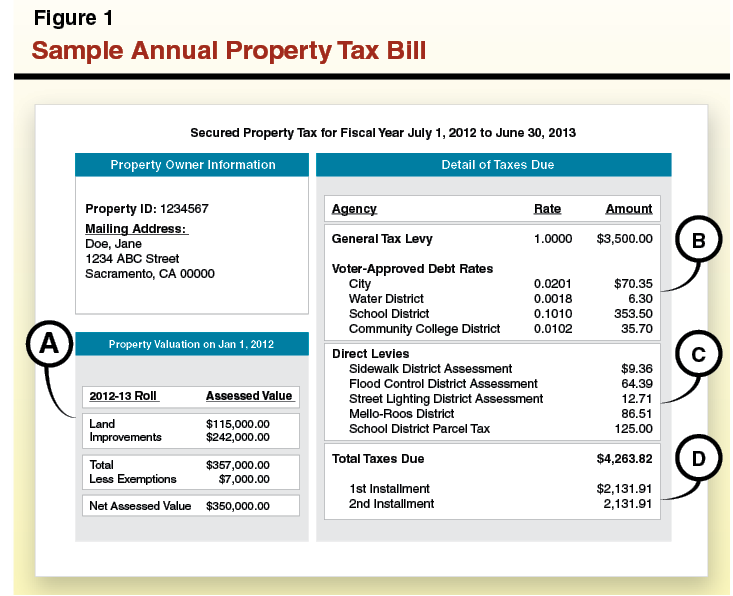
- Types of Levies: These might appear on your tax bill as “special assessments,” “special taxes,” or “voter-approved bonds.” Examples include parcel taxes for school districts or assessments for flood control.
- Impact on Total Rate: The cumulative effect of these local levies can significantly increase the total property tax rate beyond the initial 1%. In some areas, particularly those with strong school systems or extensive infrastructure needs, the total tax rate can reach 1.5% or even higher. The Los Angeles Unified School District or the San Diego Unified School District, for instance, might have associated bond measures that contribute to the overall tax burden.
How to Identify Local Levies
Your annual property tax bill, typically issued by the county tax collector’s office, will itemize these various components. It’s crucial to review this document to understand where your tax dollars are going. For example, a property in San Francisco might have different local levies than a property in Sacramento.
Exemptions and Reductions: Lowering Your Tax Burden
Fortunately, California offers several exemptions and relief programs designed to reduce property tax liability for eligible homeowners. Understanding these can lead to substantial savings.
The Homeowner’s Exemption
- Primary Residence Relief: The most common exemption is the Homeowner’s Exemption. This reduces the taxable value of your primary residence by a set amount each year. For the 2023-2024 tax year, this exemption was $7,000 for most homeowners.
- Automatic Application: For most new homeowners, this exemption is automatically applied when the property is assessed as their principal residence. However, it’s always wise to confirm its inclusion on your tax bill.
Other Key Exemptions
- Disabled Veterans’ Exemption: Eligible disabled veterans may qualify for a significant reduction in their property tax liability. The exemption amount is adjusted annually.
- Blind Exemption: Similar to the disabled veterans’ exemption, individuals who are legally blind may also qualify for a property tax reduction.
- Senior Property Tax Postponement: For seniors who meet certain income and equity requirements, the state offers a program to postpone property taxes. The deferred taxes, plus interest, become a lien on the property and are typically repaid when the home is sold or the owner no longer resides there.
- Welfare Exemption: Certain non-profit organizations that use their property for charitable, religious, or hospital purposes may be eligible for this exemption.
Proximity to Tourist Hotspots and Property Taxes
While not a direct exemption, it’s worth noting that properties located in highly desirable tourist areas or near major attractions like Disneyland in Anaheim or the Golden Gate Bridge in San Francisco can see their property values rise significantly. This increased market value, if it triggers a reassessment, can lead to higher property taxes even with the 1% cap in place. However, the rate itself doesn’t change solely based on proximity to attractions. The increase comes from the property’s assessed value reflecting its market desirability.
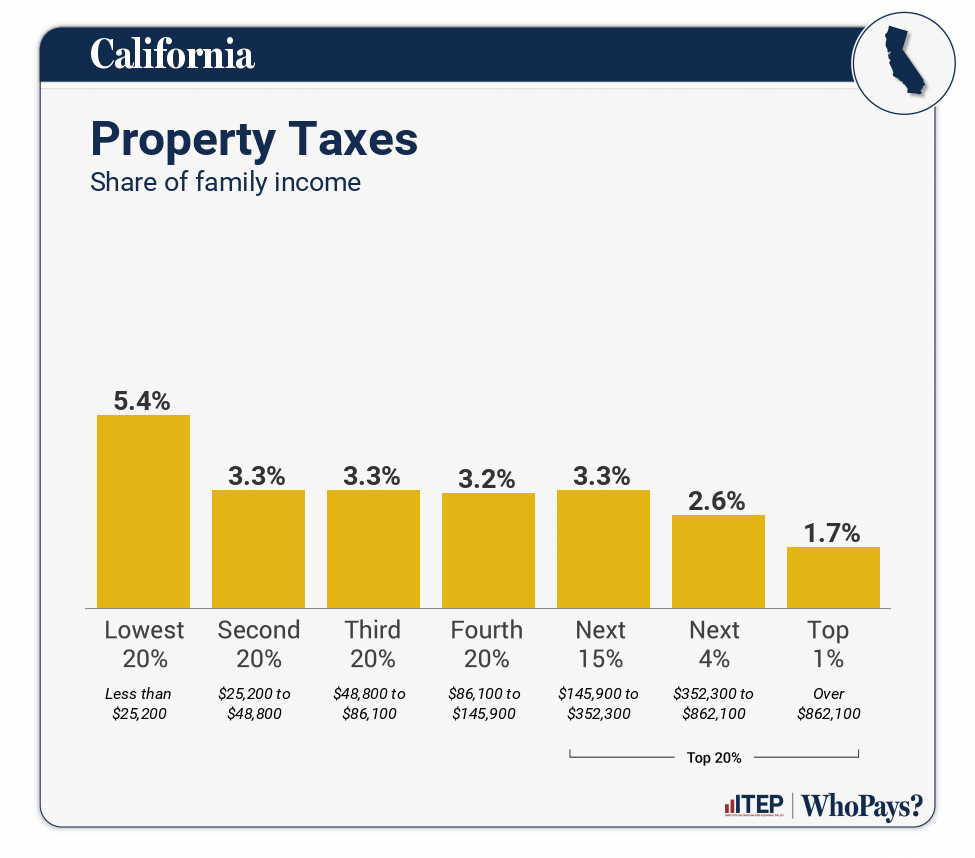
Estimating Your California Property Tax Bill
Calculating your exact property tax can be challenging without knowing the specific assessed value of a property and all applicable local levies. However, you can create a reasonable estimate using the following formula:
Estimated Property Tax = (Assessed Value – Applicable Exemptions) x (Base Tax Rate + Local Levies)
Let’s break down each component:
Determining Assessed Value
- Existing Homeowners: If you’ve owned your property since before the last change in ownership or significant new construction, your assessed value is likely your base year value plus the annual 2% CPI adjustment. You can find this on your previous property tax bills or by contacting your county assessor’s office.
- Recent Buyers: If you’ve recently purchased a property, your assessed value will be your purchase price (or the fair market value at the time of transfer). This will become your new base year value, subject to future 2% annual adjustments.
- New Construction: For new construction, the assessor will determine the value of the new additions and add it to the existing assessed value of the property.
Identifying Applicable Exemptions
- Homeowner’s Exemption: Subtract $7,000 (for the current tax year, check for updates) if the property is your primary residence.
- Other Exemptions: Factor in any other qualifying exemptions, such as those for disabled veterans or the blind. These amounts vary annually and depend on specific criteria.
Calculating the Tax Rate
- Base Rate: Start with the 1% mandated by Proposition 13.
- Local Levies: This is the trickiest part. You’ll need to research the specific tax rates for special assessments and voter-approved bonds in the city and county where the property is located. Your county assessor’s or tax collector’s website is the best resource. These rates can range from a fraction of a percent to over 0.5%. For instance, a property within the boundaries of the Metropolitan Water District of Southern California might have an additional assessment for water services.
Example Scenario
Let’s assume a hypothetical property in Palo Alto:
- Market Value: $2,000,000
- Assessed Value (assuming recent purchase): $2,000,000
- Homeowner’s Exemption: -$7,000 (for primary residence)
- Taxable Value: $2,000,000 – $7,000 = $1,993,000
- Base Tax Rate: 1.00%
- Local Levies (hypothetical): 0.30% (for local schools, fire services, etc.)
- Total Tax Rate: 1.30%
Estimated Annual Property Tax: $1,993,000 * 0.0130 = $25,909
This is a simplified example. Actual figures will vary based on the specific county and its unique set of local assessments. For properties owned for a long time, the assessed value could be substantially lower than market value, leading to a significantly lower tax bill, even if the total tax rate is higher.
The Role of the County Assessor and Tax Collector
Two key governmental entities are central to the property tax process in California:
The County Assessor
- Valuation: The assessor’s office is responsible for determining and maintaining the assessed value of all taxable property within their county. They conduct property appraisals, manage reassessments after changes in ownership or new construction, and apply exemptions.
- Information Source: Your county assessor’s website is an invaluable resource for understanding local assessment practices, property values, and potential exemptions. You can typically look up property records online.
The County Tax Collector
- Billing and Collection: The tax collector’s office is responsible for preparing and mailing property tax bills and collecting payments. They manage delinquencies and any enforcement actions.
- Payment Schedule: Property taxes in California are typically paid in two installments: one due on November 1st and the second on February 1st of the following year. Late payments incur penalties.
Conclusion
Navigating California property taxes requires understanding the historical impact of Proposition 13, the overlay of local levies, and the availability of exemptions. For potential buyers, investors, or even long-term residents, diligent research into specific property values, local tax rates, and applicable relief programs is essential for accurate financial planning and responsible homeownership. While the 1% base rate is a significant starting point, the true cost of property taxes in the Golden State is a mosaic of local decisions and individual circumstances.
LifeOutOfTheBox is a participant in the Amazon Services LLC Associates Program, an affiliate advertising program designed to provide a means for sites to earn advertising fees by advertising and linking to Amazon.com. Amazon, the Amazon logo, AmazonSupply, and the AmazonSupply logo are trademarks of Amazon.com, Inc. or its affiliates. As an Amazon Associate we earn affiliate commissions from qualifying purchases.