
Navigating California’s Knife Laws: A Tourist’s Essential Guide
For travelers planning a trip to California, understanding local laws and regulations is paramount to ensuring a smooth and enjoyable experience. While many visitors focus on attractions like Disneyland, the Golden Gate Bridge, or the stunning beaches of Southern California, practical considerations, such as the legality of carrying certain items, are equally important. One area that often causes confusion is the legality of automatic knives, often referred to as switchblades. As part of your tourism preparation, gaining clarity on these specific statutes can prevent unforeseen complications during your visit to the Golden State.
The Basic Premise: State vs. Local Ordinances
California knife laws are intricate, influenced by both statewide legislation and a patchwork of local ordinances that can vary significantly from one city or county to another. This dual-layer legal framework means that what might be permissible in Los Angeles could be strictly prohibited in San Francisco or a smaller, more conservative municipality. For tourists, this complexity underscores the need for thorough research specific to their planned itinerary.
At the state level, California law, specifically Penal Code 21510, directly addresses automatic knives. Previously, the sale, possession, and carry of switchblades were largely prohibited. However, the law has evolved, creating specific conditions under which these knives are legal. The crucial distinction lies in blade length. Automatic knives with a blade longer than 2 inches are generally illegal to possess or carry publicly. This is a critical threshold that every visitor must commit to memory. Conversely, automatic knives with a blade 2 inches or shorter are now legal to possess and openly carry, provided they meet certain criteria and are not otherwise restricted by local laws or in specific locations.
It is vital to emphasize that “open carry” for these smaller automatic knives means the knife must be carried in an unconcealed manner. Concealed carry of any folding knife, including automatic knives, is generally permitted unless the knife is considered a “dirk or dagger,” which implies a fixed blade or a folding blade that locks into place and is capable of being used as a stabbing weapon. Even then, an automatic knife, regardless of blade length, if carried concealed and readily accessible for use as a weapon, could still fall under the “dirk or dagger” statute if a person intends to use it as such. This distinction is subtle but important.
Beyond state law, many cities and counties impose their own, often stricter, rules. For example, some cities might prohibit the open carry of any knife regardless of length, or they might have specific regulations regarding knife sales within city limits. Before venturing into a new area of California, especially if you intend to carry a knife, a quick check of the local municipal codes for your destination (e.g., San Diego, Sacramento, Oakland) is a prudent step to avoid legal issues that could quickly derail your travel plans.
What Constitutes an “Automatic Knife”?
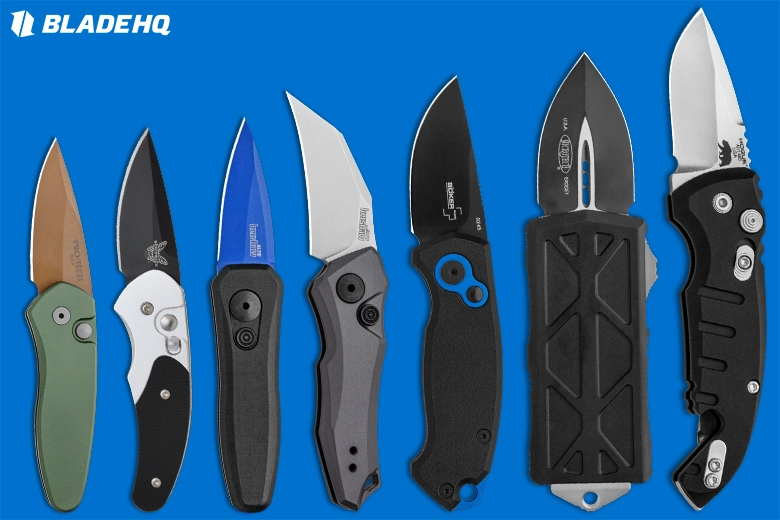
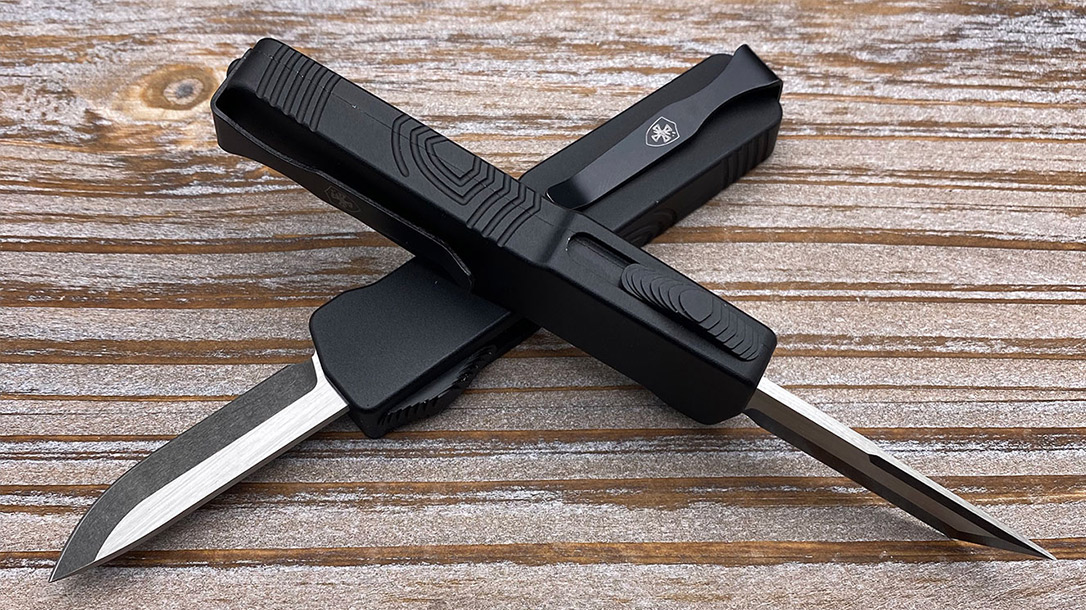
The legal definition of an “automatic knife” or “switchblade” is also crucial for compliance. California Penal Code 17235 defines a switchblade as a knife having a blade that opens automatically by a spring or other device, or by gravity, or by inertia, or that is released from the handle or sheath by the pressure of a button, detent, or other mechanism. This definition is broad and includes knives commonly known as “out-the-front” (OTF) knives, “side-opening automatics,” and even some assisted-opening knives if they are deemed to open too easily.
For tourists, it is important not to confuse an automatic knife with an “assisted-opening” knife. While both have mechanisms to aid blade deployment, assisted-opening knives typically require the user to manually initiate the blade’s movement, often with a thumb stud or flipper, before the spring takes over to complete the opening. True automatic knives require only a single button or switch activation. The legal distinction matters significantly because many assisted-opening knives are treated more like regular folding knives, not subject to the same strict regulations as automatics, especially regarding blade length. When in doubt, err on the side of caution or choose a knife that clearly does not fit the “automatic” definition.
Automatic Knives for Tourists: What You Need to Know
For tourists visiting California, understanding these specific knife laws is less about advocating for carrying such items and more about being informed to prevent inadvertent violations. Whether you are an outdoor enthusiast, a collector, or simply someone who might carry a utility tool, awareness is your best defense against legal entanglements.
Possession vs. Carry: Understanding the Nuance
The distinction between merely possessing an automatic knife and carrying it, especially openly or concealed, is a critical legal nuance. As mentioned, state law permits the possession and open carry of automatic knives with blades 2 inches or less. This means you can own such a knife and have it visibly displayed on your person. However, even for these smaller knives, discretion is advised, as open carry in certain environments could still draw unwanted attention or scrutiny from law enforcement or security personnel.
The prohibition against automatic knives with blades longer than 2 inches means that even mere possession of such an item is illegal unless specific exemptions apply (e.g., for law enforcement, military personnel in certain contexts, or for theatrical purposes). This applies whether the knife is in your pocket, backpack, or vehicle. It’s not just about how you carry it, but whether you have it at all.
For larger, non-automatic folding knives (i.e., those that require manual opening and are not considered switchblades), concealed carry is generally permitted in California as long as the knife is not considered a “dirk or dagger.” A dirk or dagger is broadly defined as a knife or other instrument with or without a handguard that is primarily designed, redesigned, or carried as a stabbing instrument, and is readily available for use as a weapon. This is where intent and context play a significant role. A large folding knife carried concealed for self-defense might be construed as a dirk or dagger, leading to a felony charge, whereas the same knife carried for utility purposes might not be. This ambiguity makes carrying larger knives, especially concealed, a potentially risky endeavor for tourists unfamiliar with local judicial interpretations.
Interstate Travel Considerations
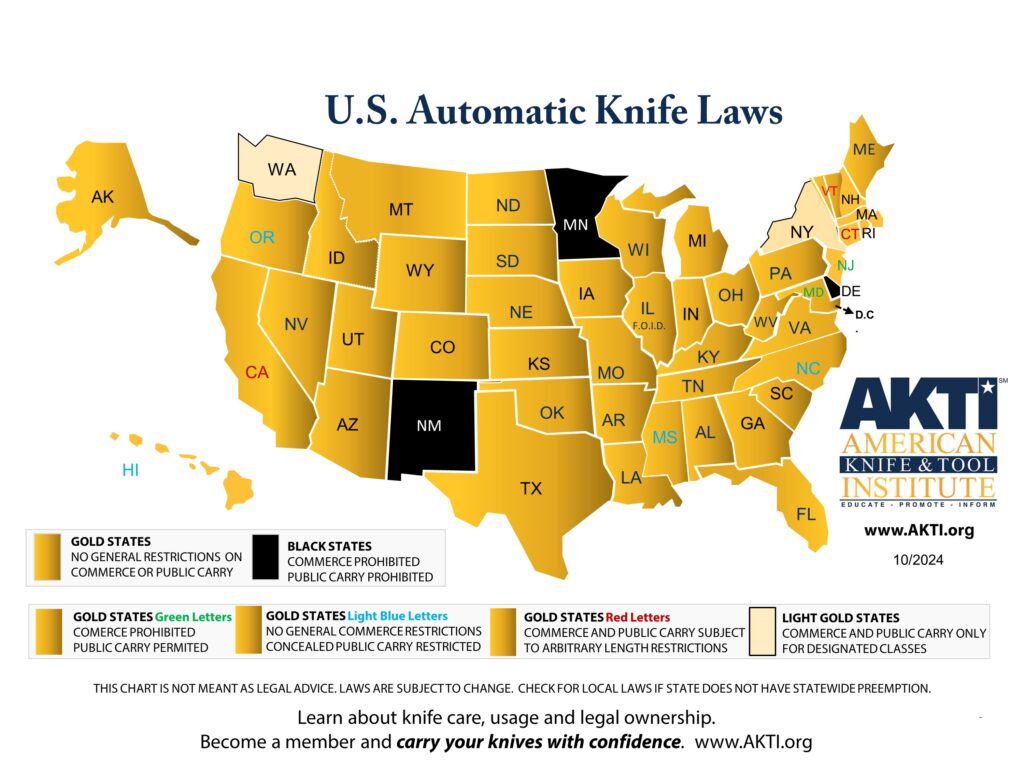
Traveling to California from another state where knife laws might be more lenient requires careful consideration. Many states have different regulations regarding automatic knives, and what is legal in Arizona or Nevada may not be in California. If you are driving into California and have an automatic knife with a blade over 2 inches, it is imperative to secure it properly, ideally in a locked container in your trunk, rendering it inaccessible. Even better, consider leaving such knives at home to avoid any risk.
Flying into California presents another set of regulations governed by the Transportation Security Administration (TSA). While TSA allows knives in checked baggage, they are strictly prohibited in carry-on luggage. Even if an automatic knife is permitted under California law (e.g., under 2 inches), attempting to carry it onto an aircraft will result in confiscation and potential penalties from the TSA. Always declare any knives in checked baggage if required by the airline and ensure they are appropriately sheathed and packaged. The safest approach for air travelers is often to avoid traveling with any knives that could be subject to stringent local laws unless absolutely necessary and thoroughly researched.
Specific Scenarios and Practical Tips for Visitors
Given the complexities, practical advice is essential for tourists navigating California’s diverse landscapes and legal environments.
Public Spaces and Restricted Areas
Even if an automatic knife is technically legal under state and local laws, there are numerous places where knives of any kind, or specifically those with certain characteristics, are prohibited. These include:
- Schools and Universities: Possessing any knife on K-12 school grounds or within a university campus is often illegal and carries severe penalties.
- Courthouses and Government Buildings: These locations typically have strict security protocols prohibiting weapons, including most knives.
- Airports and Federal Facilities: As mentioned, federal regulations prohibit knives in airport carry-on luggage and often within the facilities themselves.
- Sporting Events, Concert Venues, and Theaters: Many private and public venues have their own policies against knives, often enforced by security checkpoints.
- Designated “No Weapon” Zones: Some cities or special events may establish temporary or permanent zones where weapons, including knives, are expressly forbidden.
Always be aware of your surroundings and check for posted signs regarding prohibited items. When in doubt, it is always safer to secure any knife in your vehicle (out of sight and reach) or leave it at your accommodation.
Purchasing or Gifting Knives in California
For knife enthusiasts visiting California who might be interested in purchasing a knife as a souvenir or gift, the same laws apply. Retailers in California are legally bound to sell only automatic knives that comply with state law (i.e., blade 2 inches or shorter). If you encounter a vendor selling automatic knives with blades longer than 2 inches, exercise extreme caution, as both the sale and purchase could be illegal. Always verify the blade length before making a purchase. Remember that even if you lawfully purchase a short-bladed automatic knife, local ordinances might restrict its open carry in certain areas.
Avoiding Unintended Legal Troubles
To ensure your visit to California remains trouble-free regarding knife laws:
- Research Specific Localities: Before you travel, look up the knife ordinances for the specific cities and counties you plan to visit.
- Prioritize Utility Over Appearance: If you must carry a knife for practical purposes, opt for a clear utility knife rather than one that might be perceived as a weapon.
- Be Mindful of Blade Length: For automatic knives, the 2-inch blade length limit is non-negotiable at the state level.
- Choose Open Carry Wisely: Even when legal, open carry of any knife can be provocative in urban settings. Consider whether it is truly necessary.
- Declare Your Intent: If questioned by law enforcement, clearly state the purpose of your knife (e.g., for camping, fishing, opening packages) and cooperate fully.
- When in Doubt, Leave It Behind: The safest course of action is often to avoid carrying knives, especially automatic ones, unless absolutely essential for your planned activities and you are certain of the legality.
The Broader Context: Why These Laws Matter for Tourism
Understanding California’s automatic knife laws, and knife laws in general, is a critical component of responsible tourism. It speaks to the broader idea of respecting local customs, safety regulations, and legal frameworks that govern any travel destination. While a knife might be a useful tool for outdoor adventures in the Sierra Nevada mountains or for various tasks, inadvertently violating a local ordinance can lead to fines, arrest, and significant disruption to your travel plans.
For California, a state celebrated for its diversity and welcoming spirit, clarity on such regulations ensures that visitors can enjoy its myriad attractions without fear of legal repercussions. It reinforces the importance of due diligence as a traveler – a small investment of time in understanding local rules can pay dividends in peace of mind and an uninterrupted vacation experience. Ultimately, the goal is to fully immerse yourself in the beauty and culture of California, and doing so responsibly means being well-informed about all aspects, including the legal landscape surrounding items like automatic knives.
LifeOutOfTheBox is a participant in the Amazon Services LLC Associates Program, an affiliate advertising program designed to provide a means for sites to earn advertising fees by advertising and linking to Amazon.com. Amazon, the Amazon logo, AmazonSupply, and the AmazonSupply logo are trademarks of Amazon.com, Inc. or its affiliates. As an Amazon Associate we earn affiliate commissions from qualifying purchases.