
Navigating Professional Mobility in the Grand Canyon State
For professionals whose lifestyle involves frequent business travel, considering new career opportunities, or even contemplating a permanent move for work, understanding the legal landscape of their destination is paramount. This is especially true when it comes to restrictive covenants like non-compete agreements. If your business endeavors or potential new role bring you to Arizona, a state celebrated for its burgeoning tech sector, vibrant tourism, and dynamic economy, you might wonder: are non-competes enforceable here? The enforceability of non-compete clauses in Arizona is a nuanced area of law, significantly impacting career mobility, entrepreneurial ventures, and talent acquisition strategies across the state. For anyone considering an extended “business stay” or a permanent career relocation, deciphering these agreements is a critical step in professional planning and ensuring a seamless transition into the Arizona market.

Understanding the Basics for Your Arizona Business Journey
A non-compete agreement, often found within employment contracts, aims to prevent an employee from working for a competitor or starting a competing business for a specified period after their employment ends. Its primary purpose from the employer’s perspective is to protect legitimate business interests, such as trade secrets, confidential customer lists, proprietary information, and significant investments in employee training. For individuals evaluating business opportunities or job offers in Arizona, recognizing the function and potential impact of these clauses is vital. Arizona is generally considered an employer-friendly state, but its courts approach non-compete enforceability with a keen eye towards balancing employer protections against an individual’s right to pursue their livelihood and compete fairly. This balance forms the bedrock of how these agreements are assessed, making it a critical consideration for those whose professional lifestyle includes navigating diverse state employment laws.
Key Factors Determining Enforceability in Arizona
The enforceability of a non-compete agreement in Arizona is not absolute; it is subject to a “reasonableness” test by the courts. This means that merely having a non-compete signed does not guarantee its legal validity. For a professional considering a job in Phoenix‘s tech hub, a marketing role in Scottsdale, or a healthcare position in Tucson, understanding these factors can significantly inform their career decisions and negotiation strategies. The courts meticulously examine several aspects of the agreement to determine if it is fair and does not unduly restrict an individual’s ability to work.
The Reasonableness Standard: Balancing Employer Protection and Employee Freedom
Arizona courts will enforce a non-compete agreement only to the extent that it is reasonable in scope, duration, and geographic area, and that it protects a legitimate business interest of the employer. This standard is designed to prevent employers from stifling competition unfairly or preventing individuals from earning a living.
Legitimate Business Interest: What an Employer Must Prove
To enforce a non-compete, an employer must demonstrate that they have a legitimate business interest to protect. Common examples include:
- Trade Secrets and Confidential Information: This encompasses proprietary formulas, processes, designs, instruments, patterns, compilations of information, or other secrets that derive economic value from not being generally known. For professionals in industries like advanced manufacturing or software development in Arizona, this often means data about new products or client strategies.
- Client or Customer Goodwill and Relationships: Employers invest significant resources in building client relationships. A non-compete might protect against a former employee immediately soliciting those same clients. This is particularly relevant for sales professionals, account managers, or service providers who build strong personal connections with clients during their employment.
- Specialized Training or Investment: If an employer has invested heavily in unique, specialized training for an employee, a non-compete might be used to protect that investment by preventing the employee from immediately taking that unique skill set to a direct competitor.
Without a legitimate business interest, an Arizona court will likely deem the non-compete unenforceable, viewing it merely as an attempt to prevent competition, which is generally disfavored.
Scope of Restriction: Tailoring the Agreement
The restrictions imposed by a non-compete must be narrowly tailored to protect the identified legitimate business interest. Overly broad restrictions are typically struck down.
- Geographic Scope: The restricted area must be reasonable and confined to where the employer actually conducts business or where the employee performed services. For example, a statewide ban might be reasonable for a company with a strong statewide presence but highly unreasonable for a small local business. A professional moving to Arizona for a new role must assess if the geographic scope of their previous non-compete is realistic, especially if they are moving from a larger state or even internationally.
- Temporal Scope (Duration): The length of time an employee is prohibited from competing must also be reasonable. Generally, periods of six months to two years are often upheld, while longer durations face greater scrutiny. The court will consider the industry, the nature of the confidential information, and how quickly such information becomes obsolete. For a professional planning a long-term career in Arizona, a lengthy non-compete could significantly delay their next career move or entrepreneurial launch.
- Scope of Activity: The agreement must specify the types of activities the employee is prohibited from engaging in. It cannot broadly prevent an individual from using their general skills and experience. It should target only competitive activities that leverage the employer’s protected interests. This means an agreement might prevent an employee from working for a direct competitor in a specific role, but not from working in an entirely different capacity or industry.
Consideration and Bargaining Power for the Business Traveler
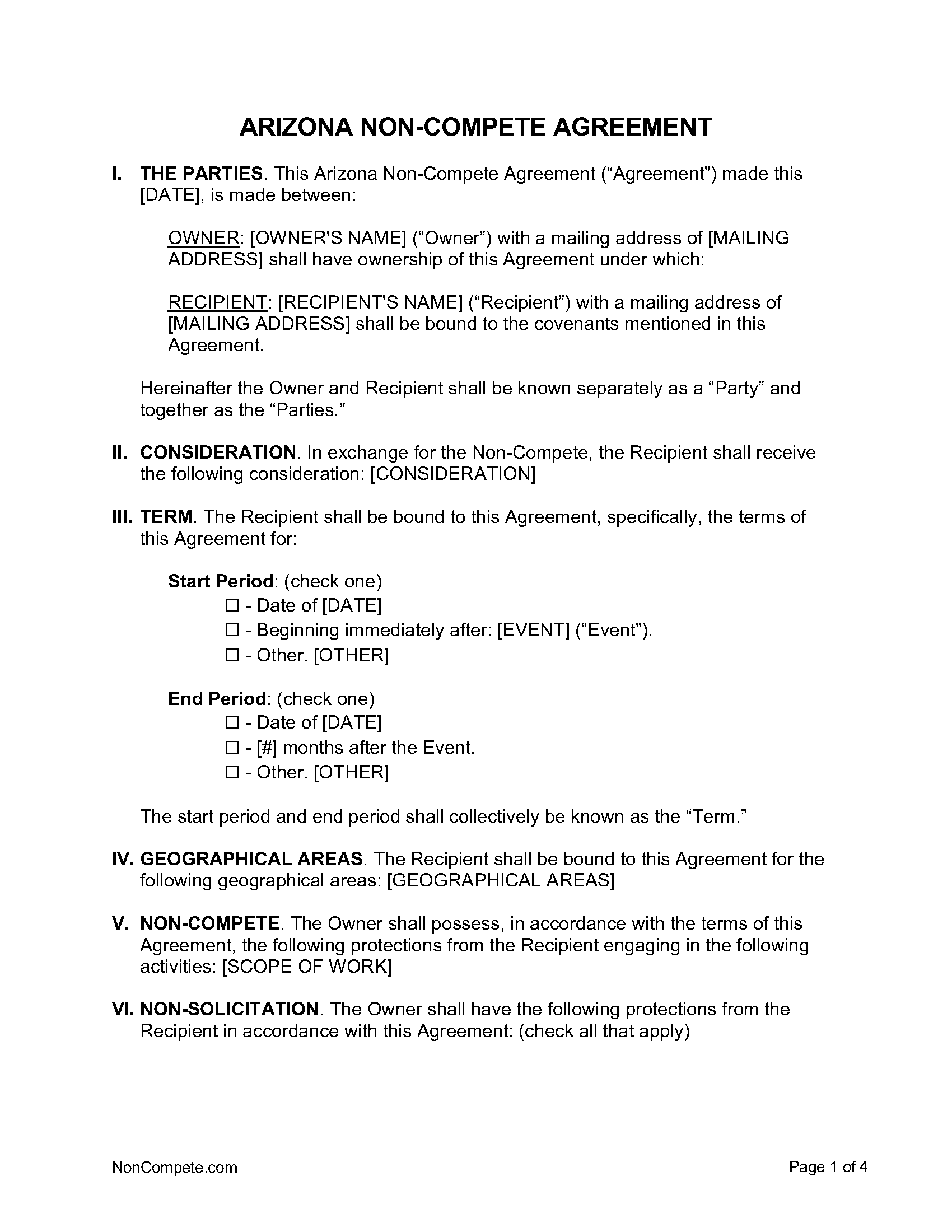
For a non-compete to be enforceable in Arizona, it must be supported by adequate “consideration.” This means there must be an exchange of something of value between the employer and employee. For a new hire, the offer of employment itself typically serves as sufficient consideration. However, for an existing employee, simply presenting a non-compete agreement without any additional benefit (like a promotion, raise, bonus, or access to new confidential information) may render it unenforceable. Individuals engaged in high-level business negotiations or considering executive positions in Arizona should be particularly aware of this, as their ability to negotiate favorable terms or receive appropriate consideration can be critical.
Implications for Professionals and Entrepreneurs in Arizona’s Dynamic Economy
The enforceability of non-competes in Arizona has profound implications for both individuals seeking career advancement and those looking to launch new businesses within the state’s burgeoning economic landscape. This aspect directly impacts the “lifestyle” choices available to professionals, influencing everything from job security to entrepreneurial freedom.
Career Mobility and Job Seeking in the Arizona Market
For employees, a non-compete can represent a significant hurdle to career mobility. If you’re considering a job change within Arizona or moving to the state for a new opportunity, it’s crucial to review any existing non-compete agreements from previous employers carefully. Many professionals arriving for business stays in cities like Phoenix or Scottsdale might discover promising new roles, only to find their previous non-compete potentially restricts them. Understanding the terms and seeking legal advice before making a move can mitigate risks. Similarly, employers in Arizona must craft enforceable agreements that protect their legitimate interests without discouraging top talent from joining their ranks. A reputation for overly aggressive or unreasonable non-competes could inadvertently limit a company’s ability to attract the best professionals.
Entrepreneurial Ventures and Starting a Business in Arizona
Arizona has a thriving entrepreneurial ecosystem, particularly in areas like clean energy, aerospace, and advanced technology. However, non-competes can pose a significant challenge for former employees aspiring to become founders. If an individual leaves an employer to start a business that directly competes, they face the risk of litigation if a valid non-compete is in place. Arizona courts employ the “Red Pencil” rule (also known as blue-penciling), which means they can modify or “rewrite” an overly broad or unreasonable non-compete to make it enforceable, rather than striking it down entirely. This offers courts flexibility but also means that even an imperfect agreement might still be enforced in a narrower form. This rule emphasizes the need for careful legal review for any entrepreneur planning to launch a business in Arizona that might be perceived as competitive with a former employer. It also means that businesses hiring from competitors must also be mindful of these agreements to avoid potential legal entanglements.
Proactive Steps for Your Arizona Professional Lifestyle
Whether you are an employee considering a job change or an employer looking to protect your business interests, understanding and strategically addressing non-compete agreements is a vital component of professional and business planning in Arizona.
For Employees and Professionals:
- Read Carefully: Never sign an employment contract without thoroughly understanding all its clauses, especially any non-compete provisions. Ask questions if anything is unclear.
- Negotiate Terms: In many cases, non-compete agreements are negotiable. You might be able to limit the geographic scope, duration, or specific activities restricted, particularly if you have significant bargaining power or unique skills.
- Seek Legal Counsel: Before accepting a new role, leaving an old one, or starting a business, if you are subject to a non-compete, consult with an Arizona employment law attorney. They can assess the enforceability of your specific agreement and advise you on potential risks and strategies.
- Document Your Work: Keep clear records of your responsibilities, general skills, and client interactions that are distinct from proprietary information to better defend against overly broad claims.

For Businesses and Employers:
- Draft Meticulously: Ensure your non-compete agreements are narrowly tailored to protect only legitimate business interests. Overly broad agreements are more likely to be challenged and potentially struck down or modified by Arizona courts.
- Review Regularly: Periodically review and update your non-compete agreements to ensure they remain compliant with current Arizona law and reflect your evolving business needs.
- Provide Adequate Consideration: Always provide sufficient consideration, especially when asking existing employees to sign a new non-compete.
- Consult Legal Experts: Work with legal counsel experienced in Arizona employment law to draft and enforce your non-compete agreements, helping to avoid common pitfalls and enhance enforceability.
Understanding the enforceability of non-competes in Arizona is not merely a legal technicality; it’s a strategic imperative for anyone navigating the state’s dynamic professional landscape. For those whose “lifestyle” involves career growth, entrepreneurial spirit, and exploring opportunities in new regions, this knowledge is invaluable in making informed decisions and charting a successful course in the Grand Canyon State.
LifeOutOfTheBox is a participant in the Amazon Services LLC Associates Program, an affiliate advertising program designed to provide a means for sites to earn advertising fees by advertising and linking to Amazon.com. Amazon, the Amazon logo, AmazonSupply, and the AmazonSupply logo are trademarks of Amazon.com, Inc. or its affiliates. As an Amazon Associate we earn affiliate commissions from qualifying purchases.