
Owning accommodation in California, whether it’s a primary residence, a vacation home, or an investment rental property, comes with a myriad of financial considerations. Among the most significant of these are property taxes. While often viewed as an unavoidable expense, understanding the deductibility of these taxes can significantly impact the overall cost of ownership and your financial planning. The question of whether property taxes are deductible in California is not a simple yes or no, as it depends on several factors, including the type of property, how it’s used, and current federal tax laws. Navigating these complexities is essential for any property owner looking to optimize their financial position.

Understanding Property Taxes in California
Before delving into deductibility, it’s crucial to grasp how property taxes are structured in California. The state operates under a unique system largely defined by Proposition 13, a landmark ballot initiative passed in 1978. This proposition fundamentally changed how residential and commercial properties are assessed and taxed.
The Basics of Proposition 13
Proposition 13 established that the maximum ad valorem tax on real property is 1% of its full cash value. Crucially, it also limits the annual increase in assessed value to no more than 2% per year, regardless of market appreciation. This cap on value increases applies as long as the property remains under the same ownership. However, a property is reassessed to its full market value whenever there is a change in ownership or new construction occurs. This mechanism means that long-term homeowners often pay significantly lower property taxes than new buyers in the same neighborhood, even for comparable properties. Beyond the 1% base rate, local voters can approve additional taxes for specific purposes, such as schools, libraries, or infrastructure projects, which are added to the property tax bill. These are often referred to as “ad valorem taxes” or “special assessments.”
How Property Taxes Are Assessed
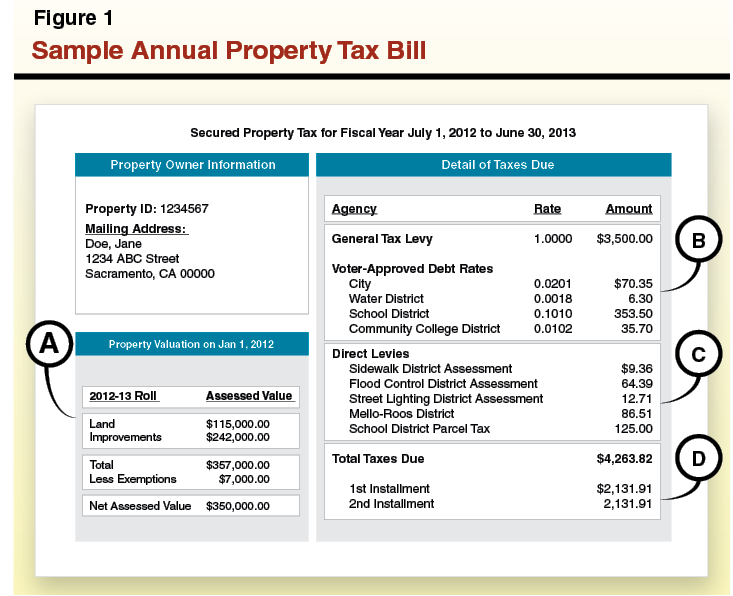
In California, property taxes are assessed annually by county assessors based on the property’s purchase price or its most recent reassessment event. The assessed value is then multiplied by the local tax rate (typically around 1.1% to 1.25% in many areas, including the 1% base plus local add-ons) to determine the annual tax liability. These taxes are typically paid in two installments: the first due in November and delinquent in December, and the second due in February and delinquent in April. Understanding this assessment framework is the first step in appreciating the financial implications of owning accommodation in the state, particularly before considering any potential tax relief through deductions.
Federal Deductibility of Property Taxes
The ability to deduct property taxes from your federal income tax is a significant benefit for many homeowners, reducing their overall taxable income. However, the rules surrounding this deduction have changed considerably in recent years, particularly for individual taxpayers.
The State and Local Tax (SALT) Cap
Prior to the Tax Cuts and Jobs Act of 2017 (TCJA), taxpayers could deduct an unlimited amount of state and local taxes, including property taxes, as an itemized deduction on Schedule A of Form 1040. The TCJA introduced a significant change: the State and Local Tax (SALT) deduction is now capped at $10,000 per household. This $10,000 limit applies to the combined total of state and local income taxes, sales taxes (if chosen over income taxes), and property taxes. For many California homeowners, especially those in high-value real estate markets, this cap dramatically reduces the federal tax benefit of owning accommodation. Given the high property values and state income taxes in California, it’s common for homeowners to pay far more than $10,000 in combined state and local taxes, making the cap a particularly impactful limitation.
Primary Residence vs. Investment Properties
The distinction between a primary residence and an investment property (such as a rental property) is critical for property tax deductibility.
- Primary Residence (and Secondary Homes Used Personally): For personal residences, property taxes are an itemized deduction, subject to the aforementioned $10,000 SALT cap. This applies to your main home and any other homes you own and use primarily for personal enjoyment (like a vacation home you don’t rent out, or only rent for very limited periods). To claim this deduction, you must itemize deductions on your federal tax return, which may not be beneficial if the standard deduction exceeds your total itemized deductions.
- Investment Properties (Rental Accommodation): The rules are significantly different and more favorable for properties held purely for investment or rental income. Property taxes paid on rental properties are generally fully deductible as an ordinary and necessary business expense against rental income. These deductions are reported on Schedule E (Supplemental Income and Loss) of Form 1040 and are not subject to the $10,000 SALT cap. This distinction is vital for those who own vacation rentals or long-term rental units in California, as it allows them to significantly reduce their taxable rental income.

Navigating Deductions for Rental and Vacation Accommodation
For individuals and entities operating within the accommodation sector in California, understanding the nuances of property tax deductions for rental and vacation homes is paramount. These properties represent a different class of asset from a primary residence, offering distinct tax advantages.
Deducting Property Taxes for Rental Properties
If you own residential or commercial property in California that is strictly used as a rental, the property taxes you pay are fully deductible as an operating expense. This means they reduce your net rental income, thereby lowering your overall tax liability. This deduction is not subject to the $10,000 SALT cap that applies to personal residences. Alongside other expenses like mortgage interest, insurance, repairs, and depreciation, property taxes contribute to the overall cost of providing accommodation, and their deductibility makes rental property ownership a more viable investment. The Internal Revenue Service (IRS) considers the activity of renting property as a business, allowing for these comprehensive deductions. This framework makes owning multiple accommodation units in high-tax states like California potentially more attractive from a tax perspective than it might seem at first glance, especially when factoring in the significant property tax burdens.
Special Considerations for Vacation Homes
Vacation homes present a hybrid scenario, often used for both personal enjoyment and rental income. The deductibility of property taxes for a vacation home depends on the ratio of personal use to rental use.
- Primarily Personal Use: If you use your vacation home primarily for personal purposes (more than 14 days or 10% of the total days rented at a fair rental price, whichever is greater), it’s treated similarly to a second home. The property taxes are deductible as an itemized deduction, subject to the $10,000 SALT cap. Rental income received must still be reported.
- Primarily Rental Use: If your vacation home qualifies as a rental property (meaning you rent it out for more than 14 days and use it for personal purposes for the lesser of 14 days or 10% of the total days rented), then property taxes can be deducted as a rental expense. However, the deduction must be prorated based on the percentage of time the property was rented versus used for personal enjoyment. For example, if the property was rented for 200 days and used personally for 50 days, 80% (200/250) of the property taxes would be deductible as a rental expense, and the remaining 20% would be allocated to personal use, potentially falling under the $10,000 SALT cap if you itemize. The IRS provides detailed guidance on these rules in IRS Publication 527, “Residential Rental Property (Including Vacation Homes).” Accurately tracking personal and rental days is crucial for maximizing these deductions and ensuring compliance.
Strategic Planning for California Property Owners
Understanding the nuances of property tax deductibility is not merely about compliance; it’s a critical component of strategic financial planning for anyone owning accommodation in California. The choices made regarding property use and tax strategies can significantly influence profitability and long-term wealth accumulation.
Impact on Accommodation Ownership Costs
For a primary residence or a vacation home used mostly for personal enjoyment, the $10,000 SALT cap means that a substantial portion of property taxes (and state income taxes) paid by many California residents may not be federally deductible. This effectively increases the net cost of homeownership beyond what it was before the TCJA. Property owners must factor this higher after-tax cost into their budgeting and financial projections.
Conversely, for dedicated rental properties, the full deductibility of property taxes as a business expense significantly reduces the operating costs and enhances the cash flow and profitability of providing accommodation. This distinction often makes rental property investments in California more appealing from a tax perspective than owning additional personal residences. Investors can leverage these deductions to offset rental income, making high-value properties more financially manageable. This can influence decisions on whether to convert a former primary residence into a rental property or to actively seek out investment opportunities in the robust California rental market.
Seeking Professional Advice
Given the complexities of federal and state tax laws, and the specific regulations governing property taxes in California, it is highly advisable for property owners to consult with a qualified tax professional. An experienced certified public accountant (CPA) or tax attorney specializing in real estate can provide personalized advice tailored to your unique circumstances. They can help you:
- Accurately calculate your deductions.
- Understand the implications of the SALT cap on your personal finances.
- Strategize the optimal use of vacation homes to maximize tax benefits.
- Ensure compliance with all IRS and California tax regulations.
- Explore other potential deductions related to property ownership, such as mortgage interest, depreciation, and operating expenses for rental properties.
The tax landscape is dynamic, with laws potentially changing with new legislation. Professional guidance ensures that property owners are always up-to-date with the latest rules and are making informed decisions that support their financial goals in the intricate California real estate market. Ultimately, knowing if and how your property taxes are deductible is a cornerstone of intelligent accommodation ownership and management.
LifeOutOfTheBox is a participant in the Amazon Services LLC Associates Program, an affiliate advertising program designed to provide a means for sites to earn advertising fees by advertising and linking to Amazon.com. Amazon, the Amazon logo, AmazonSupply, and the AmazonSupply logo are trademarks of Amazon.com, Inc. or its affiliates. As an Amazon Associate we earn affiliate commissions from qualifying purchases.