
California, a state synonymous with innovation, diverse landscapes, and a vibrant lifestyle, attracts millions of visitors annually. From the sun-kissed beaches of San Diego to the majestic redwoods of Big Sur and the bustling streets of Los Angeles and San Francisco, the Golden State offers an unparalleled array of experiences. Whether you’re planning a luxurious Napa Valley getaway, a family adventure to Disneyland, or a rugged hiking trip through Yosemite National Park, understanding local laws is crucial for a smooth and enjoyable visit. Among the various regulations that can differ significantly from other parts of the United States, knife laws often spark confusion, particularly concerning switchblades. For travelers, new residents, and even long-time Californians, navigating the specifics of these laws can be a perplexing task.
The legal status of switchblades in California is not straightforward, often leading to misunderstandings that could have serious consequences. While some states have relatively lenient knife laws, California has historically maintained stricter regulations, particularly regarding automatic knives. This comprehensive guide aims to demystify the intricacies of California’s switchblade laws, offering clarity for anyone planning to visit, move to, or simply enjoy the diverse offerings of this iconic state. Our goal is to provide practical insights that align with a worry-free travel and lifestyle experience, ensuring you stay on the right side of the law while exploring destinations from Palm Springs to the Golden Gate Bridge.
Understanding California’s Knife Laws for Travelers
When you’re packing for a trip to California, whether it’s for an extended stay in a luxury resort or a backpacking adventure, it’s essential to be aware of the state’s specific knife regulations. Ignorance of the law is never an excuse, and encountering legal troubles can quickly turn a dream vacation into a nightmare. Knife laws in California are primarily governed by the California Penal Code, which outlines what types of knives are prohibited, how they can be carried, and in what locations. For switchblades, the law is particularly explicit, designed to control what the legislature has historically deemed as potentially dangerous weapons.
What Constitutes a Switchblade in California?
The definition of a “switchblade” under California law is critical to understanding its legality. California Penal Code § 21510 defines a switchblade as a knife having a blade of two inches or more in length that can be released automatically by a button, spring, or other device in the handle, or by gravity or centrifugal force. This definition is crucial because it focuses on the mechanism of deployment and the blade length. Many people mistakenly believe that any folding knife is permissible, but the automatic deployment feature is what specifically categorizes a knife as a switchblade in this context.
It’s important to distinguish between a “switchblade” and other types of folding knives. For example, a common folding knife that requires manual opening of the blade is generally legal to carry concealed, provided it is not locked open. However, if that same knife has a spring-assisted mechanism that propels the blade open with the push of a button or lever after an initial manual nudge, it might tread into a legal grey area, although typically, true switchblades are fully automatic from a closed position. The law specifically targets the automatic release, meaning knives that spring open without any direct force applied to the blade itself are the primary concern.
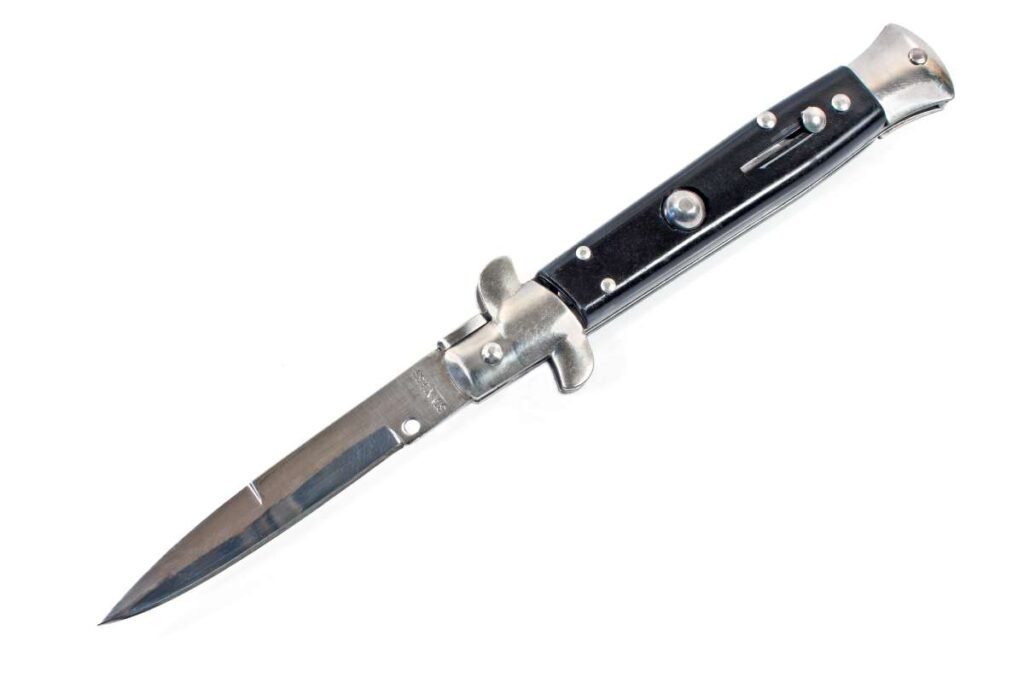
The 2-Inch Blade Rule: A Crucial Detail
The “two inches or more in length” clause within the definition of a switchblade is perhaps the most critical detail for legality. If a knife is an automatic knife (a switchblade) as defined, but its blade is less than two inches, it generally falls outside the prohibition of Penal Code § 21510. This creates a narrow exception where very small automatic knives might be legal. However, this is a very fine line, and measuring a blade can be subjective in a street stop scenario. Therefore, relying on this exception for travel or general possession is not advisable, as even a slight mismeasurement or differing interpretation by law enforcement could lead to legal trouble. It’s often safer to avoid carrying any knife that could be construed as a switchblade if its blade length is questionable. This rule applies uniformly across the state, from the urban centers of Oakland and Long Beach to the rural expanses near Joshua Tree National Park.
Navigating California as a Visitor: What You Need to Know
For those exploring California’s diverse attractions, from the historical Alcatraz Island to the glitz of Hollywood and the scenic drive along the Pacific Coast Highway, understanding how knife laws affect visitors is paramount. Different travel scenarios present different legal considerations, and being prepared can save you from unnecessary stress or legal complications.
Carrying Restrictions in Public and Private Spaces
The overarching rule in California is that carrying a switchblade (as defined by the 2-inch rule) is illegal, whether openly or concealed. This means you cannot have it in your pocket, bag, vehicle, or anywhere on your person in public spaces. This prohibition extends to private property as well, unless you are on your own private property (like your home or a legally rented apartment or villa) and are not in violation of other laws.
For general folding knives (not switchblades), California law permits them to be carried concealed, provided they are in the folded position. Fixed-blade knives, however, must be carried openly in a sheath on the waist or other visible manner. This distinction is critical for hikers, campers, or those engaged in outdoor activities who might carry such tools. Always remember that local ordinances in cities like Santa Monica, San Jose, or Sacramento can sometimes impose additional restrictions, so it’s wise to research specific city regulations if you plan an extended stay in one area.

The Impact on Outdoor Activities and Camping
California’s stunning natural beauty draws countless outdoor enthusiasts. From exploring Death Valley National Park to camping near Lake Tahoe or surfing in Huntington Beach, many activities traditionally involve carrying a reliable utility knife. While a good knife is indispensable for camping, fishing, or hiking, it’s crucial to ensure it doesn’t fall under the switchblade category. Most multi-tools, fixed-blade hunting knives, or manually-opening folding knives are perfectly legal for these purposes, provided they are carried appropriately (e.g., fixed blades openly sheathed).
The key is to avoid any knife that employs an automatic opening mechanism that makes it a switchblade according to state law. When packing your gear for a wilderness adventure, choose tools that are unambiguously legal to prevent any issues with park rangers or local law enforcement. Many outdoor lodges and resorts in these areas are well-versed in local regulations, but it remains the individual’s responsibility to comply.
Flying into California: Airport and Transportation Hubs
Travelers arriving by air into major hubs like Los Angeles International Airport or San Francisco International Airport must also be mindful of knife laws. The Transportation Security Administration (TSA) has its own rules regarding knives in carry-on and checked luggage, which are federal. However, once you disembark, California state laws apply.
While you might successfully check a legally owned knife in your luggage, possessing a switchblade (as defined by California law) becomes illegal the moment you retrieve it in California. This means even if you legally purchased a switchblade in another state, bringing it into California could lead to an arrest. It is strongly advised against traveling to California with any knife that falls under the state’s prohibited switchblade definition, regardless of its legality elsewhere. Similar caution should be exercised when using other forms of public transport, such as Amtrak trains or local bus systems, where possessing a prohibited item can lead to immediate legal issues.
Consequences of Non-Compliance and Legal Nuances
Understanding the legal landscape is only half the battle; knowing the potential repercussions of non-compliance is equally important. California’s legal system treats violations of knife laws seriously, particularly those involving prohibited weapons.
Penalties for Possessing a Prohibited Switchblade
Possession of a prohibited switchblade in California is generally classified as a misdemeanor. The penalties for a misdemeanor conviction can include:
- Jail Time: Up to six months in a county jail.
- Fines: Up to $1,000.
- Probation: The court may impose probation, which could involve various conditions.
- Criminal Record: A misdemeanor conviction will result in a criminal record, which can have long-lasting implications for employment, housing, and travel, even if you are just a tourist.
These penalties underscore the importance of strictly adhering to California’s knife laws. For a tourist, an arrest and legal proceedings can derail an entire trip, incur significant legal fees, and lead to an unpleasant and costly experience.
Differences Between Assisted-Opening Knives and Switchblades
A common source of confusion lies in differentiating between a “switchblade” and an “assisted-opening” knife. Assisted-opening knives utilize a spring or other mechanism to assist in the blade’s deployment, but they typically require an initial manual push or flick of the blade or a thumbstud/flipper to begin the opening process. They do not deploy “automatically” from the handle with a button or spring solely from the handle, as defined for switchblades.
Generally, assisted-opening knives are not considered switchblades under California law and are thus legal to possess and carry (with the same concealed/open carry rules as other folding knives). However, the line can be blurry, and aggressive opening mechanisms might be misinterpreted by law enforcement. When in doubt, it’s always safer to choose knives with less ambiguous opening mechanisms, especially if you plan to carry them in public. Legal interpretations can sometimes be complex, and what one person considers an assisted opener, another might see as an automatic knife, leading to potential legal challenges.

Special Considerations for Residents vs. Tourists
While the basic laws apply to everyone within California’s borders, there might be practical differences in how these laws impact residents versus tourists. For residents, especially those new to the state, understanding these laws is part of integrating into the local lifestyle. They have more opportunities to educate themselves through local resources and adjust their habits. Tourists, on the other hand, often arrive with knives legal in their home states, unaware of California’s stricter rules.
For both groups, it’s crucial to proactively learn the laws. Residents may encounter these laws more frequently in their daily lives, while tourists face a higher risk of accidental non-compliance due to unfamiliarity. Whether you’re staying at a chic hotel in Beverly Hills or a rustic cabin in the Sierra Nevada mountains, the law treats everyone equally.
Practical Advice for a Worry-Free California Experience
To ensure your visit or residency in California remains enjoyable and free of legal complications, here’s some practical advice concerning knives.
Best Practices for Knife Enthusiasts and Collectors
For knife enthusiasts or collectors, California presents a particular challenge. While collecting certain types of knives is a hobby, owning or importing prohibited items into California can be problematic. If you possess a switchblade that falls under California’s definition, it is best kept strictly on private property, out of public view, and never carried outside. When traveling to California, consider leaving prohibited knives at home. If you are moving to California and have such items, it would be prudent to consult with legal counsel regarding the proper way to handle their transportation and storage, potentially even before entering the state. Many outdoor gear shops and specialty stores throughout California stock a wide array of legal knives that can serve any practical purpose without violating the law. Choosing a legal alternative is always the safest bet.
When in Doubt: Err on the Side of Caution
The most important piece of advice regarding knife laws in California is to err on the side of caution. If you are unsure whether a knife is legal to possess or carry, especially a switchblade, it is best not to carry it in public. This applies whether you are visiting attractions like Universal Studios Hollywood or Legoland California, or simply taking a stroll along the boardwalk in Santa Cruz. Legal ambiguities can be stressful and costly. Opt for clearly legal tools, and if you require a knife for a specific activity, ensure it complies with California Penal Code. By doing so, you can focus on making unforgettable memories, experiencing the rich local culture, and enjoying all the fantastic activities California has to offer without the worry of legal entanglements.
LifeOutOfTheBox is a participant in the Amazon Services LLC Associates Program, an affiliate advertising program designed to provide a means for sites to earn advertising fees by advertising and linking to Amazon.com. Amazon, the Amazon logo, AmazonSupply, and the AmazonSupply logo are trademarks of Amazon.com, Inc. or its affiliates. As an Amazon Associate we earn affiliate commissions from qualifying purchases.