
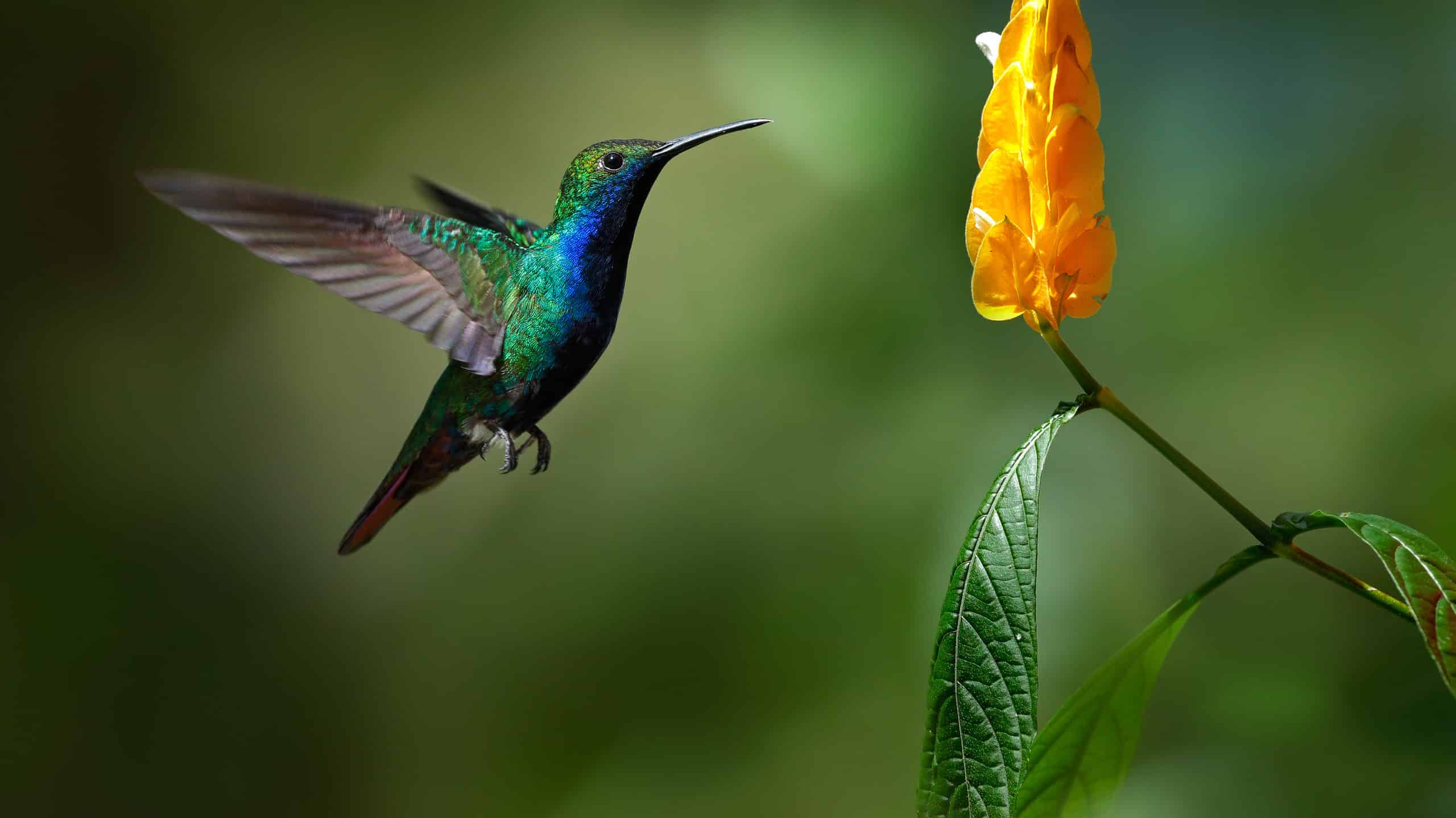
For many nature enthusiasts and travelers, the image of a hummingbird, a tiny jewel-toned marvel hovering at a flower, is synonymous with vibrant ecosystems. It’s a common sight across much of the Americas, inspiring wonder and curiosity. So, when planning a trip to the tropical paradise of Hawaii, a natural question might arise: will I be lucky enough to spot these agile, iridescent birds flitting through the islands’ lush landscapes? The definitive answer, surprisingly to some, reveals a fascinating aspect of Hawaii’s unique ecological story.
The Simple Answer: No Native Hummingbirds
Despite the abundant flora and seemingly ideal tropical environment, the Hawaiian Islands are not home to any native hummingbird species. This might come as a surprise given Hawaii’s reputation for extraordinary biodiversity and vibrant natural beauty. However, the absence of hummingbirds is a testament to the islands’ extreme isolation and the very specific evolutionary pathways that have shaped its unique ecosystem over millions of years. Travelers hoping to photograph or observe hummingbirds during their Hawaiian vacation will, unfortunately, need to temper those expectations.
Hawaii’s Isolated Ecosystem
The Hawaiian archipelago is the most isolated island chain in the world, located roughly 2,400 miles (3,860 km) from the nearest continental landmass. This extreme isolation has been the primary driver behind Hawaii’s incredible endemism, meaning a vast majority of its native species are found nowhere else on Earth. Organisms that arrived in Hawaii did so via incredible journeys across vast stretches of ocean – carried by wind, currents, or on the wings of birds. Only a select few managed to successfully colonize and, over millennia, evolve into the unique species we see today.
The terrestrial ecosystems of Hawaii developed largely without the presence of many common continental species. Large predators, diverse mammal populations (aside from the Hawaiian hoary bat), and many specific bird families simply never made the journey or failed to establish viable populations. This ecological void allowed for remarkable adaptive radiation among the species that did arrive, leading to an evolutionary story unlike any other.
Why Hawaii Lacks Hummingbirds
The absence of hummingbirds in Hawaii can be attributed to several interconnected factors stemming from this isolation:
- Geographic Barriers: Hummingbirds are primarily found in the Americas, with their range extending from Alaska to Tierra del Fuego. To reach Hawaii, these tiny birds would have had to cross thousands of miles of open ocean. While some birds are master navigators and long-distance fliers, hummingbirds are relatively small, have high metabolic rates, and require frequent feeding. Such an arduous journey across the Pacific would be virtually impossible for them without intermediate stopover points, which simply do not exist.
- Lack of Established Niche: Even if a stray hummingbird somehow made it to Hawaii, establishing a breeding population would be incredibly difficult. The islands already have their own specialized nectar-feeding birds – the Hawaiian honeycreepers – that evolved to fill this ecological niche. These honeycreepers boast an astonishing array of bill shapes and sizes, perfectly adapted to feed on the nectar of native Hawaiian plants. A newcomer would face intense competition and the challenge of finding a mate to successfully propagate the species.
- Specific Habitat Requirements: While Hawaii offers abundant flowers, the specific types of flora and the broader ecological relationships that hummingbirds have evolved with on the continents are different. The co-evolutionary relationships between plants and their pollinators are often highly specialized, and without their co-evolved partners, introduced species can struggle.
Therefore, the lack of hummingbirds is not an oversight in Hawaii’s biodiversity but rather a natural consequence of its unique biogeography and evolutionary history.
What Nectar Feeders Call Hawaii Home?
While hummingbirds may be absent, Hawaii’s ecosystems are far from devoid of nectar-feeding birds. The islands boast a spectacular array of endemic avian life, some of which fulfill similar ecological roles to hummingbirds, albeit through different evolutionary paths. Travelers with an interest in birdwatching will find an entirely new world of avian wonders to explore.
The Marvel of Hawaiian Honeycreepers
The true stars of Hawaii’s avian nectar-feeding guild are the Hawaiian honeycreepers. This remarkable group of birds, descended from a single ancestral finch species that arrived millions of years ago, underwent an unparalleled adaptive radiation. Today, they represent one of the most spectacular examples of evolution in action, having diversified into over 50 known species, each with unique bill shapes, plumages, and feeding behaviors.
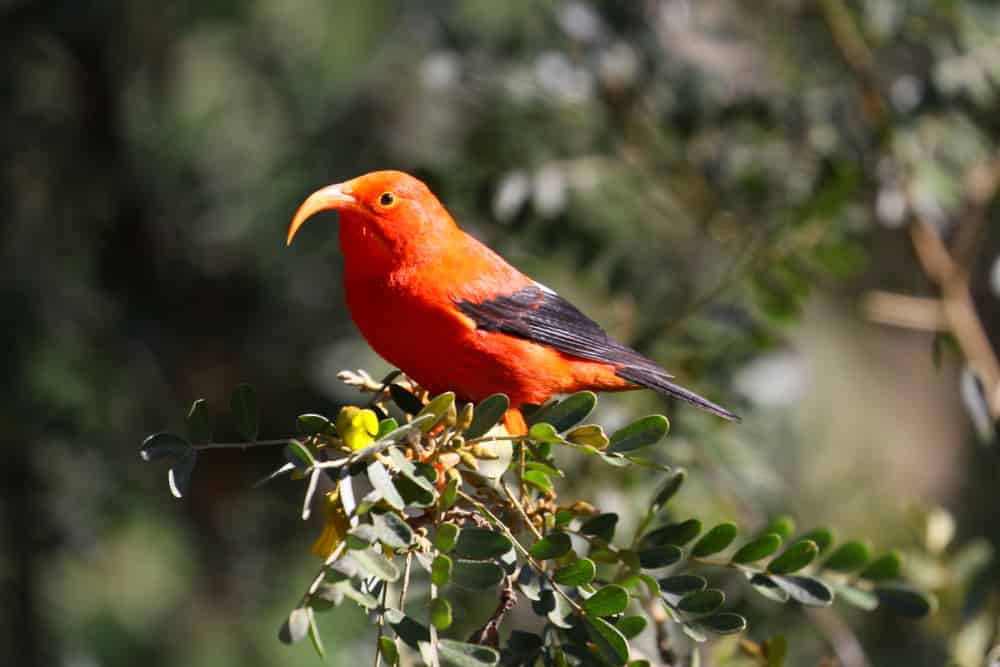
Many honeycreeper species are specialized nectar feeders, such as the I'iwi (scarlet honeycreeper), Apapane, and the critically endangered Akohekohe. The I'iwi, with its striking red plumage and long, decurved orange bill, is particularly reminiscent of a hummingbird in its feeding style, probing deep into tubular flowers like those of the hāhā (lobed-leaf Clermontia) and ohia lehua (Metrosideros polymorpha) for nectar. These birds are crucial pollinators for many native Hawaiian plants.
However, the Hawaiian honeycreepers face severe threats from habitat loss, introduced predators, and avian diseases like avian malaria, carried by introduced mosquitoes. Many species are critically endangered, and some have already gone extinct. Conservation efforts are intense, particularly in high-elevation forest refugia on islands like Maui, Kauai, and the Big Island, where temperatures are too cool for mosquitoes to thrive.
Other Avian Residents and Pollinators
Beyond the honeycreepers, Hawaii is also home to other fascinating bird species that contribute to its ecological tapestry. While not direct hummingbird analogues, some introduced species do engage in nectar feeding. For instance, the Red-billed Leiothrix and Japanese White-eye, both introduced songbirds, are frequently seen foraging in flowering plants and gardens, though they primarily feed on insects and fruits.
Insects also play a vital role in pollination in Hawaii. Native bees (like Hylaeus or Yellow-faced bees), butterflies, moths, and other invertebrates are crucial for the reproduction of many native plants, filling niches that might be occupied by hummingbirds in other parts of the world. The interactions between Hawaii’s endemic insects and plants are complex and represent another layer of its unique evolutionary story.

Rare Sightings and Misidentifications
While native hummingbirds are absent, it’s not unheard of for visitors or residents to report seeing something that looks like one. These instances almost invariably fall into one of two categories: extremely rare vagrants or, more commonly, misidentification of other fast-flying creatures.
The Accidental Visitor Phenomenon
On exceptionally rare occasions, a highly disoriented hummingbird could potentially be blown off course by a severe storm system and make it to Hawaii. These are incredibly unusual occurrences, typically involving strong winds carrying birds thousands of miles from their normal range. If such a vagrant were to arrive, it would almost certainly be exhausted, likely unable to find suitable food sources or mates, and would not establish a breeding population. These are individual, isolated incidents, not indicative of a resident or even transient hummingbird population. For a traveler, the chance of encountering such an accidental visitor is infinitesimally small – akin to winning a lottery.
Commonly Mistaken Species
More frequently, what people think is a hummingbird turns out to be something else entirely. Hawaii is home to several species that can mimic the rapid, hovering flight and nectar-feeding behavior of hummingbirds, especially when viewed quickly or from a distance.
- Hummingbird Moths (Hawk Moths): These are by far the most common culprits for hummingbird misidentification. Several species of hawk moths, particularly those in the
Sphingidaefamily, are large, stout-bodied moths with long proboscises that they extend to feed on nectar while hovering in front of flowers. Their rapid wing beats produce a humming sound, and their flight patterns are remarkably similar to those of hummingbirds, especially in low light conditions. They are active during the day and twilight hours and are frequently seen in gardens and forested areas across all the main Hawaiian Islands. - Other Fast-Flying Birds: Less common but still possible, some fast-flying insectivorous birds, like certain swift species (though not native to Hawaii themselves, vagrants are possible) or even particularly agile honeycreepers like the
I'iwimentioned earlier, might be mistaken, especially when they are actively foraging in dense foliage. However, their size and typical flight patterns are generally distinct upon closer inspection.
When visiting [Hawaii](https://lifeoutofthebox.com/hawaii], if you spot a “hummingbird,” take a moment for a closer look – chances are you’re witnessing the fascinating feeding habits of a native Hawaiian hawk moth, a truly remarkable creature in its own right.
Appreciating Hawaii’s Unique Biodiversity
The absence of hummingbirds in Hawaii doesn’t diminish its allure as a premier destination for nature lovers. In fact, it underscores the islands’ unparalleled ecological uniqueness and the incredible adaptive stories of the species that do call it home. Understanding this helps travelers appreciate the truly special environment they are experiencing.
Protecting Fragile Endemic Species
Hawaii’s endemic species, particularly the Hawaiian honeycreepers, are among the most imperiled birds on Earth. Factors such as climate change, invasive species (like rats, mongooses, and mosquitoes carrying avian malaria), and habitat destruction have pushed many to the brink of extinction. For travelers, appreciating Hawaii’s biodiversity means more than just looking for particular animals; it involves understanding the delicate balance of this unique ecosystem and supporting conservation efforts.
Visitors can contribute by practicing responsible tourism: staying on marked trails, not introducing foreign plants or animals, supporting local conservation organizations, and being mindful of their environmental footprint. Learning about the native flora and fauna before or during your trip enhances the experience, allowing for a deeper connection with the islands’ natural heritage.
Best Places for Birdwatching in Hawaii
For those keen on birdwatching and eager to witness Hawaii’s true avian gems, focusing on high-elevation native forests is key. These areas often serve as critical refugia for endangered honeycreepers, where cooler temperatures limit the spread of avian malaria.
- Maui: The
Hosmer GroveinHaleakala National Parkand theWaikamoi Preserve(guided tours often available) are prime locations. Here, you might spot species like theApapane,I'iwi, and if you’re very lucky, theAkohekohe. - Kauai: The
Alakai Wilderness Preserveand trails withinKoke'e State Parkoffer opportunities to see Kauai’s unique forest birds, including theAnianiauandKauai Amakihi. - Big Island: The
Hakalanu Forest National Wildlife Refugeand parts ofHawaii Volcanoes National Parkare excellent for birding, offering chances to seeApapane,I'iwi, andHawaii Amakihi. ThePalilais another critically endangered honeycreeper found in the high-elevation dry forests ofMauna Kea. - Oahu: While much of Oahu’s native forest bird habitat is gone, some introduced species are common, and remnants of native bird populations exist in the
WaianaeandKoolaumountain ranges.
Equipping yourself with a good pair of binoculars and a field guide to Hawaiian birds will significantly enhance your birdwatching experience, allowing you to identify the truly unique and often vibrant birds that grace the Hawaiian skies and forests.
Planning Your Wildlife Exploration in Hawaii
While the elusive hummingbird won’t be on your birdwatching checklist for Hawaii, the islands offer an unparalleled opportunity to witness evolutionary wonders found nowhere else on Earth. Embrace the unique, the endemic, and the truly Hawaiian. Your travel experience will be richer for understanding what makes this destination so ecologically distinct.
Focus on discovering the dazzling array of Hawaiian honeycreepers, marvel at the mimicry of hawk moths, and dive into the vibrant marine life that surrounds the islands. Whether you’re hiking through a cloud forest on Maui, exploring the volcanic landscapes of the Big Island, or enjoying the lush canyons of Kauai, Hawaii’s natural environment promises breathtaking discoveries. It’s a place where evolution has played out in magnificent isolation, creating a world of its own, waiting to be respectfully explored and deeply appreciated by every thoughtful traveler.
LifeOutOfTheBox is a participant in the Amazon Services LLC Associates Program, an affiliate advertising program designed to provide a means for sites to earn advertising fees by advertising and linking to Amazon.com. Amazon, the Amazon logo, AmazonSupply, and the AmazonSupply logo are trademarks of Amazon.com, Inc. or its affiliates. As an Amazon Associate we earn affiliate commissions from qualifying purchases.