
When planning a journey to the middle of the Pacific Ocean, one of the first questions travelers ask is: what’s the weather like in Hawaii? Known globally as a quintessential tropical paradise, the archipelago of Hawaii offers a climate that is as diverse as its landscape. While many perceive it as a land of perpetual summer, the reality is a fascinating tapestry of microclimates, trade winds, and seasonal shifts that can significantly influence your travel experience. Understanding these patterns is essential for any traveler looking to make the most of their visit to the United States’ 50th state.
Understanding Hawaii’s Two Seasons: Summer and Winter
Unlike the four-season cycle found in much of North America, Hawaii essentially experiences only two seasons: summer (known in Hawaiian as Kau) and winter (Hooilo). Because the islands are located in the tropical zone, the temperature variation between these seasons is remarkably slight, yet the atmospheric changes are distinct enough to affect everything from surf swells to hiking conditions.
The Dry Season (Kau): April to October
The summer season in Hawaii typically begins in April and stretches through October. During this period, the weather is characterized by consistent sunshine and warm temperatures. Average daytime highs at sea level usually hover around 85°F (29°C), while nighttime lows rarely dip below 75°F (24°C). This is the peak time for sun-seekers and those looking to enjoy the calm waters of the South Shore of the islands. The trade winds, which blow from the northeast, are most reliable during these months, providing a natural air conditioning that keeps the humidity manageable and the atmosphere refreshing.
The Rainy Season (Hooilo): November to March
Winter in the islands brings a slight cooling and an increase in precipitation. From November to March, the average daytime temperature drops to a comfortable 78°F (25°C). While “winter” might sound daunting to those from colder climates, it remains incredibly mild. The primary difference is the frequency of rain. Most of Hawaii’s rainfall occurs during these months, often in short, intense bursts followed by bright rainbows. It is also the season of the “Kona storms,” which bring rain to the typically dry leeward sides of the islands and can occasionally cause more widespread overcast conditions.
Regional Weather Variations Across the Major Islands
While the seasonal cycle provides a general framework, the local geography of each island creates unique weather patterns. The high volcanic mountains act as barriers to the prevailing trade winds, creating a “windward” side (northeast) that is lush and rainy, and a “leeward” side (southwest) that is sunny and arid.
Oahu: The Gathering Place
Oahu is home to the state capital, Honolulu, and the world-famous Waikiki Beach. The weather here is famously reliable. In Honolulu, visitors can expect sunny skies nearly 270 days a year. However, if you travel just a few miles inland toward the Nuuanu Pali, you might encounter misty rains and significantly cooler air. The North Shore of Oahu undergoes a dramatic transformation; in the summer, the waters are lake-still, while winter brings massive swells that attract professional surfers from around the globe.
Maui: The Valley Isle
The weather on Maui is defined by its dramatic topography. The western side, including Lahaina and Ka’anapali, is generally dry and hot. Conversely, the Road to Hana on the eastern coast winds through a tropical rainforest where rain is a daily occurrence. One of the most unique weather experiences on Maui is found at the summit of Haleakala National Park. At over 10,000 feet, the temperature at the summit can be 30 degrees colder than at the beach, often dropping below freezing before sunrise.
Kauai: The Garden Isle
Kauai is the oldest and lushest of the main islands. It is also home to Mount Waialeale, frequently cited as one of the wettest spots on Earth. This abundance of rain is what gives Kauai its vibrant emerald hue and spectacular waterfalls. While the North Shore near Hanalei Bay sees frequent showers, the South Shore near Poipu Beach remains much sunnier and drier, making it a popular choice for those wanting to avoid the rain during the winter months.
Hawaii Island: The Big Island
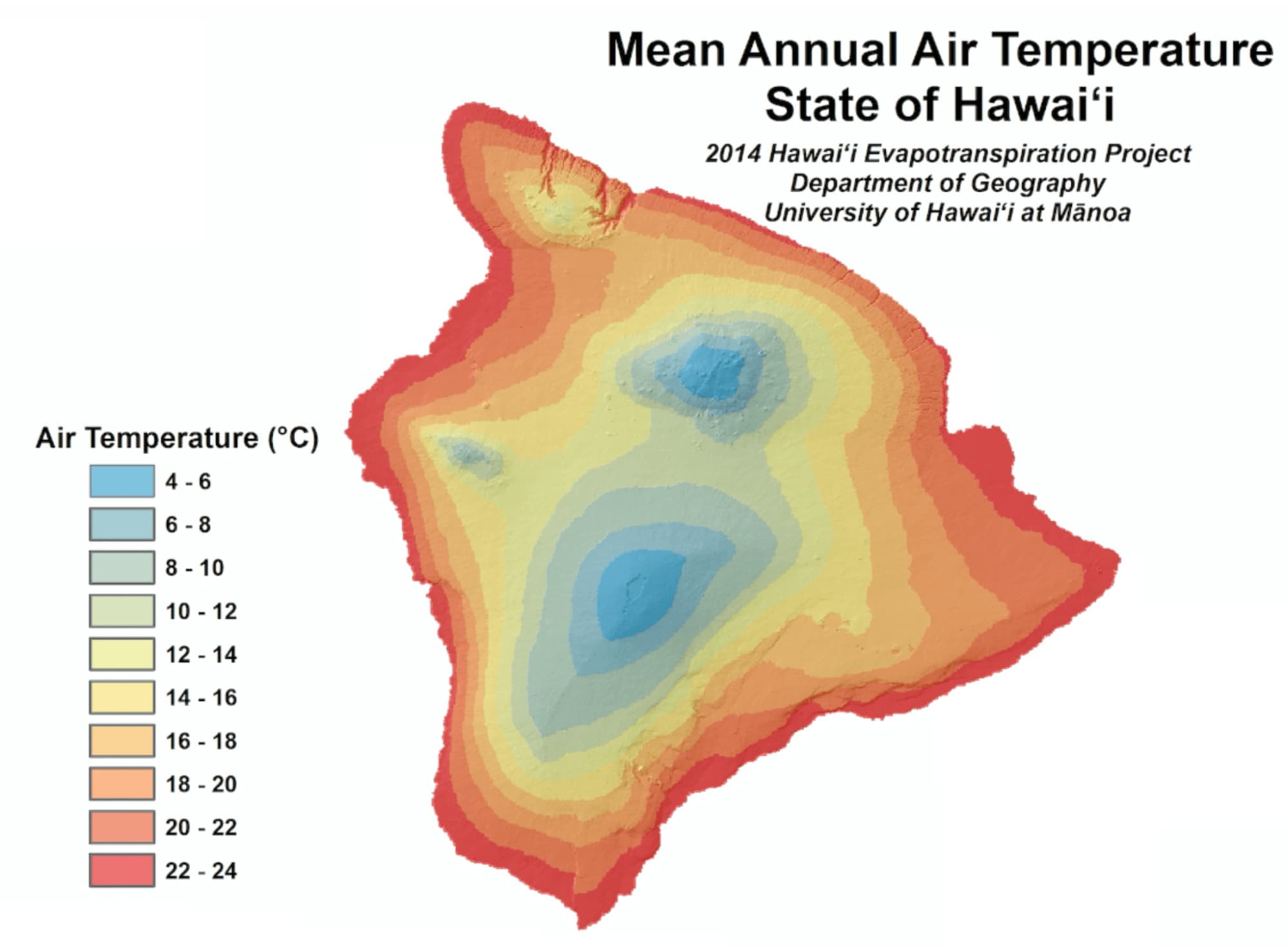
Hawaii Island, commonly referred to as the Big Island, contains 4 out of the 5 major climate zones. Within a single day, a traveler can experience tropical rainforests in Hilo, volcanic deserts in Kau, and even subarctic conditions on the peaks of Mauna Kea. Kona on the west coast is known for its perfect, sunny weather and calm waters, while Hilo on the east coast is one of the wettest cities in the United States.

Microclimates and Environmental Factors
The diversity of Hawaii’s weather is largely driven by its unique environmental factors. These elements create microclimates that can change drastically within just a few miles of travel.
Trade Winds and Windward vs. Leeward Sides
The most influential factor in Hawaiian weather is the trade winds. These winds blow from the northeast and carry moisture from the Pacific Ocean. When this moist air hits the mountains, it rises, cools, and turns into rain. This results in the “windward” side of the islands being wet and green. Once the air passes over the peaks, it is dry, leading to the “leeward” side being sunny and desert-like. For travelers, this means if it is raining where you are, a 20-minute drive to the other side of the island will likely find you under clear blue skies.
Elevation Changes and Volcanic Activity
Elevation is a critical component of the travel experience in Hawaii. For every 1,000 feet of gain, the temperature drops by about 3.5 degrees Fahrenheit. This is why visiting Hawaii Volcanoes National Park or the Waimea highlands requires a light jacket, even if it was sweltering at the beach that morning. Additionally, volcanic activity on Hawaii Island can create “vog” (volcanic smog). While Kilauea activity varies, vog can occasionally affect air clarity and quality on the Kona coast depending on the wind direction.
Best Times to Visit for Specific Activities
The “best” weather in Hawaii often depends on what you plan to do during your stay. Different activities are favored by different seasonal conditions.
Surfing and Water Sports
For world-class surfing, the winter months (November to February) are unparalleled. This is when the North Shore of Oahu and the northern coasts of Maui experience massive swells generated by storms in the North Pacific. If you are a beginner or looking for calm waters for snorkeling and swimming, the summer months offer gentle waves, especially on the southern shores of the islands.
Whale Watching and Wildlife
The weather and the seasons dictate the migration patterns of Hawaii’s most famous seasonal residents: the Humpback whales. These majestic creatures travel from Alaska to the warm, shallow waters of the Auau Channel between Maui, Lanai, and Molokai to mate and give birth. The best weather for whale watching is between January and March, when the whales are most active, though the season begins in December and lasts through May.
Hiking and Terrestrial Exploration
For those planning to explore the Kalalau Trail on Kauai or trek through the Iao Valley State Monument on Maui, the shoulder seasons (April, May, September, and October) offer the best balance. During these months, the trails are generally drier than in mid-winter, and the temperatures are not as intensely hot as in the peak of summer. It is always wise to check the local forecast before heading out, as mountain weather can change rapidly.

Travel Preparation: What to Pack for Hawaiian Weather
Given the variations in climate, packing for Hawaii requires a bit more thought than just tossing a swimsuit and flip-flops into a bag. A professional traveler knows that layering is the key to comfort in the islands.
- Lightweight Clothing: Breathable fabrics like cotton and linen are essential for the humidity of Honolulu and Waikiki Beach.
- Rain Gear: Even in the summer, a light, packable rain jacket is useful for visits to the windward side or for unexpected tropical showers.
- Warm Layers: If your itinerary includes Haleakala National Park or the summit of Mauna Kea, you will need a fleece or a light down jacket, long pants, and closed-toe shoes.
- Sun Protection: The sun in Hawaii is incredibly strong due to its proximity to the equator. High-SPF, reef-safe sunscreen, a wide-brimmed hat, and UV-protective sunglasses are non-negotiable.
- Footwear: While sandals are the standard, bring sturdy hiking shoes if you plan to visit landmarks like Diamond Head or explore the rugged terrain of Hawaii Volcanoes National Park.
In conclusion, the weather in Hawaii is remarkably consistent yet delightfully complex. Whether you are basking in the sun at Kaanapali Beach or watching the clouds roll over the Pali Lookout, the climate is a fundamental part of the islands’ magic. By understanding the seasons, microclimates, and regional variations, you can plan a trip that perfectly aligns with your desired activities and ensures a comfortable, unforgettable Hawaiian adventure. Regardless of when you choose to visit, the “Aloha Spirit” remains constant, shining through the occasional rain shower and warming every traveler who steps onto these beautiful shores.
LifeOutOfTheBox is a participant in the Amazon Services LLC Associates Program, an affiliate advertising program designed to provide a means for sites to earn advertising fees by advertising and linking to Amazon.com. Amazon, the Amazon logo, AmazonSupply, and the AmazonSupply logo are trademarks of Amazon.com, Inc. or its affiliates. As an Amazon Associate we earn affiliate commissions from qualifying purchases.