
For many travelers landing in Hawaii, the expectation of a tropical paradise includes lush rainforests, cascading waterfalls, and the vibrant plumage of exotic birds. One of the most frequent questions asked by visitors exploring the Islands is whether parrots are part of the local scenery. The answer is a fascinating blend of natural history and modern environmental dynamics. While you will certainly see and hear parrots across the archipelago, none of the parrot species currently found in the wild are native to the United States or the Pacific Ocean islands.
Understanding the presence of these colorful birds is a vital part of engaging with the local tourism landscape. These birds have become a staple of the urban and suburban experience in places like Honolulu and Lihue. For those interested in avian life, the sight of a flock of parakeets soaring over a beach is a highlight of their trip, yet it also serves as a starting point for learning about the delicate balance of the Hawaiian Islands ecosystem.
The Vibrant Reality of Hawaii’s Avian Life
When you walk through the streets of Waikiki or hike the trails near Diamond Head State Monument, the screeching calls of parrots are often the first thing you notice. These birds are highly visible and vocal, making them a common feature of the Oahu tourist experience. However, to understand their presence, one must look back at the history of the pet trade and accidental introductions.
A History of Escaped Species
The parrots found in the wild today are descendants of escaped pets or birds intentionally released decades ago. Because the climate of Hawaii is so similar to the tropical regions of South America, Africa, and Asia, these birds found it remarkably easy to adapt. Without natural predators and with an abundance of fruiting trees, the populations began to swell. For the casual tourist, this means that a morning coffee on a balcony in Maui might be accompanied by the bright green flash of a passing parakeet.
Impact on the Tourism Experience
From a tourism perspective, parrots add an element of “exotic” charm that many visitors expect from a tropical destination. They are photogenic, energetic, and provide a sense of wonder for families and wildlife enthusiasts. However, the local community often views them through a more complex lens. In the Tourism sector, guides often use the presence of these birds to educate visitors on the difference between indigenous species and introduced ones, highlighting the importance of protecting the unique biodiversity of Polynesia.
Where to Spot Parrots across the Islands
If your goal is to see these birds in their naturalized habitat, certain locations are legendary for parrot sightings. Each island offers a slightly different experience, with different species dominating the local canopy.
Oahu: The Urban Parrot Hub
Honolulu is perhaps the best place to witness large flocks. Kapiolani Park, located at the end of Waikiki Beach, is a prime spot. As the sun begins to set, hundreds of birds return to the large trees within the park. This area, nestled between the Honolulu Zoo and the slopes of Leahi, offers a spectacular auditory and visual display. Another excellent location is the Foster Botanical Garden, where the diversity of tropical flora provides a perfect buffet for the resident avian populations.
Kauai: The Garden Isle’s Green Flocks
On Kauai, the situation is slightly different. The island is famous for its massive population of Rose-ringed Parakeets. Visitors staying near Poipu or exploring the Kaua’i Lagoons will likely see these birds in the early morning. They are particularly fond of the fruit trees found in residential areas and around the National Tropical Botanical Garden. While they are beautiful to look at, they are also a major point of discussion in local conservation circles due to their impact on the island’s agriculture.
Maui and the Big Island
On Maui, sightings are common in Kihei and Lahaina, though the fires have recently altered some of their traditional roosting spots. On the Big Island, the parrot population is more scattered, but birdwatchers often find them in the lush, tropical areas of Hilo and along the Hamakua Coast. The cooler elevations of the Kona coffee belt also host several species that enjoy the temperate climate and abundant shade.
Common Parrot Species Found in the Wild

Knowing which species you are looking at can greatly enhance your travel experience. While there are dozens of escaped species that might be seen occasionally, a few have established permanent, self-sustaining populations.
The Rose-ringed Parakeet
The Rose-ringed Parakeet is the most widespread species in Hawaii. Originally from Africa and India, these birds are bright lime-green with a distinct ring around the neck of the males. They are highly social and are usually seen in large, noisy groups. For tourists, they are the “typical” parrot of the islands, often seen darting between palm trees at high speeds.
Red-masked Parakeet (Cherry-headed Conure)
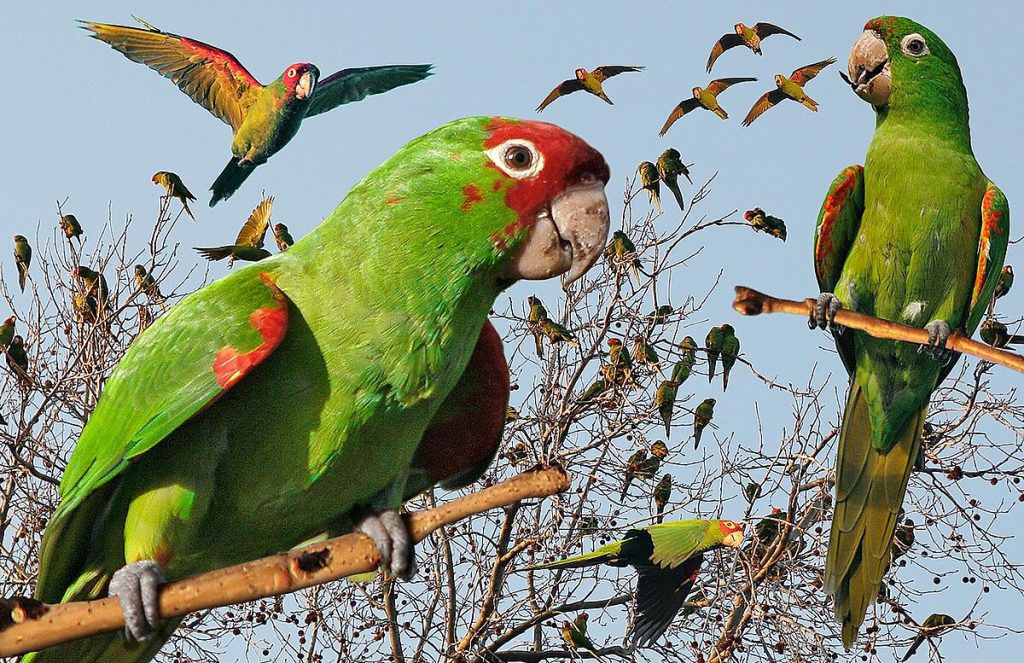
If you find yourself in the hills of Oahu or near the Tantalus Lookout, you might encounter the Red-masked Parakeet. These birds are famous for their bright red faces and green bodies. They were made famous by the documentary “The Wild Parrots of Telegraph Hill,” and their cousins in Hawaii are just as charismatic. They are often found in the higher elevations of Manoa Valley, where the frequent rain keeps the vegetation lush and full of seeds.
Mitred Parakeet and Red-crowned Amazon
The Mitred Parakeet is another common sight, often confused with the Red-masked variety. Additionally, the Red-crowned Amazon, a stockier parrot with a short tail, is frequently spotted on Oahu. These birds are significantly larger and have a deeper, more resonant call. Seeing an Amazon Parrot in the wild is a treat for many visitors, as they are often associated with the classic imagery of South American jungles.
Ethical Wildlife Tourism and Conservation
As a visitor, it is important to engage with Hawaii wildlife responsibly. While parrots are beautiful, they represent a challenge for the native ecosystem. The “Tourism” experience in Hawaii is increasingly focused on “Malama” (to care for), and understanding the parrot’s role is part of that journey.
The Threat to Native Species
The primary concern regarding parrots is their competition with native Hawaiian birds, such as the I’iwi or the Apapane. These native honeycreepers are already under threat from habitat loss and avian malaria. Parrots can compete for nesting sites and food sources. Furthermore, they are known to damage the fruit crops that are vital to the local economy, particularly on Kauai. When you go on a bird-watching tour, many guides will take the opportunity to explain these ecological nuances, providing a deeper, more insightful look at the environment than a simple photo op.
Responsible Viewing Tips
When seeking out parrots, tourists are encouraged to follow ethical guidelines.
- Do Not Feed the Birds: Feeding wild parrots can make them overly dependent on humans and can lead to the spread of diseases. It also encourages them to congregate in areas where they might cause more damage to native plants.
- Keep Your Distance: Use binoculars or a long camera lens to get a close look. Approaching a nesting site can cause stress to the birds and disrupt their natural behavior.
- Support Local Sanctuaries: If you want a guaranteed look at exotic birds while supporting a good cause, visit places like the Pacific Bird Conservation or other local wildlife centers. This ensures that your tourism dollars are going toward the protection of all avian life in the islands.
Iconic Avian Landmarks and Activity Recommendations
For travelers who want to center their trip around the natural beauty of Hawaii, there are several activities and landmarks that should be on the itinerary.
Botanical Gardens as Sanctuaries
The botanical gardens across the islands serve as unintentional sanctuaries for these birds. A visit to the Wahiawa Botanical Garden or the McBryde Garden on Kauai offers a peaceful environment to observe parrots in a setting that mimics their natural habitats in South America or Asia. These locations are also perfect for photography, as the birds are often distracted by the abundance of tropical flowers and fruits.
Guided Bird-Watching Tours
For a professional experience, consider booking a guided tour through the Hawaii Nature Center. Expert guides can help you distinguish between the various parakeet species and might even help you spot some of the rarer native birds in the higher elevations of the Ko’olau Range. This is a fantastic activity for families, as it combines outdoor adventure with an educational component about the natural history of the Pacific.

Morning and Evening Roosts
The best times for parrot watching are shortly after sunrise and just before sunset. On Oahu, taking a stroll near the Ala Wai Canal at dawn will reward you with the sight of parrots leaving their roosts for the day. Similarly, the area around the Polynesian Cultural Center on the North Shore often sees significant parrot activity in the late afternoon.
In conclusion, while parrots are not native to Hawaii, they have become an inseparable part of the modern tourism experience. They add a splash of color and a sense of wild energy to the urban landscapes of Honolulu and the rural charm of the Garden Isle. By approaching these birds with curiosity and respect for the local ecosystem, visitors can enjoy a unique aspect of Hawaiian wildlife while supporting the ongoing efforts to preserve the islands’ true native treasures. Whether you are a dedicated birdwatcher or a casual tourist, the sight of a green parakeet against the backdrop of a Hawaiian sunset is a memory that will surely last a lifetime.
LifeOutOfTheBox is a participant in the Amazon Services LLC Associates Program, an affiliate advertising program designed to provide a means for sites to earn advertising fees by advertising and linking to Amazon.com. Amazon, the Amazon logo, AmazonSupply, and the AmazonSupply logo are trademarks of Amazon.com, Inc. or its affiliates. As an Amazon Associate we earn affiliate commissions from qualifying purchases.