
Yes, unequivocally. The Common Raven (Corvus corax) is not merely present in California; it is a ubiquitous and iconic natural feature, deeply woven into the state’s diverse landscapes, from its sun-baked deserts to its towering mountain ranges and bustling urban centers. These intelligent and adaptable birds are an enduring part of California’s natural heritage, contributing significantly to its ecological tapestry and offering a fascinating spectacle for anyone keen to observe the state’s wild inhabitants. Far from being a mere footnote, the raven’s presence is a testament to the richness and resilience of California’s natural environment, making them as much a living landmark as any redwood forest or desert expanse.

The Indisputable Presence of California’s Iconic Corvid
The presence of ravens in California is undeniable, with the Common Raven being one of the most widely distributed birds in the state. These magnificent creatures embody a unique blend of wilderness and adaptability, thriving across an astonishing array of environments. Historically, ravens have held a significant place in the folklore and mythologies of various indigenous Californian tribes, often revered for their intelligence, cunning, and mysterious nature. Their deep-throated croaks and striking aerial displays have been a constant backdrop to the state’s natural history, providing a continuous link to its wilder past.
In many ways, the Common Raven serves as a living symbol of California’s’s robust natural landscape. Unlike many species that face habitat fragmentation or decline, ravens have shown remarkable resilience and even expansion into new areas, including semi-urban environments. Their ability to adapt to human-modified landscapes, coupled with their inherent wildness, makes them a compelling subject for naturalists and casual observers alike. Encountering a raven in California is not a rare occurrence; it is an expected part of experiencing the state’s dynamic natural character, a constant reminder of the wild intelligence that persists even near human habitation.
Distinguishing Ravens from Crows in the Golden State
While both ravens and crows belong to the Corvidae family and are frequently observed across California, they are distinct species with discernible differences. Understanding these distinctions enhances the appreciation of each bird as a unique natural element within the Californian landscape.
Size and Build
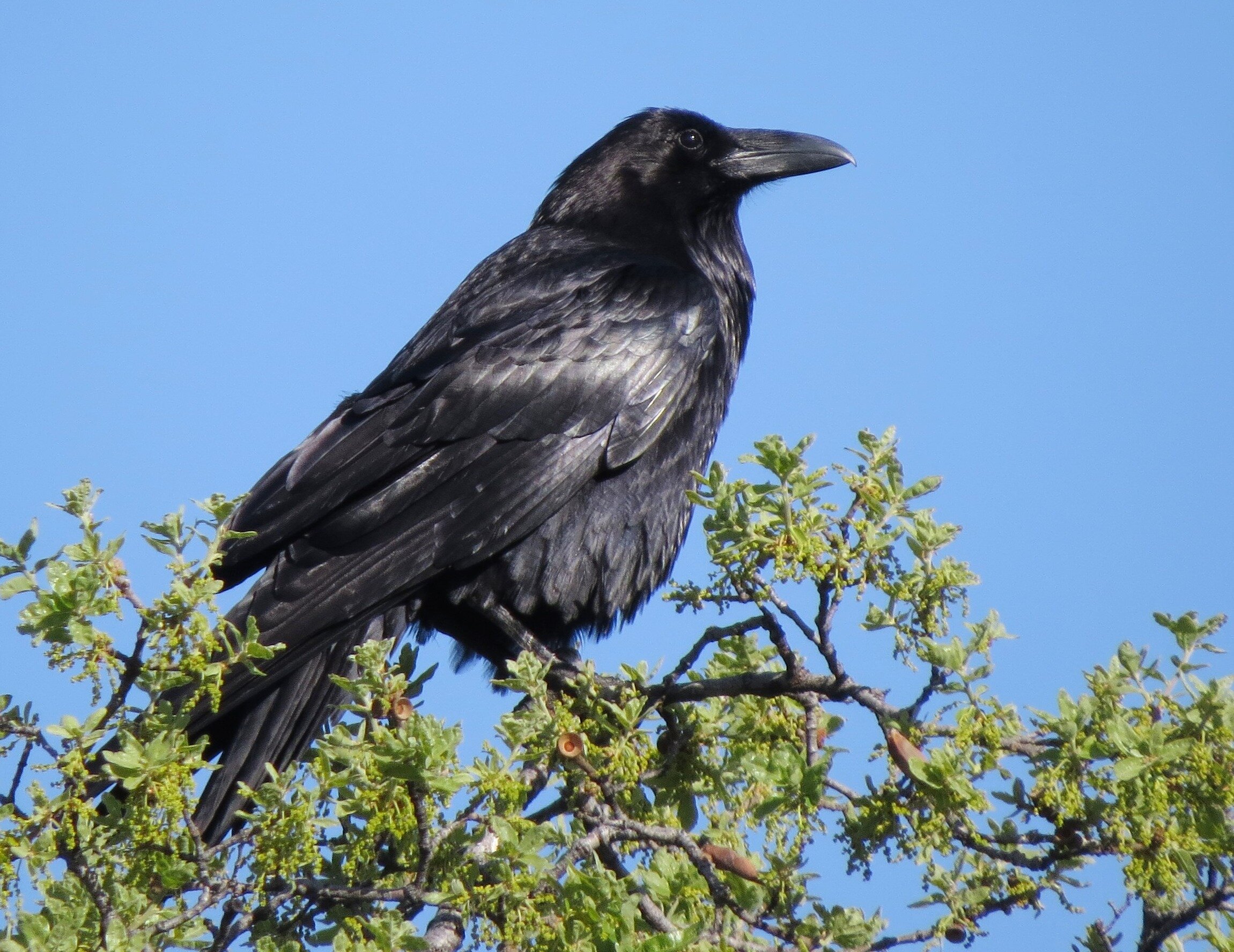
The most immediate difference is size. The Common Raven is significantly larger than its crow counterparts, such as the American Crow or the Western Crow which are also found in the state. Ravens boast a wingspan of up to 4 feet and can weigh more than twice as much as a crow. Their bodies are more robust, and their beaks are noticeably thicker and more powerful. When seen side-by-side, a raven’s larger head and shaggier throat feathers are often apparent, giving it a more formidable appearance.
Flight Patterns and Tail Shape
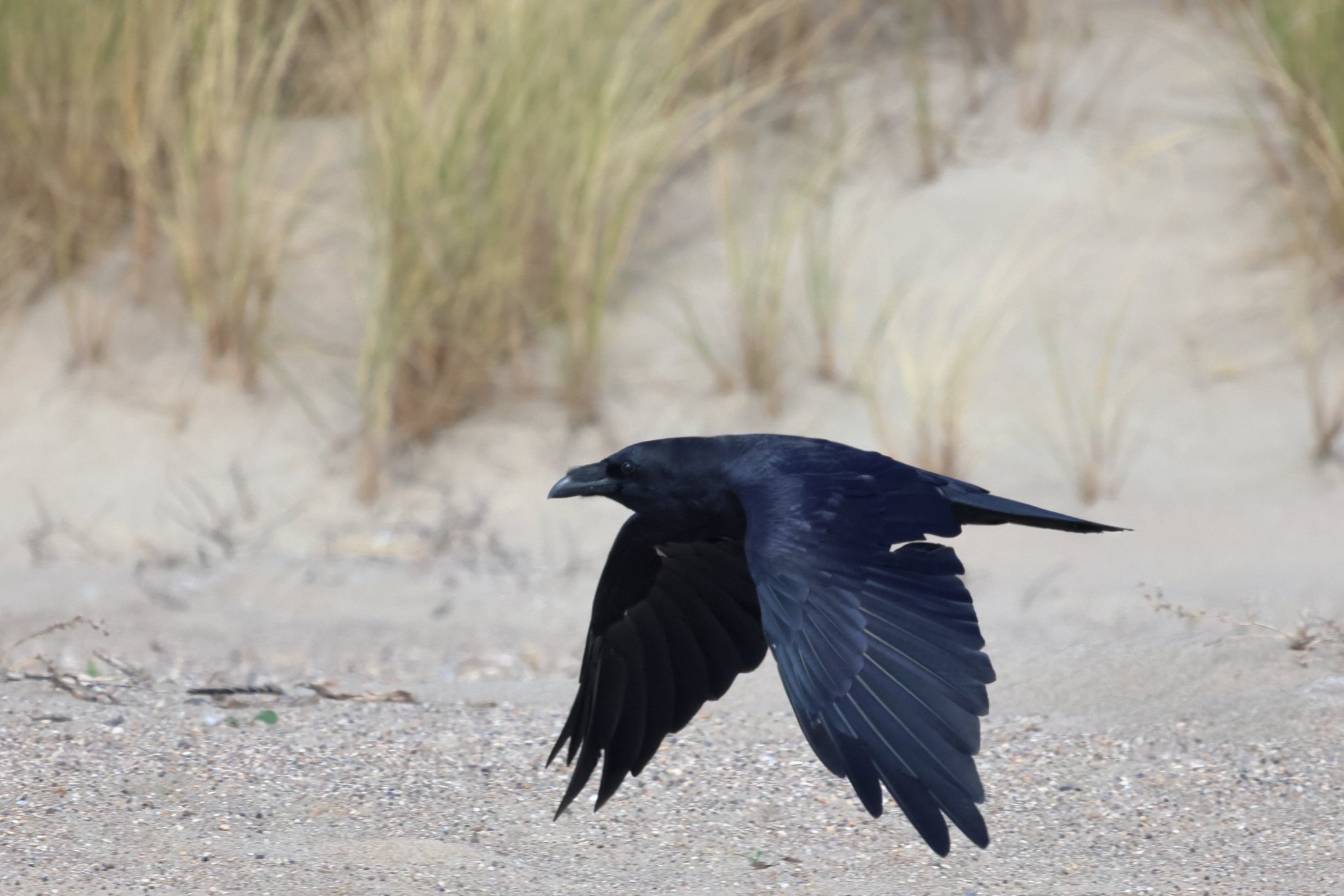
In flight, ravens exhibit a more graceful and soaring style, often gliding for extended periods on thermal currents, reminiscent of raptors. Crows, in contrast, typically have a more direct, flapping flight. A key visual identifier in flight is the tail shape: a raven’s tail is wedge-shaped or diamond-shaped, clearly visible when spread, whereas a crow’s tail is fan-shaped or blunt. This subtle but consistent difference allows for identification even at a distance.
Vocalizations
The vocalizations of ravens are another distinguishing feature. While crows are known for their characteristic “caw-caw” calls, ravens possess a much broader and more complex repertoire of sounds. Their calls include deep, resonant croaks, gurgles, raps, and even bell-like tones. They are highly vocal and can mimic other birds and even human speech, showcasing their remarkable intelligence. Hearing a raven’s distinct, throaty croak echoing through a canyon or across a desert expanse is an auditory landmark of California’s’s wild places.
Habitat Preferences
While both species are adaptable, there are subtle differences in their preferred habitats. Crows often thrive in more heavily human-populated areas, including suburban neighborhoods and agricultural lands. Ravens, though increasingly seen in urban peripheries, traditionally favor more expansive, wilder landscapes such as deserts, mountain ranges, and dense forests. This distinction, however, is not absolute, and overlap can occur, particularly in transitional zones where natural areas meet human development.
Diverse Habitats: Where Ravens Roam Across California
The adaptability of the Common Raven is one of its most defining characteristics, allowing it to occupy nearly every ecological niche within California. This widespread distribution makes them a constant natural landmark, whether one is traversing the parched desert or ascending a snow-capped peak.
Deserts and Arid Regions
Ravens are quintessential residents of California’s vast desert landscapes, including the Mojave Desert, the Colorado Desert, and the iconic Death Valley National Park. Here, their dark plumage stands out against the muted tones of the sand and rock, and their soaring silhouettes are a common sight against the intense blue sky. They thrive in these harsh environments by being opportunistic foragers, preying on small reptiles, insects, and scavenging carrion. Their intelligence allows them to locate scarce resources, often observing other predators or human activity for potential food sources. In these desolate yet beautiful expanses, the raven is often one of the most prominent forms of life, a sentinel of survival.
Mountains and Forests
Moving into the state’s mountainous and forested regions, such as the Sierra Nevada, the Cascade Range, and the coastal redwood forests like Redwood National Park, ravens continue to dominate the avian landscape. They are commonly seen soaring over high alpine meadows in Yosemite National Park, perched on craggy cliffs, or nesting in the upper reaches of tall conifer trees. In these areas, they feed on everything from berries and seeds to eggs and small mammals. The sheer scale and ruggedness of these natural landmarks provide ample nesting sites and foraging opportunities, making them prime raven habitat. Their presence adds to the grandeur and wildness of these iconic natural treasures.
Coastal Areas and Urban Edges
Even along California’s extensive Pacific Coast, from the misty shores of Point Reyes National Seashore to the cliffs overlooking Big Sur, ravens are a familiar sight. They patrol beaches for carrion, scavenge around tide pools, and nest on sea stacks or cliffs. Furthermore, as human populations have expanded, ravens have demonstrated an increasing ability to adapt to urban and semi-urban environments. While traditionally associated with wilderness, they are now routinely observed in the outskirts of major cities like Los Angeles and San Francisco, even nesting on communication towers and buildings. This urban adaptability highlights their resilience and reinforces their status as an integral part of California’s’s dynamic natural and built environment.
The Ecological Tapestry: Ravens as Key Natural Elements
Ravens are more than just inhabitants of California’s’s diverse natural landmarks; they are active participants in its ecological processes, shaping the environment through their behaviors and interactions. Their role is a vital component of the state’s natural systems.
Scavengers and Opportunistic Foragers
One of the most significant ecological roles of ravens is that of a scavenger. By consuming carrion, they help clean up the environment and prevent the spread of disease, essentially acting as nature’s clean-up crew. This is particularly crucial in vast wilderness areas where animal deaths are common. Their keen eyesight and intelligence allow them to quickly locate carcasses, often guiding other scavengers to the scene. This scavenging behavior is not merely survival; it is a fundamental process that maintains the health and balance of ecosystems across the Central Valley and beyond.
Predators and Seed Dispersers
Beyond scavenging, ravens are also effective predators. They consume a variety of small animals, including rodents, insects, bird eggs, and nestlings, helping to regulate populations. While sometimes controversial, this predatory role is a natural part of food webs. Interestingly, ravens also contribute to seed dispersal. By consuming fruits and berries, and later expelling the seeds, they inadvertently aid in the propagation of various plant species, particularly in less disturbed natural areas. This dual role showcases their complex interactions within the environment.
Indicators of Environmental Health
The widespread presence and adaptability of ravens also make them informal indicators of environmental health. Their ability to thrive in varied conditions suggests a certain resilience in the broader ecosystem, though localized changes in their populations can sometimes signal deeper environmental shifts. Their role as an apex avian scavenger means they are exposed to environmental toxins, and their health can reflect the health of the broader food chain. Observing ravens in California thus offers a window into the ongoing vitality of its natural landscapes.
Experiencing the Raven: A Living Natural Landmark
For visitors and residents alike, observing the Common Raven is an enriching experience that deepens one’s connection to California’s’s natural character. They are a continuously evolving, dynamic landmark, offering insights into the state’s intelligence and adaptability.
To truly appreciate ravens as a living natural landmark, consider visiting some of California’s’s more expansive wilderness areas. In Joshua Tree National Park, for instance, their calls echo among the unique rock formations and ancient trees, providing a primal soundtrack to the desert. In the high country of the Sierra Nevada, a raven soaring effortlessly above a granite peak feels like an ancient spirit of the mountains. Even in more accessible natural parks near urban centers, such as Griffith Park in Los Angeles, their intelligent gaze and purposeful movements can be observed.
Watching a raven forage, interact with its mate, or engage in playful acrobatics in the sky reveals a creature of profound intelligence and social complexity. Their problem-solving abilities, tool use, and memory are renowned in the animal kingdom. Engaging with these behaviors offers a unique perspective on the intricate workings of nature, reminding us that even common species hold extraordinary secrets. The constant, watchful presence of the raven across California serves as a persistent testament to the state’s enduring wildness and its rich, living natural heritage. They are not merely birds; they are an integral, compelling, and ever-present feature of the Californian experience.
LifeOutOfTheBox is a participant in the Amazon Services LLC Associates Program, an affiliate advertising program designed to provide a means for sites to earn advertising fees by advertising and linking to Amazon.com. Amazon, the Amazon logo, AmazonSupply, and the AmazonSupply logo are trademarks of Amazon.com, Inc. or its affiliates. As an Amazon Associate we earn affiliate commissions from qualifying purchases.