
Navigating California’s Complex Firearm Landscape for Travelers
For many enthusiasts and responsible firearm owners, understanding the legal landscape of different states is a crucial part of any travel plan. California, renowned for its diverse attractions from the beaches of Los Angeles to the vineyards of Napa Valley and the bustling tech hubs of Silicon Valley, is also infamous for having some of the most stringent firearm laws in the United States. Travelers planning a trip to the Golden State, especially those who carry firearms for personal protection, sport, or competition, must be intimately familiar with these regulations before crossing state lines or purchasing firearms within the state. A particular point of confusion and legal peril for visitors often revolves around “assault weapon” definitions and features, chief among them, threaded barrels on pistols. This guide aims to demystify this specific legal question within the broader context of traveling to California as a firearm owner.

California’s approach to firearms is designed to heavily restrict certain types of weapons and features. Unlike many other states, where a threaded barrel might be a common modification for a suppressor (a device also heavily regulated federally and locally) or other muzzle devices, California’s gun laws view these features through a much stricter lens. The core issue lies in how California defines and regulates “assault weapons” and the criteria used to classify firearms. Ignorance of these laws is not a defense, and violations can carry severe penalties, including felony charges and substantial fines, which can drastically alter any travel plans. Therefore, thorough research and preparation are not just recommended but absolutely essential for anyone contemplating firearms in California.
The Specifics of Threaded Barrels: What Visitors Need to Know
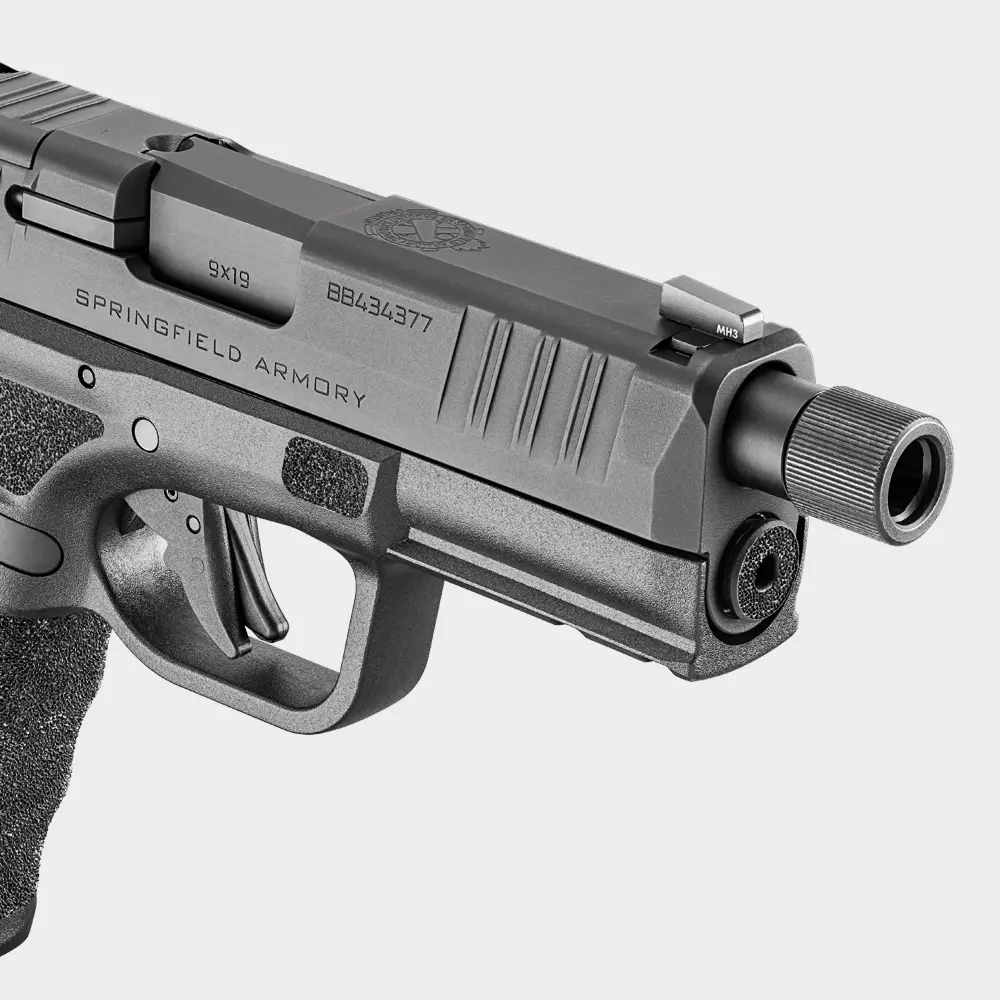
In California, the legality of threaded barrels on pistols is not straightforward and depends heavily on the specific configuration of the firearm. Generally speaking, a semi-automatic pistol that has the capacity to accept a detachable magazine and possesses a threaded barrel is considered an “assault weapon” under California law, specifically Penal Code sections 30515(a)(4)(A) and 30515(a)(4)(D). This classification means that such a pistol is prohibited for purchase, possession, or import by most private citizens in the state. The intent behind this prohibition, from the state’s perspective, is to restrict features that facilitate the rapid attachment of accessories like suppressors (silencers) or flash hiders, which lawmakers deem unsuitable for civilian ownership.
For travelers, this has direct and critical implications. If you own a pistol with a threaded barrel that also accepts detachable magazines and you bring it into California, you could be committing a felony. This applies even if the barrel is designed to accommodate a compensator or a simple muzzle brake, and even if you do not possess a suppressor. The mere presence of the threading is often enough to trigger the “assault weapon” classification.
Understanding the “Assault Weapon” Definition
California’s “assault weapon” laws are notoriously complex and have evolved over decades, often leading to confusion even among seasoned residents. For pistols, the general definition includes:
- A semi-automatic pistol that has the capacity to accept a detachable magazine and has any one of the following:
- A threaded barrel, capable of accepting a flash suppressor, forward handgrip, or silencer.
- A second handgrip.
- A shroud that is attached to, or partially or completely encircles, the barrel and that permits the shooter to grasp the firearm with the non-trigger hand without being burned.
- The capacity to accept a detachable magazine at some location outside of the pistol grip.
The threaded barrel is a critical point in this list. Many modern semi-automatic pistols come standard with detachable magazines and may also be available with threaded barrels, making them a common choice for owners in other states. Bringing such a firearm into California without modification or prior legal review is a significant risk.
Fixed Magazine Alternatives and “Featureless” Pistols
California has introduced concepts like “fixed magazine” firearms and “featureless” firearms to allow for certain configurations that bypass the “assault weapon” definition. For pistols, converting to a fixed magazine system (where the magazine cannot be removed without disassembling the action or using a tool) might, in some cases, exempt the pistol from the threaded barrel prohibition. However, this is a highly technical area, and modifications must strictly adhere to California Department of Justice (DOJ) guidelines. For travelers, attempting such modifications solely for a trip is often impractical and carries its own risks of non-compliance. It is generally advisable for visitors to avoid bringing pistols with threaded barrels into California unless they are absolutely certain of the firearm’s legal status after modification and registration, which for a short-term visitor, is usually not feasible.

Prohibited Features and Their Impact on Your Journey
The threaded barrel is just one of many features that can classify a firearm as an “assault weapon” in California. Travelers must consider all aspects of their firearms. For example, rifles and shotguns also have their own sets of prohibited features. While this article focuses on pistols, the underlying principle is the same: any feature that the state has deemed a characteristic of an “assault weapon” makes that firearm illegal for civilian possession.
This means that even if a threaded barrel is removed and replaced with a non-threaded barrel, other features on the same pistol could still trigger the “assault weapon” classification. For instance, a pistol with a detachable magazine and a “shroud” (a barrel shroud or cooling sleeve) or a “second handgrip” could also be problematic. These definitions are often interpreted broadly by law enforcement, and a misinterpretation by an owner can lead to serious legal consequences.
For the purposes of travel, the simplest and safest approach is often to leave firearms that could be construed as “assault weapons” under California law at home. If travel with a firearm is absolutely necessary, then opting for firearms that are explicitly designed to be California-compliant from the factory, or have been professionally modified to meet these requirements, is the most prudent course of action. Always ensure that any firearm you bring into the state is on the California Department of Justice’s Handgun Roster if you plan to transfer ownership, though for visitors, the primary concern is generally possession legality.
Responsible Travel with Firearms: Best Practices and Precautions
Traveling to California with firearms requires meticulous planning and adherence to both federal and state laws. Here are some best practices for visitors:
1. Research Extensively Before You Go
Confirm the legality of every firearm you intend to bring into California. This includes checking not only the state’s “assault weapon” laws but also local ordinances in your destination cities, such as San Francisco or Oakland, which may have additional restrictions. The California Department of Justice website is an authoritative source, but legal counsel specializing in California firearm law is highly recommended for complex situations.
2. Understand Transportation Requirements
Federal law (18 U.S.C. § 926A, the Firearm Owners’ Protection Act or FOPA) allows individuals to transport unloaded, cased firearms through states where they might otherwise be illegal, provided they are traveling from a place where they are legal to a place where they are legal. However, this protection is limited to interstate travel and does not apply to carrying firearms for local activities or stopping for extended periods within California. For firearms being transported, they must be unloaded, stored in a locked container, and kept separate from ammunition. The container should not be readily accessible from the passenger compartment of the vehicle. For vehicles without a trunk, the locked container must be in the rearmost compartment.
3. Concealed and Open Carry Laws
California is generally a “may issue” state for concealed carry permits (CCW), meaning permits are issued at the discretion of local law enforcement agencies. Out-of-state CCW permits are not recognized in California. Open carry of loaded or unloaded firearms is also largely prohibited, with very limited exceptions. For visitors, assume that neither concealed nor open carry is permitted.
4. Ammunition Restrictions
California also has restrictions on ammunition, including bans on certain types of ammunition (e.g., armor-piercing handgun ammunition) and limits on magazine capacity (generally ten rounds for new acquisitions). While FOPA helps with the interstate transportation of firearms, it does not explicitly protect the transportation of large-capacity magazines. It is safest to assume that bringing magazines over ten rounds into California is prohibited, even if they were legally owned elsewhere.
5. When in Doubt, Leave it Out
The safest policy for travelers concerned about California’s complex and ever-changing firearm laws, especially regarding features like threaded barrels, is to simply leave potentially problematic firearms at home. The legal risks and potential penalties far outweigh the convenience of bringing a non-compliant firearm into the state. If you plan an extended stay or relocation, seeking expert legal advice from a California attorney specializing in firearm law is indispensable.
In conclusion, the answer to “Are threaded barrels on pistols legal in California?” for the average traveler is a resounding no, if that pistol also accepts a detachable magazine. This feature triggers the state’s “assault weapon” definition, making such firearms generally illegal to possess. Visitors to California must prioritize legal compliance to ensure a safe and enjoyable trip, free from the severe consequences of violating the state’s strict firearm regulations.
LifeOutOfTheBox is a participant in the Amazon Services LLC Associates Program, an affiliate advertising program designed to provide a means for sites to earn advertising fees by advertising and linking to Amazon.com. Amazon, the Amazon logo, AmazonSupply, and the AmazonSupply logo are trademarks of Amazon.com, Inc. or its affiliates. As an Amazon Associate we earn affiliate commissions from qualifying purchases.