
Navigating the landscape of employee rights and employer responsibilities can be complex, especially when it comes to paid sick leave. In Colorado, a state with progressive labor laws, understanding the nuances of sick time accrual and usage is crucial for both employees and businesses. The question of whether an employer can deny sick time in Colorado hinges on a variety of factors, primarily governed by the Healthy Families and Workplaces Act (HFWA).
Understanding Colorado’s Paid Sick Leave Law: The HFWA
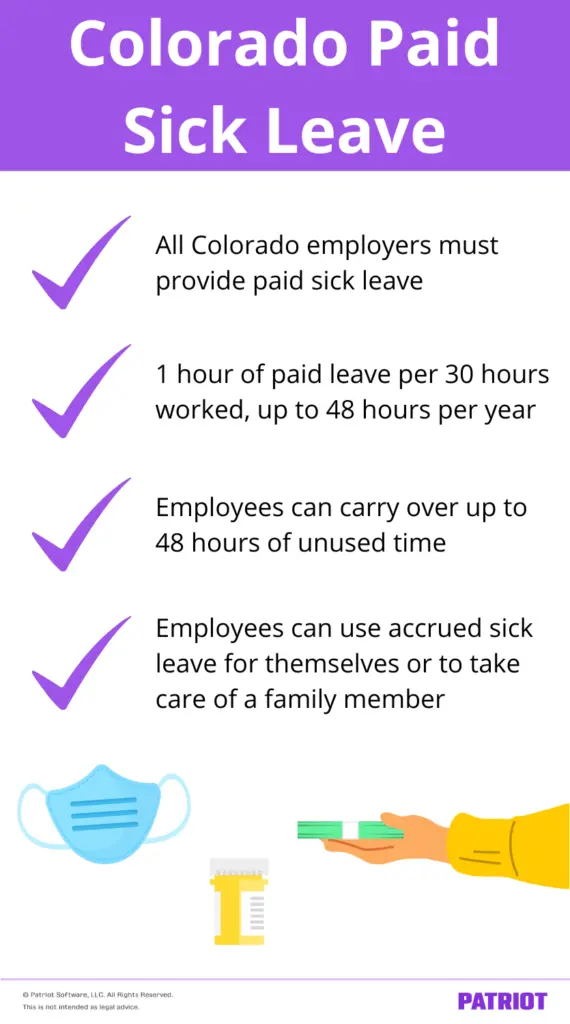
The Healthy Families and Workplaces Act (HFWA) is the cornerstone of paid sick leave in Colorado. Enacted to provide a safety net for workers, it mandates that most employers provide paid sick leave to their employees. The law, which became effective on January 1, 2021, applies to virtually all employers in the state, regardless of size.
Who is Covered by the HFWA?
The HFWA covers all employees who work at least 25 hours per week in Colorado during a calendar year. This includes full-time, part-time, and temporary employees. There are very few exceptions, generally limited to employees of an air carrier who are covered by federal law.
How Sick Leave Accrues
Under the HFWA, employees accrue one hour of paid sick leave for every 30 hours worked. This accrual begins on the first day of employment. Employers are required to track and display the amount of sick leave an employee has accrued.
What Sick Leave Can Be Used For
The purpose of sick leave is broad, designed to protect public health and individual well-being. Employees can use accrued sick leave for:
- Their own mental or physical health needs: This includes routine medical appointments, treatment for illnesses or injuries, and recovery from health conditions.
- Care for a family member: Family members are broadly defined to include children, grandchildren, grandparents, parents, siblings, spouses, and domestic partners. This also extends to individuals for whom the employee is serving as a de facto parent.
- Public health emergencies: If a public health official closes a business or the employee’s child’s school or place of care due to a public health emergency.
- Reasons related to domestic violence, sexual assault, or stalking: This includes seeking medical attention, obtaining services from a victim services organization, legal or other remedies, or counseling.
Employer Requirements
Employers must allow employees to use their accrued sick leave. This means they cannot prohibit an employee from taking leave for a qualifying reason. However, employers can implement reasonable policies regarding the use of sick leave, provided these policies do not interfere with the employee’s right to use the leave.
Circumstances Under Which Sick Time Might Be Denied
While the HFWA broadly protects an employee’s right to sick leave, there are specific situations where an employer might legally deny a sick time request or face limitations on its usage. These denials are typically not about the employee’s right to sick time itself, but rather about the specifics of the request or the employer’s policies.
Insufficient Accrued Sick Leave
The most straightforward reason for denying sick time is if the employee has not accrued enough leave to cover the requested absence. For instance, if an employee requests a full day off but only has two hours of sick leave accrued, the employer can deny the request for the full day. However, they would likely have to allow the employee to use their accrued two hours, assuming it’s for a qualifying reason, and potentially treat the remaining time as unpaid or necessitate a different leave arrangement.
Failure to Follow Reasonable Notification Policies
The HFWA allows employers to establish reasonable notification policies. If an employee fails to provide adequate notice for an anticipated absence, and this absence causes significant disruption to business operations, the employer might have grounds to deny the timing of the leave or require documentation.
- Anticipated Absences: For foreseeable absences, such as scheduled medical appointments, employers can require reasonable advance notice, typically at least 10 days in advance, if the need for leave is known.
- Unforeseen Absences: For unforeseeable absences, like sudden illness, employers can require notification as soon as practicable.
However, it’s crucial for employers to remember that these policies cannot be used as a pretext to deny legitimate sick leave. If an employee provides notice as soon as possible under the circumstances, the absence should generally be permitted.
Lack of Documentation for Extended Absences
While not typically required for short-term absences, employers may request reasonable documentation for absences that are:
- Three consecutive workdays or longer: For absences exceeding three consecutive days, an employer may request reasonable documentation to verify the need for sick leave.
- Related to specific public health emergencies: Documentation might be required to confirm the closure of a school or place of care due to a public health emergency.
The documentation requested must be reasonable and cannot be overly burdensome. It typically involves a doctor’s note or similar verification. If an employee fails to provide requested documentation without a valid reason, the employer may have grounds to deny further sick leave for that period or treat the absence as unauthorized.
Use for Non-Qualifying Reasons

The HFWA specifies the reasons for which sick leave can be used. If an employee attempts to use sick leave for a reason not covered by the law, the employer can deny the request. For example, using sick leave for a vacation or a personal day that is not related to a health need or family care would be grounds for denial.
Employer Eligibility Requirements (Less Common)
While the HFWA applies to most employees, there are very limited exceptions. If an employee falls into one of these narrowly defined categories (e.g., certain airline employees covered by federal law), they may not be entitled to sick leave under the HFWA, and thus their employer could deny it. However, for the vast majority of workers in Colorado, this is not applicable.
Employer Best Practices for Managing Sick Leave
To avoid legal complications and foster a positive work environment, Colorado employers should adopt clear and compliant sick leave policies.
Develop a Clear Written Policy
- Policy Content: The policy should detail how sick leave accrues, the maximum amount of leave that can be carried over, the reasons for which leave can be used, and the notification procedures for requesting leave.
- Accessibility: Ensure the policy is readily accessible to all employees, perhaps through an employee handbook or an employee portal.
Train Managers and Supervisors
- Understanding the Law: Managers need to be thoroughly trained on the HFWA to understand their obligations and the rights of employees.
- Consistent Application: Train them to apply the sick leave policy consistently and fairly across all employees. Inconsistent application can lead to discrimination claims.
Implement Accurate Tracking Systems
- Accrual and Usage: Use reliable systems to accurately track sick leave accrual and usage for each employee. This is vital for compliance and to prevent disputes.
- Transparency: Provide employees with easy access to their current sick leave balance.
Avoid Retaliation
- Protected Activity: Taking or requesting sick leave under the HFWA is a protected activity. Employers must not retaliate against employees for using their sick leave, such as by demoting them, firing them, or otherwise discriminating against them.
- Complaint Procedures: Establish clear complaint procedures for employees who believe they have been retaliated against.
Consult Legal Counsel
- Complex Situations: For complex situations, or if you are unsure about the legality of a particular sick leave denial, it is always advisable to consult with an employment attorney specializing in Colorado labor law.
The Employee’s Role in Navigating Sick Leave
Employees also play a role in ensuring their sick leave is used correctly and compliantly.
Know Your Rights and Accrual
- Understand the HFWA: Familiarize yourself with the provisions of the Healthy Families and Workplaces Act (HFWA) and your employer’s specific sick leave policy.
- Track Your Balance: Keep track of your accrued sick leave balance. Many employers provide this information on pay stubs or through an online portal.
Provide Timely and Appropriate Notice
- Follow Procedures: Adhere to your employer’s notification procedures for requesting sick leave, especially for foreseeable absences.
- Communicate Clearly: Be clear about the reason for your absence, as required by the policy, and understand when documentation might be needed.
Seek Clarification When Needed
- Ask Questions: If you are unsure about your eligibility for sick leave, the process for requesting it, or if your request has been denied, ask your HR department or supervisor for clarification.
- Document Everything: Keep records of sick leave requests, denials, communications with your employer, and any documentation you provide.

Conclusion: A Balance of Rights and Responsibilities
In Colorado, an employer generally cannot deny an employee their accrued sick time if it is being used for a qualifying reason under the Healthy Families and Workplaces Act (HFWA). The law is designed to protect workers and ensure they can attend to their health and family needs without fear of reprisal or financial hardship.
However, employers do have the right to implement reasonable policies and procedures regarding the use of sick leave. Denials are typically permissible when an employee lacks sufficient accrued leave, fails to follow notification requirements without good cause, attempts to use leave for non-qualifying reasons, or does not provide necessary documentation for extended absences.
By understanding the intricacies of the HFWA and adhering to best practices, both employers and employees in Colorado can navigate sick leave effectively, ensuring a healthier and more productive workforce. The key lies in clear communication, adherence to the law, and a commitment to fair and consistent application of policies.
LifeOutOfTheBox is a participant in the Amazon Services LLC Associates Program, an affiliate advertising program designed to provide a means for sites to earn advertising fees by advertising and linking to Amazon.com. Amazon, the Amazon logo, AmazonSupply, and the AmazonSupply logo are trademarks of Amazon.com, Inc. or its affiliates. As an Amazon Associate we earn affiliate commissions from qualifying purchases.