
Navigating the world of hospitality with a service animal involves a unique set of legal protections and responsibilities. For individuals with disabilities, a service dog is not merely a companion but a vital tool for independence. However, a common point of confusion for both travelers and property managers is whether a facility can legally levy fees for these animals. In the United States, the answer is a definitive no, but the nuances of how these regulations are applied within the hospitality industry require a deeper look.
The relationship between a guest with a service dog and a hotel is governed by strict civil rights laws. From boutique properties in New York City to sprawling resorts in Florida, the mandate remains consistent: accessibility must be provided without the burden of extra “pet” costs. This article explores the legal framework, operational policies, and the specific instances where a hotel might actually be able to charge for damages, ensuring both guests and hoteliers are well-informed.
The Legal Framework: Service Dogs and the ADA
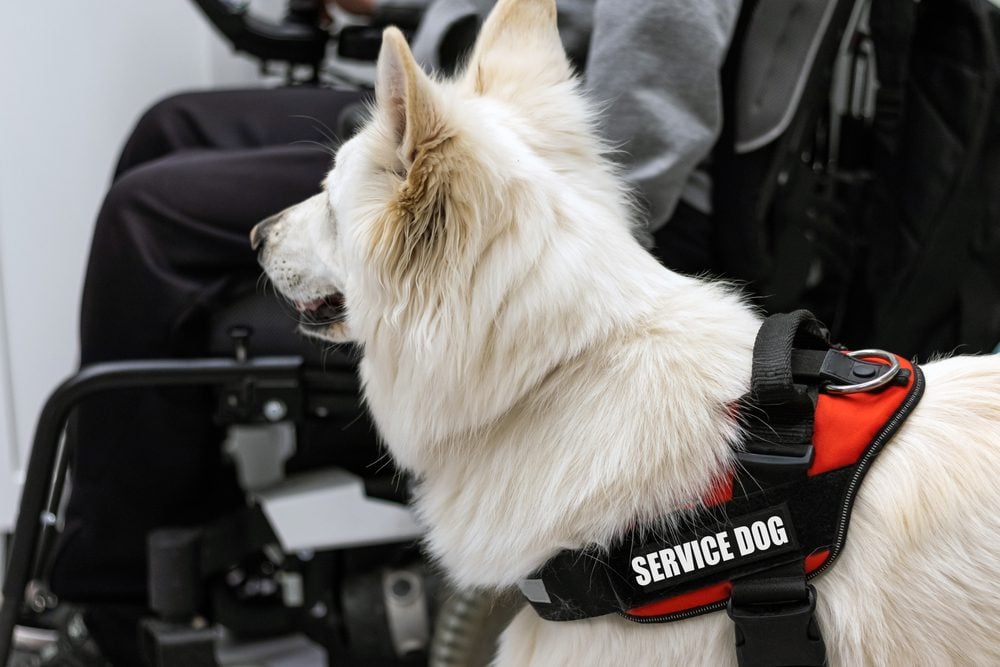
In the hospitality sector, the primary governing authority regarding service animals is the Americans with Disabilities Act, often abbreviated as the ADA. Under this federal civil rights law, service animals are not classified as pets. Because they are working animals, the standard “pet policies” that many hotels use do not apply to them.
Defining Service Animals vs. Emotional Support Animals
One of the most frequent points of contention in the Hotels niche is the distinction between a service dog and an emotional support animal (ESA). According to the Department of Justice, a service animal is a dog that is individually trained to do work or perform tasks for a person with a disability. The tasks performed must be directly related to the individual’s disability.
Common tasks include guiding people who are blind, alerting people who are deaf, pulling a wheelchair, or alerting and protecting a person who is having a seizure. Conversely, emotional support animals provide comfort just by being with a person. Because they have not been trained to perform a specific job or task, they do not qualify as service animals under the ADA. Hotels in states like California or Texas are generally not required to waive pet fees for ESAs, though some may choose to do so as a courtesy.
Federal Law and the Prohibition of Pet Fees
The ADA is explicit: hotels, motels, and other places of public accommodation cannot require guests with service dogs to pay a surcharge, even if they usually charge a fee for pets. This protection extends to security deposits. A hotel cannot ask a guest to pay an upfront “service dog deposit” that other guests do not have to pay.
Major chains such as Marriott International, Hilton, and Hyatt Hotels Corporation have rigorous training programs to ensure their staff understands this. If a guest arrives at the Grand Hyatt New York or a Hampton Inn in Chicago, the front desk staff should already know that charging a pet fee for a legitimate service dog is a violation of federal law.
Hotel Policies and Operational Compliance
While the law prohibits fees, it does not mean hotels have no rights or protocols. Hoteliers must balance the rights of the disabled guest with the safety and comfort of other guests and staff. This balance is managed through specific operational guidelines that are standard across the United States.
Where Service Dogs Can Go: Access to Public Spaces
A key aspect of hotel compliance is ensuring that the service dog is allowed in all areas where the public is generally permitted to go. This includes the hotel restaurant, the fitness center, the business lounge, and the lobby. For example, if you are staying at The Ritz-Carlton in Boston, your service dog is permitted to accompany you into the dining room, even if the hotel has a strict “no pets” policy for its restaurants.
However, there are “fundamental alteration” exceptions. A service dog might be restricted from a specific area if its presence would fundamentally alter the nature of the service provided. An example of this would be a sterile environment like an operating room in a medical facility, though in a hotel context, such areas are rare. Generally, if a guest can go there, the dog can go there.
The Two Questions Hotel Staff Can Legally Ask
To prevent the abuse of service dog protections, the Department of Justice allows hotel staff to ask two specific questions if the guest’s disability is not obvious:
- Is the dog a service animal required because of a disability?
- What work or task has the dog been trained to perform?
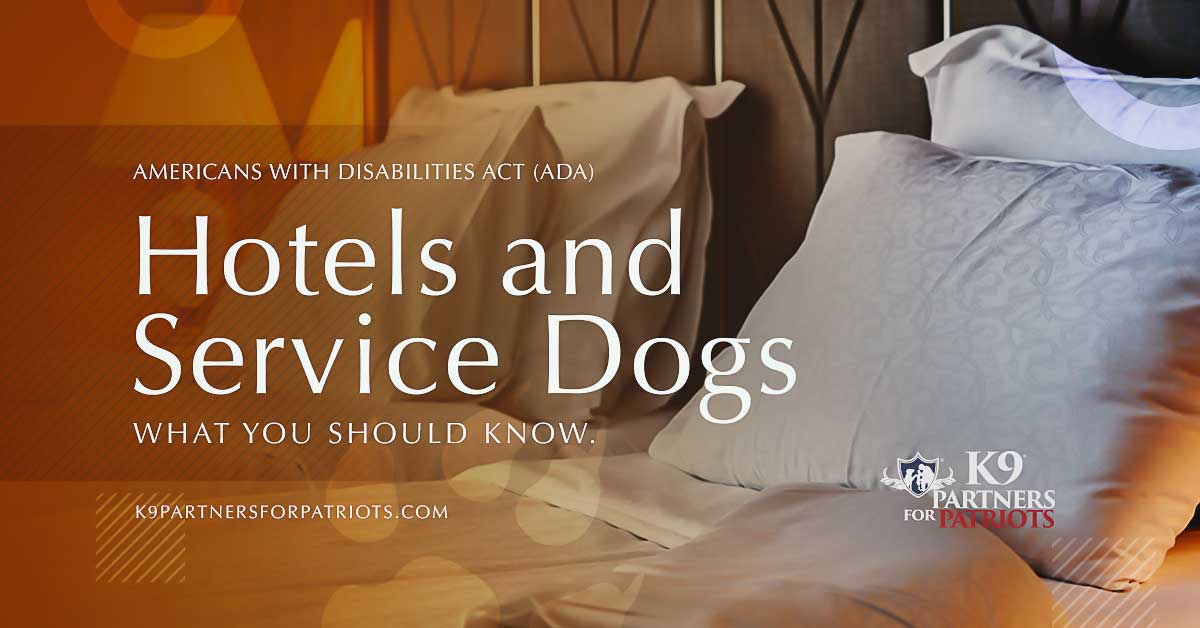
Staff at a Holiday Inn or a Four Seasons Hotels and Resorts property cannot ask about the person’s disability, require medical documentation, require a special identification card or training documentation for the dog, or ask that the dog demonstrate its ability to perform the work or task. This keeps the process dignified for the traveler while allowing the hotel to verify the animal’s status.
Exceptions and Potential Charges
While the base stay and the presence of the dog cannot be charged, there are circumstances where a guest may find themselves responsible for costs. These are typically related to the behavior of the animal or the physical condition of the room after checkout.
Damage Fees and Cleaning Surcharges
The ADA states that if a business, such as a Westin Hotels and Resorts property, normally charges guests for damage they cause, a guest with a disability may also be charged for damage caused by themselves or their service animal. If a service dog chews on the furniture or stains the carpet in a suite at the Bellagio Las Vegas, the hotel is well within its rights to bill the guest for repairs or professional deep cleaning.
It is important to note that a “standard cleaning fee” applied to all pet-friendly rooms cannot be applied to a service dog user. The hotel can only charge for actual damage or extraordinary cleaning that exceeds the normal cleaning routine. If the room simply requires vacuuming to remove dog hair, this is considered part of standard housekeeping and should not result in a charge.
Behavioral Standards and Removal Situations
A hotel can ask a guest to remove a service animal from the premises if:
- The dog is out of control and the handler does not take effective action to control it.
- The dog is not housebroken.
If a dog is barking incessantly in a room at the Waldorf Astoria and disrupting other guests, or if the dog acts aggressively toward staff, the hotel may legally require the animal be removed. Even in these cases, the hotel must give the guest the opportunity to stay at the hotel without the animal. Because the animal’s presence is what is causing the issue, the removal is based on behavior, not the disability itself.
Navigating International Travel and Specific Hotel Chains
When traveling outside the United States, the rules can change significantly. Accessibility laws vary by country, and what is standard in Los Angeles may not apply in London or Tokyo.
Variations in International Law
In the United Kingdom, the Equality Act 2010 provides similar protections to the ADA. Service dogs (often called assistance dogs in the UK) are allowed into hotels and restaurants without extra charge. However, in other parts of Europe or Asia, the definitions and requirements for documentation may be stricter.
For instance, in France, while assistance dogs are generally protected, there may be more localized requirements for the animal to wear a specific harness or for the owner to carry an official disability card. If you are booking a stay at a Sheraton in Paris or an InterContinental Hotels Group property in Germany, it is wise to research the specific national laws of that country beforehand.
Proactive Communication with Your Hotel
Even though the law is on your side, proactive communication is always recommended. When booking a room at a Fairmont Hotels and Resorts property or a Loews Hotels location, adding a note to your reservation about your service dog can streamline the check-in process.
This is particularly helpful in popular destinations like Orlando or San Francisco, where hotels are often at high capacity. Alerting the hotel allows them to assign you a room that might be closer to a grassy relief area or away from high-traffic elevators, making the stay more comfortable for both the guest and the working dog. It also ensures that the management can brief the housekeeping staff so they are not surprised when they enter the room for service.
In conclusion, hotels cannot charge pet fees, deposits, or surcharges for service dogs under the ADA. These animals are essential for the individuals they serve and are protected as such. By understanding the distinction between service animals and pets, and knowing the specific legal limits regarding damage and behavior, both guests and hotel operators can ensure a seamless, respectful, and legally compliant experience. Whether you are checking into a luxury resort in Hawaii or a budget-friendly Motel 6, your right to travel with your service dog is a fundamental aspect of modern hospitality.
LifeOutOfTheBox is a participant in the Amazon Services LLC Associates Program, an affiliate advertising program designed to provide a means for sites to earn advertising fees by advertising and linking to Amazon.com. Amazon, the Amazon logo, AmazonSupply, and the AmazonSupply logo are trademarks of Amazon.com, Inc. or its affiliates. As an Amazon Associate we earn affiliate commissions from qualifying purchases.