
Navigating the legal landscape of firearm carry when visiting a new destination is a critical aspect of responsible travel. For those planning a trip to Florida, understanding the state’s specific gun laws is paramount, as regulations can differ significantly from your home state. [Florida] is known for its beautiful beaches, vibrant cities, and world-class attractions, but it also has unique firearm legislation that travelers must be aware of to ensure a safe and lawful visit.
Navigating [Florida]’s Firearm Laws as a Visitor
[Florida] has seen significant changes in its firearm laws, particularly with the implementation of what is commonly referred to as “constitutional carry.” These changes directly impact how both residents and visitors can carry firearms within the state. As a traveler, it’s essential not to assume that laws from your home state apply; instead, prioritize understanding [Florida]’s specific requirements and prohibitions.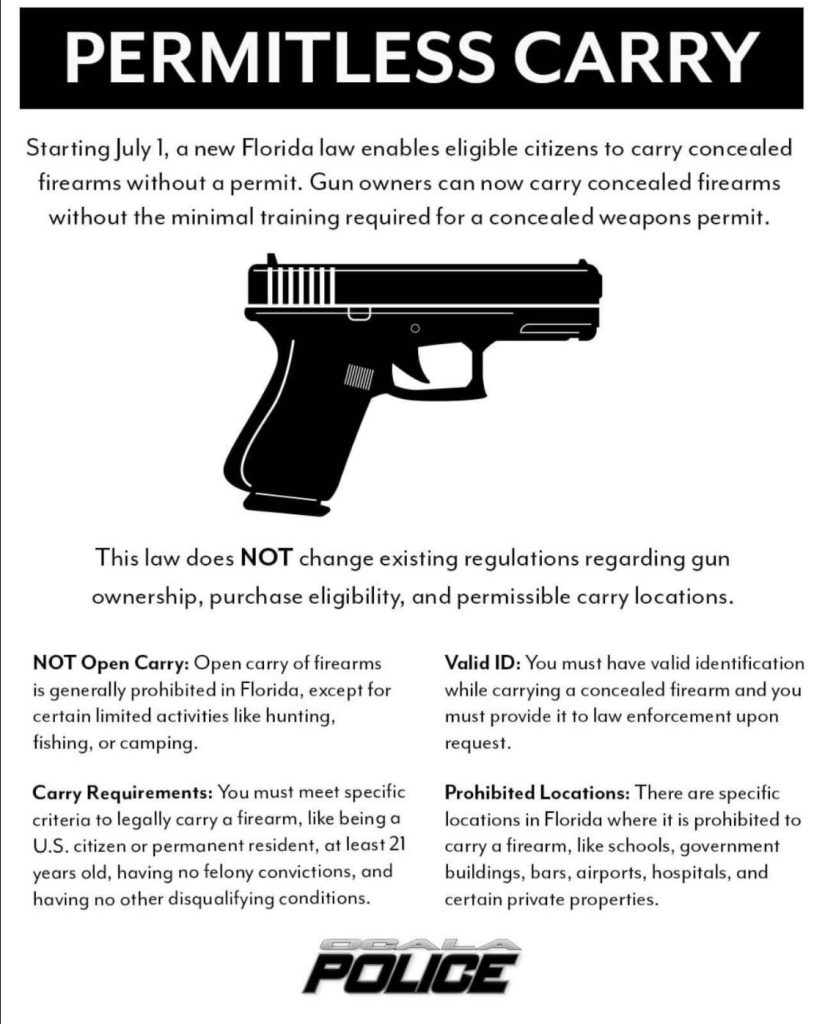
Understanding [Florida]’s Constitutional Carry Law
Effective July 1, 2023, [Florida] enacted a law that allows eligible individuals to carry a concealed firearm without a government-issued license or permit. This is often referred to as “constitutional carry” or “permitless carry.” For travelers, this means that if you meet the state’s eligibility requirements (which include age and lack of disqualifying criminal history), you can carry a concealed firearm in [Florida] even if you do not possess a concealed carry permit from your home state or [Florida] itself.
However, it is crucial to understand that “permitless carry” does not equate to “unrestricted carry.” All other existing firearm laws, including those pertaining to prohibited places, eligibility requirements, and the manner of carry, remain in full effect. This change primarily removes the licensing requirement for concealed carry, not the underlying regulations governing firearm possession and use.
Concealed Carry vs. Open Carry
A key distinction for anyone considering carrying a firearm in [Florida] is the difference between concealed and open carry. While the new law permits concealed carry without a license for eligible individuals, open carry of handguns remains largely prohibited in public places.
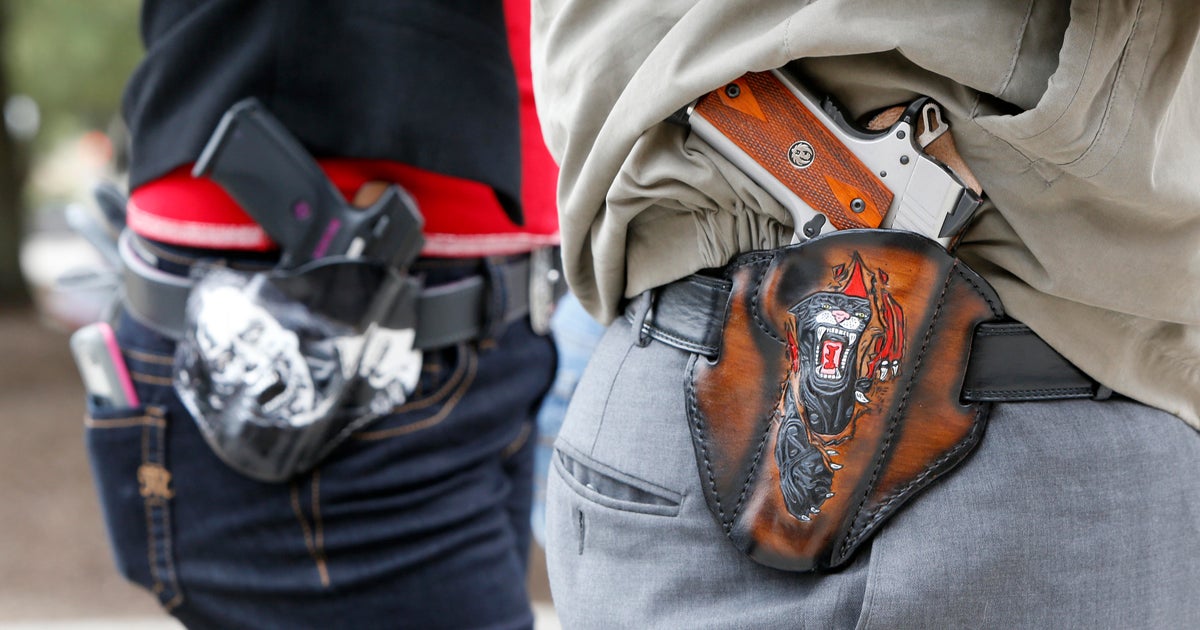
Concealed Carry: This refers to carrying a firearm on or about your person in such a manner that it is not visible to the ordinary observation of another person. This is generally allowed for eligible persons under the constitutional carry law.
Open Carry: In [Florida], open carry of handguns is generally illegal in public. There are very limited exceptions, such as while hunting, fishing, or target shooting, or while going to or from a shooting range or hunting expedition. For most visitors, open carry in public is not permitted and can lead to severe legal consequences. Always ensure any firearm you carry is fully concealed.
Eligibility and Restrictions for Carrying a Firearm
Even with constitutional carry in place, not everyone is eligible to carry a firearm in [Florida], and there are specific places where firearms are strictly prohibited. These restrictions apply equally to residents and visitors.
Who Can Carry?
To legally carry a concealed firearm in [Florida] without a license, you must meet several criteria:
- Age Requirement: You must be at least 21 years old.
- Legal Eligibility: You must not be a convicted felon or have any other disqualifying criminal record, such as a conviction for domestic violence.
- Mental Health: You must not have been adjudicated delinquent or been committed to a mental institution.
- Residency Status: You must be a United States citizen or a lawful permanent resident alien.
It is your responsibility to ensure you meet all these legal qualifications before carrying a firearm in [Florida].
Prohibited Places for Firearms
One of the most critical aspects for travelers is understanding where firearms are absolutely prohibited, regardless of your eligibility or whether you possess a permit. Carrying a firearm in these locations can result in serious legal penalties, including felony charges. Prohibited places include, but are not limited to:
- Any place of nuisance as defined in Section 823.05, Florida Statutes.
- Any police station, sheriff’s office, or highway patrol station.
- Any detention facility, prison, or jail.
- Any courthouse.
- Any courtroom (except for a judge or authorized law enforcement personnel).
- Any polling place during an election.
- Any meeting of the governing body of a county, public school district, municipality, or special district.
- Any meeting of the Legislature or a committee thereof.
- Any school, college, or university facility (this includes K-12 schools, public and private colleges, and universities, and their grounds or facilities, with limited exceptions for securing a firearm in a vehicle).
- Any airport passenger terminal, beyond the security checkpoint (sterile area). This applies to facilities like Orlando International Airport or Miami International Airport.
- Any establishment primarily devoted to dispensing alcoholic beverages for on-premises consumption (i.e., bars, but not typically restaurants that also serve alcohol).
- Any portion of an establishment licensed to dispense alcoholic beverages for on-premises consumption that is primarily devoted to such purpose.
- Federal buildings and property (e.g., post offices, federal courthouses, Everglades National Park, Biscayne National Park visitor centers).
Always be vigilant about signage and be prepared to secure your firearm before entering any establishment where carry might be prohibited.
Interstate Travel and Reciprocity
While [Florida]’s constitutional carry law simplifies concealed carry within the state for eligible individuals, understanding how your home state’s permit (if you have one) is recognized, and the rules for transporting firearms across state lines or via air travel, remains vital for responsible travelers.
Reciprocity Agreements (Prior Context)
Prior to the implementation of permitless carry, [Florida] maintained reciprocity agreements with numerous other states, recognizing their concealed weapon permits. With permitless carry now in effect for concealed firearms, the direct need for reciprocity for carrying a concealed firearm within [Florida] for eligible persons is diminished. However, if you possess a concealed carry license from your home state, it remains a valid document. While not explicitly required for concealed carry in [Florida] anymore (if you meet [Florida]’s eligibility), having a license is still valuable for carrying in other states that recognize your permit and [Florida]’s, and for potential legal and insurance purposes.

Traveling Through [Florida] with a Firearm
For those traveling through [Florida] by vehicle or air, specific federal and state laws govern the transportation of firearms.
Vehicle Transportation: When a firearm is not on your person and is not in use, it generally must be securely encased and not readily accessible. “Securely encased” can mean:
- In a gun case (zipped, snapped, or tied).
- In a glove compartment (whether locked or not).
- In a closed box or container.
- In a luggage compartment (trunk).
- In a vehicle compartment which is not accessible by the driver or passengers (e.g., behind the last row of seats in an SUV).
It’s advisable to transport firearms unloaded.
Air Travel: If you plan to fly into or out of [Florida] with a firearm, you must adhere to strict federal TSA regulations, in addition to airline-specific policies.
- Declare It: Always declare your firearm to the airline at the check-in counter.
- Unloaded: The firearm must be unloaded.
- Locked, Hard-Sided Container: It must be in a hard-sided container, completely secured with a lock or locks (that only you have the combination/key for), and placed in checked baggage.
- Ammunition: Ammunition must also be securely packed in a proper container and cannot be carried in carry-on bags.
Never attempt to carry a firearm (or ammunition) onto an airplane as a carry-on item. Violations can lead to severe federal penalties.
Best Practices and Legal Considerations for Travelers
For responsible travelers, vigilance and education are your best defenses against potential legal issues.
Prioritize Education and Local Laws
While [Florida] has statewide preemption laws regarding firearm regulation, meaning local governments generally cannot enact ordinances stricter than state law concerning firearms, it’s always prudent to remain informed. Consult official sources such as the Florida Department of Agriculture and Consumer Services, which oversees concealed weapon licenses (even if not required for carry, their site provides legal updates), and review the relevant sections of the [Florida Statutes]. Ignorance of the law is not a valid defense.
The “Duty to Inform” and Interactions with Law Enforcement
[Florida] law does not impose a general “duty to inform” a law enforcement officer that you are carrying a concealed firearm unless specifically asked. However, transparency and cooperation are always recommended during any interaction with law enforcement. If an officer asks if you are carrying a firearm, you should respond truthfully. Keeping your hands visible and refraining from reaching for your firearm without being directed to do so are essential safety measures during a stop.Potential Legal Ramifications
Violating [Florida]’s firearm laws can have severe consequences, ranging from significant fines to felony convictions and substantial jail time. As a visitor, a criminal record in [Florida] could impact your ability to travel internationally or carry a firearm in your home state. Always err on the side of caution and ensure strict compliance with all applicable laws.
[Florida] Destinations and Firearm Carry Considerations
When planning your itinerary, consider how [Florida]’s firearm laws intersect with popular tourist destinations and attractions.
Theme Parks and Attractions
Many of [Florida]’s premier tourist attractions, including world-renowned theme parks, have strict “no weapons” policies. Places like Walt Disney World Resort, Universal Orlando Resort, Busch Gardens Tampa Bay, and SeaWorld Orlando are private properties that enforce their own rules, often prohibiting firearms even if you are otherwise legally permitted to carry them in public. Always check the specific security policies of any attraction you plan to visit, and be prepared to leave your firearm securely stored elsewhere.
Beaches, Public Parks, and Natural Areas
Generally, carrying a concealed firearm is permitted in most public outdoor spaces like beaches, state parks, and other natural areas, provided these are not specifically designated as prohibited places (e.g., federal parks or administrative buildings within state parks). However, always be mindful of signage or specific local rules that might apply.
Dining and Entertainment Venues
As mentioned, establishments where the primary business is the sale of alcohol for on-site consumption (bars) are off-limits for firearm carry. However, most restaurants that serve alcohol alongside food are generally permissible, as long as the establishment is not primarily dedicated to alcohol consumption. Use good judgment and check for “no weapons” signs, particularly in private businesses.
In conclusion, while [Florida]’s constitutional carry law allows eligible individuals to carry concealed firearms without a permit, it is imperative for travelers to thoroughly understand all associated regulations, restrictions, and prohibitions. Responsible firearm ownership and carry begin with comprehensive legal awareness, especially when visiting an unfamiliar state. Prioritize safety, compliance, and respect for [Florida]’s laws to ensure an enjoyable and trouble-free travel experience.
LifeOutOfTheBox is a participant in the Amazon Services LLC Associates Program, an affiliate advertising program designed to provide a means for sites to earn advertising fees by advertising and linking to Amazon.com. Amazon, the Amazon logo, AmazonSupply, and the AmazonSupply logo are trademarks of Amazon.com, Inc. or its affiliates. As an Amazon Associate we earn affiliate commissions from qualifying purchases.