
Understanding the legal landscape surrounding audio recordings is crucial for anyone traveling to or residing in Arizona. Whether you’re a tourist aiming to capture the nuances of a local cultural exchange, a business traveler documenting important meetings, or simply someone who wants to keep a record of a significant discussion, knowing the do’s and don’ts of recording conversations is paramount. Arizona operates under specific statutes that govern privacy and consent when it comes to audio recordings, and failing to adhere to these can have serious legal repercussions. This article delves into the intricacies of Arizona‘s recording laws, providing clarity for individuals seeking to navigate this often-complex area.

Understanding Consent in Arizona Recording Laws
At the heart of Arizona’s approach to recording conversations lies the concept of consent. Arizona is a “one-party consent” state. This is a fundamental distinction from “two-party” or “all-party” consent states, where every participant in a conversation must agree to be recorded. In a one-party consent state, as long as at least one person involved in the conversation is aware of and consents to the recording, it is generally legal to record. This means that if you are a participant in the conversation, you have the legal right to record it without the other participants’ knowledge or consent.
The “One-Party” Distinction Explained
The “one-party consent” rule in Arizona law is enshrined in A.R.S. § 13-3018. This statute broadly prohibits the interception or recording of private communications by mechanical or electronic means without the consent of at least one party to the communication. The key here is “private communications.” This refers to conversations where participants have a reasonable expectation of privacy. A casual chat on a busy street corner where anyone can overhear might not qualify, whereas a discussion in a hotel room or a private office would.
What Constitutes “Consent”?
In Arizona, consent can be either express or implied.
- Express Consent: This is the most straightforward. It occurs when a party explicitly agrees to be recorded, either verbally or in writing. For instance, if you inform someone, “I’m going to record this conversation,” and they agree, that is express consent.
- Implied Consent: This is more nuanced. Implied consent can arise from the circumstances of the conversation. For example, if you are engaged in a business meeting in a formal setting and you begin recording, and the other parties are aware of the recording device (e.g., it’s visible on the table) and continue the conversation without objection, their continued participation can be construed as implied consent. However, relying on implied consent is riskier and can lead to disputes. It is always best practice to seek express consent whenever possible.
Exceptions and Nuances to Arizona’s Recording Laws
While the one-party consent rule provides a general framework, there are specific situations and exceptions that travelers and residents should be aware of when considering recording conversations in Arizona. These nuances can significantly impact the legality of your recording.
Recording of Public Officials and Law Enforcement
A critical area where recording is generally permissible, even without explicit consent, relates to public officials and law enforcement officers acting in their official capacities. In Arizona, as in many other jurisdictions, citizens have a right to record public officials performing their duties in public spaces. This is rooted in the First Amendment right to gather information and observe government conduct. Therefore, recording a police officer during a traffic stop on a public street, or a public servant at a town hall meeting, is typically legal, provided you are not interfering with their duties.
Recording in Places Where There is No Reasonable Expectation of Privacy
The legality of recording is also contingent on whether the conversation takes place in an area where participants have a reasonable expectation of privacy. If a conversation occurs in a place where it is open to the public and easily overheard by others, it is unlikely to be considered a “private communication” under the law, and thus, recording it may not fall under the purview of consent requirements. For example, recording a conversation at a bustling restaurant in Phoenix or a crowded tourist attraction like the Grand Canyon is generally permissible because there is no reasonable expectation of privacy.
Recording in Private Residences or Secure Business Settings
Conversely, recording in a private residence, a hotel room (e.g., at the Arizona Biltmore, A Waldorf Astoria Resort), or a private office where participants clearly intend for their discussions to be confidential, invokes a strong expectation of privacy. In such settings, the one-party consent rule still applies, meaning at least one participant must consent to the recording. If you are not a participant and do not have consent from at least one participant, recording in these private settings would be illegal.
Wiretapping and Eavesdropping Laws
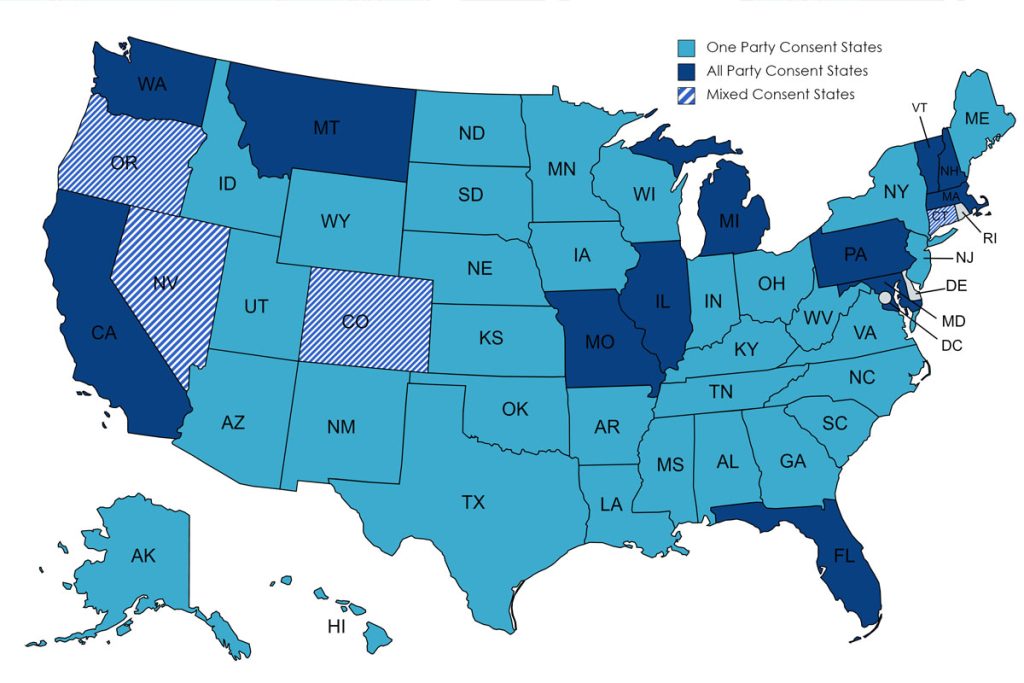
Arizona’s laws also prohibit unlawful wiretapping and eavesdropping. This generally refers to the intentional interception of oral communications by someone who is not a party to the communication and without the consent of any party. This is where the “one-party” rule is crucial. If you are not a participant, you absolutely need the consent of at least one participant to legally record. The intent to record for illegal or nefarious purposes can also be a factor in legal proceedings.
Practical Implications for Travelers and Businesses in Arizona
For visitors and businesses operating in Arizona, understanding these laws has practical implications that can prevent legal entanglements and ensure smooth operations.
Business Meetings and Negotiations
In the business context, whether you are in Scottsdale for a conference or holding a meeting in a corporate office, recording discussions is common. Under Arizona’s one-party consent law, if you are a participant in the meeting, you can legally record the proceedings without informing other attendees. However, it is always good practice to be transparent. Informing participants beforehand that you intend to record can foster goodwill and avoid potential misunderstandings, even if not legally required. If you are not a participant, you must obtain the consent of at least one person who is involved in the conversation.
Travel and Tourism Experiences
When traveling through Arizona, whether you’re exploring the Petrified Forest National Park, experiencing the vibrant culture of Tucson, or enjoying the amenities of a luxury resort like The Phoenician, you might want to record conversations with guides, fellow travelers, or locals to preserve memories or gather information. If you are part of the conversation, you can record it. However, be mindful of recording private conversations of others without their consent, even in public spaces, as it could still be perceived as an invasion of privacy.
Documentation and Evidence
In certain situations, individuals may wish to record conversations for documentation or as potential evidence. This could range from recording a dispute with a service provider to documenting important personal matters. As long as you are a participant in the conversation and are recording in compliance with Arizona’s one-party consent law, the recording can be legally admissible in some legal proceedings. However, the admissibility of such recordings in court depends on various factors, including how the recording was obtained and its relevance to the case. It is always advisable to consult with legal counsel regarding the use of recordings as evidence.
Best Practices and Legal Considerations
Navigating the legalities of recording conversations in Arizona doesn’t have to be a minefield. By adhering to certain best practices, you can ensure compliance and avoid unintended legal issues.
Prioritize Transparency and Express Consent
The safest and most ethical approach to recording any conversation is to be upfront and obtain express consent. Even in a one-party consent state like Arizona, obtaining consent from all parties involved fosters trust and prevents potential disputes. Before hitting record, simply state your intention and ask for agreement. This proactive approach is particularly advisable in sensitive situations or when dealing with individuals who may not be familiar with Arizona’s laws.
Be Mindful of Privacy Expectations
Always consider whether the individuals you are interacting with have a reasonable expectation of privacy. Recording private conversations without consent, even if you are a participant, can still lead to ethical dilemmas and potential civil claims if it causes harm or distress. This is especially relevant when interacting with individuals in their private homes or during confidential business discussions.
Know the Laws of Other Jurisdictions
If your conversations involve individuals who are physically located in a different state or country with different recording laws, the situation can become more complex. Arizona’s one-party consent law applies to actions within Arizona. However, if you are recording a conversation with someone in a two-party consent state, you may need to adhere to the stricter laws of that jurisdiction. This is particularly relevant for long-distance calls or virtual meetings. It is advisable to err on the side of caution and seek consent from all parties when in doubt, especially when interstate or international communication is involved.

Consult Legal Counsel When in Doubt
The nuances of privacy laws and the admissibility of recordings can be intricate. If you are involved in a situation where you are considering recording for legal or evidentiary purposes, or if you are uncertain about the legality of a particular recording scenario, it is always best to seek advice from a qualified legal professional. An attorney specializing in Arizona law can provide specific guidance tailored to your circumstances and help you understand your rights and obligations. This is especially important for business owners, journalists, or anyone involved in sensitive negotiations or potential legal disputes.
LifeOutOfTheBox is a participant in the Amazon Services LLC Associates Program, an affiliate advertising program designed to provide a means for sites to earn advertising fees by advertising and linking to Amazon.com. Amazon, the Amazon logo, AmazonSupply, and the AmazonSupply logo are trademarks of Amazon.com, Inc. or its affiliates. As an Amazon Associate we earn affiliate commissions from qualifying purchases.