
Navigating the intricacies of voting rights, especially when you’re a resident of one state and find yourself in another during an election period, can be a source of confusion. The question, “Can I vote in Texas with an out-of-state license?” is a common one, particularly for individuals who travel frequently or have recently relocated. While an out-of-state driver’s license is a valid form of identification for many purposes, its acceptability for voting in Texas is a more nuanced issue, tied directly to residency requirements and the specific rules set forth by the Texas Secretary of State.

This article will delve into the requirements for voting in Texas, clarifying the role of identification and, more importantly, the concept of residency. Understanding these foundational principles is crucial for any citizen wishing to participate in the democratic process, whether they are a long-term resident or a temporary visitor considering their options. We’ll explore the accepted forms of identification, the definition of residency in the context of voting, and what steps one can take if their primary identification is from another state. While the allure of visiting Texas for its vibrant culture, from the culinary delights of Austin to the historic charm of San Antonio, might draw visitors, voting requires a clear connection to the state as a resident.
The primary concern when considering voting with an out-of-state license is not the license itself, but rather whether the individual meets the residency requirements to vote in Texas. The right to vote is generally tied to where you establish your permanent home, not merely where you are physically present at a given time. Therefore, even if you possess a valid out-of-state driver’s license, it does not automatically grant you the right to vote in Texas if Texas is not your established residence.
Understanding Texas Voting Requirements and Identification
In Texas, like in most jurisdictions, the ability to cast a ballot is governed by specific eligibility criteria, with residency and valid identification being paramount. The Texas Election Code outlines these requirements to ensure the integrity of the electoral process. While an out-of-state driver’s license is a common form of identification for many daily activities, its role in voting in Texas is contingent upon your residency status.
Eligibility to Vote in Texas
To be eligible to vote in Texas, an individual must meet several criteria:
- Be a United States Citizen: You must be a citizen of the United States.
- Be a Resident of Texas: You must be a resident of the county in which you are voting. This is the critical factor when considering an out-of-state license. Residency for voting purposes is defined as the place where a person has established a fixed, permanent home and to which such person intends to return when absent.
- Be 18 Years of Age: You must be at least 18 years old on election day.
- Not Be a Felon: You must not have been finally convicted of a felony, unless you have completed your sentence, including any probation or parole.
- Not Be Determined Mentally Incapacitated: You must not have been finally determined to be mentally incapacitated by a court.
The emphasis here is on being a resident of Texas. If your primary driver’s license is from another state, it strongly suggests that your established residency is elsewhere. The purpose of residency requirements is to ensure that individuals are voting in the jurisdiction where they have a vested interest and are subject to its laws and governance.
Accepted Forms of Identification for Voting
Texas law requires voters to present one of the following forms of identification at the polling place:
- Texas Driver’s License
- Texas Election Certificate
- Texas Personal Identification Certificate
- Texas Handgun License
- United States Citizenship Certificate
- United States Military Identification Certificate
- United States Passport
- Other Supporting Documentation: In certain circumstances, voters who do not possess one of the above photo IDs may be allowed to vote by presenting a “Reasonable Impediment Declaration” and one of the following non-photo IDs: copy of a birth certificate, copy of a utility bill, copy of a social security card, copy of a school transcript, copy of a bank statement, or copy of a government check or other government document showing the voter’s name and address.
Crucially, the list of acceptable photo identification explicitly mentions Texas forms of identification. While a U.S. Passport or U.S. Military ID are exceptions, a standard out-of-state driver’s license is not listed as a primary acceptable form of photo ID for voting in Texas. This is because the identification serves not only to confirm your identity but also, implicitly, your connection to the jurisdiction through its issuance.
Therefore, if your only form of photo identification is an out-of-state driver’s license, you would generally not be able to use it to vote in Texas unless you have established residency in Texas and have obtained a Texas driver’s license or one of the other accepted Texas IDs. The Texas Department of Public Safety issues Texas driver’s licenses, and obtaining one requires proving residency within the state.
Establishing Residency in Texas for Voting Purposes
The core of the answer to whether you can vote in Texas with an out-of-state license lies in the definition and establishment of residency for voting purposes. Simply being present in Texas, whether for leisure, business, or even temporary work, does not constitute residency. Establishing residency is a deliberate act that signifies your intention to make Texas your permanent home.
What Constitutes Residency in Texas?
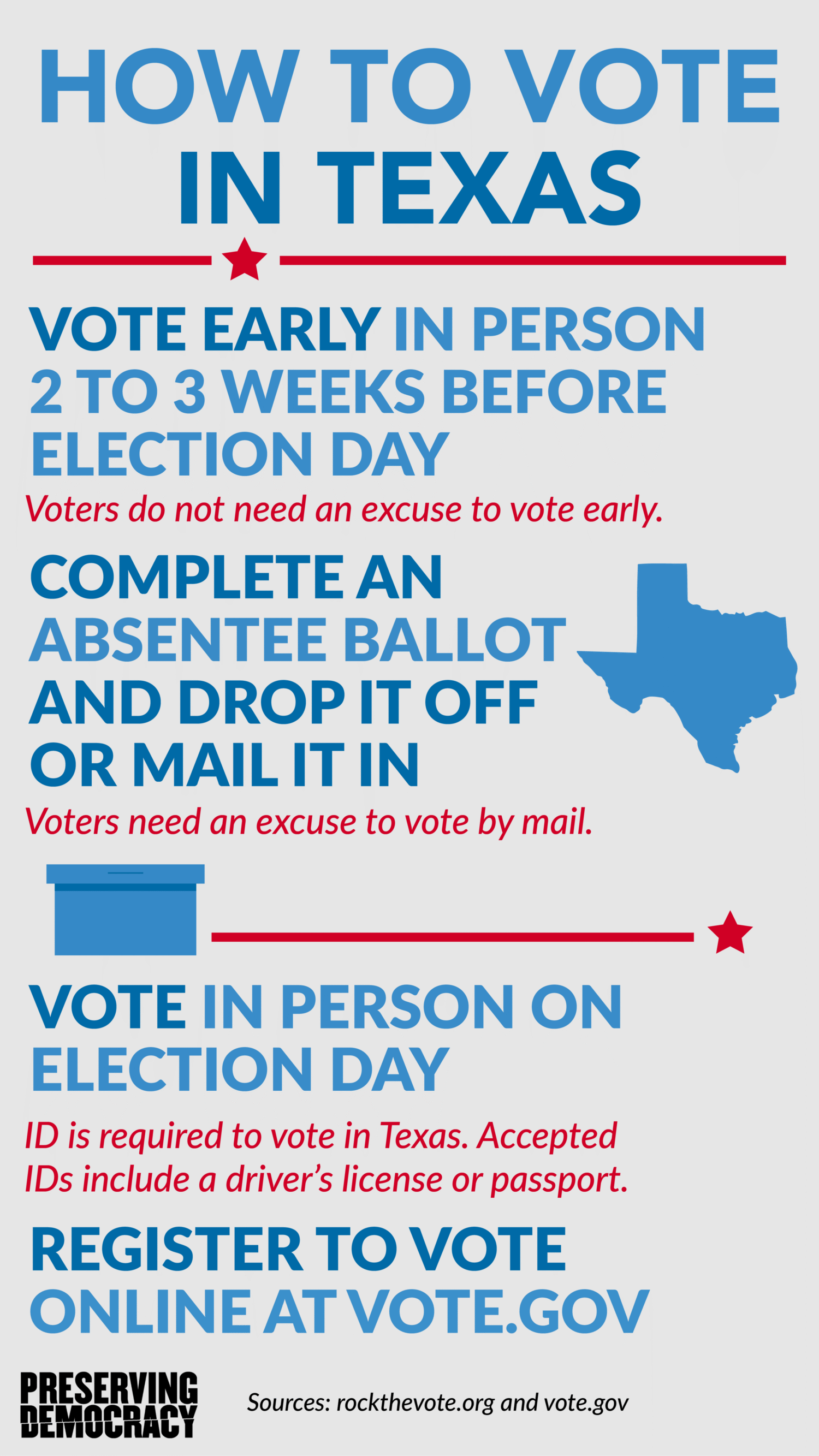
Texas law defines residency for voting purposes as the place of fixed, permanent home and principal establishment. It is the place to which you intend to return when you are absent. This is a factual determination based on a variety of factors, including:
- Physical Presence: Where do you spend most of your time?
- Intent: Where do you intend to make your permanent home?
- Declaration: Have you declared yourself a resident of Texas? This can be through actions like registering to vote, obtaining a Texas driver’s license, enrolling children in Texas public schools, or filing Texas income tax returns.
- Dwelling: Where do you primarily live? Do you own or rent a home in Texas?
- Employment: Where is your primary place of employment?
- Financial Ties: Where do you pay taxes, bank, and maintain financial accounts?
- Social and Family Ties: Where are your family members and community connections?
If you are visiting Texas for an extended period, perhaps to explore attractions like the Alamo in San Antonio, enjoy the vibrant nightlife of Dallas, or experience the natural beauty of the Big Bend National Park, you are still considered a visitor if Texas is not your permanent home. Your out-of-state driver’s license, in this context, is simply a valid form of identification from your home state, not proof of residency in Texas.
The Process of Establishing Texas Residency
If your intention is to make Texas your permanent home, you will need to take steps to establish residency. This process typically involves demonstrating your intent to live in Texas indefinitely. Key actions that solidify your claim to Texas residency include:
- Obtaining a Texas Driver’s License or State ID: This is a primary indicator of residency as the Texas Department of Public Safety requires proof of residency to issue these documents. If you are moving to Texas, you are generally required to obtain a Texas driver’s license within 90 days of establishing residency.
- Registering to Vote in Texas: Once you meet the residency requirements, you can register to vote in Texas. This is a formal declaration of your intent to participate in Texas elections. You can register to vote when you obtain your Texas driver’s license or through other state-approved methods.
- Securing a Permanent Address: This could be through purchasing a home, signing a lease for an apartment in a city like Houston, or establishing a fixed address where you receive mail and conduct your affairs.
- Relocating Your Belongings and Establishing a Household: Physically moving your essential possessions and setting up a living space in Texas further demonstrates your commitment to making it your home.
- Changing Other Official Documents: Update your address on bank accounts, insurance policies, and any other official correspondence.
It is important to note that you cannot simultaneously claim residency in two different states for voting purposes. If you are registered to vote in another state, you must cancel that registration before registering to vote in Texas. This ensures that each voter casts a ballot only in their true place of residency.
When an Out-of-State License Becomes Relevant: The Exception
While the general rule is that an out-of-state license alone does not permit you to vote in Texas if Texas is not your residency, there is a specific exception that relates to the identification requirement itself. This exception pertains to individuals who have established residency in Texas but have not yet obtained a Texas driver’s license or other Texas-issued photo ID.

The “Reasonable Impediment” Declaration
As mentioned earlier, Texas law provides a mechanism for voters who do not possess one of the seven approved photo IDs. This is through the use of a “Reasonable Impediment Declaration.” If a voter has an “acceptable form of photo identification” listed above, they must use it. However, if a voter is unable to obtain one of the acceptable forms of photo ID, they can present one of the following:
- Copy of a birth certificate
- Copy of a utility bill
- Copy of a social security card
- Copy of a school transcript
- Copy of a bank statement
- Copy of a government check or other government document showing the voter’s name and address
In addition to presenting one of these supporting documents, the voter must also fill out a “Reasonable Impediment Declaration.” This declaration explains why the voter is unable to obtain an acceptable photo ID. Examples of reasonable impediments include:
- Religious objection to being photographed.
- Disability or illness.
- Lack of transportation to obtain an ID.
- Family responsibilities.
- Loss or theft of the ID.
- Documents needed to obtain the ID are unobtainable.
Now, here’s where the out-of-state license can become indirectly relevant. If a voter has recently moved to Texas and is in the process of establishing residency, they may still possess their out-of-state driver’s license. While this license itself is not a valid Texas voting ID, it might be the document that helps them fulfill the supporting documentation requirement of the Reasonable Impediment Declaration. For instance, if they need to show proof of their name and address, and their only current official document is their out-of-state license, they might be able to use that in conjunction with the declaration.
However, this is a specific scenario, and it hinges on the fact that the voter is a Texas resident, even if they haven’t yet acquired the preferred Texas identification. The Reasonable Impediment Declaration is not a loophole for non-residents to vote. It’s a provision to assist legitimate Texas residents who face genuine difficulties in obtaining the standard photo ID.
For instance, imagine someone who has just relocated to Texas for work, perhaps taking a job in the energy sector in Houston or attending a prestigious university like the University of Texas at Austin. They have moved their belongings, secured an apartment, and are actively working towards obtaining their Texas driver’s license. They might have their out-of-state license with them. If, on election day, they haven’t yet received their Texas ID, they could potentially use their out-of-state license as one of the supporting documents for the Reasonable Impediment Declaration, along with the completed declaration itself. This allows them to exercise their right to vote as a confirmed Texas resident.
Ultimately, the critical distinction remains residency. An out-of-state license is a document from another jurisdiction, and Texas requires its voters to be residents of Texas and to present appropriate identification. If you are a Texas resident who has not yet obtained a Texas ID, your out-of-state license might serve as a supporting document in a very specific, limited circumstance involving a Reasonable Impediment Declaration. But it is not a direct substitute for proper Texas identification, nor does it grant voting privileges in Texas if you are not a Texas resident. For those planning a visit to explore the wonders of Texas, from the music scene in Austin to the historical sites in Galveston, the right to vote remains firmly tied to your established home state.
LifeOutOfTheBox is a participant in the Amazon Services LLC Associates Program, an affiliate advertising program designed to provide a means for sites to earn advertising fees by advertising and linking to Amazon.com. Amazon, the Amazon logo, AmazonSupply, and the AmazonSupply logo are trademarks of Amazon.com, Inc. or its affiliates. As an Amazon Associate we earn affiliate commissions from qualifying purchases.