
Navigating the complexities of property ownership and estate planning in Florida can be a challenging endeavor, especially when it comes to understanding how your assets, particularly your home, will be handled upon your passing. The question of whether one can directly add a beneficiary to a mortgage is a common one, and the answer, while seemingly straightforward, involves a nuanced understanding of mortgage agreements, estate law, and Florida-specific regulations. Unlike other assets that can be directly designated with a beneficiary (such as bank accounts or life insurance policies), a mortgage is a debt secured by property, and the beneficiary designation process for it operates differently. This article will delve into the intricacies of this topic, clarifying the distinctions and outlining the proper channels for ensuring your property is passed on according to your wishes.
Understanding the Mortgage and Beneficiary Concepts
At its core, a mortgage is a legal contract between a borrower and a lender to finance the purchase of a property. The property itself serves as collateral for the loan. When a homeowner passes away, the outstanding mortgage debt does not simply disappear; it becomes part of the deceased’s estate. The concept of a “beneficiary” typically refers to an individual or entity designated to receive an asset upon the owner’s death. While you can name beneficiaries for your property itself through estate planning tools, directly naming a beneficiary on the mortgage document in the same way you might for a bank account is generally not how the system works.
The Mortgage Agreement: A Contract of Debt
When you take out a mortgage, for instance, from Wells Fargo or Bank of America, the loan is in your name. The mortgage document outlines the terms of repayment, interest rates, and the consequences of default. Crucially, it establishes a contractual relationship between you and the lender. This contract is tied to the property and the debt owed, not directly to who will inherit the property. Therefore, you cannot simply “add” a name to the mortgage to designate an heir.
Beneficiary Designations: Assets vs. Debts
Beneficiary designations are typically associated with assets that can be transferred outside of the probate process. Examples include:
- Life Insurance Policies: You name beneficiaries who will receive the death benefit.
- Retirement Accounts (IRAs, 401(k)s): You designate beneficiaries to inherit the account balance.
- Payable-on-Death (POD) or Transfer-on-Death (TOD) Accounts: These are bank accounts or investment accounts that transfer directly to a named beneficiary upon death.
A mortgage, being a debt, operates on a different principle. While you can pass the ownership of the property to a beneficiary, the responsibility for the debt associated with that property still needs to be addressed.
How Property Ownership and Mortgages Interact in Florida
In Florida, the way you own property significantly impacts how it’s handled after your death. The primary mechanisms for transferring property ownership, and consequently dealing with an associated mortgage, are through estate planning documents like a will or living trust, or through specific forms of joint ownership.
Wills and Trusts: The Primary Estate Planning Tools
The most common and recommended method for designating who inherits your property, including your home with a mortgage, is through your will or a living trust.
- Wills: A last will and testament is a legal document that outlines your wishes for the distribution of your assets after your death. You can name specific individuals (beneficiaries) to inherit your real estate. When you pass away, your will goes through probate, a court-supervised process where your assets are identified, debts are paid, and remaining assets are distributed to your beneficiaries. The mortgage will be paid from your estate, and the beneficiary will inherit the property free and clear of the mortgage if there are sufficient funds, or they may assume the mortgage, depending on the estate’s liquidity and their wishes.
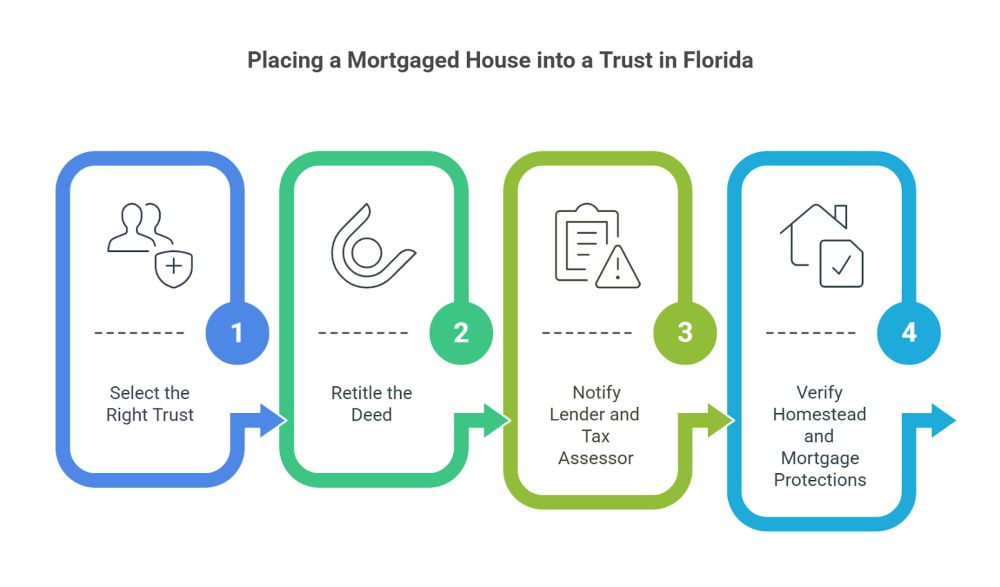
- Living Trusts: A living trust is another estate planning tool that allows you to transfer ownership of your assets into a trust during your lifetime. You name a trustee (often yourself initially) to manage the assets, and you designate beneficiaries who will receive the trust assets upon your death. Property held in a trust typically bypasses probate, allowing for a smoother and often faster transfer of ownership to your beneficiaries. Similar to a will, the mortgage debt remains a lien on the property, and its handling will be determined by the terms of the trust and the executor’s actions.
Joint Tenancy with Right of Survivorship (JTWROS)
In Florida, you can also own property with another person or persons as joint tenants with the right of survivorship (JTWROS). In this form of ownership, if one of the joint owners dies, their share of the property automatically passes to the surviving joint owner(s) outside of probate. This is a common way for married couples to own their home.
However, it’s crucial to understand that JTWROS applies to the ownership of the property, not the mortgage itself. If you and your spouse own a home as JTWROS and have a mortgage, upon the death of one spouse, the surviving spouse becomes the sole owner of the property. The mortgage obligation still exists and remains the responsibility of the surviving owner. The lender has the right to foreclose if payments are not made.
Tenancy by the Entireties
Florida also recognizes tenancy by the entireties, a form of ownership available exclusively to married couples. This ownership structure offers greater creditor protection than JTWROS and also includes the right of survivorship, meaning the property automatically passes to the surviving spouse upon the death of the other. As with JTWROS, the mortgage remains a liability, and the surviving spouse is responsible for its repayment.
The “Due-on-Sale” Clause and Inheriting Mortgages
A significant factor to consider when dealing with mortgages and inherited properties is the “due-on-sale” clause, which is standard in most mortgage agreements. This clause states that if the property is sold or transferred, the entire outstanding mortgage balance becomes immediately due and payable.
What Happens When a Mortgaged Property is Inherited?
When a property with an outstanding mortgage is inherited, the beneficiary (heir) generally has a few options, though the due-on-sale clause might seem to complicate things:
- Assume the Mortgage: The beneficiary can choose to take over the mortgage payments and assume responsibility for the remaining debt. Lenders often allow this, especially if the beneficiary is creditworthy and has a clear path to meeting the payment obligations.
- Pay Off the Mortgage: The beneficiary can use funds from the deceased’s estate, their own savings, or a new loan to pay off the mortgage balance in full.
- Sell the Property: The beneficiary can sell the property. The proceeds from the sale would first be used to pay off the outstanding mortgage, and any remaining funds would go to the beneficiary.
- Let the Lender Foreclose: If the beneficiary cannot or chooses not to manage the mortgage, the lender may eventually foreclose on the property.
Important Note: Federal law, specifically the Garn-St. Germain Depository Institutions Act of 1982, provides protections for borrowers and their heirs. It generally prohibits lenders from enforcing the due-on-sale clause when the transfer of the property is due to the death of a borrower and results in the property passing to a relative who will occupy the home. This means that typically, an heir who inherits a home and intends to live in it will not be forced to pay off the entire mortgage immediately simply because of the inheritance. They can usually continue making payments under the existing loan terms.
Ensuring Your Wishes Are Met: Best Practices in Florida
Given that you cannot directly add a beneficiary to a mortgage, the key to ensuring your property is handled according to your wishes lies in robust estate planning.
1. Create a Comprehensive Will or Living Trust
This is the cornerstone of your estate plan. Clearly define who you want to inherit your home and other assets. Consult with an experienced Florida estate planning attorney to ensure your documents are legally sound and reflect your intentions accurately.
2. Review and Update Your Estate Documents Regularly
Life circumstances change. Review your will or trust periodically, especially after major life events such as marriage, divorce, the birth of children, or the death of a beneficiary.
3. Consider Life Insurance or Savings for Debt Coverage
To ensure that your heirs are not burdened by your mortgage debt, you might consider taking out a sufficient life insurance policy that would cover the outstanding mortgage balance. Alternatively, ensuring your estate has adequate liquid assets can allow for the mortgage to be paid off during the probate process.
4. Discuss Your Intentions with Heirs
Open communication with your intended beneficiaries about your estate plan can prevent confusion and disputes after your death. Let them know about the property, the mortgage, and your wishes for its disposition.

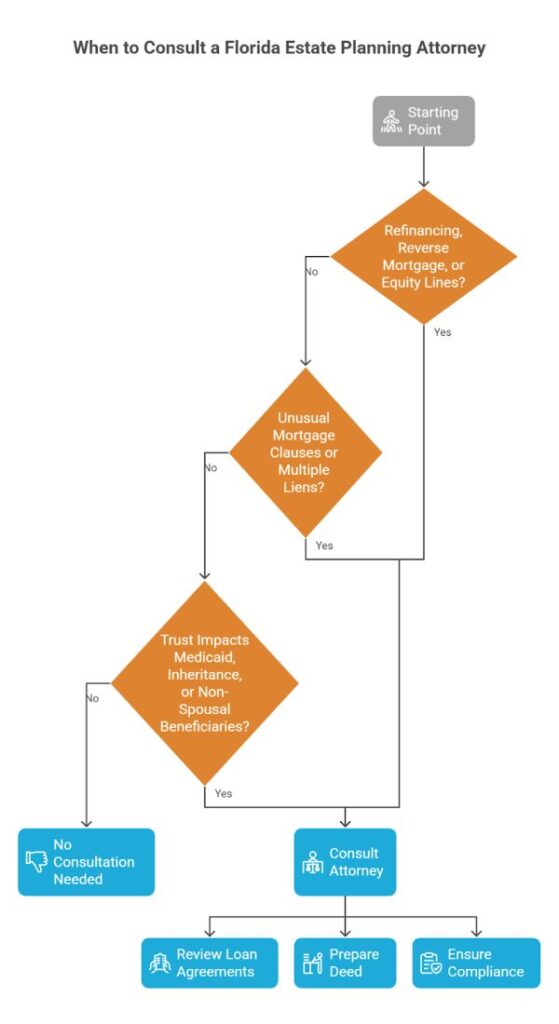
5. Consult with a Real Estate and Estate Attorney
For specific advice tailored to your situation in Florida, it is highly recommended to seek legal counsel. An attorney can guide you through the nuances of property ownership, mortgage implications, and estate distribution, ensuring a clear and legally compliant plan is in place. They can also advise on the best way to structure ownership or prepare for inheritance, considering options like adding a child to the deed during your lifetime (which has its own implications and should be carefully considered with legal advice).
In conclusion, while you cannot directly add a beneficiary to a mortgage document in Florida, you absolutely can ensure your property is passed to your chosen beneficiaries. This is achieved through proper estate planning tools like wills and trusts, and by understanding how joint ownership and mortgage clauses interact. Proactive planning and legal guidance are paramount to making this process as seamless as possible for your loved ones.
LifeOutOfTheBox is a participant in the Amazon Services LLC Associates Program, an affiliate advertising program designed to provide a means for sites to earn advertising fees by advertising and linking to Amazon.com. Amazon, the Amazon logo, AmazonSupply, and the AmazonSupply logo are trademarks of Amazon.com, Inc. or its affiliates. As an Amazon Associate we earn affiliate commissions from qualifying purchases.