
Navigating California‘s Complex Firearm Laws for Travelers
Traveling through or to California offers an unparalleled experience, from its stunning coastlines and majestic mountains to its vibrant cities and diverse cultural landscapes. However, for those who own firearms and are considering bringing them along, understanding California’s gun laws is not just advisable—it’s absolutely essential. The state of California maintains some of the strictest firearm regulations in the United States, and what might be legal in one state could lead to serious legal complications here. This guide aims to provide a clear, insightful overview for travelers, helping you navigate these complex rules to ensure a smooth and lawful journey. The core principle for any firearm owner visiting California is meticulous preparation and adherence to the letter of the law. Ignorance of the law is not a valid defense, and violations can range from significant fines to felony charges and imprisonment. Therefore, before packing any firearm in your vehicle, a thorough understanding of state statutes, particularly those concerning transportation and carry, is paramount for a worry-free travel experience.
Understanding ‘Open Carry’ and ‘Concealed Carry’ in Vehicles
California’s approach to carrying firearms, both openly and concealed, is highly restrictive, especially when it involves vehicles. The distinction between these two forms of carry is critical, as are the specific conditions under which either might be permissible.
Unloaded Open Carry in a Vehicle
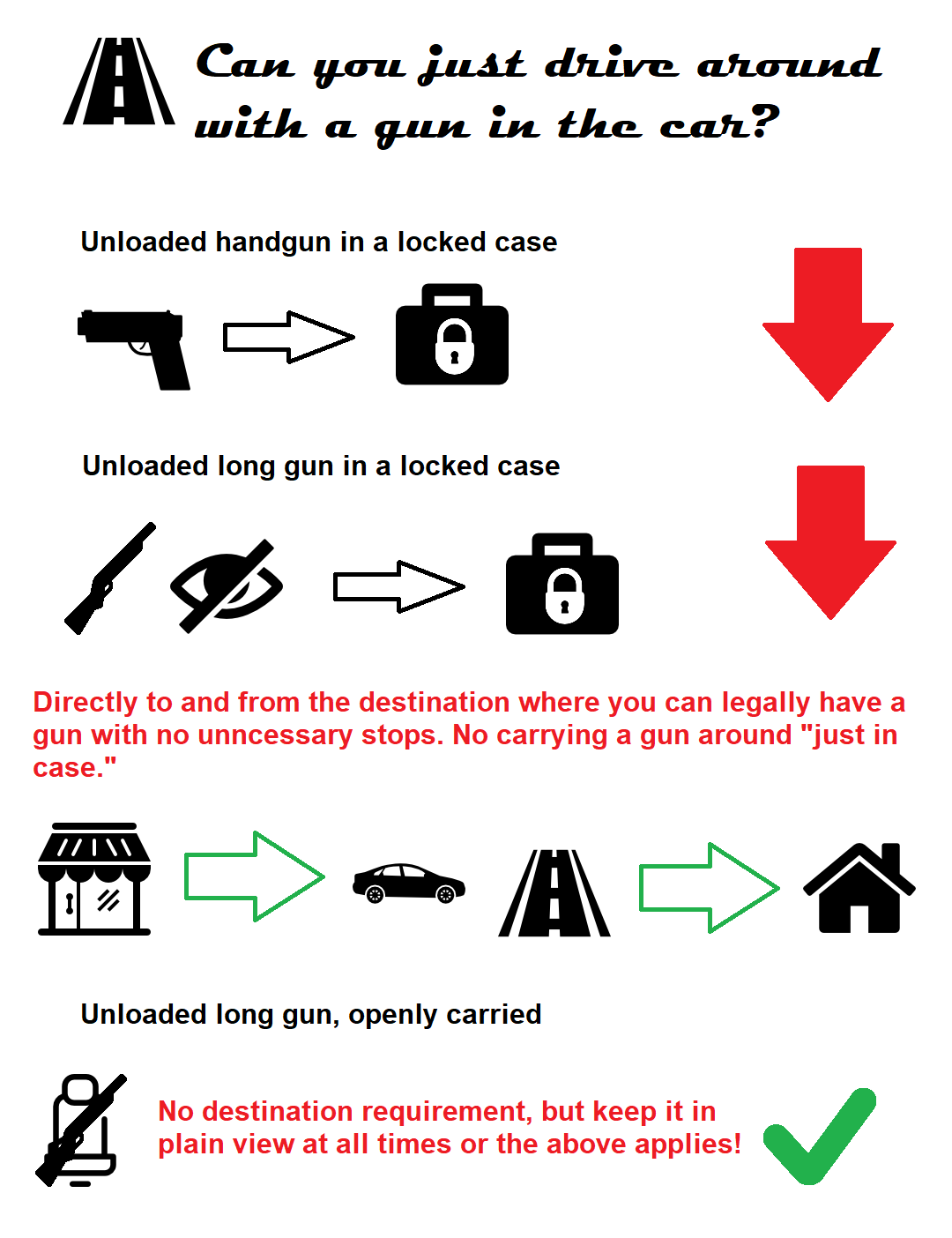
Generally, California prohibits the open carry of loaded or unloaded firearms in public, and this prohibition largely extends to vehicles. While the concept of “unloaded” might seem straightforward, in California, a firearm is considered “loaded” if there is an unexpended cartridge or shell in the chamber or attached to the firearm in any manner. This means a magazine inserted into a pistol, even if the chamber is empty, can render the firearm “loaded” under specific interpretations, depending on the firearm type and location. Historically, there were limited scenarios where unloaded open carry was permissible in vehicles, primarily for specific activities like hunting or sport shooting, provided the firearm was being transported directly to or from these activities and was unloaded. However, these exceptions are narrow and have been further restricted over time. For the average traveler, the default expectation should be that open carry, even unloaded, is largely illegal in a vehicle on public roads and spaces in California, unless explicitly covered by a very specific, limited exception, such as a licensed hunter in transit to a hunting ground with an unloaded long gun.
Concealed Carry with a License (CCW)
Concealed carry of a handgun in a vehicle in California requires a valid Concealed Carry Weapon (CCW) license issued by a California sheriff or police chief. This is where California significantly differs from many other states. California is a “may-issue” state, meaning authorities have discretion in issuing CCW permits, and historically, “good cause” was a significant hurdle. While recent legal developments have impacted this, obtaining a CCW in California remains challenging, especially for non-residents. Crucially, California does not recognize CCW permits from any other state. This means if you have a valid CCW from Arizona or Texas, it provides no legal authority to carry a concealed firearm in California, whether in your vehicle or on your person. Therefore, travelers with out-of-state CCW permits must still adhere to California’s strict transportation laws for unloaded and securely stored firearms, as if they had no permit at all. The only exception is if a peace officer with CCW privileges is operating within the scope of their duties or if certain federal law enforcement officers are exempt.
Transporting Firearms in Your Vehicle: The Legal Specifics
Given the severe restrictions on carrying firearms in California, proper transportation becomes paramount for any firearm owner. The law makes clear distinctions between handguns and long guns and specifies exactly how they must be secured.
Handguns
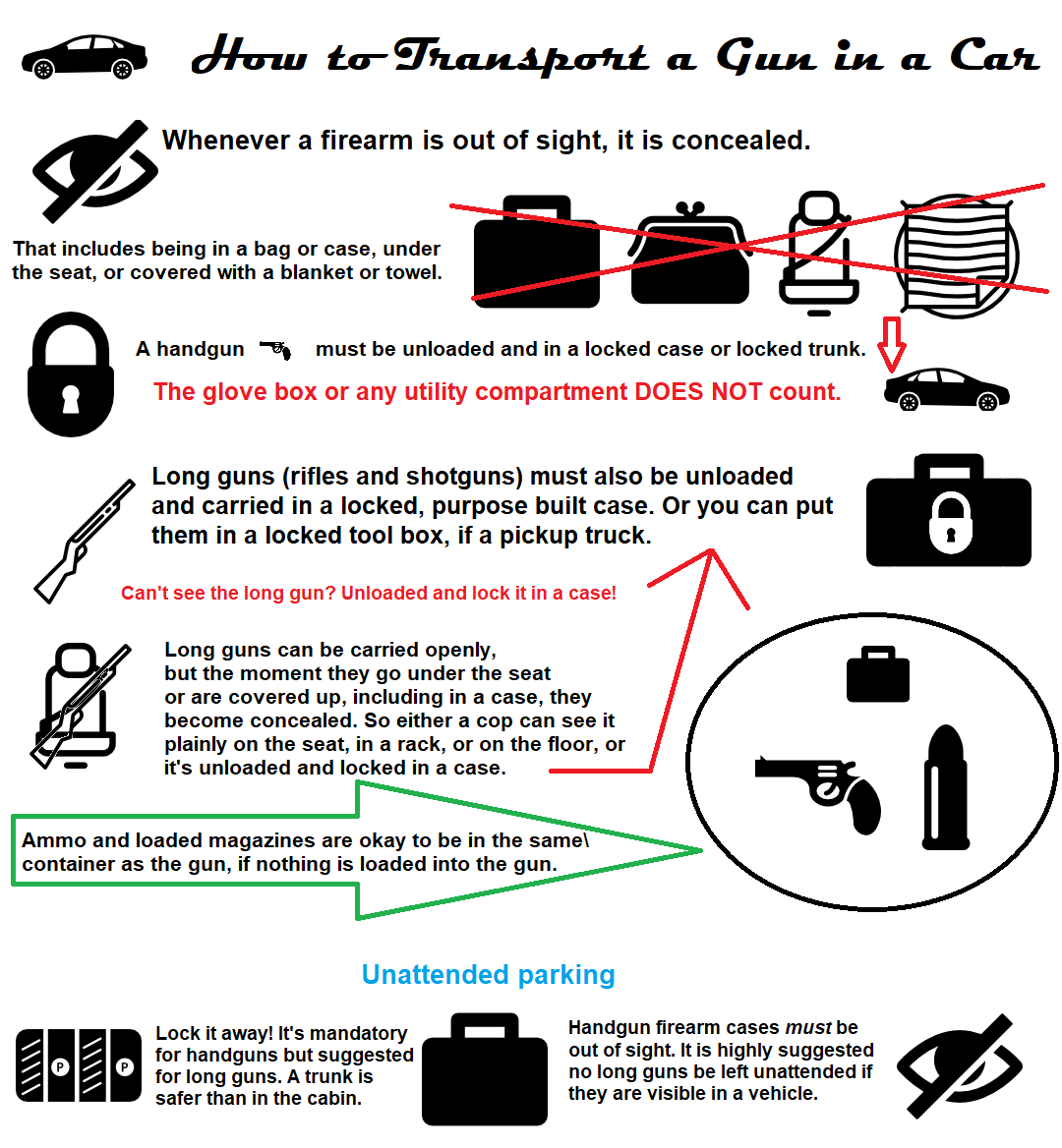
For handguns, California law mandates that they must be transported in a locked container. This means the handgun must be unloaded and placed within a container that is fully enclosed and locked. The definition of a “locked container” is crucial: it must be a fully enclosed, secure container that requires a key or combination to open. This explicitly excludes the glove compartment or any console compartment that is not locked with a key or combination lock separate from the vehicle’s ordinary locking system. A locked toolbox, a gun case designed with a lock, or even a locked luggage case will typically suffice, as long as the handgun is rendered inaccessible without unlocking the container. Furthermore, the ammunition must generally be stored separately from the firearm itself. While it can be in the same locked container, it must not be loaded into the firearm or any magazine that is inserted into the firearm. Some interpretations suggest the magazine itself, if separate from the firearm, can be in the same container. The safest practice is to ensure the handgun is unloaded, in a locked container, and all ammunition is kept separately, either in another container or a different part of the vehicle, to eliminate any ambiguity.
Long Guns (Rifles and Shotguns)
The rules for transporting long guns, such as rifles and shotguns, are slightly different but still highly restrictive. Long guns must also be transported unloaded. Unlike handguns, California law does not strictly require long guns to be in a locked container for general transport, although doing so is strongly recommended as a best practice for safety and to avoid potential issues, especially in specific locales. However, if you are transporting a long gun through a “school zone” (within 1,000 feet of a school), it must be in a locked container or secured to the vehicle in a locked rack that prevents removal. This additional requirement for school zones makes a locked container the most prudent choice for all long gun transport. As with handguns, the definition of “unloaded” means no round in the chamber and no magazine attached to the firearm with ammunition. For both handguns and long guns, it is illegal to transport them if they are considered “assault weapons” or “fifty caliber BMG rifles” under California law, which has its own complex definitions and restrictions that often prohibit possession entirely within the state.
Prohibited Areas and Exceptions
Even with proper transportation, certain locations are strictly off-limits for firearms. These include, but are not limited to:
- School Zones: As mentioned, within 1,000 feet of a K-12 school, firearms must be unloaded and in a locked container or rack.
- Government Buildings: State and local government buildings, including courthouses, usually prohibit firearms.
- Courthouses: Carrying a firearm in a courthouse or other court facility is prohibited.
- Airports: Specific regulations apply within airport terminals and secured areas.
- National Parks: While federal law may allow concealed carry in National Parks if permitted by state law, California’s strict laws still apply within its park boundaries. It’s critical to check specific park regulations.
- Federal Buildings: All federal buildings are typically off-limits for firearms.
- Private Property: Private property owners can prohibit firearms, even if you are otherwise legally allowed to possess them.
Exceptions to these rules generally exist for active-duty law enforcement officers, federal agents, and in some cases, licensed security guards acting within their scope of duty. For the general traveler, assume these prohibitions apply universally.
Interstate Travel and Federal Protections (FOPA)
For those traveling across state lines with firearms, the Firearm Owners’ Protection Act (FOPA) is a critical federal law to understand. Enacted in 1986, FOPA provides a limited federal protection for individuals transporting firearms through states where possession might otherwise be illegal, provided specific conditions are met.
FOPA essentially states that, notwithstanding any state or local law, a person shall be entitled to transport a firearm for any lawful purpose from any place where he may lawfully possess and carry such firearm to any other place where he may lawfully possess and carry such firearm. However, this protection is not a license to carry a firearm openly or concealed in a prohibited state like California. Instead, it strictly applies to transportation under very specific conditions:
- Unloaded: The firearm must be unloaded.
- Locked Container: The firearm must not be directly accessible from the passenger compartment of the vehicle. If the vehicle does not have a trunk, the firearm must be in a locked container other than the glove compartment or console.
- Direct Transit: The travel must be continuous and uninterrupted. Any significant deviation from a direct route for non-travel purposes (e.g., stopping for an extended visit, sightseeing, or staying overnight in California without immediately continuing your journey) could void FOPA protection.
- Legal Origin and Destination: The individual must be legally allowed to possess and carry the firearm at both their point of origin and their final destination.
It is crucial to understand that FOPA offers protection only for through-transit. If your origin or your intended destination is California, FOPA generally does not apply. This means if you are moving to [California](https://lifeoutofthebox.com/california] or beginning your trip from within the state, you must comply with California’s state laws for possession and transportation, which may include registering certain firearms or rendering others illegal. FOPA is a narrow protection; relying on it requires strict adherence to its requirements and an understanding of its limitations. When in doubt, always err on the side of caution and adhere to California’s stricter state laws.

Key Takeaways for Travelers to California
Traveling with firearms through or to California demands meticulous planning and adherence to a highly complex set of laws. The Golden State’s regulations are among the most stringent in the United States, and what is legal elsewhere may lead to severe penalties here.
The most critical points for any firearm owner considering a trip to California are:
- No Reciprocity for CCW: California does not recognize any out-of-state concealed carry permits. Do not assume your permit from another state allows you to carry a concealed firearm in California.
- Handguns in Locked Containers: All handguns must be transported unloaded in a fully enclosed, locked container. A glove compartment or console without a separate lock is generally not sufficient.
- Long Guns Unloaded: Rifles and shotguns must be transported unloaded. While not always legally required to be in a locked container (outside school zones), it is highly recommended as a best practice for safety and legal clarity.
- Ammunition Separate: Always keep ammunition separate from your firearm. While it can be in the same locked container as the firearm, it should not be loaded into the firearm or an attached magazine.
- Beware of Prohibited Locations: Be acutely aware of “no-gun” zones such as government buildings, schools, courthouses, and private property with posted prohibitions.
- Understand FOPA’s Limitations: The Firearm Owners’ Protection Act (FOPA) offers limited protection for through-transit, but only if all its strict conditions are met, and it does not apply if California is your origin or destination.
- Research Specific Local Ordinances: Some cities and counties within California may have additional local ordinances that are even more restrictive than state law. Always check the specific regulations for your destination within California.
The safest approach for travelers is often to leave firearms at home if they are not absolutely essential for the purpose of the trip (e.g., competitive shooting events, hunting with proper permits). If you must bring a firearm, prioritize caution and legal compliance above all else. When in doubt, consult with a California attorney specializing in firearm law or contact local law enforcement agencies for specific guidance. Your peace of mind and legal standing are worth the extra effort to ensure compliance with California’s stringent firearm regulations during your travels.
LifeOutOfTheBox is a participant in the Amazon Services LLC Associates Program, an affiliate advertising program designed to provide a means for sites to earn advertising fees by advertising and linking to Amazon.com. Amazon, the Amazon logo, AmazonSupply, and the AmazonSupply logo are trademarks of Amazon.com, Inc. or its affiliates. As an Amazon Associate we earn affiliate commissions from qualifying purchases.