
Navigating the complexities of travel documentation can often be a source of confusion for even the most seasoned travelers. A common question that arises, particularly for residents of the Golden State, is: “Can you cross the border with a California Real ID?” The short answer is generally no, especially when referring to international borders. While the Real ID serves a crucial purpose within the United States, its utility diminishes significantly when attempting to enter another country. This article will meticulously dissect the functionalities and limitations of the California Real ID, clarifying its role in both domestic and international travel and outlining the essential documents required for seamless border crossings.

Understanding Your California Real ID
The introduction of the Real ID Act in 2005 marked a significant shift in federal security standards for state-issued identification documents. Born out of a recommendation from the 9/11 Commission, the Act aimed to enhance the security of driver’s licenses and state IDs, making them more difficult to counterfeit and ensuring consistent standards across all states.
What is a Real ID?
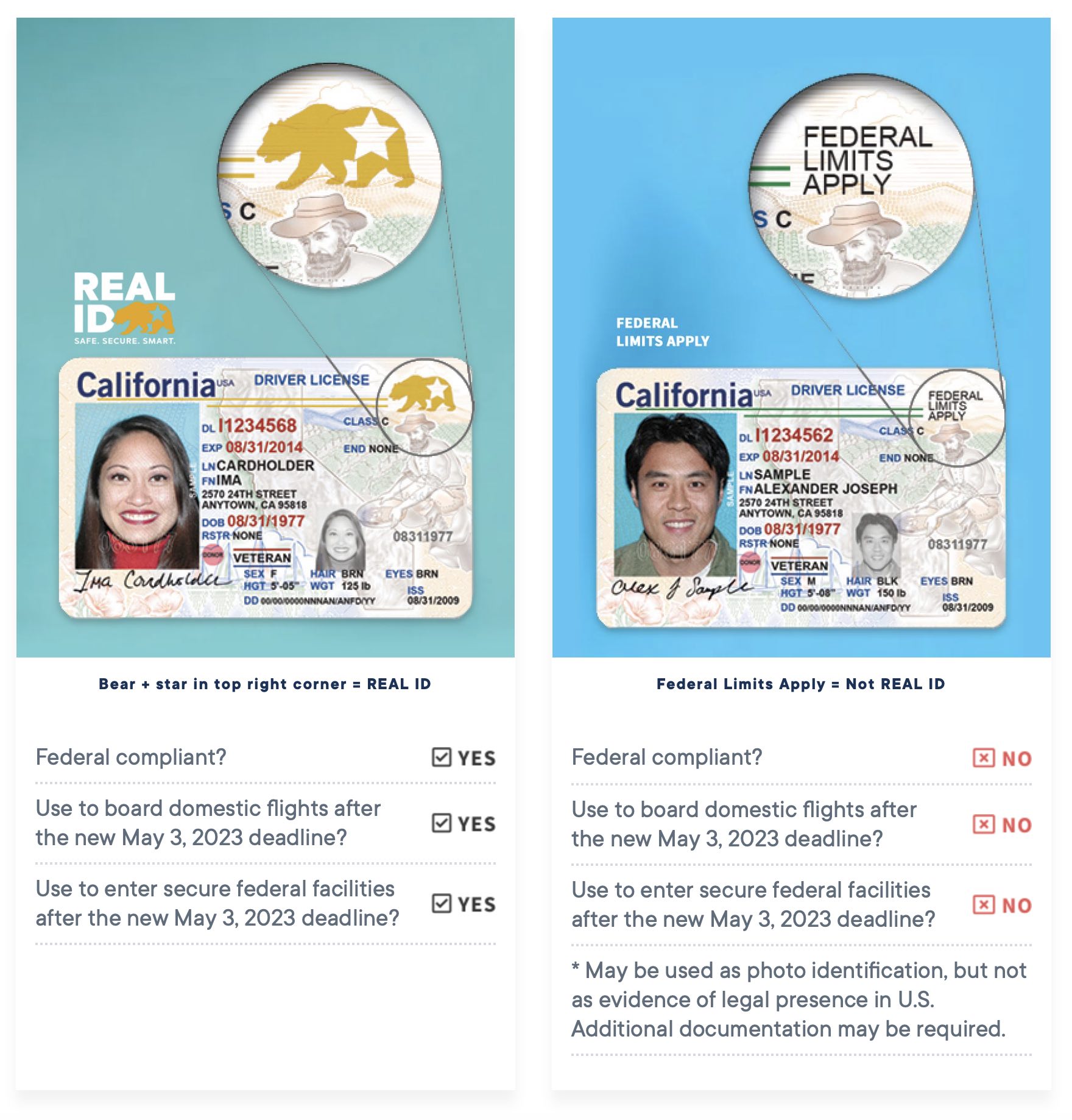
A Real ID is a driver’s license or state identification card that meets stricter federal security standards. For California residents, this means applying for an ID that verifies your identity, date of birth, legal status, social security number, and residency. Upon successful application, the card features a star symbol (often a gold bear and star in California) in the upper right-hand corner, distinguishing it from a standard driver’s license or ID that does not meet federal compliance. The primary impetus for the Real ID was to standardize acceptable forms of identification for specific federal purposes.
Key Features and Benefits
The paramount benefit of a Real ID is its acceptance for domestic air travel. As of May 7, 2025, a Real ID compliant driver’s license or state ID will be mandatory for individuals aged 18 and over to board federally regulated commercial flights within the United States. Beyond air travel, it is also accepted for entry into secure federal facilities, such as military bases and nuclear power plants. The enhanced security features embedded in a Real ID are designed to prevent identity fraud and ensure that individuals presenting these documents are indeed who they claim to be, thereby contributing to national security. However, it is crucial to understand that these benefits are primarily confined to domestic applications.
Domestic vs. International Travel: The Core Distinction
The fundamental difference between the utility of a Real ID for domestic purposes versus its inadequacy for international borders lies in the nature of jurisdiction and accepted identification protocols.
Real ID for Air Travel Within the United States
For citizens flying within the United States, the Real ID will soon be the standard acceptable form of identification at Transportation Security Administration (TSA) checkpoints. Its purpose is to verify identity for security screening procedures, ensuring that travelers are legitimate passengers. It acts as proof of identity and age, simplifying the boarding process for domestic flights and reducing the risk of unauthorized individuals accessing secure airport areas. This is where the Real ID’s strength truly lies.
Limitations for International Borders
Despite its enhanced security features, a Real ID is not an internationally recognized travel document. It does not signify citizenship or offer the universally accepted proof of identity required by other sovereign nations. When you attempt to cross an international border, foreign governments and U.S. Customs and Border Protection (CBP) require documentation that explicitly establishes your citizenship and allows for reciprocal agreements between countries. A standard driver’s license or state ID, even if Real ID compliant, lacks these critical attributes. It is purely a state-issued document for state and federal domestic purposes, not a passport equivalent.
Border Crossing Scenarios: Where Real ID Falls Short
To illustrate the limitations, let’s consider specific international borders that California residents frequently encounter.
Crossing into Canada
For U.S. citizens entering Canada by air, a valid U.S. passport is unequivocally required. For land and sea travel to Canada, the requirements are slightly broader, but a Real ID still falls short. Under the Western Hemisphere Travel Initiative (WHTI), U.S. citizens need a passport, a U.S. passport card, an Enhanced Driver’s License (EDL) from one of the states that issues them (which California does not), or a NEXUS card. A California Real ID is not listed among these acceptable WHTI documents. Therefore, whether you’re driving across the border or taking a ferry, your California Real ID alone will not suffice.
Crossing into Mexico

Similar to Canada, entering Mexico by air requires a valid U.S. passport. For land and sea travel, U.S. citizens can present a passport, a U.S. passport card, or an Enhanced Driver’s License from an issuing state (again, not California). Other documents like SENTRI or Global Entry cards are also accepted. A California Real ID is not recognized as a legitimate document for crossing into Mexico by any mode of transport. Attempting to do so will likely result in denial of entry, significant delays, and frustration.
Other International Destinations
For any other international destination around the globe, the requirement becomes even stricter: a valid U.S. passport is almost universally mandatory. The Real ID has no bearing on entry requirements for countries outside of North America (and even there, it’s not sufficient). Each country establishes its own entry requirements, which typically include a passport, and often a visa, depending on the traveler’s nationality and the duration/purpose of their stay. Relying on a Real ID for any foreign journey beyond the United States borders would be a critical oversight.
Essential Documents for International Travel
Given the limitations of the California Real ID for international crossings, it’s imperative for travelers to understand what documents are indeed necessary.
The Indispensable U.S. Passport
The U.S. passport is the gold standard for international travel. It is a universally accepted document that proves both your identity and your U.S. citizenship, and it contains security features that meet international standards. For all air travel outside the United States, and for the vast majority of land and sea entries into foreign countries, a valid U.S. passport book is the primary requirement. Many countries also stipulate that your passport must be valid for at least six months beyond your intended date of departure from their territory. This is to ensure you have valid documentation in case of unforeseen delays.
Other Acceptable Travel Documents
While the passport book is paramount, a few other documents are recognized under specific circumstances, particularly for land and sea travel within North America.
- U.S. Passport Card: This wallet-sized card is valid for entry into Canada and Mexico by land or sea, as well as for Caribbean travel. It is not valid for international air travel. It provides a convenient alternative for frequent cross-border commuters or for those who prefer not to carry their passport book for short trips.
- Enhanced Driver’s Licenses (EDLs): Issued by certain states (Michigan, Minnesota, New York, Vermont, and Washington) and Canadian provinces, EDLs are compliant with WHTI and contain security features and RFID technology that makes them acceptable for land and sea crossings into Canada and Mexico. It is crucial to remember that California does not issue EDLs. Therefore, a California Real ID is not an EDL and does not grant the same international travel privileges.
- Trusted Traveler Programs: Programs like NEXUS (for Canada), SENTRI (for Mexico), and Global Entry provide expedited processing at borders for pre-approved, low-risk travelers. Membership cards from these programs are accepted for land and sea crossings in their respective regions.
Planning Your Journey: Practical Advice for Travelers
Proper planning is key to a stress-free travel experience, especially when it involves crossing borders.
Verifying Requirements Before You Go
Before embarking on any international travel, it is absolutely critical to verify the most up-to-date entry and exit requirements for your destination country and for re-entry into the United States. Official government websites, such as the U.S. Department of State and the Department of Homeland Security (DHS), are the most reliable sources of information. Requirements can change due to various factors, including global health concerns, political developments, or shifts in international relations. Always check well in advance of your travel dates.
Applying for a Passport: Timeline and Tips
If you do not possess a valid U.S. passport, applying for one should be your top priority for any planned international travel.
- Timeline: Routine processing can take several weeks, and expedited services come with additional fees. During peak travel seasons or unforeseen global events, processing times can significantly extend. It’s advisable to apply for a passport at least 6-9 months before your anticipated travel date.
- Application Process: You can apply at a designated passport acceptance facility, often a post office, public library, or clerk of court. You will need proof of U.S. citizenship (e.g., original birth certificate or previous passport), a valid photo ID, and a recent passport-compliant photograph.
- Renewal: If your passport is nearing expiration, initiate the renewal process well in advance. Renewals can often be done by mail if you meet specific criteria.
Staying Informed
Travel regulations are not static. Staying informed about current events and official travel advisories is crucial for safe and compliant international travel. Subscribe to travel alerts from the U.S. Department of State, follow reputable news sources, and periodically check the websites of the border authorities for your intended destination. Being proactive will prevent last-minute crises and ensure your travel plans proceed smoothly.
In conclusion, while your California Real ID is an indispensable document for domestic air travel and access to federal facilities within the United States, it is emphatically not sufficient for crossing international borders. For any journey beyond U.S. territory, a valid U.S. passport (or a U.S. passport card for specific land/sea crossings to Canada and Mexico) is your primary and most critical travel document. Plan ahead, acquire the correct identification, and enjoy your travels with peace of mind.
LifeOutOfTheBox is a participant in the Amazon Services LLC Associates Program, an affiliate advertising program designed to provide a means for sites to earn advertising fees by advertising and linking to Amazon.com. Amazon, the Amazon logo, AmazonSupply, and the AmazonSupply logo are trademarks of Amazon.com, Inc. or its affiliates. As an Amazon Associate we earn affiliate commissions from qualifying purchases.