
Navigating the complexities of unemployment benefits, especially after voluntarily leaving a job, is a significant lifestyle concern for many in California. While the common perception is that quitting a job automatically disqualifies you from receiving unemployment insurance, the reality is often more nuanced. California’s system, managed by the Employment Development Department (EDD), allows for benefits in specific situations where a claimant can demonstrate “good cause” for leaving their employment. Understanding these provisions is crucial for anyone considering a voluntary separation and its potential impact on their financial well-being and future lifestyle plans.
Understanding Unemployment Benefits in California
Unemployment insurance (UI) is a state-federal program designed to provide temporary financial assistance to eligible workers who are unemployed through no fault of their own. In California, the EDD administers this program, setting the criteria for eligibility, benefit amounts, and duration. For most, the primary condition for receiving benefits is involuntary separation – layoffs, reductions in force, or termination for reasons other than serious misconduct. However, the system acknowledges that some voluntary quits are justifiable and should not preclude someone from receiving support.
The EDD’s Role and Basic Eligibility Criteria
The EDD acts as the gatekeeper for unemployment benefits in California. When you file a claim, they will evaluate your work history, earnings, and the circumstances surrounding your job separation. Key eligibility criteria, regardless of whether you quit or were laid off, include:
- Monetary Eligibility: You must have earned enough wages during a specific “base period” (typically the first four of the last five completed calendar quarters before your claim starts).
- Availability and Search for Work: You must be able and available for work and actively seeking new employment.
- Reason for Separation: This is where quitting becomes a critical factor. The EDD investigates the reasons for your departure to determine if “good cause” existed.
Understanding these foundational elements is the first step in assessing your potential for benefits. The EDD’s objective is to determine if your decision to quit was reasonable under the circumstances, reflecting a responsible approach to your career and personal life, rather than a mere disinterest in working.
The “Good Cause” Standard for Quitting
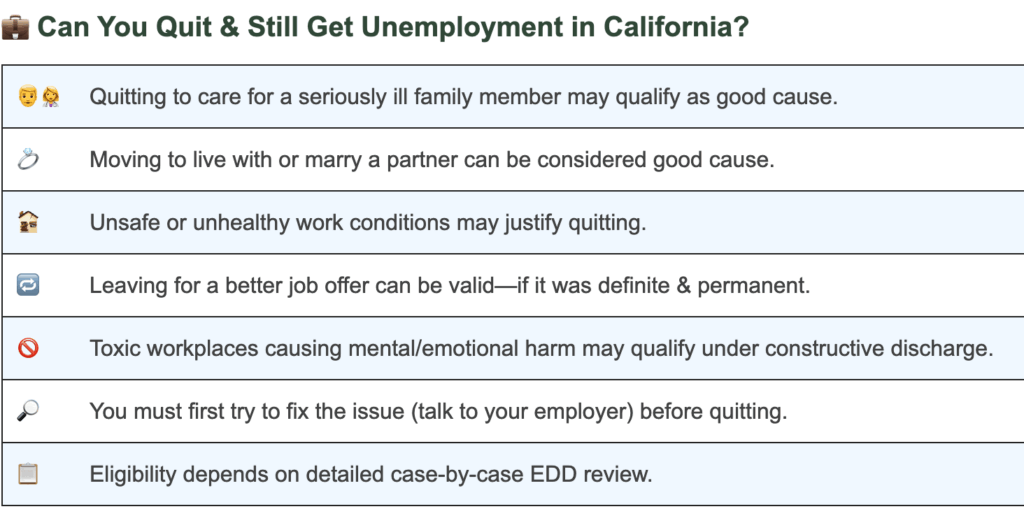
The most critical hurdle for individuals who quit their jobs in California to receive unemployment benefits is proving “good cause.” This legal standard requires demonstrating that your reason for leaving was compelling, substantial, and would have caused a reasonable person in the same circumstances to quit. It implies that staying in the job was either impossible, unreasonable, or detrimental to your health, safety, or well-being.
What Constitutes Good Cause?
While the EDD evaluates each case individually, several common scenarios often qualify as “good cause”:
- Unsafe Working Conditions: If your workplace presented a clear and present danger to your health or safety, and you took reasonable steps to have the employer rectify the situation without success, this could constitute good cause. Examples include exposure to toxic chemicals without proper protection, dangerous machinery, or a consistently hazardous environment.
- Harassment or Discrimination: Experiencing unlawful harassment (e.g., sexual harassment, racial harassment) or discrimination based on protected characteristics (e.g., age, gender, religion, disability) can be good cause, especially if you reported the issues to management and they failed to address them effectively.
- Medical Necessity: If a medical condition (yours or a family member’s) requires you to leave your job, and you provide appropriate medical documentation, you may qualify. This often requires proof that the job itself exacerbated the condition or that the job’s demands were incompatible with your treatment or caregiving responsibilities.
- Relocation for a Spouse’s Employment: If your spouse’s employment requires a significant relocation, making your commute unreasonable or continuing your current job impractical, this may be considered good cause. The relocation must typically be a substantial distance and for a bona fide job offer for your spouse. This often applies to situations involving military spouses or transfers with existing employers.
- Wage Reduction or Material Change in Working Conditions: A significant, unilateral reduction in your wages, or a drastic alteration of your job duties, hours, or working conditions that fundamentally changes the nature of your employment, can be good cause, especially if you did not agree to the changes.
- Employer Breach of Contract: If your employer violated a material term of your employment contract, written or implied, and you can demonstrate this breach, it might constitute good cause for quitting.
- To Escape Domestic Violence: Leaving a job to escape an abusive environment is generally considered good cause, recognizing the immediate danger and necessity of such a decision.
It’s important to remember that merely being dissatisfied with your job, disliking your boss, or finding a better opportunity elsewhere generally does not constitute good cause. The bar is set high to ensure benefits are reserved for those facing genuine hardships.
Documenting Your Case
The burden of proof rests with you, the claimant. Strong documentation is paramount to successfully demonstrating good cause. Without clear evidence, your claim is likely to be denied. Essential documentation may include:
- Written communications: Emails, letters, or memos exchanged with your employer regarding the issues you faced (e.g., reports of harassment, requests for accommodation, complaints about unsafe conditions).
- Medical records: Physician’s notes, diagnoses, and recommendations if your quit was medically related.
- Police reports or restraining orders: In cases of domestic violence or workplace threats.
- Spouse’s job offer and relocation details: If relocating due to a spouse’s employment.
- Witness statements: If applicable, from co-workers who can corroborate your claims regarding harassment or unsafe conditions.
- Employer policies: Evidence of policies you followed or that were violated by your employer.
- Pay stubs or employment contracts: To demonstrate wage reductions or breaches of contract.
The more detailed and verifiable your documentation, the stronger your case will be. The EDD adjudicator will scrutinize this evidence alongside your testimony and your former employer’s statement.

Navigating the Application Process
Once you decide to quit, or have already quit, and believe you have good cause, the next step is to file your claim and prepare for the EDD’s investigation. This process can be daunting, but thorough preparation can make a significant difference.
Initial Steps and Required Information
- File Your Claim Online: The quickest way to apply is through the EDD’s website. Be honest and comprehensive in your application, clearly stating that you quit and why.
- Provide Detailed Information: When asked about your separation, articulate your reasons clearly and include all relevant details, referencing any supporting documentation you have. Do not omit any facts that you believe support your “good cause” argument.
- Expect a Phone Interview: For voluntary separations, the EDD almost always schedules a phone interview. This is your opportunity to explain your case directly to an EDD representative. Be prepared to elaborate on your reasons for quitting, provide specific dates, details of conversations with your employer, and how you attempted to resolve the issues before leaving. Your former employer will also be contacted for their statement.
The Interview and Appeals Process
The phone interview is a critical juncture. During the interview:
- Be Prepared and Concise: Have your documentation ready to reference. Clearly explain the timeline of events and how your employer failed to address your concerns.
- Be Honest: Any misrepresentation can lead to disqualification and potential penalties.
- Focus on Facts: Stick to objective facts and avoid emotional language. Explain why continuing employment was not a viable option for a reasonable person.
If your claim is initially denied, do not despair. You have the right to appeal the decision. An appeal will lead to a hearing before an Administrative Law Judge (ALJ) at the California Unemployment Insurance Appeals Board (CUIAB). At this hearing, both you and your former employer will present your cases, call witnesses, and submit evidence. This is a more formal proceeding, and legal assistance, while not mandatory, can be highly beneficial. Many people successfully overturn initial denials on appeal by presenting a stronger, more organized case.
Financial Implications and Planning Your Transition
Even if you have a strong “good cause” claim, the process of receiving unemployment benefits after quitting can take time. There will be a waiting period for the EDD to process your claim and conduct its investigation. During this period, you will be without your regular income, which can significantly impact your lifestyle.
Managing Without Immediate Income
- Emergency Fund: Having a robust emergency fund covering several months of living expenses is crucial for anyone considering a job change, especially a voluntary quit. This financial cushion provides stability during the application and waiting periods.
- Budgeting: Create a strict budget immediately upon contemplating leaving your job. Identify essential expenses and cut back on non-essential spending.
- Explore Other Resources: Look into any severance packages, accrued vacation pay, or other financial resources that might be available from your former employer. Consider temporary or part-time work if it doesn’t interfere with your availability requirements for unemployment.
Exploring Alternatives and Resources
Beyond unemployment benefits, consider other avenues for support. Many non-profits and government agencies offer assistance for housing, food, and job search support. Networking, updating your resume, and actively engaging in job search activities are essential, not just for meeting EDD requirements, but for quickly re-establishing your financial independence.
For instance, if you reside in major metropolitan areas like Los Angeles or San Francisco, local career centers and community organizations often provide free services like resume workshops, interview coaching, and job fairs. These resources can be invaluable in shortening your period of unemployment and mitigating the financial strain.

Long-Term Lifestyle Adjustments
A period of unemployment, even with benefits, often necessitates lifestyle adjustments. This could mean delaying large purchases, re-evaluating discretionary spending, or adjusting long-term financial goals. It also presents an opportunity to reassess career paths, invest in new skills, or pursue educational opportunities that enhance your long-term employability.
While quitting a job in California does not automatically disqualify you from unemployment benefits, the path to eligibility requires careful planning, a clear understanding of the “good cause” standard, and diligent documentation. For those facing difficult work circumstances, knowing your rights and preparing thoroughly can be the difference between financial stability and significant hardship during a career transition.
LifeOutOfTheBox is a participant in the Amazon Services LLC Associates Program, an affiliate advertising program designed to provide a means for sites to earn advertising fees by advertising and linking to Amazon.com. Amazon, the Amazon logo, AmazonSupply, and the AmazonSupply logo are trademarks of Amazon.com, Inc. or its affiliates. As an Amazon Associate we earn affiliate commissions from qualifying purchases.