
Navigating the complex landscape of employment law in Texas can be daunting, especially when facing the distressing situation of termination. While many employers operate within the bounds of the law, instances of wrongful termination do occur. Understanding your rights and the legal avenues available is crucial if you believe you have been unfairly dismissed. Texas, like most states, operates under an “at-will” employment doctrine, which generally allows employers to terminate an employee for any reason, or no reason at all, as long as it’s not an illegal reason. However, this doctrine is not absolute and is subject to significant exceptions that protect employees from discriminatory or retaliatory practices.
Understanding “At-Will” Employment and Its Exceptions in Texas
The doctrine of “at-will” employment is the cornerstone of the employer-employee relationship in Texas. This means that, in the absence of a contract specifying a definite term of employment or a collective bargaining agreement, either the employer or the employee can terminate the employment relationship at any time, with or without notice, and for any reason that is not prohibited by law. This can seem like a broad power for employers, but the key phrase here is “not prohibited by law.” Texas law, along with federal statutes, carves out several crucial exceptions to the at-will doctrine, transforming it from a shield for employers into a framework with protected boundaries.
Public Policy Exception
One of the most significant exceptions to at-will employment is the public policy exception. This exception prohibits an employer from terminating an employee for reasons that violate a clear mandate of public policy. This means an employer cannot fire an employee for refusing to commit an illegal act, for exercising a legal right, or for performing a legal duty.
For example, if an employee is terminated for refusing to lie under oath, for reporting illegal activities by the employer (whistleblowing), or for serving on a jury, they may have a claim for wrongful termination. The definition of “public policy” is generally derived from statutes, constitutional provisions, and judicial decisions. The Texas Supreme Court has recognized this exception, providing a vital safeguard against employer overreach.
Contractual Exceptions
While many employees in Texas are considered at-will, some may have an employment contract that alters this status. These contracts can be express, written agreements or, in some cases, implied from the employer’s conduct or statements. If an employment contract specifies a fixed term of employment, an employee cannot be terminated before that term expires unless there is “good cause” as defined in the contract. Similarly, if an employee handbook or company policy outlines specific disciplinary procedures that must be followed before termination, and the employer fails to adhere to these procedures, it may constitute a breach of contract, leading to a wrongful termination claim. However, it is crucial to carefully review any employment agreement or employee handbook, as many contain disclaimers that preserve the at-will nature of employment.
Discrimination and Retaliation
Federal and state laws in Texas strictly prohibit terminating an employee based on protected characteristics or in retaliation for engaging in protected activities. These protections are paramount and form the basis for a significant number of wrongful termination lawsuits.
Discrimination
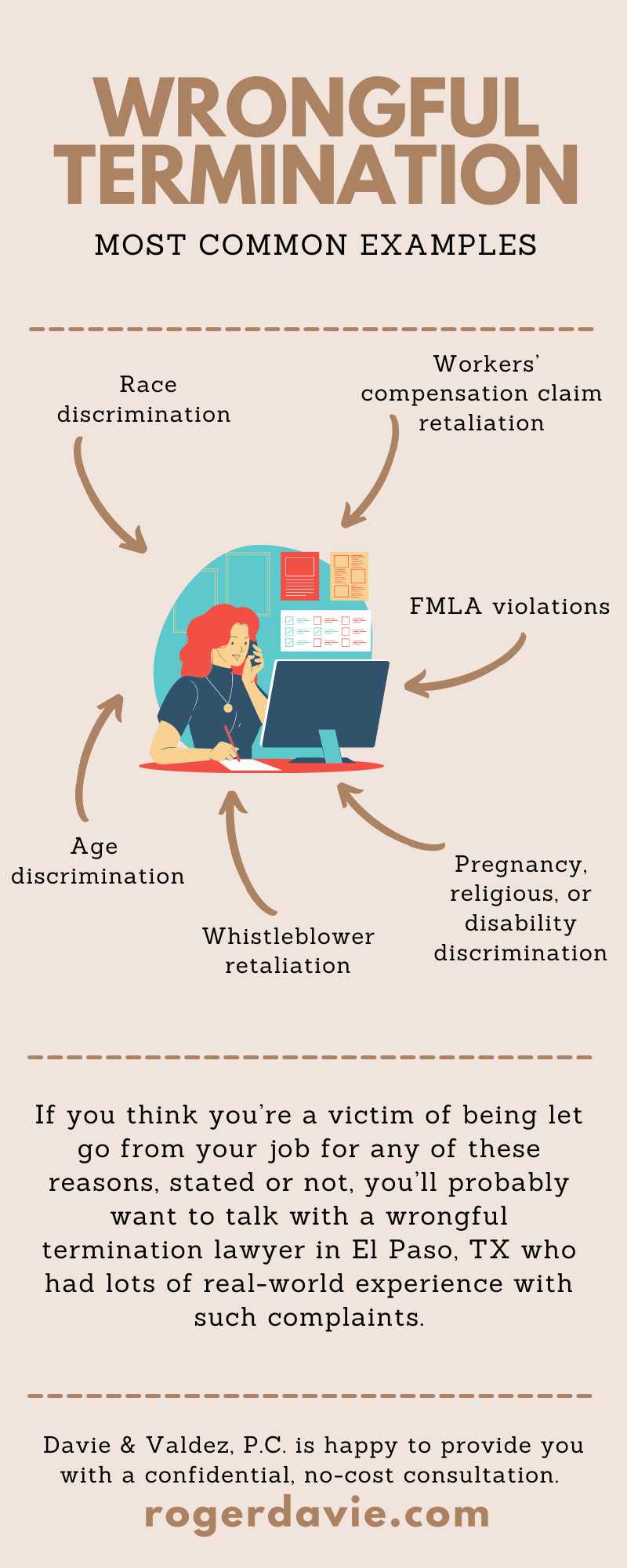
Discrimination occurs when an employer makes adverse employment decisions, including termination, based on an individual’s race, color, religion, sex (including pregnancy, sexual orientation, and gender identity), national origin, age (40 or older), disability, or genetic information. The Civil Rights Act of 1964, specifically Title VII, and the Age Discrimination in Employment Act (ADEA), are key federal laws that provide these protections. Texas also has its own anti-discrimination statutes that mirror these federal protections. If an employee can demonstrate that their termination was motivated, even in part, by discriminatory animus based on one of these protected categories, they may have a strong claim for wrongful termination.
Retaliation
Retaliation is another common basis for wrongful termination lawsuits. Employers are prohibited from retaliating against employees who engage in certain protected activities. These activities include:
- Reporting discrimination or harassment: This involves filing a complaint with HR, management, or an external agency like the Equal Employment Opportunity Commission (EEOC).
- Participating in an investigation: Cooperating with an employer or government agency investigating a discrimination or harassment claim.
- Requesting reasonable accommodations for a disability or religious belief.
- Taking protected leave: Such as under the Family and Medical Leave Act (FMLA).
- Reporting illegal activities (whistleblowing): As mentioned under the public policy exception, reporting violations of law or regulations can also be a protected activity against retaliation.
If an employer terminates an employee shortly after the employee has engaged in one of these protected activities, and there’s a temporal proximity or other evidence suggesting a causal link, it can be grounds for a retaliation claim.
Types of Wrongful Termination Claims in Texas
When an employee believes they have been wrongfully terminated, the specific circumstances will dictate the type of legal claim they can pursue. Understanding these distinctions is vital for building a case.
Constructive Discharge
Constructive discharge occurs when an employer makes working conditions so intolerable that a reasonable person in the employee’s position would feel compelled to resign. While the employee resigns, the law treats this resignation as a termination because the employer’s actions created a hostile or unbearable work environment. For a constructive discharge claim to succeed, the employee must typically show that the employer deliberately created or allowed the intolerable conditions and that the employer knew or should have known that these conditions would lead to the employee’s resignation. This often overlaps with discrimination or harassment claims, where the hostile work environment is the result of illegal conduct.
Breach of Contract
As previously discussed, if an employee has an employment contract that has been breached by the employer’s termination decision, they may have a claim for breach of contract. This can involve terminating an employee before the end of a fixed term, or failing to follow mandatory termination procedures outlined in a contract or handbook. Damages in a breach of contract case typically include lost wages and benefits for the remainder of the contract term.
Violation of Statutory Rights
This category encompasses claims arising from violations of federal and state laws that protect employees. This includes discrimination based on protected characteristics, retaliation for protected activities, and violations of wage and hour laws that might lead to an unfair termination. Pursuing these claims often involves an administrative process with agencies like the EEOC or the Texas Workforce Commission before litigation can commence.
The Legal Process for Wrongful Termination in Texas
If you believe you have been wrongfully terminated in Texas, there is a structured legal process you will likely need to follow. This process can be complex and is best navigated with the assistance of an experienced employment attorney.
Initial Steps and Evidence Gathering
The first crucial step is to gather all relevant documentation and evidence. This includes:
- Your employment contract or offer letter.
- The employee handbook and any written policies related to termination.
- Performance reviews, commendations, and any disciplinary warnings.
- Emails, letters, or other communications related to your employment and termination.
- Notes detailing conversations with supervisors or HR regarding the termination or any preceding events.
- Evidence of discriminatory or retaliatory comments or actions by supervisors or colleagues.
- Documentation of any protected activities you engaged in prior to termination.
It is also wise to consult with an employment lawyer as soon as possible. They can advise you on the strength of your potential claim, the applicable statutes of limitations (deadlines for filing a claim), and the best course of action.
Filing Administrative Complaints
For claims involving discrimination or retaliation under federal law (like Title VII or ADEA), you typically must first file a charge of discrimination with the Equal Employment Opportunity Commission (EEOC) or a similar state agency, such as the Texas Workforce Commission (TWC). These agencies will investigate your complaint. If they find merit, they may attempt to mediate a settlement. If they do not find sufficient cause, or if mediation fails, they will issue a “right-to-sue” letter, which allows you to file a lawsuit in court. There are strict time limits for filing these charges, often 180 or 300 days from the date of the discriminatory act.
Litigation
If administrative remedies are exhausted or prove unsuccessful, the next step is to file a lawsuit in state or federal court. This initiates the litigation process, which can involve:
- Pleadings: Formal documents outlining the claims and defenses.
- Discovery: A phase where both sides exchange information and evidence through depositions, interrogatories, and document requests.
- Motions: Requests made to the court for specific actions or rulings.
- Settlement negotiations: Throughout the process, parties may attempt to reach a settlement agreement.
- Trial: If no settlement is reached, the case proceeds to trial, where a judge or jury will decide the outcome.
- Appeals: Either party may appeal the court’s decision.
Potential Damages
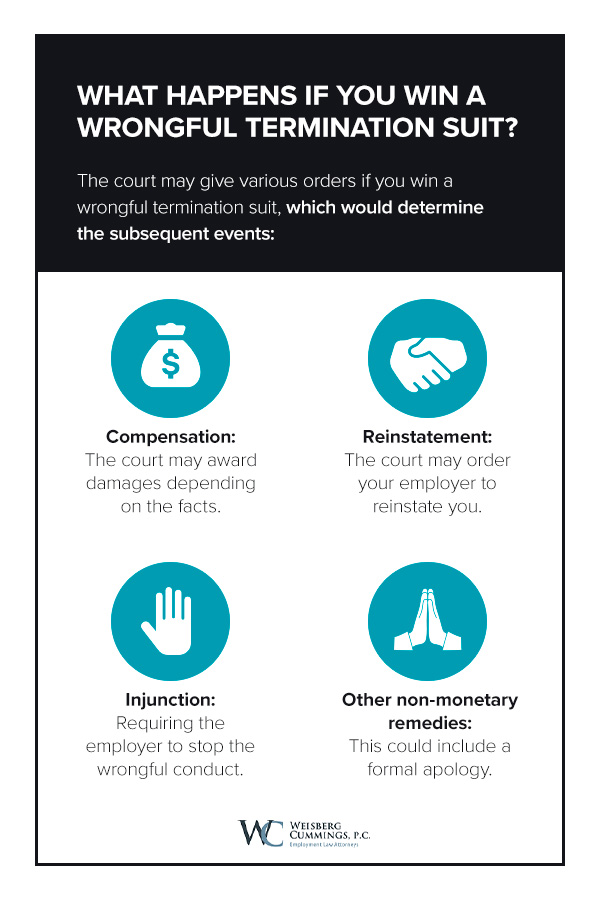
If you are successful in a wrongful termination lawsuit, you may be awarded various types of damages, including:
- Lost Wages and Benefits: Compensation for the income and benefits you would have earned had you not been wrongfully terminated.
- Front Pay: Compensation for future lost earnings if reinstatement is not feasible.
- Emotional Distress Damages: Compensation for the psychological harm caused by the wrongful termination.
- Punitive Damages: In cases of particularly egregious misconduct, courts may award punitive damages to punish the employer and deter similar behavior in the future.
- Attorney’s Fees and Costs: In many employment law cases, successful plaintiffs can recover their legal fees and court costs.

Seeking Legal Counsel in Texas
The complexities of Texas employment law, coupled with the emotional toll of wrongful termination, make seeking professional legal advice indispensable. An experienced attorney specializing in employment law can provide clarity, guide you through the intricate legal processes, and advocate fiercely on your behalf. They will assess the viability of your case, explain your rights and options, and help you pursue the best possible outcome, whether through negotiation, settlement, or trial. Don’t let the uncertainty of your situation leave you without recourse. Understanding your rights and taking appropriate action is the first step toward achieving justice in the Lone Star State.
LifeOutOfTheBox is a participant in the Amazon Services LLC Associates Program, an affiliate advertising program designed to provide a means for sites to earn advertising fees by advertising and linking to Amazon.com. Amazon, the Amazon logo, AmazonSupply, and the AmazonSupply logo are trademarks of Amazon.com, Inc. or its affiliates. As an Amazon Associate we earn affiliate commissions from qualifying purchases.