
Florida, often hailed as the “Sunshine State,” is a paradise for water enthusiasts. With its extensive coastline bordering the Atlantic Ocean and the Gulf of Mexico, thousands of miles of inland waterways, and countless lakes and rivers, boating is not just a recreational activity—it’s a way of life. From the bustling waters off Miami to the serene estuaries near Tampa, or the vibrant reefs around Key West, the opportunities for aquatic adventure are limitless. However, before you cast off into these inviting waters, a crucial question arises for many prospective boaters: Do you need a boating license in Florida?

The short answer is: not exactly a “license” in the traditional sense, but rather a “Boating Safety Education Identification Card” which acts as proof of successfully completing an approved boating safety course. This distinction is important. Unlike a driver’s license that you must renew periodically, the boating safety card, once obtained, is valid for life. Understanding who needs this card, how to acquire it, and the underlying laws is essential for safe and legal boating in Florida’s beautiful waters. This comprehensive guide will navigate you through everything you need to know, ensuring your time on the water is both enjoyable and compliant with state regulations.
Navigating Florida’s Boating Regulations: Who Needs Certification?
Florida’s approach to recreational boating safety is primarily focused on education. The state mandates that certain individuals operating motorized vessels complete a boating safety course and carry proof of that completion. This regulation is designed to ensure that boat operators possess a fundamental understanding of boating laws, safety procedures, and responsible waterway etiquette.
The Age Requirement for Boating in Florida
The core of Florida’s boating safety education requirement revolves around age. Specifically, anyone born on or after January 1, 1988, who operates a motorized vessel of 10 horsepower or greater, is required to have successfully completed an approved boating safety course and possess a Boating Safety Education Identification Card issued by the Florida Fish and Wildlife Conservation Commission (FWC). This applies to anyone, regardless of whether they are a Florida resident or a visitor to the state. If you were born before January 1, 1988, you are generally exempt from this specific requirement, although taking a safety course is always highly recommended for all boaters.
It’s also important to note that while younger individuals may operate a boat under certain conditions, there are strict rules. For instance, no person under 14 years of age may operate a personal watercraft (PWC), even if supervised. Additionally, a person 14 or 15 years of age may operate a PWC only if they have successfully completed an approved boating safety course. These age-specific restrictions underscore Florida’s commitment to ensuring operators have the maturity and knowledge necessary to handle vessels safely.
Exemptions to the Florida Boating Safety Education Requirement
While the age requirement covers a significant portion of boat operators, several exemptions exist:
- Individuals born before January 1, 1988: As mentioned, these individuals are grandfathered in and do not need the card, though voluntary education is encouraged.
- Those operating a vessel on a private lake or pond: If the water body is entirely on private property and not accessible to other boats via public waterways, the state’s boating education requirement typically does not apply.
- Persons operating a vessel within 90 days of purchase and having a bill of sale: This allows new boat owners a grace period to obtain their certification, provided they have proof of recent purchase.
- Individuals accompanied on board by a person at least 18 years of age who holds the required Boating Safety Education Identification Card: The accompanying certified individual must be able to take immediate control of the vessel. This is a common scenario for new boaters learning the ropes.
- Persons operating a vessel while under the direct supervision of a certified instructor: This exemption applies specifically during the instruction of an approved boating safety course.
- Non-residents who have completed an approved boating safety course or hold an equivalent certification issued by another state or country: Florida recognizes certifications from other jurisdictions, provided they meet the standards set by the National Association of State Boating Law Administrators (NASBLA) or are approved by the U.S. Coast Guard.
- Persons operating a sailboat without an auxiliary motor: The requirement specifically targets motorized vessels.
- Persons operating a non-motorized vessel: Kayaks, canoes, paddleboards, and other non-motorized craft do not fall under this requirement.
Understanding these exemptions is crucial, but when in doubt, completing the course is always the safest and most responsible approach.
Understanding the Florida Boating Safety Education Card
The “Florida Boating Safety Education Identification Card” is physical proof that you have completed a boating safety course approved by the FWC and recognized by NASBLA. It is not a traditional license that expires or requires renewal. Once earned, it is valid for life. When operating a vessel where the card is required, you must have it on your person, along with a valid photo identification (like a driver’s license), ready to present to law enforcement officers upon request. Failure to produce both can result in a citation. This card signifies that you possess foundational knowledge regarding safe boating practices, navigation rules, and emergency procedures, making you a more responsible and confident operator on Florida’s waterways.
How to Obtain Your Florida Boating Safety Education Card
Acquiring your Boating Safety Education Identification Card is a straightforward process designed to be accessible to everyone interested in responsible boating. The primary pathway involves completing an FWC-approved boating safety course.
Approved Boating Safety Courses
There are several options for completing an approved boating safety course, catering to different learning styles and schedules:
- Online Courses: Many providers offer self-paced online courses. These are popular due to their flexibility, allowing you to learn at your convenience from anywhere. Ensure the course is explicitly approved by the FWC and NASBLA. Typically, these courses cover topics such as navigation rules, safety equipment, emergency procedures, environmental responsibilities, and specific Florida boating laws.
- Classroom Courses: For those who prefer a traditional learning environment, in-person classroom courses are available through various organizations, including the FWC, local marine patrol units, and private instructors. These courses often provide interactive discussions and direct engagement with experienced instructors.
- Home-Study Courses: Some providers offer home-study materials that you can review at your own pace before taking a proctored exam.
- Weekend Seminars: Certain organizations, such as the U.S. Power Squadrons and the U.S. Coast Guard Auxiliary, offer comprehensive weekend courses that combine classroom instruction with practical demonstrations.
Regardless of the format you choose, verify that the course is certified by the FWC. The FWC website provides a list of approved providers and courses.
The Examination Process
Upon completing your chosen boating safety course, you will typically need to pass a final examination. This exam tests your understanding of the material covered, ensuring you have absorbed the critical safety information. For online courses, the exam is usually taken digitally at the end of the modules. For classroom or home-study courses, a proctored exam might be required. The passing score varies slightly by course provider but generally aims to demonstrate a solid grasp of boating safety principles and regulations. It’s not designed to trick you but to confirm your readiness to operate a vessel safely.
Receiving and Carrying Your Card
Once you successfully pass the exam, the course provider will submit your completion information to the FWC. You will then be issued your official Florida Boating Safety Education Identification Card. This card is typically mailed to you within a few weeks. It’s crucial to keep this card in a safe place. As previously mentioned, when operating a vessel that requires the card, you must have it physically on your person, along with a valid photo ID. Digital copies or photos of the card are generally not accepted by law enforcement. Should you lose your card, you can apply for a replacement through the FWC website.
Key Boating Laws and Safety Practices in Florida
Beyond merely having the required card, understanding and adhering to Florida’s extensive boating laws and embracing general safety practices are paramount for preventing accidents and ensuring everyone’s enjoyment on the water.
Essential Safety Equipment You Must Carry
Florida law, consistent with federal regulations, mandates certain safety equipment be on board all vessels. The specific requirements vary based on the size and type of your vessel, but generally include:
- Personal Flotation Devices (PFDs): Also known as life jackets, there must be at least one readily accessible, U.S. Coast Guard-approved PFD for each person on board. Children under 6 years of age must wear a PFD at all times while on a vessel under 26 feet in length, when underway.
- Fire Extinguishers: Motorized vessels are required to carry approved fire extinguishers, with the number and type depending on the vessel’s length and fuel system.
- Sound-Producing Devices: Whistles, horns, or other sound-producing devices are essential for signaling, especially in fog or emergency situations.
- Visual Distress Signals (VDS): Vessels operating in coastal waters, on the Great Lakes, or on the high seas are required to carry VDS. This can include flares, a flag, or an electric light.
- Navigation Lights: All vessels must display proper navigation lights between sunset and sunrise, and during periods of restricted visibility.
- Anchor: An anchor with adequate rode (rope or chain) suitable for your vessel’s size and the waters you are in, is highly recommended for emergencies and routine anchoring.
Always conduct a safety check before heading out to ensure all equipment is in good working order and easily accessible.
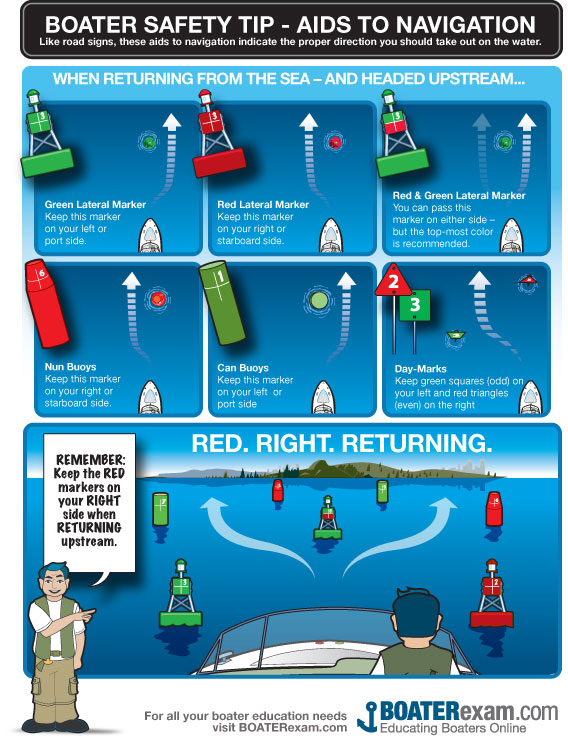
Understanding Navigation Rules and Right-of-Way
Just like on roads, there are “rules of the road” for waterways. Known as navigation rules or COLREGs (Collision Regulations), these guidelines dictate how vessels should interact to prevent collisions. Key principles include:
- Stand-on vs. Give-way Vessels: In many crossing situations, one vessel is the “stand-on” vessel (maintains course and speed), while the other is the “give-way” vessel (takes early and substantial action to avoid collision).
- Overtaking: An overtaking vessel must give way to the vessel being overtaken.
- Meeting Head-on: In a head-on situation, both vessels should alter course to starboard (right) to pass port-to-port (left side to left side).
- Power-driven vs. Sailboats: Generally, power-driven vessels must give way to sailboats, unless the sailboat is overtaking.
- Vessels with Restricted Maneuverability: Large commercial vessels, fishing boats, or vessels engaged in specific operations may have the right-of-way due to their inability to maneuver easily.
These rules are not merely suggestions; they are legally binding and critical for preventing accidents. A thorough understanding of them is a cornerstone of responsible boating.
The Dangers of Boating Under the Influence (BUI)
Florida has a zero-tolerance policy for Boating Under the Influence (BUI). It is illegal to operate a vessel while under the influence of alcohol or drugs, with a blood alcohol content (BAC) of 0.08% or higher. For individuals under 21, any detectable alcohol level can lead to penalties. The consequences of a BUI conviction are severe, mirroring those for DUI, and can include hefty fines, jail time, community service, and mandatory boating safety courses.
Alcohol and drug consumption significantly impair judgment, reaction time, and coordination, making safe boat operation nearly impossible. Moreover, the sun, wind, waves, and motion of a boat can intensify the effects of alcohol. Always designate a sober operator if alcohol will be consumed, or simply keep alcohol off the boat. The FWC actively patrols Florida’s waterways, and BUI enforcement is a high priority.
The Benefits of Being a Certified Boater in Florida
Beyond legal compliance, obtaining your Boating Safety Education Identification Card and adhering to Florida’s boating laws offers numerous advantages that enhance your boating experience and contribute to the safety and preservation of Florida’s natural treasures.
Enhancing Safety for Yourself and Others
The primary benefit of boating safety education is the significant reduction in boating accidents and fatalities. By understanding navigation rules, emergency procedures, proper equipment use, and the dangers of hazards like weather changes or shallow waters, you are far better equipped to prevent accidents. This knowledge not only protects you and your passengers but also safeguards other boaters, swimmers, and wildlife. Confident and knowledgeable operators create a safer and more enjoyable environment for everyone on the water. The skills learned can mean the difference between a minor inconvenience and a life-threatening situation.
Protecting Florida’s Marine Environment
Florida’s delicate ecosystems, including its coral reefs, seagrass beds, and diverse marine life, are incredibly valuable and vulnerable. Boating safety courses emphasize environmental stewardship, teaching boaters how to minimize their impact. This includes proper waste disposal, understanding slow speed/no wake zones to prevent erosion and protect manatees, avoiding anchoring on fragile habitats, and recognizing the importance of clean boating practices. Responsible boaters play a crucial role in preserving the beauty and health of Florida’s waterways for future generations.

Potential Insurance Benefits
Many marine insurance providers offer discounts to boat owners who have completed an approved boating safety course. This is because certified boaters are generally considered lower risk. The financial savings on insurance premiums can often offset the cost of the course itself, making the certification an economically sound decision in addition to being a responsible one. It’s always a good idea to check with your insurance provider about potential discounts for FWC-approved boating safety education.
In conclusion, while Florida doesn’t technically require a “boating license,” the Boating Safety Education Identification Card is a vital credential for anyone born on or after January 1, 1988, operating a motorized vessel of 10 horsepower or greater. Obtaining this card is not merely a legal obligation but a commitment to safety, responsibility, and the enjoyment of Florida’s spectacular aquatic playground. By understanding the regulations, completing an approved course, and practicing safe boating habits, you contribute to a safer, cleaner, and more enjoyable experience for everyone on the water. So, get certified, know the rules, and embark on your Florida boating adventures with confidence and peace of mind.
LifeOutOfTheBox is a participant in the Amazon Services LLC Associates Program, an affiliate advertising program designed to provide a means for sites to earn advertising fees by advertising and linking to Amazon.com. Amazon, the Amazon logo, AmazonSupply, and the AmazonSupply logo are trademarks of Amazon.com, Inc. or its affiliates. As an Amazon Associate we earn affiliate commissions from qualifying purchases.