
Arizona holds a unique position in the landscape of American firearm laws, particularly concerning the concealed carry of weapons. Often referred to as a “constitutional carry” state, Arizona’s approach grants its citizens and visitors considerable latitude regarding their right to carry a firearm for self-defense. However, the simplicity of permitless carry doesn’t negate the potential advantages and responsibilities associated with obtaining a Concealed Weapons Permit (CWP), commonly known as a CCW permit. For anyone considering carrying a firearm in the Grand Canyon State, understanding these nuances is crucial, not just for legal compliance but for informed and responsible personal safety.
The question of whether one needs a permit is complex, blending legal definitions with practical considerations. While the law may not require a permit for many, the benefits of having one often extend beyond basic compliance, offering enhanced legal protections, broader reciprocity, and a clear demonstration of commitment to training and responsible gun ownership. This exploration delves into Arizona’s permitless carry laws, the compelling reasons one might still choose to obtain a CCW permit, and the process involved, all framed within the context of a responsible lifestyle choice.
Understanding Constitutional Carry in Arizona
Arizona is one of the pioneering states in adopting “constitutional carry” legislation, a legal framework that significantly impacts how individuals can carry firearms, both openly and concealed. This system is founded on the belief that the Second Amendment to the United States Constitution inherently grants citizens the right to carry firearms without needing explicit government permission in the form of a permit.
What is Constitutional Carry?
At its core, constitutional carry means that if you are legally allowed to possess a firearm, you are generally allowed to carry it, openly or concealed, without a specific permit from the state. For Arizona, this law came into effect on July 29, 2010. Prior to this, a permit was required to carry a concealed weapon. The shift represented a significant expansion of firearm rights within the state, aligning with a broader philosophical movement emphasizing individual liberty and self-defense. This doesn’t mean there are no rules, but rather that the primary barrier of a permit has been removed for most eligible individuals.
Who Can Carry Without a Permit?
While the concept is straightforward, “eligible individuals” is a critical distinction. To carry a concealed firearm in Arizona without a permit, you must meet several criteria:
- Age: You must be 21 years of age or older. Individuals between 18 and 20 years old can generally open carry but cannot carry concealed without a permit. If they obtain a CCW permit, they must still be 21 to carry concealed legally in places like restaurants serving alcohol.
- Legal Eligibility: You must not be a “prohibited possessor” under state or federal law. This includes individuals convicted of felonies, those adjudicated as mentally defective, unlawful users of controlled substances, individuals subject to domestic violence restraining orders, and others outlined in statutes. A background check is implicit in this requirement; carrying when prohibited is a serious offense.
- Residency: The constitutional carry law applies to both residents and non-residents of Arizona, as long as they meet the age and legal eligibility criteria.
Where is Permitless Carry Restricted?
Even in a constitutional carry state, there are explicit locations where carrying a firearm, especially concealed, remains restricted or outright prohibited, regardless of whether you have a permit. These “prohibited places” are essential for all firearm carriers to know:
- Federal Buildings: Post offices, federal courthouses, military bases, and other federal properties typically prohibit firearms.
- Polling Places: During an election, carrying a firearm at a polling place is generally prohibited.
- School Campuses: While exceptions exist for those with a CCW permit or for specific authorized personnel, K-12 school grounds are largely gun-free zones. This includes public, private, and charter schools.
- Aircraft and Sterile Areas of Airports: Commercial aircraft and the secure areas of airports are strictly regulated under federal law.
- Private Property with Posted Signs: Property owners retain the right to prohibit firearms on their premises. If a business or private residence posts signs indicating “no firearms allowed” or similar, carrying there would be a violation.
- Establishments Serving Alcohol: While you can generally carry a firearm in an establishment that serves alcohol (like a restaurant), it is illegal to consume alcohol while carrying a firearm, and it is illegal to carry a firearm concealed in an establishment that has a series 6 or 7 liquor license (bar or restaurant where alcohol consumption is the primary business) without a valid Arizona CCW permit. This is a significant distinction that highlights a benefit of having a permit.
- Correctional Facilities: Jails, prisons, and other detention centers are strictly off-limits for firearms.
Understanding these restrictions is paramount. Ignorance of the law is not a defense, and violations can lead to severe penalties.
The Advantages of Obtaining an Arizona CCW Permit
Given Arizona’s constitutional carry status, the question naturally arises: why would anyone bother getting a CCW permit? The answer lies in a host of practical, legal, and educational advantages that significantly enhance a gun owner’s ability to responsibly carry a firearm, especially when traveling or navigating complex legal scenarios.
Reciprocity and Interstate Travel
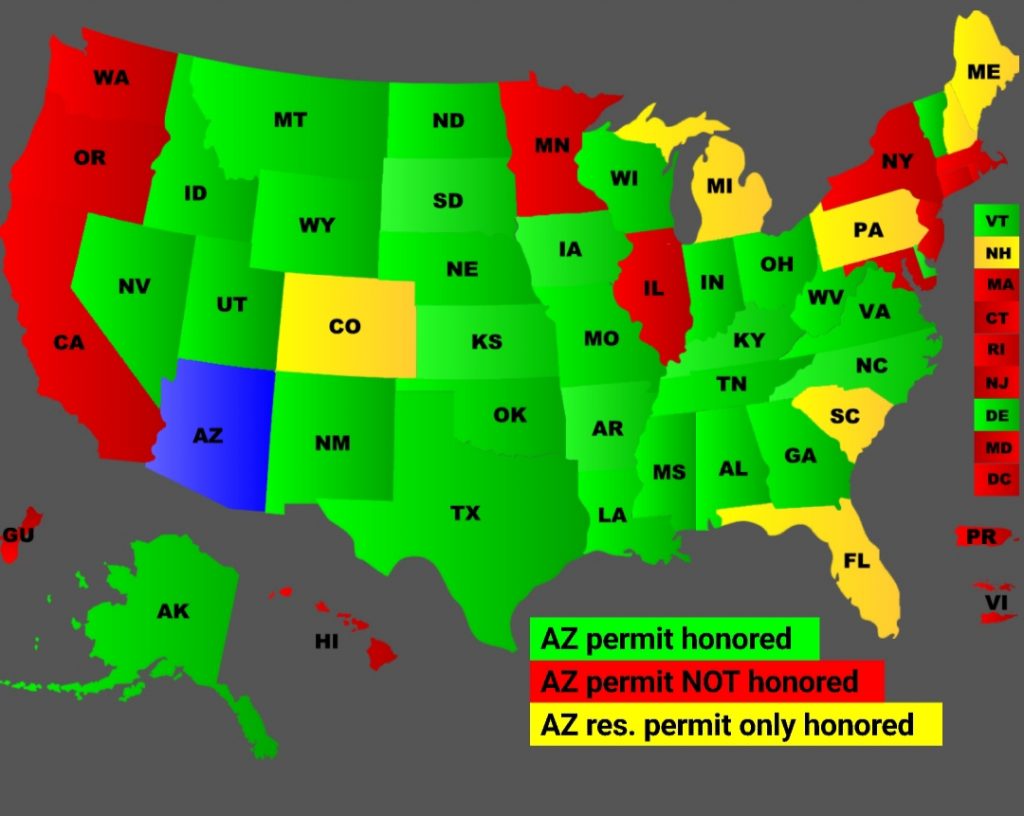
Perhaps the most compelling reason for an Arizona resident to obtain a CCW permit is the benefit of reciprocity with other states. While Arizona honors permits from any other state, many states do not extend the same courtesy to individuals carrying under constitutional carry laws. An Arizona CCW permit is recognized by numerous other states, allowing you to carry concealed legally when traveling outside Arizona. This reciprocity patchwork is constantly changing, making a permit a vital tool for consistent legal carry across state lines. Without it, you would need to meticulously research each state’s laws before entering, which could be cumbersome and restrictive.
Enhanced Legal Protections and Privileges
An Arizona CCW permit grants several specific legal advantages:
- Federal Gun-Free School Zones Act Exemption: The federal Gun-Free School Zones Act generally prohibits individuals from knowingly possessing a firearm in a school zone. However, there is an exemption for individuals licensed by the state to carry a firearm. This means an Arizona CCW permit holder can legally carry a firearm in a school zone, provided they are in compliance with state law. This is a critical distinction for parents dropping off or picking up children, or for anyone whose daily commute takes them through school zones.
- Carry in Establishments Serving Alcohol: As mentioned, individuals without a permit cannot carry concealed in an establishment that has a series 6 or 7 liquor license (bars, or restaurants where alcohol is the primary business). An Arizona CCW permit bypasses this restriction, allowing permit holders to carry concealed in such establishments, provided they do not consume alcohol.
- Streamlined Firearm Purchases: While not a federal mandate, some states or even specific retailers may expedite the background check process (NICS check) for CCW permit holders, treating the permit as sufficient proof of eligibility. While Arizona doesn’t typically require a NICS check for private sales, federal firearm licensed (FFL) dealers in Arizona must perform them, and a CCW permit can sometimes streamline this.
- Interactions with Law Enforcement: While not legally required to inform an officer that you are carrying a concealed weapon in Arizona, displaying a valid CCW permit during a traffic stop or other interaction can sometimes facilitate a smoother encounter by demonstrating your commitment to legal and responsible gun ownership.
Training and Education Benefits
To obtain an Arizona CCW permit, applicants must complete a firearms safety course or demonstrate competence with a handgun. This mandatory training, while an initial investment of time and money, offers invaluable benefits:

- Enhanced Safety: Proper training covers safe handling, storage, and practical shooting skills, significantly reducing the risk of accidental discharge or misuse.
- Legal Knowledge: Courses often include detailed instruction on Arizona’s specific use-of-force laws, self-defense statutes, and prohibited places, ensuring permit holders are well-versed in their legal responsibilities.
- Confidence and Competence: Training builds confidence in one’s ability to safely and effectively use a firearm, which is crucial for anyone carrying for self-defense. It transforms theoretical rights into practical, responsible capabilities.
The Process of Obtaining an Arizona CCW Permit
For those who decide the benefits outweigh the permitless option, obtaining an Arizona CCW permit is a relatively straightforward process managed by the Arizona Department of Public Safety (AZDPS).
Eligibility Requirements
Before beginning the application process, ensure you meet the fundamental criteria:
- Age: You must be 21 years of age or older.
- Residency: You do not need to be an Arizona resident. Non-residents can apply for an Arizona CCW permit.
- Legal Standing: You must not be a prohibited possessor under federal or state law. This includes having no felony convictions, no active warrants, no domestic violence convictions, and not being deemed a danger to oneself or others.
- Training/Competency: You must demonstrate competence with a handgun through a qualifying training course or other approved means. This typically involves completing a firearms safety course that meets the state’s requirements.
Application Steps
Once eligibility is confirmed, the application process generally follows these steps:
- Complete a Certified Firearms Safety Course: Enroll in and successfully complete a course from a qualified instructor. The course must cover handgun safety, marksmanship, and Arizona firearm laws, including use of force. Many gun stores and training facilities in cities like Phoenix and Tucson offer these courses.
- Obtain an Application Packet: The application packet can be downloaded from the AZDPS website or requested by mail.
- Fingerprints: You will need to obtain two sets of fingerprint cards, typically done at a local law enforcement agency or a certified fingerprinting service. These are used for a comprehensive background check.
- Fill Out the Application: Complete the application thoroughly and accurately. Provide all requested personal information, and details about your training course.
- Submit Required Documentation: This includes:
- The completed application form.
- Proof of firearms training (certificate or notarized affidavit).
- Two fingerprint cards.
- A photocopy of your driver’s license or state-issued identification.
- Pay the Fee: As of the last update, the initial application fee is typically around $60, payable to the Arizona Department of Public Safety. Check the official AZDPS website for the most current fees.
- Mail the Application: Send the complete packet to the AZDPS Concealed Weapons Permit Unit.
The AZDPS has 75 days to process the application and issue or deny the permit. If denied, applicants receive a written explanation and information on how to appeal the decision.
Renewal Process
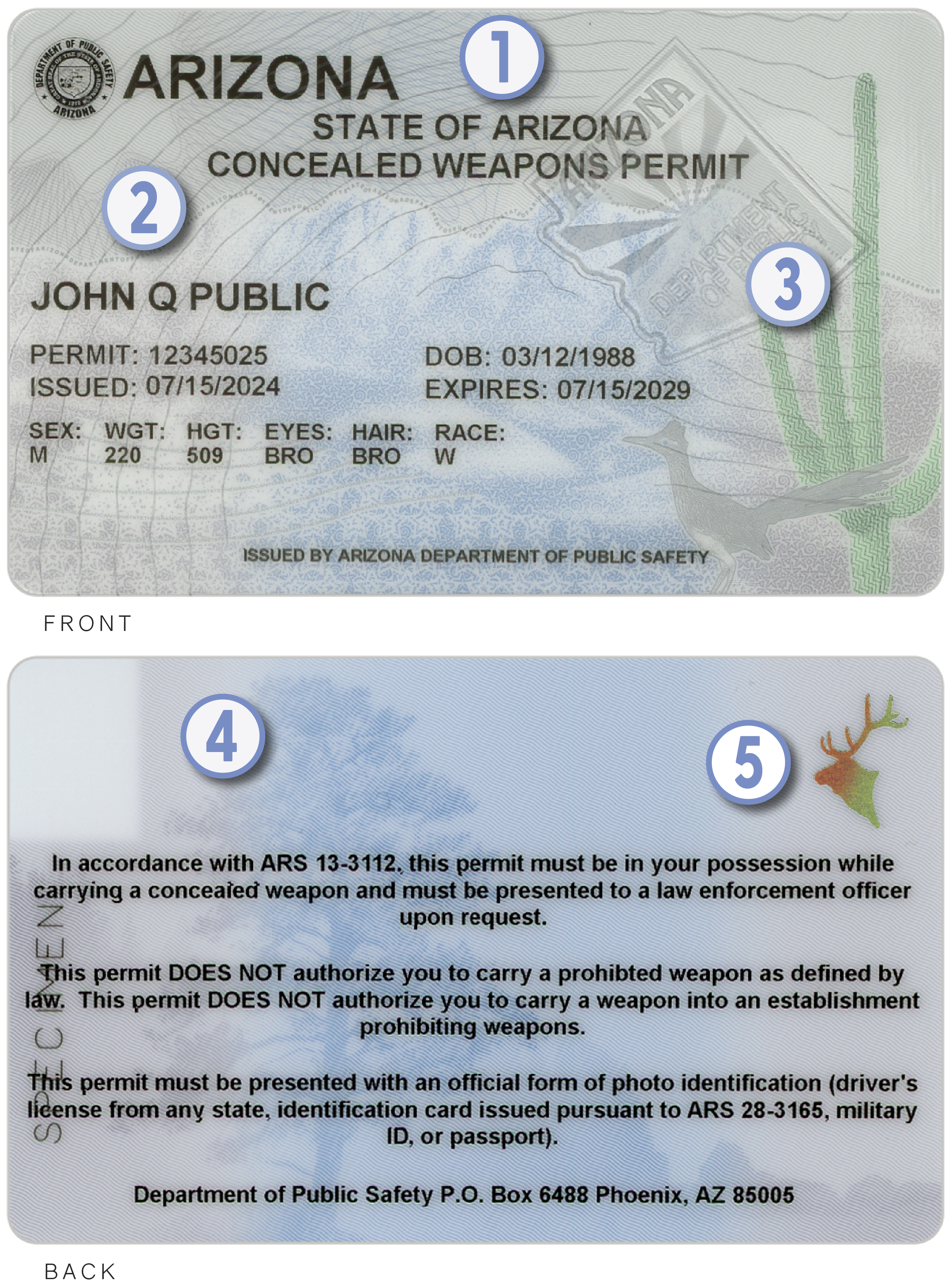
An Arizona CCW permit is valid for five years. To maintain the permit, holders must renew it before it expires. The renewal process is similar to the initial application but often requires less documentation and a lower fee. Typically, it involves submitting a renewal application, an updated set of fingerprints, and the renewal fee. No additional training is generally required for renewal unless there have been significant changes in laws or if the individual wishes to refresh their skills.
Responsible Gun Ownership and Concealed Carry in Arizona
Whether you choose to carry with or without a permit in Arizona, the overarching principle of responsible gun ownership remains paramount. Carrying a firearm is a significant responsibility that extends beyond merely understanding the law; it encompasses ethical considerations, ongoing training, and a commitment to safety.
Legal Responsibilities
Even with constitutional carry, legal responsibilities are extensive:
- Duty to Understand the Law: It is the responsibility of the carrier to know and obey all federal, state, and local laws regarding firearms. This includes where you can and cannot carry, and the legal framework for using deadly force.
- Use of Force Laws: Arizona has robust self-defense laws, including “Stand Your Ground” provisions. However, understanding when the use of deadly force is legally justified, and the potential legal ramifications, is critical. Training courses are excellent resources for this.
- Accidental Discharge: You are responsible for any unintended discharge of your firearm, and negligence can lead to legal penalties.
Safety Best Practices
Beyond legal compliance, practical safety measures are non-negotiable for anyone carrying a firearm:
- Secure Storage: When not being carried, firearms should be stored securely to prevent unauthorized access, especially by children or individuals prohibited from possessing them. This might include safes, lockboxes, or trigger locks.
- Ongoing Training: Firearms proficiency is a perishable skill. Regular practice at a shooting range and refresher training courses are essential to maintain competence and confidence.
- Situational Awareness and Mindset: Carrying a firearm for self-defense involves more than just having a weapon. It requires a defensive mindset, a commitment to situational awareness, and the ability to de-escalate conflicts whenever possible. A firearm should always be a last resort.
- Proper Gear: Using a quality holster that fully covers the trigger guard and securely retains the firearm is crucial for both safety and effective concealed carry.
Staying Informed
Firearms laws can change. It is incumbent upon every gun owner to stay informed about potential legislative updates at both state and federal levels. Following reputable gun rights organizations, consulting legal resources, and checking the AZDPS website regularly can help ensure continuous compliance.
In Arizona, the freedom to carry a concealed weapon without a permit is a significant aspect of the state’s approach to personal liberties. However, the decision to carry a firearm carries immense responsibility. While a permit may not be legally “needed” for many scenarios, the advantages it offers in terms of legal protection, interstate travel, and demonstrating a commitment to safety and training are undeniable. For those embracing a lifestyle that includes self-defense with a firearm, obtaining an Arizona CCW permit is often a wise and responsible choice, enhancing both peace of mind and operational capability.
LifeOutOfTheBox is a participant in the Amazon Services LLC Associates Program, an affiliate advertising program designed to provide a means for sites to earn advertising fees by advertising and linking to Amazon.com. Amazon, the Amazon logo, AmazonSupply, and the AmazonSupply logo are trademarks of Amazon.com, Inc. or its affiliates. As an Amazon Associate we earn affiliate commissions from qualifying purchases.