
Navigating the vibrant landscapes and bustling cities of Florida often involves hitting the open road, whether you’re cruising along a scenic coastal highway, exploring the theme parks of Orlando, or experiencing the unique culture of Miami. For any visitor planning to drive in the Sunshine State, a critical question arises: “Do you need auto insurance in Florida?” The unequivocal answer is yes. Understanding Florida’s specific auto insurance laws is not just a legal requirement but a crucial step towards ensuring a safe, stress-free, and enjoyable trip. Without proper coverage, your dream vacation could quickly turn into a financial nightmare.

Navigating Florida’s No-Fault System for Visitors
Florida operates under a “no-fault” auto insurance system, which means that regardless of who caused an accident, your own insurance policy is primarily responsible for covering your medical expenses and lost wages up to a certain limit. This system significantly impacts how claims are handled compared to traditional “at-fault” states, making it especially important for visitors to grasp its nuances. For tourists and temporary residents, comprehending these specific requirements is key to legal compliance and personal protection.
Understanding Personal Injury Protection (PIP)
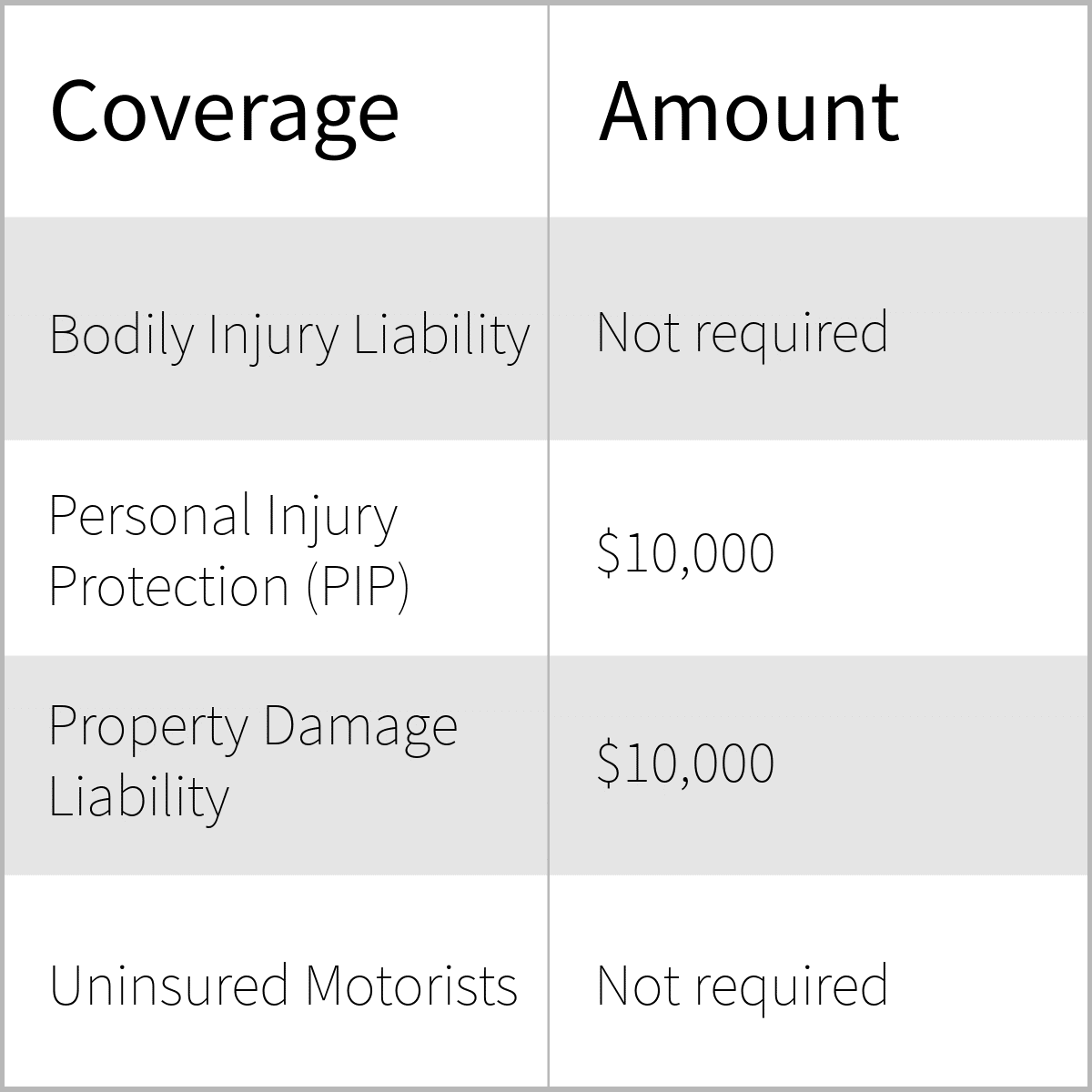
The cornerstone of Florida’s no-fault system is Personal Injury Protection (PIP). Every driver in Florida is legally required to carry PIP coverage, providing a minimum of $10,000 in benefits. This coverage is designed to pay for 80% of necessary and reasonable medical expenses, 60% of lost wages, and 100% of replacement services (like hiring someone to perform tasks you can’t due to injury), up to the policy limit. Crucially, PIP covers you regardless of who was at fault for the accident. It also extends to cover your passengers who don’t have their own PIP, and even if you’re a pedestrian or cyclist hit by a motor vehicle. For visitors, this means that if you’re injured in an accident while driving or as a passenger in a vehicle in Florida, your own PIP policy (or the policy covering the vehicle you’re in) will be the first line of defense for your medical costs.
Property Damage Liability (PDL) Explained
In addition to PIP, Florida law mandates that drivers carry Property Damage Liability (PDL) coverage. This covers damages you cause to another person’s property, which primarily includes their vehicle, but can also extend to fences, buildings, or other structures. The minimum legal requirement for PDL in Florida is $10,000. Unlike PIP, which covers your personal injuries regardless of fault, PDL is directly related to your liability for damage to someone else’s property. If you are found at fault for an accident and cause damage exceeding $10,000, you could be personally responsible for the remaining costs, highlighting the potential financial risk of carrying only minimum coverage.
The Importance of Minimum Coverage
While Florida’s minimum insurance requirements — $10,000 PIP and $10,000 PDL — meet the legal threshold for operating a vehicle in the state, it’s vital for visitors to understand that these are indeed minimums. Accidents, especially those involving serious injuries or extensive vehicle damage, can quickly incur costs far exceeding these limits. Relying solely on minimum coverage leaves you vulnerable to significant out-of-pocket expenses and potential legal liabilities, which could severely impact your financial well-being and disrupt your travel plans.
Auto Insurance for Tourists and Rental Cars
For many visitors, driving in Florida means renting a car. The insurance landscape for rental vehicles can be confusing, with various options presented at the rental counter. Understanding your existing coverage and the choices available is paramount to avoiding unnecessary expenses or, worse, being underinsured.
Rental Car Insurance Options
When renting a car, you’ll typically be offered several types of optional insurance from the rental company:
- Loss Damage Waiver (LDW) or Collision Damage Waiver (CDW): This waives your financial responsibility if the rental car is damaged or stolen. It’s not technically insurance but a contract between you and the rental company.
- Supplemental Liability Insurance (SLI): This provides additional liability coverage beyond the state minimums that the rental company might carry, protecting you against claims from third parties for bodily injury or property damage.
- Personal Accident Insurance (PAI): Similar to PIP, this covers medical expenses and accidental death benefits for you and your passengers.
- Personal Effects Coverage (PEC): This covers the theft or damage of personal belongings in the rental car.
Before accepting any of these, check if your personal auto insurance policy (if you have one in the U.S.), your credit card, or your travel insurance already provides similar coverage. Many premium credit cards offer CDW as a benefit when you use them to pay for the rental, but often it’s secondary coverage, meaning your primary auto insurance must pay first.
Out-of-State Policies and Reciprocity
If you have an existing auto insurance policy from another U.S. state, it typically extends to cover you when driving in Florida. Most U.S. auto policies are designed to follow the driver, providing coverage anywhere in the United States and Canada. However, there’s a crucial caveat: your out-of-state policy must still meet Florida’s minimum requirements for PIP and PDL. Some out-of-state policies may automatically “step up” to meet the local minimums if you’re driving in a state with higher requirements, but it’s essential to confirm this with your insurance provider before your trip. International visitors without a U.S. policy will need to secure coverage, usually through the rental car company or a specialized international policy.
What If You’re Driving a Friend’s Car?
If you’re visiting Florida and plan to borrow a friend’s car, the general rule is that the car owner’s insurance policy is primary. This means their policy would first cover any damages or injuries if you’re involved in an accident, assuming you have their permission to drive the vehicle (known as “permissive use”). However, the friend’s policy might not be sufficient to cover all damages, or it might have specific exclusions. It’s always wise for both you and your friend to verify the specifics of their policy, including liability limits and whether it extends to cover guest drivers, before you get behind the wheel.
Beyond the Basics: Recommended Additional Coverage for a Worry-Free Trip
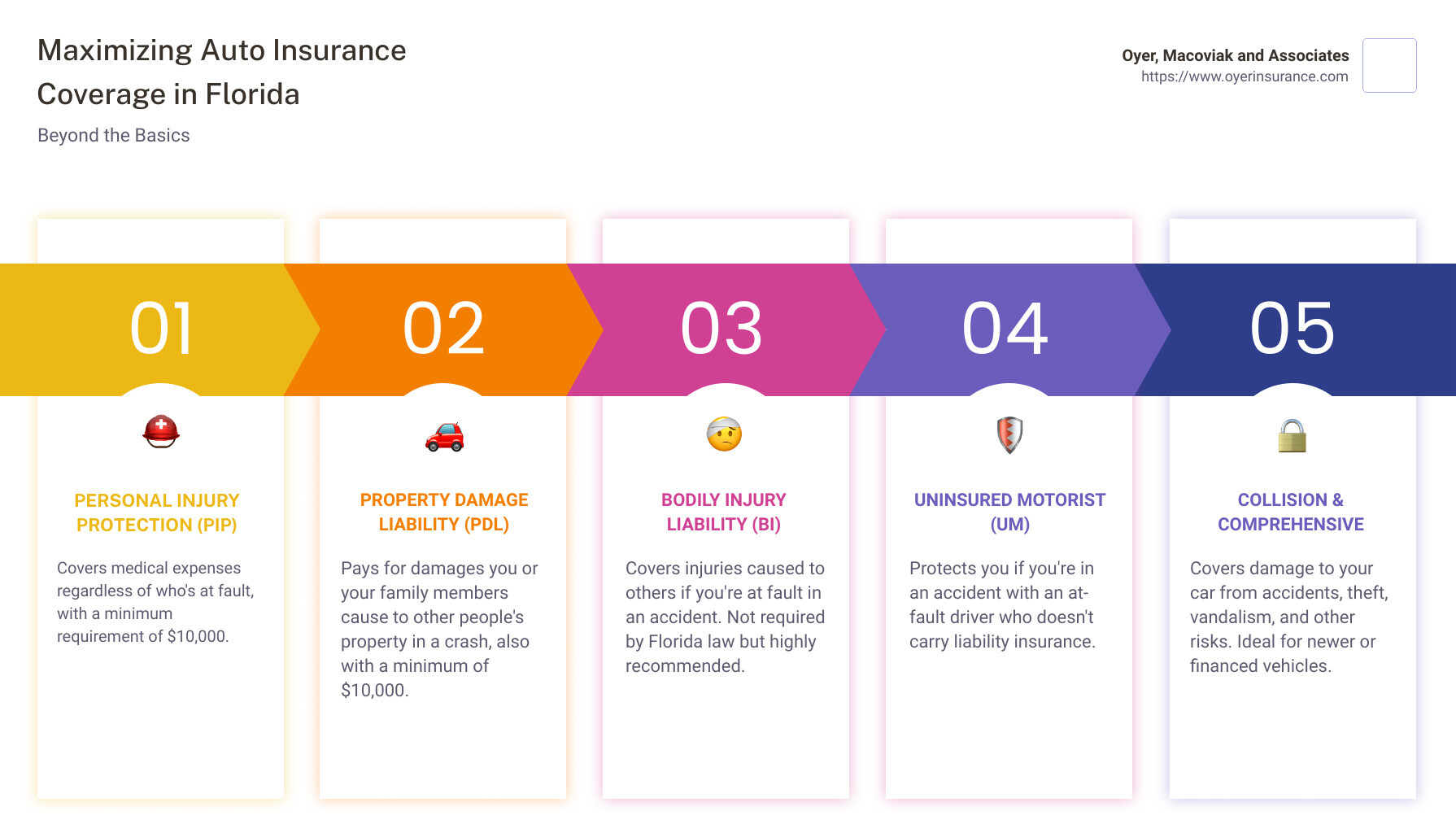
While meeting Florida’s minimum insurance requirements is legally necessary, it offers only baseline protection. For visitors seeking true peace of mind and comprehensive protection against the unforeseen, several additional coverage options are highly recommended. These can make a significant difference in safeguarding your finances and ensuring your Florida trip remains enjoyable, even in the event of an accident.
Uninsured/Underinsured Motorist Coverage (UM/UIM)
Florida has one of the highest rates of uninsured drivers in the United States. This means that even if you’re a careful driver, you could be involved in an accident with someone who doesn’t have insurance or whose coverage is insufficient to cover your damages. Uninsured/Underinsured Motorist (UM/UIM) coverage protects you in such scenarios. It covers your medical expenses and, in some cases, lost wages and pain and suffering, if the at-fault driver has no insurance or too little insurance. Given the prevalence of uninsured drivers, UM/UIM is an invaluable addition for any driver in Florida, especially visitors who want to avoid unexpected financial burdens from an accident that isn’t their fault.
Collision and Comprehensive: Is It Worth It?
These two types of coverage protect your own vehicle (or rental car) from damage.
- Collision coverage pays for damages to your car resulting from an accident with another vehicle or object, regardless of who is at fault.
- Comprehensive coverage covers non-collision incidents such as theft, vandalism, fire, natural disasters (like hurricanes, common in Florida), and hitting an animal.
If you own your car and it’s financed, your lender will almost certainly require you to carry both collision and comprehensive. If you’re renting a car, and your personal policy or credit card doesn’t offer adequate coverage for damage to the rental vehicle, purchasing the rental company’s Loss Damage Waiver (LDW) can serve a similar purpose, protecting you from significant out-of-pocket costs if the rental car is damaged or stolen. For visitors, these coverages are critical to avoid paying potentially thousands of dollars for repairs or replacement out of pocket, ensuring your vehicle (or the rental) is covered.
Medical Payments Coverage (MedPay)
While PIP covers a portion of your medical expenses, Medical Payments (MedPay) coverage can supplement it by paying for additional medical bills, hospital stays, and sometimes even funeral expenses for you and your passengers, regardless of who caused the accident. It has a lower deductible than PIP, making it a good option for immediate medical costs. For tourists, who may not have robust health insurance coverage that extends easily across state lines or countries, MedPay can offer an extra layer of financial security for unexpected medical emergencies following a car accident.
Consequences of Driving Uninsured in Florida
The temptation to forgo insurance, especially for a short visit, might seem appealing to some, but the risks and legal ramifications of driving uninsured in Florida are severe and far outweigh any perceived savings. Florida’s Department of Highway Safety and Motor Vehicles (DHSMV) actively monitors insurance compliance, and penalties for non-compliance are strictly enforced.
Legal Penalties and Financial Risks
Driving without the mandatory PIP and PDL coverage in Florida can lead to immediate and serious consequences:
- Suspension of Driver’s License and Registration: Your driver’s license, vehicle registration, and license plates can be suspended for up to three years, or until proof of insurance is provided. This applies even if you are not involved in an accident.
- Fines and Fees: You will be required to pay reinstatement fees, which can be substantial, in addition to any traffic citations.
- Personal Financial Liability: This is perhaps the most devastating consequence. If you cause an accident while uninsured, you will be personally responsible for all damages and injuries you inflict on others, potentially leading to lawsuits, wage garnishments, and a long-term financial burden that could impact your life long after your visit to Florida ends. Even if you aren’t at fault, if you are uninsured, you will have no coverage for your own medical bills or vehicle damage.
Protecting Your Florida Vacation
Imagine planning a dream vacation to Florida only to have it derailed by an accident and the subsequent legal and financial fallout from being uninsured. The stress, legal battles, and massive debt could turn a relaxing trip into a living nightmare. Ensuring you have the proper auto insurance coverage is a simple, effective way to protect your travel investment, your peace of mind, and your financial future, allowing you to fully enjoy the beaches, attractions, and vibrant culture that Florida has to offer.
Practical Tips for Securing Coverage and What to Do in an Accident
Understanding the requirements is one thing; putting it into practice is another. For visitors, taking proactive steps to secure appropriate coverage and knowing how to act if an accident occurs are crucial practical tips.
Getting Quotes and Understanding Policies
- For Out-of-State Drivers: Contact your current insurance provider before your trip to confirm your policy’s coverage in Florida, specifically regarding PIP and PDL minimums. Ask about increasing liability limits if you feel your current coverage is insufficient.
- For Rental Cars: If relying on credit card benefits, confirm the exact coverage terms, including any exclusions or primary/secondary status, with your credit card company. Compare this to the rental company’s offerings and your personal policy to identify any gaps.
- For International Visitors or Long-Term Stays: You may need to purchase a non-resident insurance policy from a Florida-licensed insurer. Research and get quotes from multiple providers well in advance. Consider consulting with a local independent insurance agent in Florida who can help you navigate state-specific options.
- Read the Fine Print: Always read your policy documents carefully, or ask clarifying questions, to fully understand what is and isn’t covered, including deductibles and limits.
What to Do in Case of an Accident
Even with the best preparation, accidents can happen. Knowing how to react can significantly mitigate stress and protect your interests:
- Ensure Safety: Move to a safe location if possible. Check for injuries and call 911 immediately if anyone is hurt or if there’s significant damage.
- Contact Law Enforcement: Always report the accident to the police, regardless of how minor it seems. A police report is vital for insurance claims.
- Exchange Information: Collect names, contact details, insurance information, driver’s license numbers, and license plate numbers from all parties involved.
- Document the Scene: Take photos of vehicle damage, the accident scene, road conditions, and any relevant traffic signs or signals.
- Do Not Admit Fault: Stick to the facts when speaking with police and other drivers. Do not apologize or admit responsibility.
- Notify Your Insurance Company: Report the accident to your insurance provider as soon as possible. If it’s a rental car, also notify the rental company.
In conclusion, understanding Florida’s auto insurance requirements is a critical piece of the puzzle for any visitor planning to drive in the state. From the mandatory PIP and PDL to highly recommended additional coverages like UM/UIM, securing the right policy ensures not only legal compliance but also financial protection. By taking the time to prepare and understand your options, you can safeguard your trip and fully immerse yourself in the unforgettable experiences that await you in Florida.
LifeOutOfTheBox is a participant in the Amazon Services LLC Associates Program, an affiliate advertising program designed to provide a means for sites to earn advertising fees by advertising and linking to Amazon.com. Amazon, the Amazon logo, AmazonSupply, and the AmazonSupply logo are trademarks of Amazon.com, Inc. or its affiliates. As an Amazon Associate we earn affiliate commissions from qualifying purchases.