
When planning a trip to the Sunshine State, understanding local driving regulations is a crucial aspect of seamless travel. For many visitors accustomed to differing laws in their home regions, a common question arises regarding vehicle registration: Does Florida require a front license plate? The straightforward answer is no, Florida does not require vehicles to display a front license plate. This distinction sets it apart from many other states across the United States and has specific implications for both residents and travelers navigating its vibrant roads. This guide delves into the specifics of this law, its historical context, and practical advice for anyone driving in Florida.

Understanding Florida’s Vehicle Registration Laws
Florida’s approach to vehicle registration is unique in its lack of a front license plate mandate. Under Florida Statute 320.06, titled “Registration; fees; penalties,” it clearly states that a license plate must be “conspicuously displayed on the rear of the vehicle.” There is no mention or requirement for a front plate. This has been the standard practice in Florida for decades, contrasting sharply with the majority of states where two plates are the norm.
Historically, the debate over front license plates often centers on issues of cost, law enforcement identification, and vehicle aesthetics. Florida has consistently sided with a single-plate system, citing reduced administrative costs for the state and potentially lower costs for vehicle owners. While there have been occasional discussions or proposals to introduce a front plate requirement, none have gained significant traction or become law. This steadfast adherence to a rear-plate-only system is a defining characteristic of driving in Florida.
This regulation is a significant point of difference, especially for travelers from two-plate states such as California, New York, or Texas, where a vehicle without a front plate might attract unwanted attention from law enforcement. In Florida, however, it is entirely normal and legal.
Implications for Travelers and Visitors to the Sunshine State
For those planning a road trip or visiting Florida and renting a car, understanding this law is crucial for a stress-free experience.
For Out-of-State Drivers
If you are driving your personal vehicle into Florida from a state that does require a front license plate, you are generally expected to comply with your home state’s registration laws. Florida law enforcement typically recognizes the validity of out-of-state registrations, meaning if your vehicle is legally registered in Georgia and Georgia requires two plates, you should display both. However, a vehicle registered in a single-plate state arriving in Florida would naturally not have a front plate and would be in compliance with its home state’s laws, which Florida honors. The key is that Florida’s lack of a front plate mandate means you will not be ticketed for not having one if your vehicle is registered in Florida or in another single-plate state. The focus is on compliance with the state of registration.
For Rental Cars
When renting a car in Florida, the vehicle will almost certainly be registered in Florida and will, therefore, only have a license plate displayed on the rear. This is the standard practice for all rental agencies operating within the state, whether you pick up your car at Orlando International Airport or a local branch in Miami. There is no need for concern or inquiry about a missing front plate; it is simply not required for Florida-registered vehicles.
Avoiding Unnecessary Concerns
The absence of a front license plate requirement simplifies things for travelers. You won’t need to worry about the legality of your rental car’s registration or whether your own Florida-registered vehicle is compliant. Focus your attention on safe driving practices and enjoying your trip, rather than fretting over vehicle display norms.
Why Some States Require Two Plates (and Florida Doesn’t)
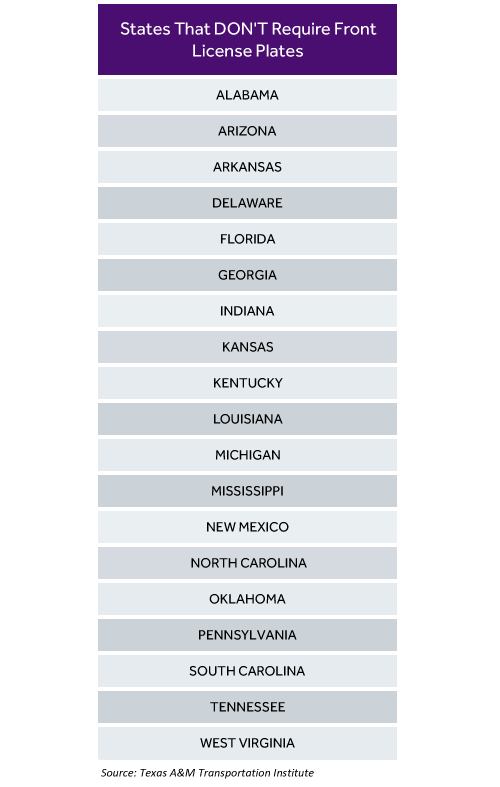
The rationale behind requiring two license plates in some states is multifaceted, primarily revolving around public safety, law enforcement, and revenue collection.
Many states enforce front plates to aid law enforcement in identifying vehicles. In scenarios such as hit-and-runs, amber alerts, or traffic violations caught by cameras, a front plate provides an additional point of identification, especially if the rear plate is obscured or not visible from certain angles. Front plates can also be crucial for automated systems like toll booths, red-light cameras, and speed cameras, which often capture images from the front of the vehicle.
Florida, however, has developed alternative methods for these functions. For instance, Florida’s extensive toll road network primarily relies on transponder systems like SunPass or utilizes “toll-by-plate” systems that photograph the rear license plate. Red-light cameras, where implemented, are also typically configured to capture the rear plate. This adaptability in technology has allowed Florida to maintain its single-plate system without compromising enforcement capabilities significantly.
Furthermore, the aesthetic appeal of a vehicle without a front plate holder or a plate obscuring the car’s design is often cited by proponents of single-plate laws. For many car enthusiasts, a clean front fascia is preferable, a preference that Florida law accommodates.
Practical Considerations for Driving in Florida
Beyond the license plate rules, there are several other practical aspects for travelers to consider when driving in Florida to ensure a smooth and enjoyable journey.
Toll Roads and SunPass
Florida has a comprehensive network of toll roads, express lanes, and bridges, especially in urban centers like Orlando, Miami, and Tampa. The most common and convenient way to pay tolls is via SunPass, an electronic transponder system. Rental cars often come equipped with a SunPass transponder or a similar toll-by-plate program, where tolls are automatically charged to your credit card or billing account. While these systems predominantly use transponders, cameras are in place to read rear license plates for those without a transponder, ensuring seamless toll collection even without a front plate. Travelers should familiarize themselves with their rental car company’s toll policies to avoid unexpected fees.
Parking and Enforcement
In parking scenarios, enforcement typically relies on the rear license plate number. Parking enforcement officers in Florida are accustomed to single-plate vehicles, so the absence of a front plate will not be an issue for legal parking. Pay attention to signage for parking restrictions, time limits, and payment requirements, especially in popular tourist destinations such as South Beach or downtown St. Augustine.
Vehicle Aesthetics vs. Functionality
For vehicle owners who prefer a cleaner look for their car, Florida’s law is a welcome provision. This allows for vehicle designs to be enjoyed as intended by manufacturers, without the need for a front plate bracket or the plate itself potentially interfering with aerodynamic features or grille designs. While not a primary legal concern, it’s a fringe benefit that many drivers appreciate, contributing to the distinct visual landscape of vehicles on Florida roads.

General Driving Tips for Your Florida Vacation
While the front license plate question is now settled, here are some broader driving tips to enhance your travel experience in Florida:
- Stay Alert for Wildlife: Especially in rural areas or near natural reserves like Everglades National Park, Florida is home to diverse wildlife, including deer, alligators, and even Florida panthers. Drive cautiously, particularly at dawn and dusk.
- Weather Conditions: Florida is known for its intense thunderstorms, especially during the summer rainy season. Rain can be heavy and sudden, leading to reduced visibility and hydroplaning risks. Always slow down in wet conditions and be aware of hurricane season (June 1st to November 30th).
- Distracted Driving Laws: Florida has a “hands-free” law for school and work zones, and texting while driving is a primary offense throughout the state. Focus on the road to ensure safety for yourself and others.
- Speed Limits: Adhere to posted speed limits. Interstates typically have limits of 70 mph, while other roads vary. Enforcement is active, especially in construction zones and residential areas.
- Seatbelt Law: All occupants of a vehicle must wear a seatbelt, regardless of where they are seated. This is a primary enforcement law, meaning officers can stop you solely for a seatbelt violation.
In conclusion, rest assured that Florida does not require a front license plate for vehicles registered within the state. This simplifies travel for many, allowing visitors to focus on the myriad attractions and beautiful landscapes that the Sunshine State has to offer. By understanding this and other key driving regulations, your Florida adventure is set to be smooth and enjoyable.
LifeOutOfTheBox is a participant in the Amazon Services LLC Associates Program, an affiliate advertising program designed to provide a means for sites to earn advertising fees by advertising and linking to Amazon.com. Amazon, the Amazon logo, AmazonSupply, and the AmazonSupply logo are trademarks of Amazon.com, Inc. or its affiliates. As an Amazon Associate we earn affiliate commissions from qualifying purchases.