
For many, a trip to Florida conjures images of sun-drenched beaches, thrilling theme parks, and vibrant cultural experiences. The allure of the Sunshine State draws millions of visitors annually, many of whom choose to explore its diverse landscapes by car. Whether you’re embarking on a scenic road trip down the Florida Keys, navigating the bustling streets of Miami, or cruising towards the magical world of Orlando resorts, understanding the local driving laws and insurance requirements is paramount for a smooth and worry-free journey. Among the various insurance considerations, one question frequently arises: Does Florida require uninsured motorist (UM) coverage? The answer, while seemingly straightforward, carries significant implications for travelers and demands a closer look into the state’s unique auto insurance landscape.
Understanding Florida’s Auto Insurance Landscape for Travelers
Navigating the roads of Florida, whether in your own vehicle or a rental car, means operating under the state’s specific auto insurance regulations. Unlike some other states, Florida operates under a “no-fault” insurance system, which significantly influences how claims are handled following an accident. Understanding this system, along with the required minimum coverages, is the first step toward safeguarding your travel experience.
Minimum Required Coverage in Florida
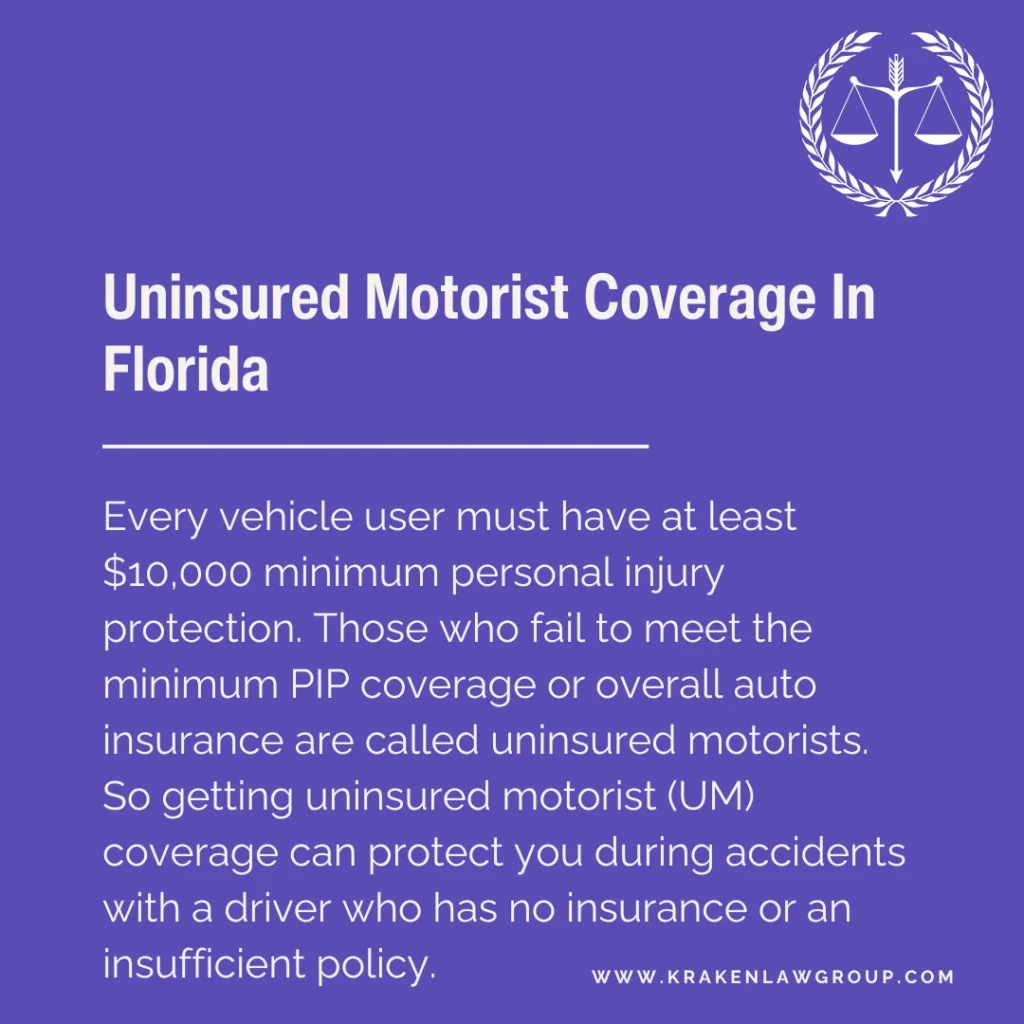
Florida’s “no-fault” system mandates that drivers carry two primary types of coverage, regardless of who is at fault in an accident:
- Personal Injury Protection (PIP): This is the cornerstone of Florida’s no-fault system. PIP covers 80% of your medical expenses, 60% of lost wages, and 100% of replacement services (like hiring someone to perform household tasks you can’t do) up to the policy limit, regardless of who caused the accident. The minimum PIP coverage required is $10,000. This coverage extends to you, your resident relatives, and certain passengers in your vehicle, as well as pedestrians or bicyclists struck by your vehicle. It’s designed to ensure prompt payment for initial medical treatment without the delay of determining fault.
- Property Damage Liability (PDL): This coverage pays for damage you cause to another person’s property, which could include their vehicle, a fence, a building, or any other physical property. The minimum PDL coverage required in Florida is $10,000. This is crucial because while PIP handles personal injuries, PDL addresses the damage your vehicle might inflict on someone else’s assets.
It’s important to note that these are the minimum requirements. While fulfilling the legal mandate, these limits are often insufficient to cover significant medical bills or extensive property damage in a serious accident. For travelers, relying solely on minimum coverage can expose them to substantial financial risk.
Is Uninsured/Underinsured Motorist (UM/UIM) Coverage Mandatory?
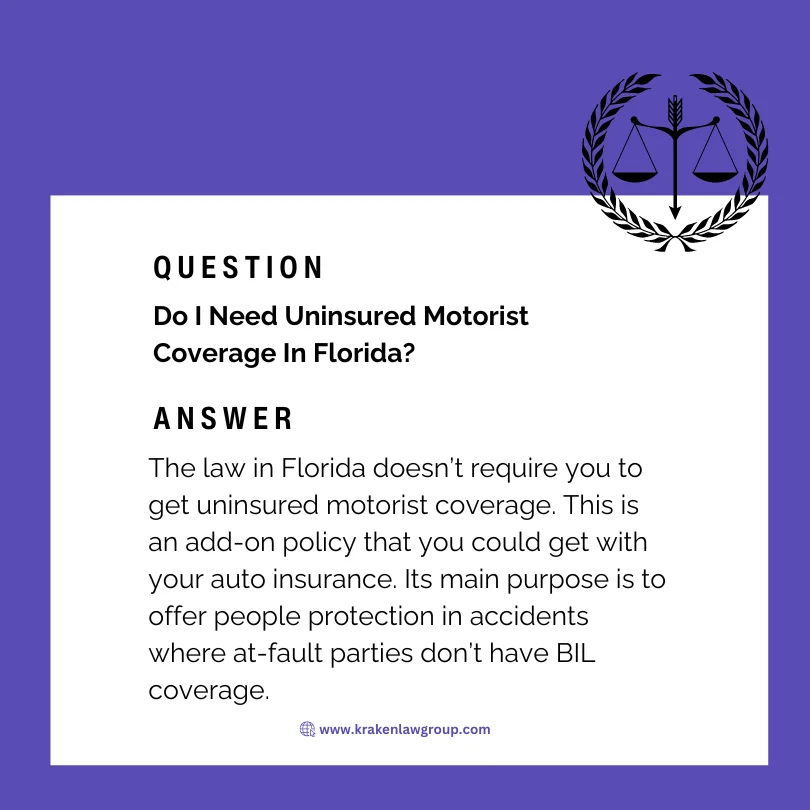
Now, to directly address the central question: No, uninsured/underinsured motorist (UM/UIM) coverage is not mandatory in Florida.
While Florida law does not compel drivers to purchase UM/UIM coverage, it does require insurance companies to offer it to every policyholder. Drivers have the right to accept or reject this coverage. If they choose to reject it, they must typically do so in writing. This distinction is critical for anyone planning to drive in the state, as electing not to carry UM/UIM coverage can leave you vulnerable to significant financial hardship if involved in an accident with a driver who lacks adequate insurance.
For travelers, this means that while your mandatory PIP and PDL coverages will address initial medical costs and damage to others’ property, they will not protect you from the financial fallout of being hit by an uninsured or underinsured driver for your own long-term medical care, lost wages beyond PIP limits, or pain and suffering.
Why Travelers Should Consider UM/UIM Coverage in the Sunshine State
Given that UM/UIM coverage is optional in Florida, many travelers might be tempted to forgo it to save on costs. However, dismissing this coverage could be a grave oversight, especially considering the specific risks present on Florida roads. For a truly worry-free travel experience, understanding the protective umbrella that UM/UIM offers is essential.
The Risks of Uninsured Drivers in Florida
Florida consistently ranks among the states with a notable percentage of uninsured drivers. While exact figures fluctuate, estimates often place the number of uninsured motorists in the double digits. This means that when you’re driving through vibrant Miami, historic St. Augustine, or the serene Florida Keys, there’s a significant chance that another vehicle on the road may not carry the legally required insurance.
Imagine this scenario: You’re enjoying your Florida vacation, and an uninsured driver negligently causes an accident that results in serious injuries to you or your passengers. Without UM coverage, your only recourse for extensive medical bills beyond your PIP limits, lost income, and compensation for pain and suffering might be to sue the at-fault driver directly. This process can be lengthy, expensive, and often fruitless, as uninsured drivers frequently lack the personal assets to cover significant damages. UM coverage steps in to pay for these costs, acting as if the at-fault driver did have insurance, protecting you and your family from financial devastation.
Protection Against Underinsured Motorists
Beyond entirely uninsured drivers, there’s also the threat of underinsured motorists. These are drivers who do carry the minimum required insurance, but their policy limits are insufficient to cover the full extent of damages in a severe accident. As noted, Florida’s minimum liability limits are quite low ($10,000 PDL). If an underinsured driver causes an accident that results in $50,000 worth of damage to your rental car or $100,000 in medical bills, their minimum policy will quickly be exhausted.
Underinsured motorist coverage acts as a vital safety net in such situations. It kicks in once the at-fault driver’s liability limits are exhausted, covering the remaining damages up to your policy limits. This ensures that even if another driver has some insurance, you won’t be left with a substantial out-of-pocket balance for injuries or property damage caused by their negligence. For travelers, who might be far from home and facing unexpected medical costs or vehicle repair bills, this protection offers invaluable financial security.
Peace of Mind for Your Florida Trip
Ultimately, a vacation to Florida should be about relaxation, discovery, and creating lasting memories, not about worrying over potential financial ruin from an unforeseen accident. Opting for UM/UIM coverage is an investment in peace of mind. Knowing that you and your loved ones are protected against the negligence of others, regardless of their insurance status, allows you to fully immerse yourself in all the Sunshine State has to offer. It transforms a potential travel nightmare into a manageable incident, ensuring that an accident doesn’t derail your entire trip or, worse, burden you with long-term financial stress long after your vacation ends.
Navigating UM/UIM Options for Visitors to Florida
For travelers journeying to Florida, the approach to securing adequate UM/UIM coverage will vary depending on whether you’re driving your own vehicle or renting one. Understanding these distinctions is crucial for making an informed choice that aligns with your travel plans and risk tolerance.
Renting a Car in Florida
Most visitors to Florida opt for rental cars to explore the state. When renting, the insurance landscape can seem complex. Rental car companies typically offer various supplemental insurance products, but these often focus on liability to third parties or damage to the rental vehicle itself.
- Your Personal Auto Policy: Before accepting any coverage from the rental company, first check with your existing auto insurance provider. Many personal auto policies extend coverage to rental cars, including liability, collision, and comprehensive. Crucially, your UM/UIM coverage from your personal policy might also extend to a rental vehicle. Confirm the geographical limits of your policy (does it cover all of the United States or North America?) and the specifics of your UM/UIM benefits.
- Credit Card Benefits: Many credit cards offer car rental insurance benefits, primarily for collision damage waiver (CDW) or loss damage waiver (LDW) for the rental vehicle. However, these rarely include liability coverage or UM/UIM protection. Always read your cardholder agreement carefully or call your credit card company directly to understand what is covered and, more importantly, what is not.
- Rental Car Company Offerings: Rental agencies in Florida will offer various additional coverages. While they typically offer supplemental liability insurance (SLI) and personal accident insurance (PAI), UM/UIM might be available as an additional add-on or might not be offered directly by all companies. Inquire specifically about their uninsured/underinsured motorist options. If your personal policy or credit card doesn’t provide adequate UM/UIM coverage for your rental, purchasing it from the rental company (if available) or a third-party provider might be a wise decision.
Driving Your Own Vehicle to Florida
If you are driving your personal vehicle into Florida from another state, your existing auto insurance policy will generally govern your coverage. However, it’s not a guarantee that your policy is sufficient for Florida’s unique risks.
- Review Your Current Policy: Contact your insurance agent or review your policy documents before your trip. Confirm that your current UM/UIM coverage extends to Florida (most policies cover you throughout the United States and Canada).
- Assess Coverage Limits: Even if your UM/UIM extends to Florida, consider if the limits are adequate given the state’s higher incidence of uninsured motorists and the potential for costly medical care. You might consider increasing your UM/UIM limits for your trip, even temporarily, for enhanced protection.
- Florida’s “No-Fault” Impact: Be aware that while your liability coverage will follow you, Florida’s “no-fault” system means your PIP will be the primary payer for your medical bills up to its limit, regardless of fault. Your out-of-state policy’s medical payments (MedPay) or health insurance might kick in after PIP. However, UM/UIM remains critical for addressing damages that exceed PIP or the at-fault driver’s minimal liability.
What to Do if You’re in an Accident
Despite all precautions, accidents can happen. For travelers, knowing the immediate steps to take is crucial:
- Ensure Safety: Move to a safe location if possible. Check for injuries and call 911 if anyone is hurt.
- Contact Law Enforcement: Always call the police, even for minor accidents. A police report is vital for insurance claims.
- Exchange Information: Collect names, contact information, driver’s license numbers, vehicle information (make, model, license plate), and insurance details from all parties involved.
- Document the Scene: Take photos and videos of the vehicles, the accident scene, road conditions, and any injuries.
- Seek Medical Attention: Even if you feel fine, some injuries might not be immediately apparent. Get checked by a medical professional.
- Notify Your Insurance Company: Report the accident to your insurance provider as soon as possible. This is when your UM/UIM coverage would come into play if the other driver is uninsured or underinsured. Prompt reporting helps streamline the claims process.
Making an Informed Decision: Is UM/UIM Right for Your Florida Travel?
The decision of whether to purchase uninsured/underinsured motorist coverage for your Florida trip ultimately rests with you. While it’s not legally mandated, the benefits it provides often far outweigh its relatively modest cost, especially when considering the potential financial risks involved.
Weighing the Costs Against the Benefits
Adding UM/UIM coverage to your auto policy (or selecting it for a rental) will increase your premium. However, in most cases, the additional cost is a small fraction of your overall insurance expenditure. When you compare this minimal extra expense to the potentially catastrophic financial burden of an accident with an uninsured or underinsured driver – including massive medical bills, lost income during recovery, and compensation for pain and suffering – the benefits of UM/UIM coverage become overwhelmingly clear. It acts as a shield, protecting your assets and your financial future, allowing you to focus on recovery rather than bankruptcy. For travelers, who might have limited access to local support networks and resources, this protection is even more critical.
Consulting with Insurance Professionals
The best approach to making an informed decision about UM/UIM coverage for your Florida travel is to consult with an experienced insurance agent or broker. They can:
- Assess Your Current Coverage: Review your existing auto policy (if driving your own car) or advise on rental car insurance options.
- Explain Florida-Specific Nuances: Detail how Florida’s “no-fault” laws interact with UM/UIM and other coverages.
- Recommend Appropriate Limits: Help you determine adequate UM/UIM limits based on your assets, income, and risk tolerance.
- Clarify Costs: Provide clear quotes for the additional premium associated with UM/UIM coverage.
An insurance professional can offer personalized advice tailored to your specific circumstances, ensuring you have the right level of protection for a secure and enjoyable visit to Florida.
In conclusion, while Florida does not legally require uninsured motorist coverage, it is an exceptionally valuable and highly recommended component of any prudent driver’s insurance portfolio, especially for travelers. The peace of mind it offers, coupled with robust financial protection against the significant risk of uninsured or underinsured drivers, makes it an essential consideration for anyone planning to hit the roads of the Sunshine State. By understanding the local insurance landscape and making an informed decision about UM/UIM, you can ensure your Florida adventure remains a joyful memory, untainted by unexpected financial hardships.
LifeOutOfTheBox is a participant in the Amazon Services LLC Associates Program, an affiliate advertising program designed to provide a means for sites to earn advertising fees by advertising and linking to Amazon.com. Amazon, the Amazon logo, AmazonSupply, and the AmazonSupply logo are trademarks of Amazon.com, Inc. or its affiliates. As an Amazon Associate we earn affiliate commissions from qualifying purchases.