
For visitors planning a trip to Minneapolis, one of the most common logistical questions involves the city’s underground transit infrastructure. Travelers accustomed to the sprawling subterranean rail networks of New York City, London, or Paris often arrive expecting a similar experience. However, the reality of transit in Minnesota is quite different.
To provide a definitive answer: No, Minneapolis does not have a traditional subway system. While the city has an extensive network of indoor walkways known as the Minneapolis Skyway System, it lacks an underground heavy-rail transit line. Understanding how the city manages its public transportation—and why it chose the surface-level path—is essential for any traveler looking to navigate the Twin Cities efficiently.

The Skyway System: An Alternative to Subways
While visitors may be disappointed to learn that they cannot hop on a subterranean train, they will quickly discover that Minneapolis has effectively replaced the need for a subway with an ingenious architectural solution. The Minneapolis Skyway System is the largest continuous network of enclosed, second-level bridges in the world.
Navigating the Elevated Grid
Spanning 9.5 miles and connecting 80 city blocks, the Skyway allows pedestrians to traverse the central business district without ever stepping foot into the harsh winter elements. For those traveling from Minneapolis-Saint Paul International Airport to a downtown hotel, the skyway provides a climate-controlled environment that feels like a subterranean tunnel, despite being elevated above the street level.
Why It Isn’t a Subway
The skyway is not a transit system in the mechanical sense—it is a pedestrian thoroughfare. It connects office towers, retail centers, Target Center, and various parking ramps. While it doesn’t carry passengers via subway cars, it serves the same purpose of connectivity. Travelers often find that navigating the city via the skyway provides a unique vantage point of the urban landscape, turning a simple walk from a hotel to a restaurant into an architectural tour of Downtown Minneapolis.
METRO Transit: Surface-Level Connectivity
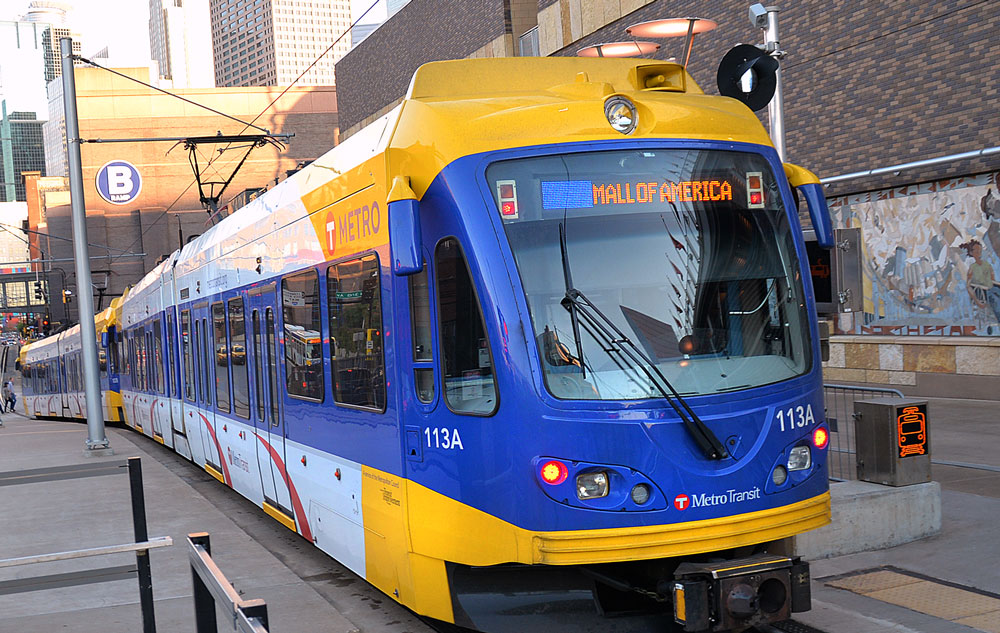
Since the city lacks a subway, the primary backbone of public transportation in the Twin Cities is the METRO light rail system, operated by Metro Transit. While it does not operate underground, it provides high-capacity, efficient travel across the region.
The Blue Line and Green Line
The Blue Line is the vital artery for tourists, connecting Minneapolis-Saint Paul International Airport directly to the heart of downtown. It continues north to Target Field, the home of the Minnesota Twins. Meanwhile, the Green Line connects Downtown Minneapolis to Downtown Saint Paul, passing through the University of Minnesota campus.
Why Surface Rails Over Subways?
The decision to focus on light rail rather than subways came down to geography and cost. Minneapolis sits atop a complex geological landscape, and the cost of boring deep-rock tunnels for a heavy-rail subway was deemed prohibitive compared to the flexibility and reach of light rail. Furthermore, surface-level rail allows passengers to engage with the city’s landmarks, such as the Minneapolis Sculpture Garden and Walker Art Center, rather than being whisked away in a dark, enclosed tunnel.
Strategic Travel Tips for Minneapolis
Navigating a city without a subway requires a bit of foresight. If you are staying at a major hotel like the Hilton Minneapolis or the Radisson Blu Minneapolis, you will find that the lack of a subway is rarely an impediment to a high-quality travel experience.
Planning Your Commute
When traveling, prioritize booking accommodation that has direct access to the Skyway. This provides a seamless transition from your room to the city’s finest dining and cultural venues. For those wishing to visit the Mall of America, the Blue Line provides a direct, stress-free route that is arguably more scenic than a typical underground subway ride.
Embracing the Walking Culture
The absence of a subway forces the city to prioritize walkability. In warmer months, walking from Nicollet Mall toward the Mississippi River reveals the vibrant street culture that a subway user would entirely miss. Minneapolis is designed to be experienced on the surface, where the local food scene—featuring culinary staples like the Juicy Lucy—and the architectural beauty of the city truly shine.
Future Prospects and Urban Development
The conversation surrounding a subway in Minneapolis is largely a historical one. Urban planners have shifted their focus toward expanding the METRO light rail and improving bus rapid transit (BRT) rather than looking toward subterranean solutions.

The Evolution of Public Transit
As the region grows, Metro Transit continues to implement the METRO Orange Line and other initiatives to ensure connectivity between the Twin Cities suburbs and the urban core. For a traveler, this means that even without a subway, the accessibility of sites such as the Minneapolis Institute of Art and the Minnehaha Falls remains exceptional.
Ultimately, while Minneapolis does not have a subway, the combination of the Minneapolis Skyway System and the METRO light rail creates a transit environment that is uniquely suited to the city’s climate and culture. Travelers should lean into this network, embracing the elevated walkways during the winter and the surface-level light rail during the summer. By shifting the perspective from “How do I get underground?” to “How do I best connect with the city’s infrastructure?”, you will find that moving through Minnesota is efficient, enjoyable, and distinctly local. Whether you are headed to a business conference at the Minneapolis Convention Center or exploring the local sights, you are well-equipped to navigate the Twin Cities without the need for a subway.
LifeOutOfTheBox is a participant in the Amazon Services LLC Associates Program, an affiliate advertising program designed to provide a means for sites to earn advertising fees by advertising and linking to Amazon.com. Amazon, the Amazon logo, AmazonSupply, and the AmazonSupply logo are trademarks of Amazon.com, Inc. or its affiliates. As an Amazon Associate we earn affiliate commissions from qualifying purchases.