
Travelers often envision sprawling peaks and rugged ranges when planning an adventure, leading to the common question about North Dakota‘s topographical features. While the Peace Garden State doesn’t boast the towering, snow-capped giants found in the Rockies or Appalachians, it offers a remarkably diverse and often dramatic landscape that promises unique and captivating travel experiences. Far from being uniformly flat, North Dakota’s terrain is a testament to ancient geological forces, resulting in distinct regions that appeal to various types of outdoor enthusiasts and scenic explorers. Understanding these unique landforms is key to unlocking the state’s hidden travel gems and appreciating its understated, yet profound, natural beauty.

Dispelling the Mountain Myth: North Dakota’s Unique Topography for Travelers
The popular perception of North Dakota as an endless plain is a myth quickly dispelled upon deeper exploration. For travelers seeking adventure and scenic vistas, the state presents a fascinating array of geographical features that, while not traditional mountains, provide equally compelling destinations. The landscape here is a product of powerful forces, particularly glaciation, which has sculpted the land in ways that defy easy categorization. Instead of sharp, craggy peaks, visitors will discover a terrain characterized by vast prairies, rolling hills, rugged buttes, and deeply carved river valleys, each offering its own set of attractions and experiences.
The Glacial Legacy: Sculpting Travel Destinations
Much of North Dakota’s topography, particularly the eastern and central regions, bears the indelible mark of the last ice age. Continental glaciers, thousands of feet thick, advanced and retreated across the land, pulverizing bedrock, scouring depressions, and depositing immense amounts of sediment. This glacial action is responsible for the formation of the fertile Red River Valley in the east, one of the flattest and most productive agricultural regions in the world, and the rolling prairie pothole region in the center, a haven for migratory birds and waterfowl.
The mighty Missouri River also played a crucial role, carving its deep valley as it diverted meltwater from the retreating glaciers. This impressive river corridor, especially in its scenic sections, offers travelers opportunities for boating, fishing, and exploring riverine ecosystems that contrast sharply with the surrounding grasslands. These glacially-formed landscapes, though lacking mountains, are themselves significant natural attractions, defining distinct travel experiences from birdwatching to paddling.
Defining “Mountain” in a Travel Context
When considering “mountains,” most travelers envision towering landforms exceeding 2,000 feet in prominence with steep slopes and high altitudes. By this strict definition, North Dakota does not possess conventional mountains. However, the state does feature several elevated regions and prominent landforms that, in a regional context, function much like mountains in terms of offering elevated views, challenging terrain, and unique ecosystems.
The highest point in North Dakota is White Butte, located in the southwestern corner of the state, rising to an elevation of 3,506 feet above sea level. While a “butte” rather than a mountain, it offers panoramic vistas that attract hikers and photographers seeking a summit experience. Similarly, the Turtle Mountains in the north-central part of the state, straddling the U.S.-Canadian border, are an elevated plateau heavily forested and dotted with lakes. While their highest point is only around 2,500 feet, they rise hundreds of feet above the surrounding prairie, providing a refreshing change of scenery and a popular destination for camping, fishing, and cross-country skiing, embodying the spirit of a mountain retreat even if not the geological definition.
The Rugged Allure of Western North Dakota: Badlands and Buttes
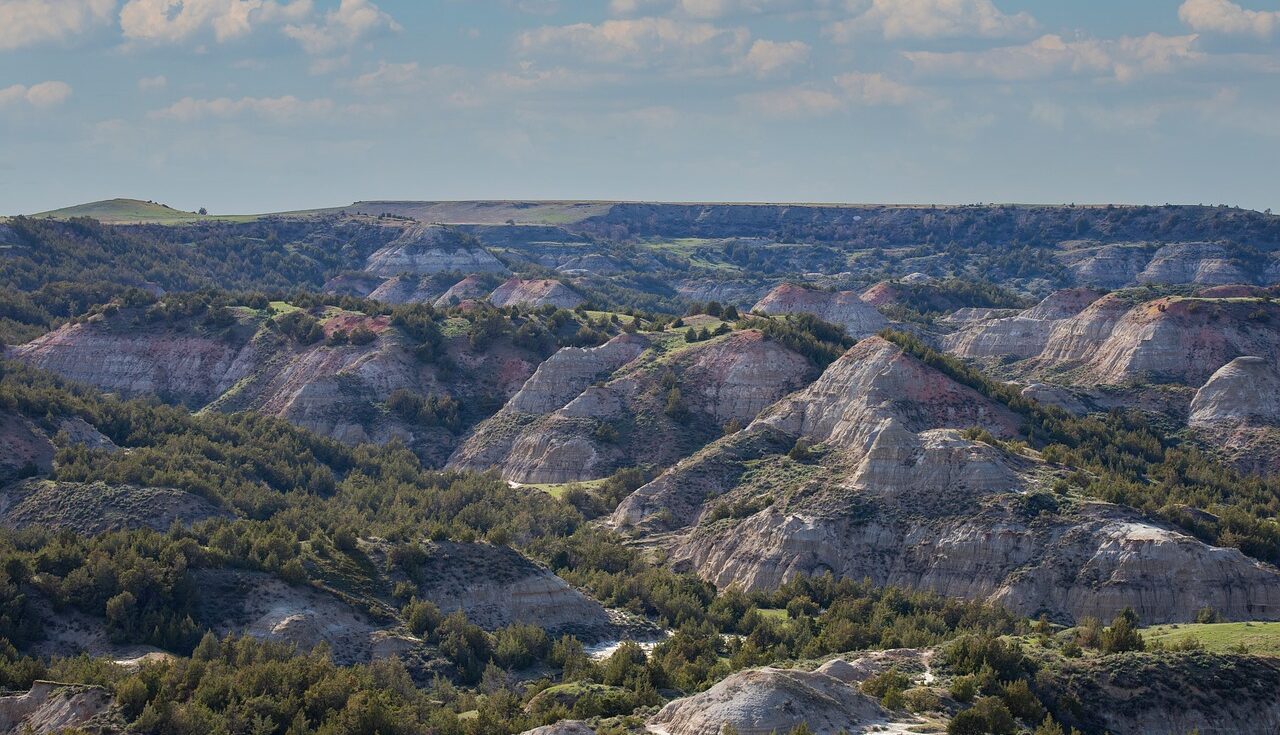
For travelers seeking truly dramatic topography, western North Dakota is the undisputed star. Here, the landscape transforms into a breathtaking expanse of rugged badlands, sculpted buttes, and deep canyons, bearing a striking resemblance to the more famous badlands of other western states. This region offers some of the state’s most iconic and sought-after travel destinations, providing a stark and beautiful contrast to the gentler eastern plains.
Theodore Roosevelt National Park: A Premier Travel Destination
The crown jewel of North Dakota‘s natural attractions is Theodore Roosevelt National Park. Spanning three units (North, South, and Elkhorn Ranch), this park protects vast swaths of the Badlands, an eroded landscape of colorful buttes, canyons, and petrified forest formations carved by the Little Missouri River.
Travelers flock to Theodore Roosevelt National Park for its stunning scenic drives, which offer numerous overlooks into the undulating terrain. Hiking trails range from easy strolls to challenging backcountry excursions, leading visitors deep into the painted canyons and atop prominent buttes for expansive views. The park is also a haven for wildlife viewing, with herds of bison and wild horses roaming freely, alongside elk, prairie dogs, and numerous bird species. Staying in nearby Medora offers additional historical and entertainment attractions, making the park a complete destination for nature lovers and history buffs alike. The experience here, with its dramatic elevation changes and remote beauty, feels very much like exploring a unique mountain range, albeit one formed by erosion rather than tectonic uplift.
The Maah Daah Hey Trail: An Adventurer’s Experience
For the truly adventurous traveler, the Maah Daah Hey Trail offers an unparalleled experience of North Dakota’s western wilderness. This 144-mile non-motorized single-track trail winds its way through the most rugged parts of the Little Missouri National Grassland and Theodore Roosevelt National Park. Renowned among mountain bikers, hikers, and horseback riders, the trail traverses vast prairies, climbs steep buttes, descends into deep canyons, and meanders along river bottoms.
The elevation changes and diverse terrain along the Maah Daah Hey Trail provide a physical challenge and a profound sense of solitude often associated with mountain exploration. Camping sites are interspersed along its length, allowing multi-day trips through some of the most isolated and scenic country in the state. This trail is not just a path; it’s an immersive journey into the heart of North Dakota’s badlands, offering a rugged, outdoor experience that rivals many mountain destinations.
Eastern North Dakota: Prairies, Rivers, and Gentle Elevations
While the west is known for its dramatic Badlands, eastern North Dakota offers a different, yet equally appealing, type of landscape for travelers. This region is characterized by its vast prairies, fertile farmlands, and significant river valleys, which carve impressive features into the otherwise gently rolling terrain. It’s a destination for those who appreciate the serene beauty of the plains, rich agricultural heritage, and diverse river-based recreation.
The Sheyenne River Valley: A Scenic Escape
One of the most distinctive features in eastern North Dakota is the Sheyenne River Valley. This unique U-shaped valley, carved by meltwater from glaciers, contrasts sharply with the flat prairie surrounding it. The valley floor is often forested, providing a lush, green corridor amidst the grasslands, especially vibrant in the fall.
Travelers can explore the Sheyenne River Valley via scenic byways, which offer access to charming small towns, historic sites, and abundant recreational opportunities. Fort Ransom State Park, nestled within the valley, is a popular destination for camping, hiking, canoeing, and horseback riding. Its dense woodlands and river access create a refreshing escape, providing a sense of elevation and enclosure that differs from the open plains. The valley’s distinct topography and microclimate make it an attractive destination for those seeking varied landscapes.
The Pembina Gorge: Northern Wonders
In the far northeastern corner of North Dakota, the Pembina Gorge stands out as another significant natural attraction. This deep, forested gorge, carved by the Pembina River, is the largest undisturbed, significant deciduous forest in the state. It features dramatic elevation changes, rugged terrain, and a rich array of flora and fauna.
The Pembina Gorge State Recreation Area offers visitors opportunities for hiking, kayaking, canoeing, and wildlife viewing. In winter, it transforms into a popular destination for snowmobiling and cross-country skiing, taking advantage of its unique topography. For travelers, the gorge provides a distinctly different outdoor experience from the prairies, with dense tree cover and winding riverways creating a sense of being in a more mountainous, northern forest environment. Its steep slopes and heavily wooded character truly set it apart as a unique travel destination within the state.
Elevated Experiences Beyond Traditional Peaks: Discovering North Dakota’s Outdoor Attractions
While North Dakota may not fit the conventional definition of a mountainous state, it undeniably offers a wealth of elevated experiences and unique outdoor attractions for every traveler. The focus here shifts from the height of peaks to the depth of canyons, the expanse of horizons, and the distinctive beauty of a glacially sculpted and river-carved land.
Hiking, Biking, and Horseback Riding: Active Travel Destinations
For those who crave active exploration, North Dakota’s diverse topography provides an abundance of trails. Beyond the renowned Maah Daah Hey Trail in the Badlands, numerous state parks and recreation areas offer well-maintained paths. From the forested trails of Fort Ransom State Park to the challenging climbs of White Butte, travelers can find routes suited to all skill levels. The unique erosional features of the Badlands in Theodore Roosevelt National Park provide dramatic backdrops for hikes, while the rolling hills of the Sheyenne River Valley are ideal for scenic horseback rides, immersing travelers in the quiet grandeur of the prairie and riverine ecosystems.
Scenic Drives and Wildlife Encounters: Unique Travel Perspectives
Experiencing North Dakota’s “mountainous” feel can often be achieved from the comfort of a vehicle. The scenic loop drives within Theodore Roosevelt National Park offer continuous vistas of the eroded Badlands formations, colorful buttes, and the meandering Little Missouri River. These routes are also prime locations for wildlife viewing, with frequent sightings of bison, wild horses, prairie dogs, and various bird species. The Bismarck area, with its Missouri River bluffs and historical sites like the Knife River Indian Villages National Historic Site, provides a different kind of scenic tour, blending natural beauty with cultural history. Even driving through the undulating plains between cities like Fargo and Bismarck reveals a subtle beauty of vast skies and endless horizons, a unique perspective only found in truly wide-open spaces.

Camping and Stargazing: Immersive Outdoor Stays
For many travelers, an outdoor destination isn’t complete without an immersive stay. North Dakota’s state parks, national grasslands, and Theodore Roosevelt National Park offer numerous camping opportunities, from developed campgrounds to primitive backcountry sites. Sleeping under the vast, unpolluted skies of North Dakota is an experience unto itself, with stargazing opportunities that rival those found in more famous dark-sky locations. The silence and solitude experienced in these natural settings, particularly within the Badlands or the forested Turtle Mountains, provide a deep connection to nature. This immersive experience of the land, whether it be its rugged contours or its expansive flatness, allows travelers to fully appreciate the “mountains” and “valleys” of [North Dakota](https://lifeoutofthebox.com/north-dakota] on its own unique and remarkable terms.
LifeOutOfTheBox is a participant in the Amazon Services LLC Associates Program, an affiliate advertising program designed to provide a means for sites to earn advertising fees by advertising and linking to Amazon.com. Amazon, the Amazon logo, AmazonSupply, and the AmazonSupply logo are trademarks of Amazon.com, Inc. or its affiliates. As an Amazon Associate we earn affiliate commissions from qualifying purchases.