
The question of whether Puerto Rico observes Daylight Savings Time is a common one among travelers planning a visit to this vibrant Caribbean island. Understanding time zones and potential shifts is crucial for ensuring seamless travel arrangements, from booking flights to scheduling activities and coordinating with local contacts. For Puerto Rico, the answer is refreshingly straightforward, offering a level of temporal predictability that many visitors find appealing.
Understanding Puerto Rico’s Time Standard
Puerto Rico operates on Atlantic Standard Time (AST). This time zone is consistent throughout the year and does not implement the practice of advancing clocks by an hour during warmer months, as is common in many parts of the United States and other countries. AST is equivalent to UTC-4, meaning it is always four hours behind Coordinated Universal Time.
The Advantages of a Consistent Time Zone
The absence of Daylight Savings Time in Puerto Rico offers several practical benefits for travelers. One of the most significant is the elimination of jet lag adjustments that can occur when crossing time zones that observe DST. When traveling from a region that does observe Daylight Savings Time to Puerto Rico, you will simply need to adjust for the standard time zone difference. For example, if you are traveling from New York City (which observes Eastern Daylight Time, UTC-4, during DST) to San Juan, the time difference will remain constant throughout the year, simplifying your internal clock’s adaptation.
This temporal consistency also aids in planning. If you are booking accommodations at a place like the Dorado Beach, a Ritz-Carlton Reserve or scheduling a tour to explore the El Yunque National Forest, you can be confident that the local time will not change unexpectedly. This predictability is invaluable for coordinating international calls, confirming reservation times, and simply knowing what time it will be during your stay, whether you’re enjoying the beaches of Vieques or exploring the historic streets of Old San Juan.
Historical Context and Rationale
The decision to forgo Daylight Savings Time in Puerto Rico is rooted in a combination of geographical location and historical precedent. Situated in the tropics, the island experiences relatively consistent daylight hours throughout the year, with less variation between summer and winter solstices compared to regions at higher latitudes. The perceived benefits of extending daylight into the evening hours, which are the primary drivers for DST in temperate climates, are less pronounced in tropical regions.
Historically, Puerto Rico has followed the lead of the United States in many aspects of its governance, but timekeeping has been a point of divergence. While the mainland United States adopted DST nationally in 1966 under the Uniform Time Act, Puerto Rico, along with other U.S. territories like Guam, American Samoa, the U.S. Virgin Islands, and Northern Mariana Islands, was exempted. This exemption was largely due to the minimal impact DST would have on daylight hours and the potential for disruption to established routines.
Planning Your Travel with Puerto Rico’s Time Zone in Mind
For any traveler, understanding the local time is fundamental to a smooth and enjoyable experience. Puerto Rico’s adherence to Atlantic Standard Time (AST) simplifies this aspect of travel planning.

Navigating Time Differences
When planning your trip to Puerto Rico, it’s essential to be aware of the time difference relative to your point of origin.
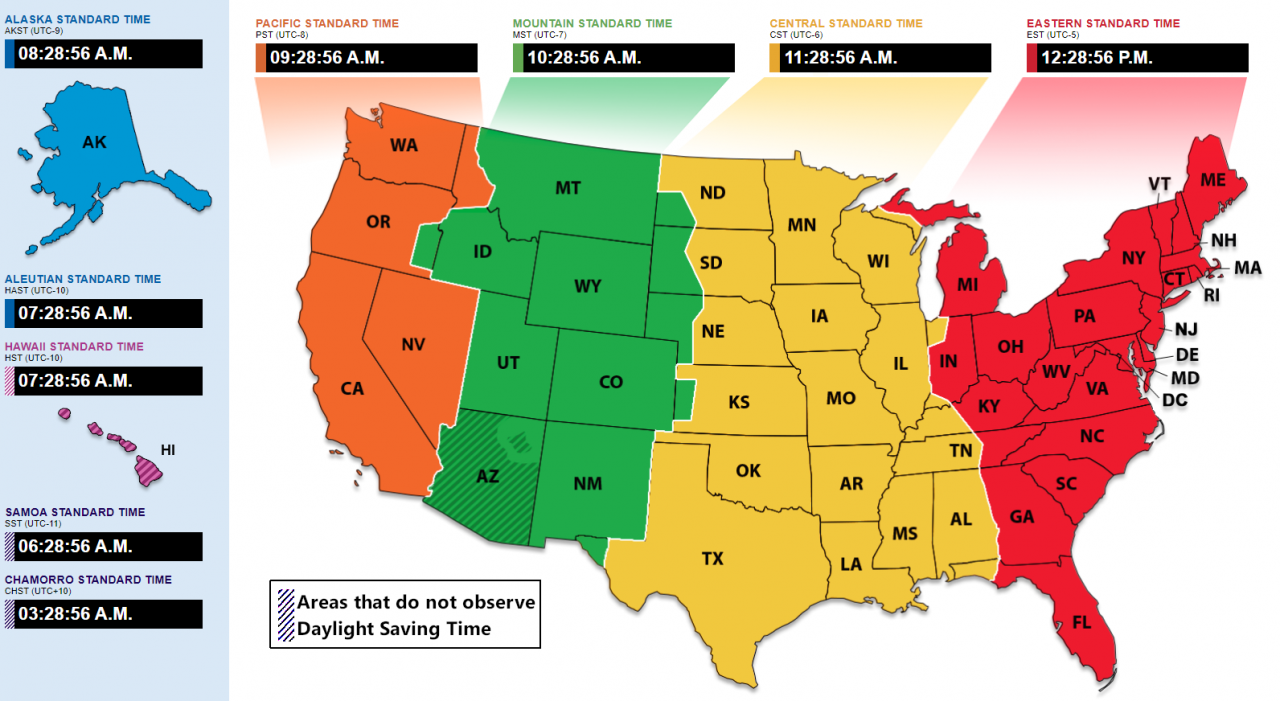
- From the East Coast of the United States: During the period when the eastern U.S. observes Eastern Daylight Time (EDT, UTC-4), there is no time difference between New York City and San Juan. When the eastern U.S. reverts to Eastern Standard Time (EST, UTC-5) in the fall, Puerto Rico will be one hour ahead.
- From the West Coast of the United States: Travelers from California, for instance, will need to account for a three-hour difference when California is on Pacific Daylight Time (PDT, UTC-7) and a four-hour difference when it’s on Pacific Standard Time (PST, UTC-8). Puerto Rico (AST, UTC-4) will always be three hours ahead of PDT and four hours ahead of PST.
- From Europe: The time difference will vary depending on which part of Europe you are coming from and whether they are observing their respective Daylight Saving Time periods. For example, from London (GMT/BST, UTC+0/UTC+1), Puerto Rico will be four or five hours behind.
It is always advisable to double-check the current time in San Juan or your specific destination within Puerto Rico closer to your travel date, especially if your departure point does observe Daylight Savings Time, to avoid any potential confusion during the transition periods on the mainland.
Impact on Itinerary Planning
The lack of Daylight Savings Time in Puerto Rico offers a degree of simplicity when crafting your vacation itinerary. You don’t need to worry about “losing” an hour of daylight or gaining an extra hour of evening light due to a clock change. Sunrise and sunset times will follow a more predictable pattern based on the earth’s axial tilt and orbital position, with gradual shifts occurring throughout the year.
This consistency is particularly beneficial for activities that are time-sensitive or depend on natural light. For example:
- Sunrise and Sunset Viewing: If you plan to catch a sunrise over the Atlantic Ocean or a sunset from the west coast of the island, you can rely on standard astronomical calculations for AST.
- Outdoor Excursions: Tours to the Camuy River Cave Park or adventures in the El Yunque National Forest can be scheduled with confidence, knowing that the local time will remain constant throughout your visit.
- Dining Reservations: Making reservations at renowned restaurants like Marmalade in Old San Juan or popular spots in Condado is straightforward, as the closing and opening hours will not be affected by a clock shift.
- Business Meetings: For those traveling for business, the absence of DST eliminates a layer of complexity when coordinating meetings with local businesses or partners.
Exploring the Island Under Consistent Skies
The allure of Puerto Rico lies not only in its stunning natural beauty and rich cultural heritage but also in the ease with which one can navigate its temporal landscape. The consistent time observed year-round contributes to a relaxed and predictable travel experience.
The Tropical Rhythm
Puerto Rico’s tropical location means that daylight hours are generally longer and more evenly distributed throughout the year than in temperate zones. While there is still a discernible difference between summer and winter daylight, the extremes are softened. This natural rhythm aligns well with the laid-back island vibe, encouraging visitors to embrace the flow of the day. Whether you’re enjoying a leisurely breakfast at a beachfront café in Rincón or embarking on an evening stroll through the historic fortifications of San Juan, you’ll find that the island operates on a steady, unchanging temporal clock.

Practical Travel Tips
For a seamless travel experience in Puerto Rico, keep the following in mind:
- Set Your Clocks Accordingly: Upon arrival, ensure your watch, phone, and any other timekeeping devices are set to Atlantic Standard Time (AST). Most smartphones will automatically update to the local time zone, but it’s always good practice to verify.
- Communicate Clearly: When making arrangements, always specify the time and acknowledge that it is local Puerto Rico time. This avoids potential confusion, especially when communicating with individuals in regions that do observe Daylight Savings Time.
- Enjoy the Predictability: Embrace the fact that Puerto Rico does not observe Daylight Savings Time. This means one less thing to worry about, allowing you to focus on immersing yourself in the island’s captivating culture, exploring its diverse attractions, and savoring its delicious cuisine. From the bioluminescent bays of Vieques to the vibrant nightlife of Santurce, your schedule will be governed by the sun and the island’s natural cadence, not by artificial clock adjustments.