
The acquisition of Texas by the United States was a complex and contentious process, deeply rooted in westward expansionist ambitions, diplomatic maneuvering, and regional conflict. This chapter in American history, culminating in the annexation of the Republic of Texas in 1845, significantly reshaped the political and territorial landscape of North America and directly contributed to the outbreak of the Mexican-American War. Understanding the multifaceted steps and underlying motivations behind this acquisition is crucial for appreciating the historical trajectory of both nations.
The Genesis of a Republic and Expansionist Dreams
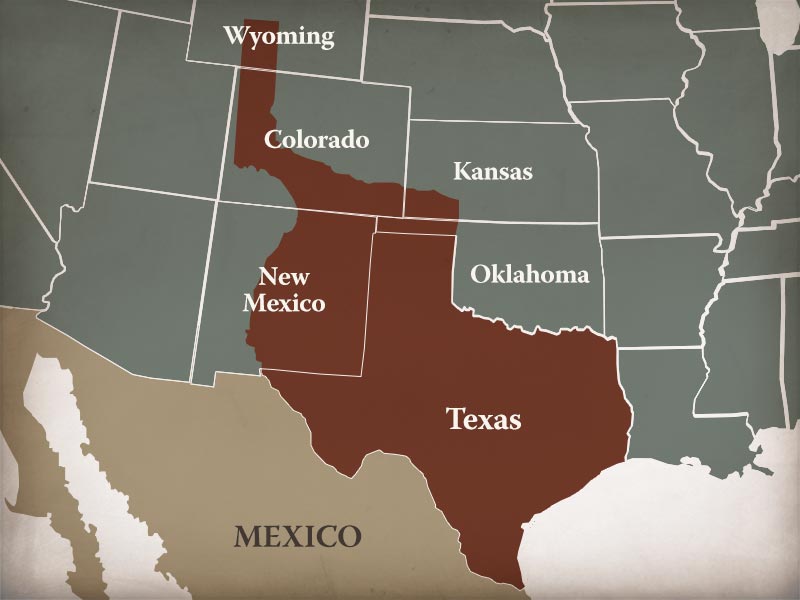
The story begins with the independence of Texas from Mexico in 1836, following the Texas Revolution. The newly formed Republic of Texas, though sovereign, faced immense challenges, including financial instability and ongoing threats from its southern neighbor. From its inception, many Texans, particularly those who had migrated from the United States and maintained strong cultural and economic ties, harbored a desire for annexation into the American Union.
Early Republic and American Interest
The concept of “Manifest Destiny,” the 19th-century belief that the expansion of the United States throughout the American continents was both justified and inevitable, played a significant role in fueling American interest in Texas. Prominent figures in American politics, including President Andrew Jackson and later John Tyler, saw the strategic and economic advantages of incorporating the vast territory of Texas into the Union. Its fertile lands offered agricultural potential, and its strategic location along the Gulf of Mexico was of immense geopolitical importance. However, the issue of slavery complicated annexation efforts. The inclusion of a large slave-holding territory like Texas threatened to upset the delicate balance of power between free and slave states in the United States Congress, leading to significant opposition from abolitionist factions.
Republic of Texas’s Diplomatic Efforts
The government of the Republic of Texas, led by figures like President Sam Houston and Mirabeau B. Lamar, actively pursued annexation as a means to secure its future. They engaged in diplomatic overtures to the United States, seeking favorable terms for joining the Union. However, initial attempts were met with political resistance, primarily due to the aforementioned slavery issue and fears of provoking Mexico, which had never formally recognized Texan independence and considered it a rebellious province. Despite these setbacks, the dream of annexation remained a persistent goal for many Texan leaders and citizens.
Diplomatic Maneuvers and Political Opposition
The path to annexation was not a straightforward one. It involved intricate diplomatic negotiations, political maneuvering within the United States, and public opinion shifts. The issue became a central point of debate in American presidential politics, with different candidates and parties taking varying stances.
The Tyler Administration’s Push
President John Tyler, an independent who had assumed the presidency after the death of William Henry Harrison, became a staunch advocate for annexation. He believed it was vital for American security and expansion. Tyler negotiated a treaty of annexation with Texas in 1844. However, this treaty faced a significant hurdle in the U.S. Senate, where it failed to garner the necessary two-thirds majority for ratification. The opposition, largely driven by anti-slavery sentiment and concerns over potential war with Mexico, was formidable. Critics argued that annexation would lead to conflict and further empower the Southern slaveholding states.
The Presidential Election of 1844
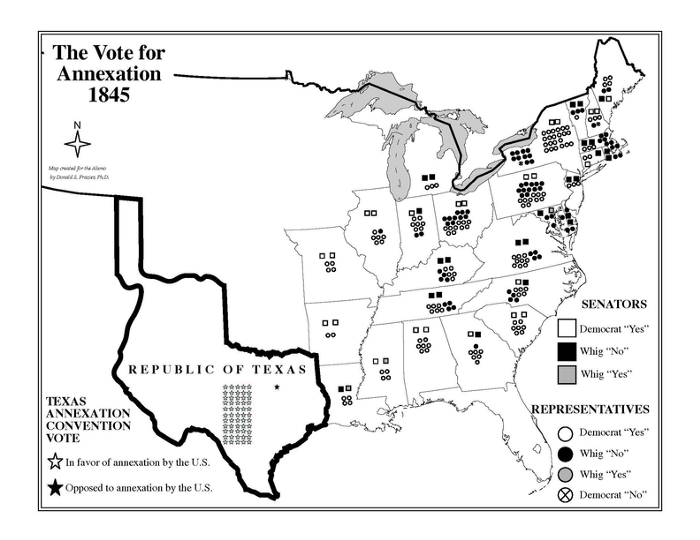
The presidential election of 1844 proved to be a pivotal moment in the annexation saga. The Democratic candidate, James K. Polk, a fervent expansionist and disciple of Andrew Jackson, made annexation a cornerstone of his campaign. Polk advocated for the “re-annexation” of Texas and the “re-occupation” of Oregon, signaling his commitment to territorial expansion. His victory over the Whig candidate, Henry Clay, who had attempted to moderate his stance on the issue, was widely interpreted as a public mandate for annexation. This electoral outcome created significant political momentum for the annexation cause.
The Final Act: Joint Resolution and Statehood
Following President Polk’s election, the annexation of Texas moved from a contentious treaty debate to a legislative push through a joint resolution of Congress. This method required a simple majority in both the House of Representatives and the Senate, bypassing the higher threshold needed for treaty ratification.
The Joint Resolution of 1845
President Tyler, eager to leave a significant achievement before the end of his term, pushed for a joint resolution. The House of Representatives passed the resolution in January 1845, and the Senate followed suit in February. The joint resolution offered generous terms to Texas, allowing it to be admitted as a state with its existing institutions, including slavery. This legislative victory marked the formal decision by the United States to annex Texas.
Texas Ratification and Statehood
Upon receiving the joint resolution from the United States Congress, the Republic of Texas convened its own Congress and held a public referendum. The terms of annexation were overwhelmingly approved by the Texan people, eager to join the growing American nation and secure their economic and political future. On December 29, 1845, President Polk signed the bill admitting Texas as the 28th state of the Union. This act, however, was not recognized by Mexico, which continued to assert its claim over the territory, setting the stage for further conflict.
The Aftermath and Lingering Tensions
The annexation of Texas was a landmark event, but it did not resolve all outstanding issues. The unresolved border dispute between Texas and Mexico, particularly concerning the territory between the Nueces River and the Rio Grande, became a flashpoint.
Border Disputes and Provocation
Mexico viewed the annexation as an act of aggression and a violation of its sovereignty. The United States, now claiming the Rio Grande as the southern border of Texas, sent troops under General Zachary Taylor to patrol the disputed territory. These actions were seen as provocative by Mexico, and skirmishes eventually broke out.

The Mexican-American War
The escalating tensions and border clashes culminated in the outbreak of the Mexican-American War in April 1846. The war, largely initiated by the United States following alleged attacks on American troops, resulted in a decisive American victory. The Treaty of Guadalupe Hidalgo, signed in 1848, ended the war and ceded vast territories from Mexico to the United States, including present-day California, Nevada, Utah, Arizona, New Mexico, and parts of Colorado and Wyoming. The acquisition of Texas, therefore, served as the direct precursor and catalyst for this significant territorial expansion, fundamentally altering the map of North America and leaving a lasting legacy on the relationship between the two neighboring nations.
LifeOutOfTheBox is a participant in the Amazon Services LLC Associates Program, an affiliate advertising program designed to provide a means for sites to earn advertising fees by advertising and linking to Amazon.com. Amazon, the Amazon logo, AmazonSupply, and the AmazonSupply logo are trademarks of Amazon.com, Inc. or its affiliates. As an Amazon Associate we earn affiliate commissions from qualifying purchases.