
Navigating the complexities of property taxes in Texas can be a daunting task for homeowners, particularly those new to the state or new to property ownership. Unlike many other states where property tax rates are uniform or determined by a central authority, Texas operates under a decentralized system where each of the more than 1,100 local taxing entities—including school districts, cities, counties, and special districts—has the authority to set its own property tax rate. This means that property tax bills can vary significantly even within the same county. Understanding the fundamental components of this calculation is key to budgeting effectively and ensuring fair taxation. The process involves three primary elements: the appraised value of your property, the tax rate set by local taxing entities, and any applicable homestead exemptions.
Understanding Property Appraisal in Texas
The foundation of any property tax calculation is the appraised value of the property itself. In Texas, this appraisal is conducted by a local county appraisal district (CAD). Each of the 254 counties in Texas has its own CAD, responsible for discovering, listing, and appraising all taxable property within its jurisdiction.
The Role of the Chief Appraiser
Each CAD is headed by a Chief Appraiser, who oversees the appraisal process. Their primary duty is to ensure that all property is appraised at its market value as of January 1st of each year. Market value, in this context, is defined as the price at which a property would transfer for cash or its equivalent under conditions where both the buyer and seller are willing but neither is compelled to buy or sell and both have reasonable knowledge of relevant facts.
Appraisal Methods
Appraisal districts typically employ three main methods to determine market value:
- The Sales Comparison Approach: This is the most common method for residential properties. It involves comparing the subject property to similar properties that have recently sold in the same or a very similar neighborhood. Adjustments are made for differences in features, size, condition, and location. For instance, a home with a recent remodel might be appraised higher than a similar home without the updates.
- The Cost Approach: This method is often used for newer or special-purpose properties where comparable sales are scarce. It estimates the cost to replace the property with a similar one, minus depreciation due to age, wear and tear, and obsolescence.
- The Income Approach: This method is primarily used for income-producing properties, such as apartment buildings or commercial spaces. It estimates the property’s value based on the income it is expected to generate. This involves analyzing rental income, operating expenses, and market capitalization rates.
The Notice of Appraised Value
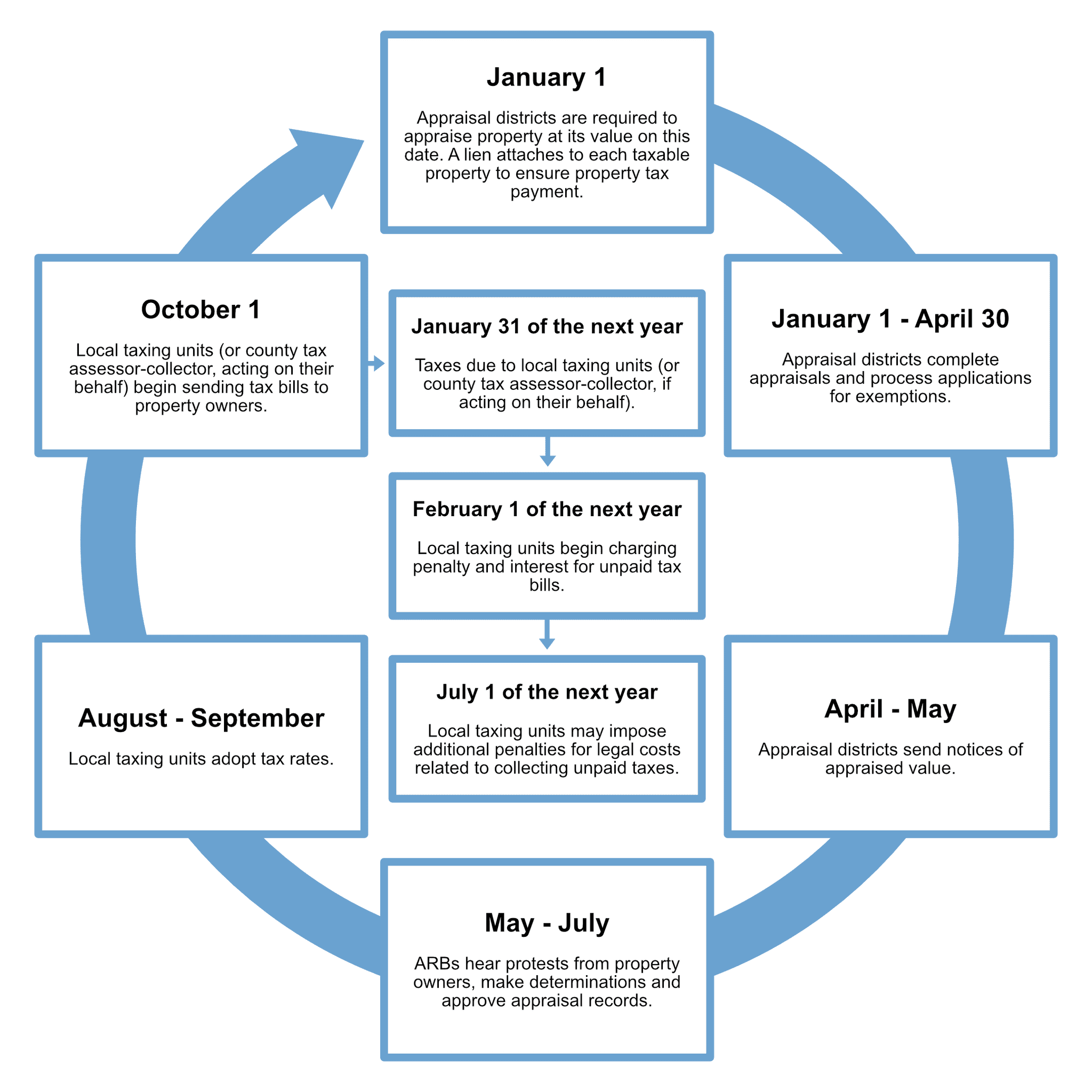
Once the appraisal district has determined the market value of your property, they will send you a Notice of Appraised Value. This notice is typically mailed in the spring and outlines the appraised value of your property for the current tax year. It’s crucial to review this notice carefully. If you believe the appraised value is higher than your property’s actual market value, or if there are errors in the description of your property, you have the right to protest the appraisal.
Protesting Your Property Value
The protest period generally runs from April 15th to May 15th, or 30 days after the notice is delivered, whichever is later. The protest can be filed with the appraisal review board (ARB) of your local CAD. You can present evidence to support your claim that the appraised value is too high, such as recent appraisals, comparative sales data, or photos of damage. If you are successful in lowering your appraised value, it directly translates to a lower property tax bill.
Determining the Tax Rate
The second critical component in calculating property taxes is the tax rate, also known as the millage rate or levy. In Texas, tax rates are set annually by the governing bodies of each taxing unit. These units include school districts, cities, counties, and various special districts (such as hospital districts, flood control districts, or community college districts).
How Taxing Units Set Rates
Each taxing unit holds public hearings to consider and adopt its tax rate for the upcoming year. During these hearings, the taxing unit must provide public notice of its proposed tax rate and hold at least one public hearing to allow citizens to comment. The process often involves balancing the need for revenue to fund public services with the desire to avoid placing an undue burden on taxpayers.
The “Effective Tax Rate” and “Rollback Rate”
Texas law provides certain protections for property owners regarding tax rate increases. Two key concepts are the “effective tax rate” and the “rollback rate.”
- Effective Tax Rate: This is the rate that would generate the same amount of revenue as the previous year if applied to the current year’s tax roll, excluding new property. It essentially accounts for inflation and changes in the tax base.
- Rollback Rate: This is the rate that would generate the same amount of revenue as the previous year, adjusted for an increase of no more than 8 percent in the tax levy, excluding new property. If a taxing unit adopts a tax rate higher than the rollback rate, voters in that taxing unit can petition to have an election to “roll back” the tax rate to the rollback rate.
For a taxing unit to adopt a rate higher than the effective tax rate, it must generally provide a notice of its proposed tax rate, which must include a statement that the proposed rate will be the rollback rate, and voters can force an election if the proposed rate exceeds the rollback rate. Taxing units with a population of 20,000 or more must also provide a notice of the proposed tax rate to every property owner if the rate will be higher than the effective tax rate.
Combining Tax Rates
Your property tax bill will reflect the sum of the tax rates set by all the taxing units that have jurisdiction over your property. For example, if you own a home in a city that is also served by a particular school district and county, your total property tax rate will be the sum of the city’s rate, the school district’s rate, and the county’s rate, plus any other applicable special district rates. These rates are typically expressed in dollars per $100 of taxable value.
Applying Exemptions and Credits
The final step in calculating your property tax bill involves applying any applicable exemptions and credits. Exemptions reduce the taxable value of your property, thereby lowering your tax liability.
Homestead Exemptions
The most common type of exemption in Texas is the homestead exemption. This exemption is available to individuals who own and occupy their primary residence. There are several types of homestead exemptions:
- General Homestead Exemption: This is a basic exemption that reduces the appraised value of your home by a certain amount. The amount is set by the taxing entities, but the state mandates a minimum $5,000 exemption for school district taxes. Other taxing units can offer higher exemptions.
- Over 65 Homestead Exemption: Homeowners who are 65 years or older may qualify for an additional homestead exemption. This exemption not only reduces the taxable value but also “freezes” the property tax amount for the qualifying homeowner if they choose to take the over-65 exemption. This means that as long as the owner continues to live in the home, the taxes will not increase, even if the property value or tax rate rises.
- Disability Homestead Exemption: Homeowners who are disabled may also qualify for an additional homestead exemption, similar to the over-65 exemption, which can also offer a tax freeze.
- Homestead Exemption for Disabled Veterans and Surviving Spouses: Specific exemptions are available for disabled veterans and their surviving spouses, offering significant tax relief.
To receive a homestead exemption, you must file an application with your local appraisal district. It’s a one-time filing, but you must meet the residency requirements by January 1st of the tax year for which you are applying.
Other Exemptions
Beyond homestead exemptions, Texas offers various other exemptions, including:
- Over 65 Exemption: This exemption is for individuals aged 65 or older who may not qualify for a homestead exemption (e.g., if they own their home but don’t reside there as their primary residence).
- Exemptions for Surviving Spouses: Provides relief for the surviving spouse of a property owner who qualified for certain exemptions.
- Exemptions for Charitable, Educational, and Religious Organizations: Non-profit organizations may be exempt from property taxes on property used for their charitable, educational, or religious purposes.
- Various Industry-Specific Exemptions: Certain industries might qualify for exemptions based on specific criteria, such as pollution control equipment.
Calculating the Final Tax Bill
Once the appraised value, tax rate, and exemptions are determined, the final property tax bill can be calculated. The formula is relatively straightforward:
(Appraised Value – Exemptions) x (Total Tax Rate / 100) = Annual Property Tax Bill
Let’s illustrate with a hypothetical example:
- Property’s Market Value: $300,000
- Appraised Value: $300,000 (assuming no protest and no changes from last year)
- Homestead Exemption: $30,000 (This is a hypothetical amount; actual exemptions vary by taxing unit)
- Taxable Value: $300,000 – $30,000 = $270,000
- Total Tax Rate (combined city, school, county, etc.): 2.00% or 2.00 per $100
- Annual Property Tax Bill: $270,000 * (2.00 / 100) = $5,400
This example highlights how exemptions can significantly reduce the final tax obligation. It’s also important to note that property taxes in Texas are generally paid in arrears, meaning taxes assessed in 2023 are typically due in January 2024.
Understanding Tax Due Dates and Payment Options
Property taxes in Texas are typically due by January 31st of the year following the tax year. For example, 2023 property taxes are due by January 31, 2024. Most taxing entities offer payment options, including lump-sum payments or installment plans, though interest and penalties are usually assessed for late payments. It is advisable to contact your local tax assessor-collector’s office for specific payment procedures and deadlines.

The Importance of Staying Informed
The property tax system in Texas is dynamic. Appraisal values can change, tax rates can be adjusted, and exemption laws may be modified. Homeowners are encouraged to stay informed by reviewing their annual appraisal notices, understanding the tax rates set by their local taxing entities, and ensuring they are taking advantage of all applicable homestead and other exemptions. Engaging with local appraisal districts and taxing units, and understanding the protest and exemption application processes, are essential steps in managing property tax obligations effectively in the Lone Star State.
LifeOutOfTheBox is a participant in the Amazon Services LLC Associates Program, an affiliate advertising program designed to provide a means for sites to earn advertising fees by advertising and linking to Amazon.com. Amazon, the Amazon logo, AmazonSupply, and the AmazonSupply logo are trademarks of Amazon.com, Inc. or its affiliates. As an Amazon Associate we earn affiliate commissions from qualifying purchases.