
Understanding the scale of a city is often best achieved by grasping its fundamental building blocks. In the vibrant, ever-evolving metropolis of New York, this fundamental unit is the “block.” Far more than just a segment of a street, a New York block carries with it a complex interplay of dimensions, history, cultural significance, and practical implications for navigating the urban landscape. While a precise, universal measurement remains elusive, exploring the average and variable dimensions of a block offers a fascinating insight into the city’s design and the experience of its inhabitants and visitors.
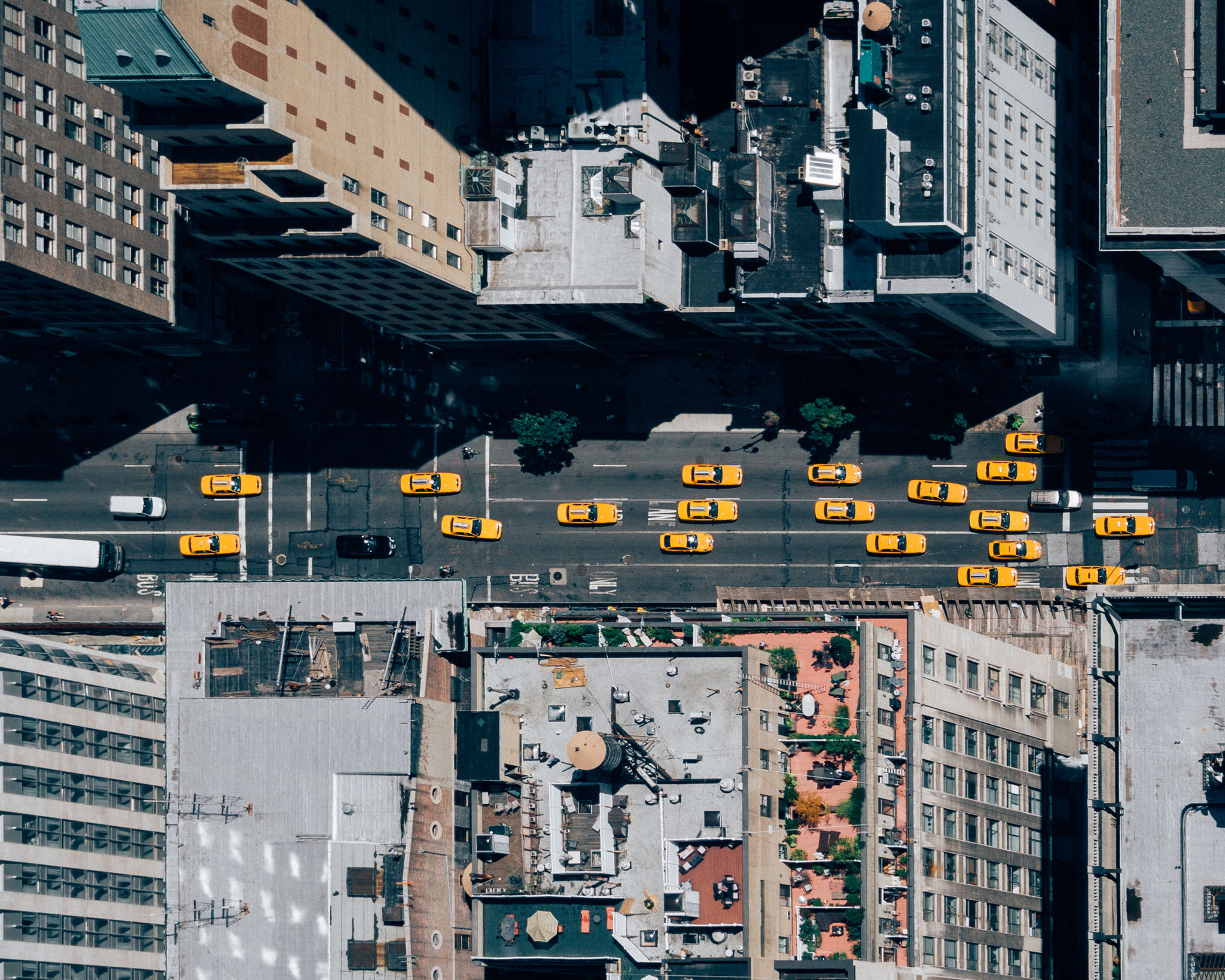
The Elusive Uniformity: Averages and Variations
To begin, it’s crucial to acknowledge that there is no single, standardized “block size” across all of New York City. The city’s grid system, most famously laid out in the Commissioners’ Plan of 1811, established a relatively uniform pattern for much of Manhattan and parts of the other boroughs. However, this uniformity is more conceptual than strictly dimensional.
Manhattan’s Grid: A General Framework
In the gridded sections of Manhattan, particularly from Houston Street northwards, a standardized block length was envisioned. A typical north-south avenue block in Manhattan is generally considered to be around 200 feet (approximately 61 meters) wide. This measurement typically refers to the distance between the centers of two intersecting streets.
However, the east-west cross-town blocks are more variable. The Commissioners’ Plan aimed for a conceptual consistency, but the actual implementation led to differences. A standard east-west block in Manhattan can range significantly, often averaging around 900 feet (approximately 274 meters) in length, but this figure is a broad generalization. Some blocks are considerably longer, especially in areas where street planning was less rigidly adhered to, or where natural topography influenced development.
Beyond Manhattan: A Mosaic of Scales
The grid system, while influential, does not encompass the entirety of New York City. In neighborhoods like parts of Brooklyn, Queens, the Bronx, and Staten Island, the urban fabric is often more organic. Streets may curve, angles may be irregular, and the concept of a “block” can become more fluid. Here, block lengths and widths are dictated by historical development, property lines, and the specific planning or lack thereof in different eras. This leads to a wider spectrum of block sizes, with some being significantly smaller or larger than their Manhattan counterparts.
Navigating the City: Practical Implications of Block Size
The dimensions of a New York block have profound practical implications for anyone navigating the city, whether on foot, by car, or using public transport. Understanding these dimensions can transform a casual stroll into a more informed exploration.
Walking and “Block Miles”
For pedestrians, the concept of a “block” is the primary unit of distance. When someone says they are “a few blocks away,” they are referencing these segments of the urban grid. The general consensus, particularly in Manhattan, is that approximately 20 blocks make up a mile. This rule of thumb is invaluable for estimating distances and planning walking routes. However, it’s important to remember this is an approximation. The variability in east-west blocks, coupled with the fact that not all blocks are created equal in terms of obstructions or pedestrian traffic, means this is a guiding principle rather than an exact science. A “block mile” can feel longer on a crowded sidewalk on Fifth Avenue than on a quieter residential street.
Driving and Traffic Flow
For drivers, block length directly impacts travel time and the experience of traffic. Shorter blocks, while offering more frequent opportunities to turn or change direction, can also lead to more congestion due to the higher number of intersections. Conversely, longer blocks might offer a smoother ride if traffic lights are synchronized, but a wrong turn can lead to a significant detour. The efficiency of traffic light timing, or “traffic light synchronization,” plays a crucial role in how quickly one can traverse a series of blocks. A well-timed progression of green lights can make a few blocks feel like a breeze, while a red light at every intersection can make them feel like an eternity.
Public Transportation and Accessibility

Public transportation, particularly the subway system, operates on a different scale. Subway lines often run for miles without surfacing, and stops are strategically placed to serve clusters of blocks. However, the walk from a subway station to a specific destination is often measured in blocks. For those with mobility challenges, understanding the number and length of blocks to be traversed can be a critical factor in planning their journey. Accessible stations and well-maintained sidewalks are key to ensuring equitable access to all parts of the city.
Beyond Dimensions: The Cultural and Historical Significance of a Block
A New York block is more than just its physical dimensions; it is a crucible of culture, history, and daily life. Each block, with its unique mix of buildings, businesses, residents, and architectural styles, contributes to the rich tapestry of the city.
Architectural Typologies and Historical Layers
The architecture of a block tells a story of the city’s evolution. In areas like the West Village or parts of Brooklyn Heights, blocks are characterized by historic brownstones, narrow streets, and a distinctly European feel. These blocks often predate the rigid grid system and retain a more intimate, human scale. Contrast this with the monumental scale of blocks in Midtown Manhattan, dominated by skyscrapers like the Empire State Building or Chrysler Building, where blocks can feel immense, defined by soaring structures and expansive plazas. The varying heights and densities of buildings on a block profoundly influence the perception of its size and the microclimates within it.
Neighborhood Identity and Micro-Cultures
Each block can feel like its own distinct neighborhood, fostering unique micro-cultures and identities. A block on Mott Street in Chinatown will have a vastly different character from a block in the Upper East Side, defined by different languages, cuisines, shops, and social rhythms. This hyperlocalism is a hallmark of New York. The businesses that line a street, the types of residences, the presence of parks or public spaces – all these elements contribute to the unique personality of a block and, by extension, the neighborhood it inhabits.
The “Street Wall” and Urban Design
Urban planners and architects often refer to the “street wall” – the continuous line of buildings that defines the edge of a street. The height, setback, and architectural style of buildings along a block contribute to the coherence and character of the streetscape. A well-defined street wall can create a sense of enclosure and intimacy, while a series of setbacks or plazas can open up the space, altering the perceived scale of the block. The interplay between the built environment and the open space of the street is a fundamental aspect of New York’s urban design, and the block is the unit where this interaction is most keenly felt.
Estimating Block Size: A Practical Guide for Travelers
For travelers and newcomers to New York, gaining an intuitive sense of block size can greatly enhance their exploration.
Visual Cues and Landmarks
Pay attention to major avenues and cross streets. In Manhattan, the numbered avenues (running north-south) are generally about 200 feet apart. The cross streets (running east-west) are more variable, but understanding the typical distances between them, especially in the grid, helps in mentally measuring distances. Look for prominent landmarks or distinctive buildings that can serve as anchors within a block or across a series of blocks. The Flatiron Building, for instance, occupies a unique, triangular block that defies the standard grid.
Using Mapping Tools and Local Knowledge
Google Maps and other mapping applications provide precise measurements. However, experiencing the city on foot and developing an internal sense of scale is an invaluable part of the New York experience. Don’t hesitate to ask locals for directions. Phrases like “How many blocks?” or “Is it a long walk?” will quickly give you a feel for local perceptions of distance. They will often provide context beyond just the number of blocks, mentioning whether it’s “a quick walk” or “a bit of a trek.”

Embracing the Variability
Ultimately, the beauty of New York lies in its lack of perfect uniformity. While the grid provides a conceptual framework, the city’s organic growth, historical layers, and diverse neighborhoods ensure that no two blocks are precisely alike. Understanding the general dimensions of a block is a useful tool, but the true magic of New York is discovered by immersing oneself in the unique character and scale of each individual block, recognizing it as a microcosm of the larger, infinitely fascinating urban landscape.
LifeOutOfTheBox is a participant in the Amazon Services LLC Associates Program, an affiliate advertising program designed to provide a means for sites to earn advertising fees by advertising and linking to Amazon.com. Amazon, the Amazon logo, AmazonSupply, and the AmazonSupply logo are trademarks of Amazon.com, Inc. or its affiliates. As an Amazon Associate we earn affiliate commissions from qualifying purchases.