
When most people envision Hawaii, images of sun-drenched beaches, lush volcanic landscapes, and vibrant local culture often come to mind. It’s a dream destination for many, a tropical paradise offering a unique blend of adventure, relaxation, and unforgettable experiences. However, beyond the idyllic scenery, a common question arises, especially for those planning a trip or simply curious about geographical facts: “How big is Hawaii compared to other states?” This inquiry delves into the physical dimensions of the Aloha State and provides a fresh perspective on its place within the vast tapestry of the United States.
While Hawaii is undeniably a significant destination in terms of its appeal to tourists and its rich history, its physical size is often surprising. Understanding its acreage and comparing it to the continental giants can offer valuable insights for travel planning, especially when considering the logistics of exploring its diverse islands. This article aims to demystify the scale of Hawaii, placing it in context with its fellow states and highlighting what its size means for travelers and those considering long-term stays.
The Archipelago’s Footprint: Hawaii’s Land Area in Perspective
The Hawaiian Islands, a chain of volcanic landmasses rising from the Pacific Ocean, form a unique geographical entity. Unlike the contiguous states that share land borders, Hawaii exists as an isolated archipelago. This isolation significantly influences how its size is perceived and how travel within the state unfolds.
Understanding the Measurement: Acreage and Square Miles
To accurately answer “How big is Hawaii?”, we must look at its total land area. Hawaii comprises 137 islands, though only seven are significant in size: Kauai, Oahu, Molokai, Lanai, Kahoolawe, Maui, and the Island of Hawaii (also known as the Big Island). The total land area of Hawaii is approximately 10,931 square miles (28,311 square kilometers).
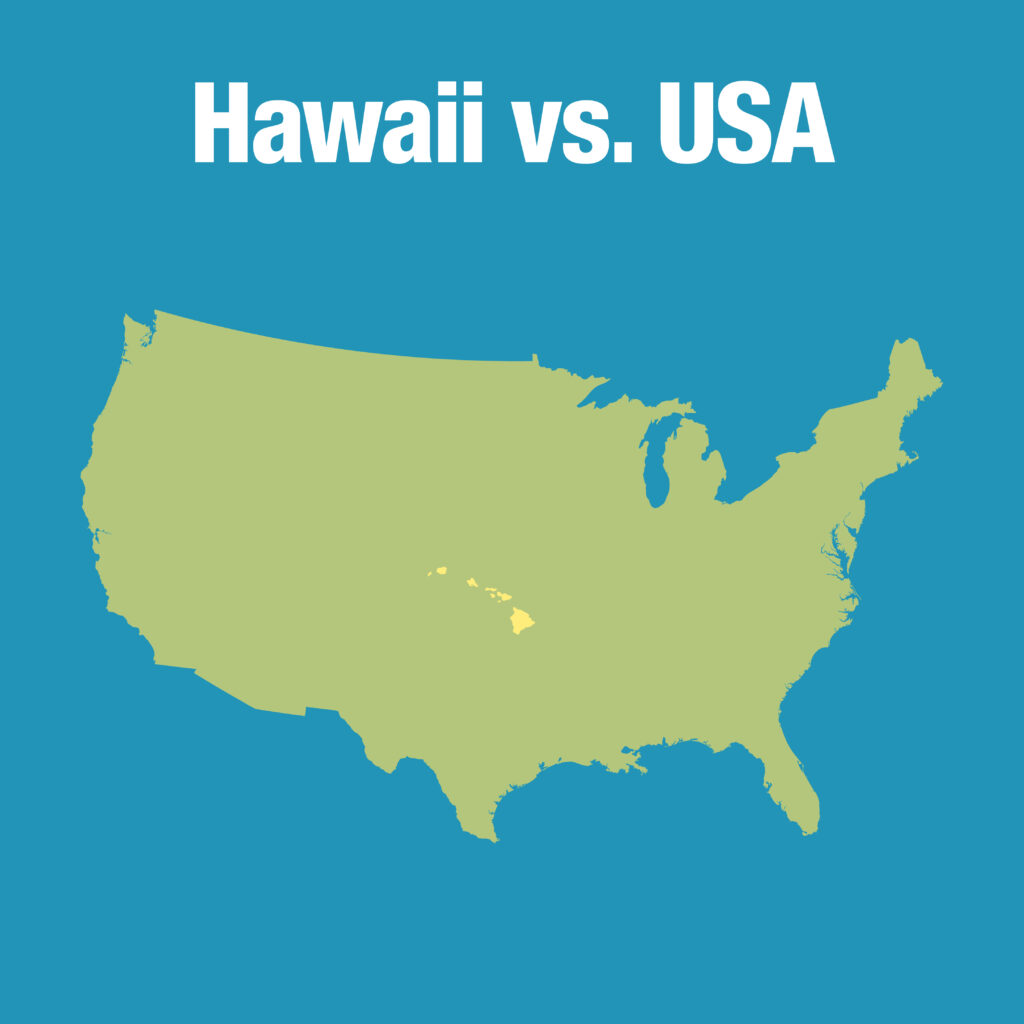
This figure might sound substantial at first, but when placed against the backdrop of the 49 other states, it reveals a different story. The largest state by land area in the United States is Alaska, which is a colossal 665,384 square miles. For a visual comparison, Alaska is more than 60 times larger than Hawaii. Texas, the second-largest state, covers 268,596 square miles, making it almost 25 times the size of Hawaii. Even California, a popular travel destination renowned for its diverse geography, spans 163,695 square miles, over 15 times Hawaii’s size.
Hawaii in the Realm of Smaller States
While Hawaii is considerably smaller than the largest states, it is not the absolute smallest. That distinction belongs to Rhode Island, which measures a mere 1,545 square miles. In fact, Hawaii is significantly larger than Rhode Island (nearly 7 times larger), Delaware (1,949 square miles), and Connecticut (5,543 square miles).
To further contextualize Hawaii’s size, consider its ranking among all states. Hawaii is the 43rd largest state in the U.S. by land area. This places it within the upper half of the list, meaning there are only seven states smaller than it. This might be surprising to some, given Hawaii’s global recognition as a premier destination.
The Impact of Islands on Perception
The archipelago nature of Hawaii also plays a crucial role in how its size is perceived. While the total landmass is what’s officially measured, the separation between islands means that travelers must consider inter-island flights, ferry services, or cruises to explore different parts of the state. This can make it feel like a larger undertaking than a single, contiguous landmass of equivalent size. For instance, traveling from Honolulu on Oahu to Kona on the Island of Hawaii involves a flight, akin to traveling between two distinct regions in a larger state. This perceived fragmentation can influence travel itineraries, accommodation choices, and the overall travel experience. Planning a family trip that encompasses multiple islands requires careful coordination, much like planning a multi-city tour in a large continental state.
Navigating the Islands: What Hawaii’s Size Means for Your Trip
Understanding Hawaii’s geographical scale provides practical implications for anyone planning a visit, from booking hotels to designing an itinerary. Its size, combined with its island structure, shapes the tourism landscape and the diversity of attractions available.
Island Hopping: A Core Element of Hawaiian Travel

Given that Hawaii is an archipelago, island hopping is often a central component of a comprehensive Hawaiian experience. Each island offers a distinct character, unique landmarks, and different activities.
- Oahu: Home to Honolulu and the world-famous Waikiki Beach, Oahu is the most populous island and often the entry point for international travelers. It offers a vibrant mix of urban life, historical attractions like Pearl Harbor, and stunning natural beauty.
- Maui: Known for its luxurious resorts, breathtaking Road to Hana, and the majestic Haleakala National Park, Maui is a popular choice for honeymooners and those seeking a blend of relaxation and adventure.
- Kauai: The “Garden Isle,” Kauai is famed for its dramatic cliffs along the Na Pali Coast, lush rainforests, and the Waimea Canyon. It’s a haven for nature lovers and outdoor enthusiasts.
- Island of Hawaii (Big Island): This is the largest island in the chain, offering incredible diversity from the active volcanoes of Hawaii Volcanoes National Park to the black sand beaches and coffee plantations of Kona. Its sheer size allows for a vast range of experiences.
- Molokai and Lanai: These islands offer a more tranquil and less developed escape, providing glimpses into traditional Hawaiian life and stunning natural landscapes without the crowds.
The fact that you can’t simply drive from one island to another means that travel between them requires dedicated planning and budget allocation for flights. While the distances between the main islands might seem short on a map, the logistics of air travel, check-in times, and transfers add to the overall travel duration. This can influence decisions about how many islands to visit during a single trip, especially for shorter stays. A common recommendation for budget travel or shorter trips is to focus on one or two islands to avoid feeling rushed. Conversely, for luxury travel or extended stays, island hopping can be a rewarding way to experience the full spectrum of what Hawaii has to offer.
Accommodation and Lifestyle Considerations
The size and distribution of islands also impact accommodation options and lifestyle choices in Hawaii.
On islands like Oahu, you’ll find a wide range of hotels, from budget-friendly options in Waikiki to upscale resorts and apartments. The density of development in areas like Honolulu means you have access to a variety of amenities and services, catering to different travel styles, including business stays.
In contrast, islands like Lanai or parts of the Island of Hawaii offer more secluded villas and boutique hotels, emphasizing a more intimate and exclusive experience. The availability of long-term stay options might also vary significantly between islands. Urban centers like Honolulu will offer more choices for apartment rentals and extended-stay hotels, while more remote areas might focus on vacation villas or short-term rentals.
When considering a lifestyle change or a long-term stay, understanding the relative sizes of the islands becomes even more critical. The accessibility to amenities, services, and communities will differ greatly. For instance, living on Molokai offers a very different daily lifestyle compared to living in Honolulu. The smaller landmass of individual islands means that a significant portion of the population is concentrated in specific areas, especially on islands like Oahu. This concentration is a direct consequence of the limited land available and the geography of volcanic islands.
Beyond the Surface: The Cultural and Natural Significance of Hawaii
While Hawaii’s physical size might not rival that of its continental counterparts, its significance extends far beyond mere acreage. Its unique environment, rich history, and vibrant culture make it a standout destination.
A Melting Pot of Natural Wonders
The relatively small landmass of Hawaii belies an astonishing diversity of ecosystems and natural landmarks. The volcanic origins of the islands have created a landscape unlike any other, featuring active volcanoes, pristine beaches, dramatic cliffs, lush rainforests, and arid lava fields. Hawaii Volcanoes National Park on the Island of Hawaii is a testament to this geological dynamism, offering unparalleled opportunities to witness volcanic activity. The na Pali Coast on Kauai showcases some of the most dramatic coastal scenery in the world. These natural attractions, concentrated within a limited geographical area, offer a concentrated dose of natural wonder that draws millions of visitors each year.
A Rich Tapestry of History and Culture
Hawaii’s history is as deep and complex as its volcanic foundations. From the ancient Polynesian voyagers who first settled the islands to its annexation by the United States, the islands have a profound cultural heritage. This heritage is celebrated through traditional music, dance (like the hula), food, and the strong sense of community that pervades the islands. The Bishop Museum in Honolulu is a key institution for understanding this rich history and culture. The impact of Captain Cook’s arrival and the subsequent missionary period are also significant historical touchstones. Even with its smaller size, Hawaii has had a substantial influence on American history and global travel.

The Economic Engine of Tourism
The tourism industry is the lifeblood of the Hawaiian economy. The allure of its natural beauty, unique culture, and world-class resorts and hotels attracts visitors from across the globe. The relatively small land area, coupled with the desire to experience the diverse offerings of each island, necessitates a well-developed tourism infrastructure. This includes a robust network of airlines, hotels, tour operators, and local businesses that cater to the influx of visitors. The success of tourism in Hawaii highlights how a destination’s impact isn’t solely determined by its physical dimensions but by its ability to captivate and welcome the world, offering unforgettable experiences and a distinct lifestyle.
LifeOutOfTheBox is a participant in the Amazon Services LLC Associates Program, an affiliate advertising program designed to provide a means for sites to earn advertising fees by advertising and linking to Amazon.com. Amazon, the Amazon logo, AmazonSupply, and the AmazonSupply logo are trademarks of Amazon.com, Inc. or its affiliates. As an Amazon Associate we earn affiliate commissions from qualifying purchases.