
The vastness of a country or a state can be a crucial factor when planning a trip. Understanding geographical scale helps manage expectations regarding travel times between destinations, the diversity of landscapes, and the sheer amount of ground one can cover. For many, the concept of “big” is often relative, and comparing familiar entities can provide a valuable frame of reference. This is particularly true when considering international travel, where the scale of places like Japan can seem immense. To contextualize this, a comparison with a well-known and geographically expansive region within the United States, such as Texas, offers a compelling perspective.
Geographical Footprints: A Tale of Two Giants
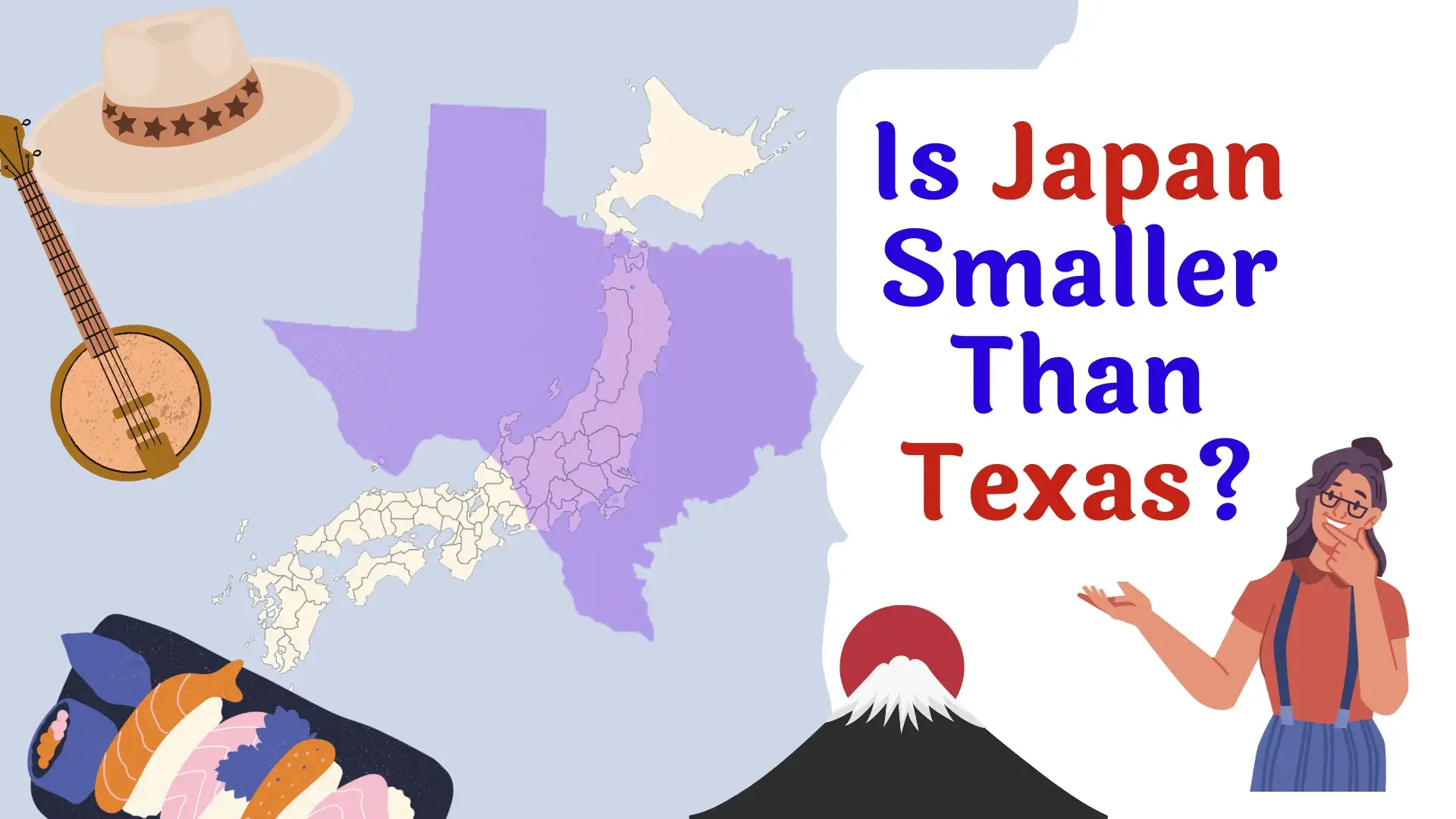
At first glance, both Japan and Texas appear to be substantial entities on the global map. Texas, a singular state, is renowned for its expansive territory. Japan, an island nation, comprises a long archipelago stretching across the Pacific Ocean. The immediate question for any prospective traveler is: how do these two behemoths stack up against each other in terms of pure landmass?
Land Area: The Numbers Game
The official land area of Texas is approximately 268,596 square miles (695,662 square kilometers). This figure encompasses all its varied terrains, from the piney woods of East Texas to the arid deserts of West Texas and the vast plains of the Panhandle.
Japan, on the other hand, has a total land area of approximately 145,937 square miles (377,975 square kilometers). This area is distributed across its four main islands – Hokkaido, Honshu, Shikoku, and Kyushu – along with thousands of smaller islands.
Comparison: Directly comparing these figures reveals a significant difference. Texas is substantially larger than Japan. In fact, Texas is almost twice the size of Japan in terms of land area. To put it another way, you could fit roughly 1.8 Japans within the borders of Texas.
Population and Density: People in the Picture
Beyond sheer landmass, the distribution and density of population play a vital role in shaping the travel experience. A large land area with a sparse population feels very different from a smaller area with a dense concentration of people.
Population Figures
Texas is home to a large and growing population, estimated to be over 30 million people. This makes it the second-most populous state in the United States after California. Its population is spread across a vast territory, leading to a generally lower population density compared to highly urbanized nations.
Japan, while geographically smaller, boasts a significantly larger population, exceeding 125 million people. This makes it one of the most populous countries in the world. The concentration of its population is a defining characteristic.
Density Contrasts
The population density of Texas is around 110 people per square mile (42 people per square kilometer). This figure, while not insignificant, reflects the sheer size of the state and the presence of vast rural and sparsely populated areas.
Japan, in stark contrast, has a population density of approximately 850 people per square mile (328 people per square kilometer). This is one of the highest population densities among major countries. This density is most pronounced in the metropolitan areas, particularly the Kanto region, which includes Tokyo, the world’s most populous metropolitan area.
Comparison: The population density is where the comparison shifts dramatically. While Texas is physically larger, Japan is far more densely populated. This means that for a traveler in Japan, encountering people, bustling cities, and developed infrastructure is a far more common experience across a larger proportion of the country, even within its vast mountain ranges and rural interiors, than it might be in many parts of Texas.
Travel Implications: Navigating the Scale
Understanding the size and population density of Japan versus Texas has direct implications for travel planning. The logistical considerations, the pace of travel, and the types of experiences available can be significantly influenced by these geographical factors.
Distance and Time: The Tyranny of Miles
In Texas, distances can be immense. A road trip from Houston to El Paso, for instance, spans over 800 miles (1,287 kilometers) and can take 12-14 hours of driving. This means that exploring multiple major cities in Texas often requires significant travel time, sometimes necessitating flights between destinations rather than driving. The state’s infrastructure, while extensive, is designed to connect vast distances.
In Japan, while the country is smaller, the excellent high-speed rail network, the Shinkansen (Bullet Train), allows for remarkably efficient travel between major cities. Traveling from Tokyo to Osaka, a distance of about 315 miles (507 kilometers), takes just over 2.5 hours by Shinkansen. This efficiency means that it is feasible to visit multiple iconic cities like Tokyo, Kyoto, and Hiroshima within a single trip without feeling rushed by travel times. However, venturing off the beaten path into more rural or mountainous areas can still involve considerable time, mirroring some of the challenges faced in Texas but on a smaller overall scale.
Urban vs. Rural Experiences
The population density has a profound impact on the traveler’s experience. In Japan, even in areas outside the mega-cities, one is rarely far from human habitation. This creates a sense of constant connectivity and accessibility. Services, restaurants, and accommodations are generally abundant. While there are indeed serene natural landscapes and remote villages, the overwhelming impression for many visitors is one of a highly developed and populated nation.
Texas, with its vast open spaces, offers a different kind of experience. Travelers can find true solitude in its deserts, ranches, and national parks like Big Bend National Park. The state’s rural areas are characterized by a sense of spaciousness and a slower pace of life. While its major cities like Dallas, Austin, and San Antonio are vibrant and populated, the sheer size of Texas means that extensive stretches of driving can pass with very few signs of significant settlement.
Cultural Immersion and Diversity
The scale of both regions also influences the perception of cultural diversity. Texas is a melting pot of cultures, reflecting its history with Native American tribes, Spanish colonization, its status as a frontier state, and its significant influx of immigrants from Mexico and other parts of the world. This results in a rich tapestry of cuisines, traditions, and architectural styles across its different regions. The sheer size allows for distinct regional identities to flourish, from the Tex-Mex culture of the south to the cowboy heritage of the west.
Japan offers a unique form of cultural depth. While geographically smaller, its islands have developed distinct regional cultures, dialects, and culinary specialties over centuries of relative isolation from one another. The traveler can experience the imperial elegance of Kyoto, the modern dynamism of Tokyo, the historic port city of Nagasaki, or the rugged natural beauty and unique culture of Hokkaido. The density of population in Japan means that cultural traditions are often deeply ingrained and observable in daily life, even in bustling urban settings.

Conclusion: A Matter of Perspective
When comparing Japan to Texas, the most striking difference lies in their relative sizes and population densities. Texas is a sprawling giant, offering vast open spaces and distinct regional identities spread across an enormous landmass. Japan, while considerably smaller in area, compensates with a much denser population, leading to a highly efficient and interconnected travel experience, particularly facilitated by its advanced transportation networks.
For travelers, this means that a trip to Texas often involves a focus on long-distance road trips, appreciating expansive landscapes, and exploring diverse regional cultures that are spread far apart. A journey through Japan, on the other hand, can be characterized by efficiently hopping between vibrant cities and immersing oneself in the rich cultural tapestry that thrives within its compact, yet densely populated, islands. Both offer incredible travel opportunities, but understanding their scale is key to planning an itinerary that maximizes enjoyment and minimizes logistical surprises.
LifeOutOfTheBox is a participant in the Amazon Services LLC Associates Program, an affiliate advertising program designed to provide a means for sites to earn advertising fees by advertising and linking to Amazon.com. Amazon, the Amazon logo, AmazonSupply, and the AmazonSupply logo are trademarks of Amazon.com, Inc. or its affiliates. As an Amazon Associate we earn affiliate commissions from qualifying purchases.