
When travelers contemplate a visit to Orange County California, one of the first questions that often arises, explicitly or implicitly, is about its scale. “How big is Orange County?” isn’t just a geographical query; it’s a foundational question that shapes expectations, influences itinerary planning, and ultimately defines the breadth of experiences available. Far more than just a cluster of beach towns, Orange County is a vast and multifaceted destination, encompassing a diverse array of cities, landscapes, and attractions. Understanding its true size—both in terms of physical area and the scope of what it offers—is paramount for anyone looking to fully appreciate and strategically navigate this iconic Southern California locale. From its sprawling inland plains to its famous coastline, the county’s dimensions are a key determinant of its character and an essential piece of information for crafting an unforgettable travel experience.
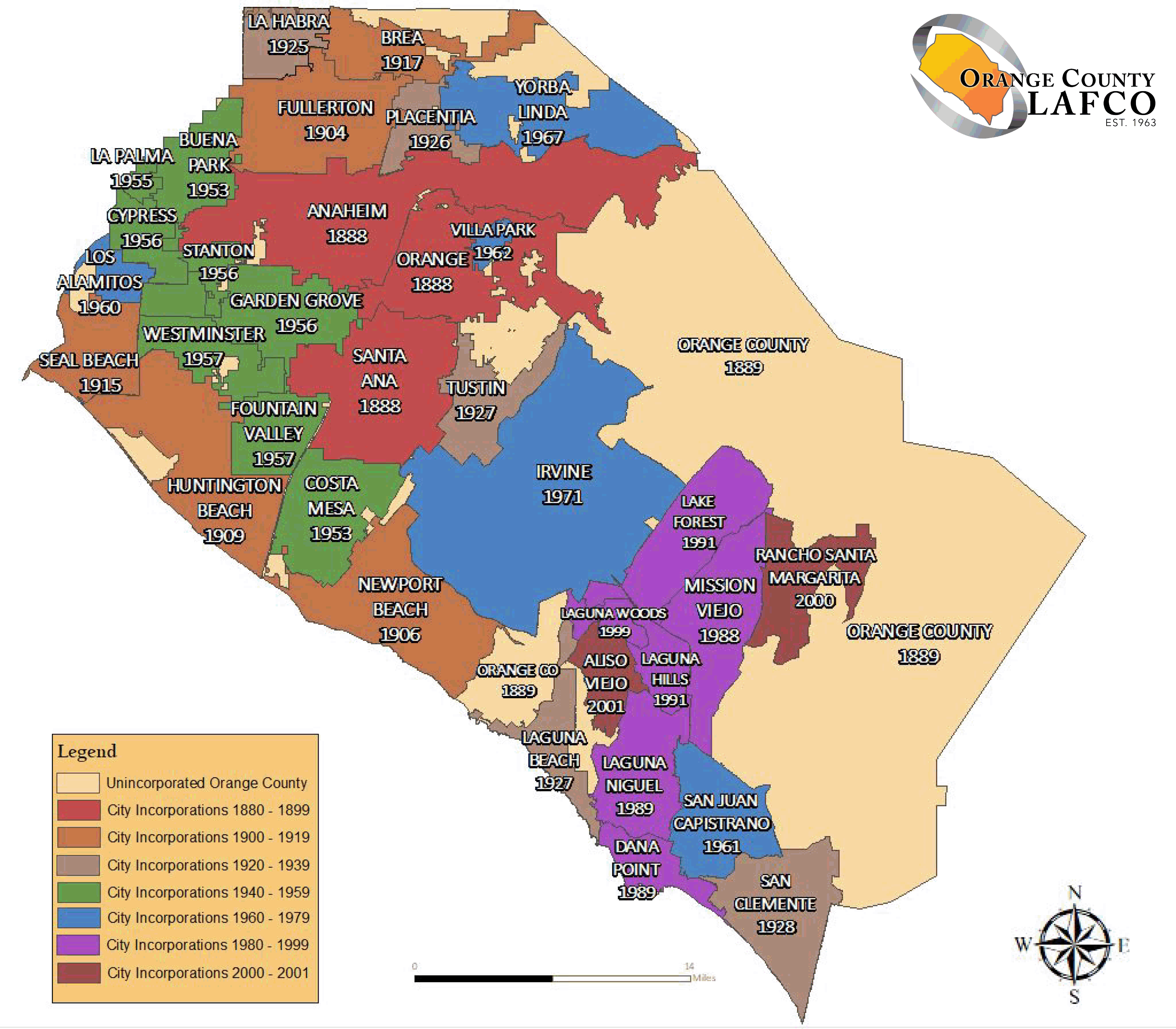
The Geographic Footprint: Quantifying the Scale
To truly grasp the magnitude of Orange County, it’s essential to look at the numbers. This region is not merely a small coastal strip but a significant landmass that plays a crucial role in the Southern California tapestry. Its geographical boundaries and diverse topography contribute immensely to its appeal as a travel destination.
Square Miles and Kilometers: A Concrete Measure
Orange County spans an impressive land area, providing ample space for its dynamic urban centers, charming suburban communities, expansive parks, and rugged natural landscapes. The county covers approximately 798 square miles (about 2,067 square kilometers) of land. This makes it larger than many individual U.S. states and numerous countries worldwide. When factoring in water area, particularly parts of the Pacific Ocean it borders, the total area expands slightly.
To put this into perspective, traveling from its northernmost city of La Habra to its southernmost tip in San Clemente can take well over an hour, even without significant traffic, highlighting the considerable distances involved. Its boundaries touch Los Angeles County to the north, San Bernardino County and Riverside County to the east, and San Diego County to the southeast, underscoring its pivotal position within Southern California’s mega-region. This substantial size means that visitors shouldn’t expect to “see it all” in a single short trip; rather, a more focused approach to exploring its distinct sub-regions is often advisable.
Coastline and Inland Reach: Diverse Landscapes
The geographic scope of Orange County isn’t just about total area; it’s also about the dramatic diversity of its landscapes. The county boasts approximately 42 miles of stunning coastline, stretching from Seal Beach in the north to San Clemente in the south. This extensive coastal strip is world-renowned for its pristine beaches, vibrant surf culture, and picturesque cliffside vistas, home to iconic cities like Huntington Beach, Newport Beach, and Laguna Beach.
Venturing inland, the landscape transforms dramatically. The central and eastern parts of the county feature sprawling suburban developments, agricultural pockets, and significant natural preserves. The towering Santa Ana Mountains, with their highest points like Santiago Peak and Modjeska Peak, form a rugged eastern boundary, offering hiking trails, wilderness areas within the Cleveland National Forest, and a stark contrast to the coastal glamour. This dual nature – extensive coastline coupled with significant mountainous and inland territories – means that Orange County truly offers something for every type of traveler, from sunbathers and surfers to hikers and nature enthusiasts. The vastness ensures that disparate experiences are often just a relatively short drive away, making it a truly dynamic travel destination.
A Constellation of Cities and Communities
The sheer size of Orange County is perhaps best exemplified by the multitude of distinct cities and communities it encompasses. Each area possesses its own unique character, attractions, and lifestyle, contributing to the rich mosaic that defines the county as a whole. For travelers, understanding this urban spread is key to identifying which locales best align with their interests and how to navigate the diverse offerings.
Iconic Coastal Cities: From Huntington Beach to Laguna Beach
The approximately 42 miles of coastline are dotted with some of California’s most celebrated beach cities, each with its own allure.
- Huntington Beach, famously known as “Surf City USA,” is a bustling hub for surfing, beach volleyball, and classic boardwalk culture. Its vast stretch of sandy beach and iconic pier attract millions annually.
- Newport Beach exudes upscale elegance, featuring luxurious yachts, pristine harbors, and high-end shopping at places like Fashion Island. It offers a more refined coastal experience, with opportunities for sailing, fine dining, and exploring Balboa Island.
- Laguna Beach is renowned for its artistic community, coves, and tide pools, offering a bohemian charm distinct from its neighbors. Its hilly terrain and dramatic coastline make it a haven for artists, nature lovers, and those seeking boutique galleries and scenic beauty.
- Further south, cities like Dana Point and San Clemente offer picturesque harbors, world-class surfing breaks, and a more laid-back, quintessentially Southern California vibe.
The significant distance between these coastal gems means that each offers a genuinely different experience, requiring travelers to allocate sufficient time to explore them individually or select a few that resonate most with their travel style.
Inland Hubs: Economic Engines and Cultural Centers
Beyond the captivating coastline, Orange County’s inland cities form the backbone of its economic and cultural landscape. These areas are characterized by thriving business districts, family-friendly attractions, and diverse cultural communities.
- Anaheim stands as the county’s largest city by population and is internationally recognized as the home of the Disneyland Resort and the Anaheim Convention Center. It’s a prime destination for theme park enthusiasts and convention-goers, drawing visitors from across the globe.
- Santa Ana, the county seat, boasts a rich historical downtown, a vibrant arts scene, and a significant Latino cultural presence. Its historic buildings, museums, and culinary offerings provide a deep dive into the county’s heritage and diversity.
- Irvine is a meticulously planned city known for its expansive business parks, prestigious universities like the University of California, Irvine, and extensive green spaces. It’s a hub for innovation and offers a high quality of life, with numerous parks and trails.
- Other significant inland cities include Costa Mesa, famous for the South Coast Plaza luxury shopping center and a thriving arts district; Fullerton, with its historic downtown and vibrant nightlife; and family-oriented communities like Mission Viejo, Lake Forest, and Yorba Linda.
The sheer number and distinct character of these cities highlight that Orange County is not a monolithic destination. Its size enables the coexistence of these diverse communities, each offering unique attractions, dining experiences, and cultural insights, making it a compelling destination for multi-faceted travel itineraries.
Navigating the Vastness: Travel and Infrastructure
The considerable size of Orange County necessitates a robust transportation infrastructure. For travelers, understanding how to move efficiently across its expansive territory is crucial for a smooth and enjoyable visit. While public transport options exist, the region is largely car-centric, reflecting its suburban sprawl and the distances between key attractions.
Major Arteries: Freeways as Lifelines
The freeway system is the lifeblood of Orange County. Key routes crisscross the county, connecting its various cities and serving as essential corridors for daily commuters and travelers alike.
- Interstate 5 (I-5) is arguably the most critical artery, running north-south through the heart of the county, connecting Los Angeles to San Diego. It provides direct access to major attractions like Disneyland Resort in Anaheim.
- State Route 405 (SR 405), often running parallel to I-5, serves as another major north-south connector, especially for coastal and central areas.
- East-west routes like State Route 91 (SR 91), State Route 55 (SR 55), and State Route 73 (SR 73) connect the inland communities to the coast and link up with the major interstates.
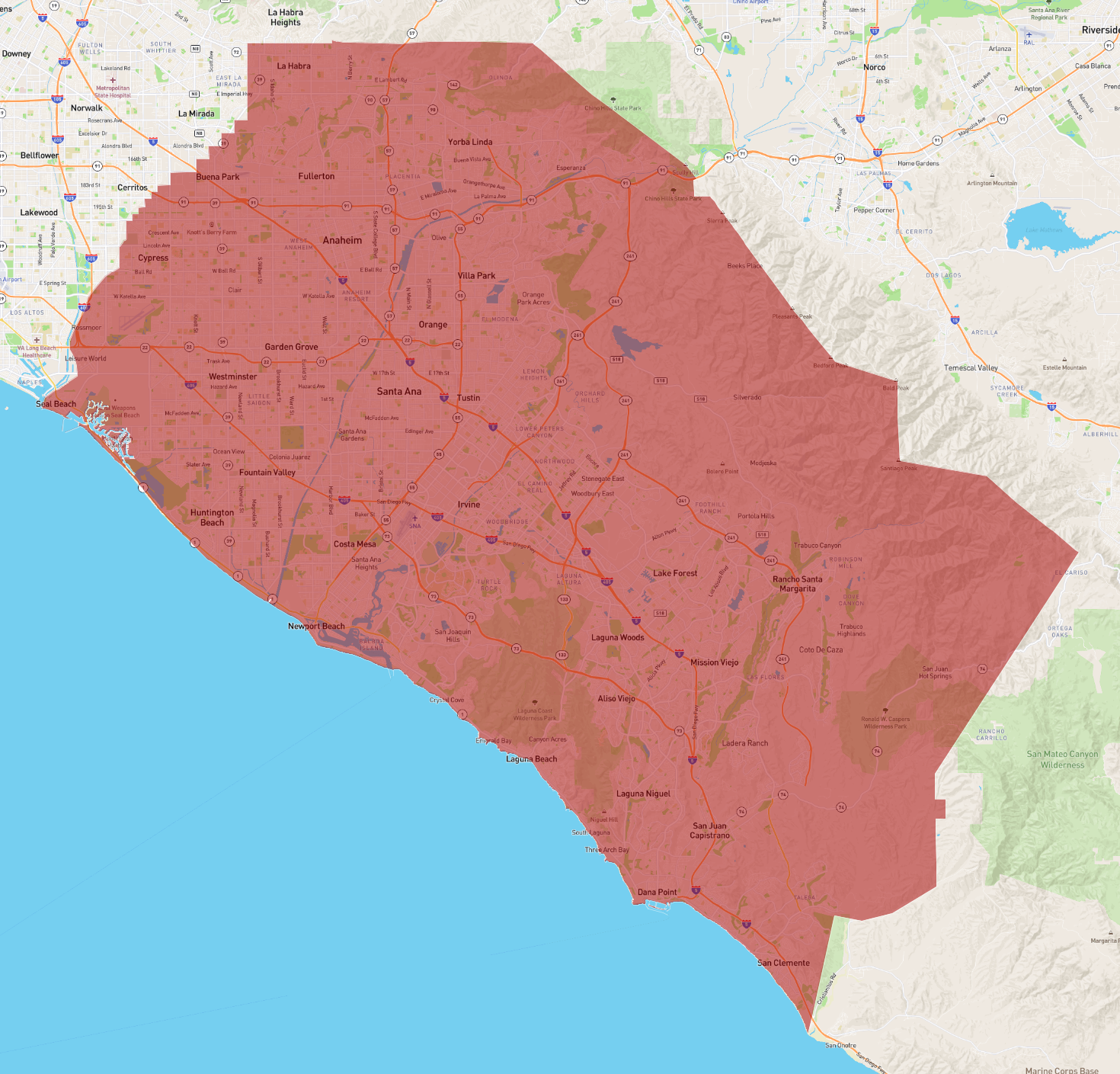
While these freeways provide efficient connections, travelers must be prepared for significant traffic congestion, particularly during peak commuting hours. Travel times between distant points within the county can easily range from 30 minutes to over an hour, underscoring the importance of factoring in transit time when planning activities. Renting a car is often the most practical option for travelers seeking flexibility and comprehensive exploration.
Public Transportation and Accessibility
While less comprehensive than in some older, denser urban areas, Orange County does offer public transportation options, primarily through the Orange County Transportation Authority (OCTA) bus system and the Metrolink commuter rail.
- OCTA buses serve a wide network across the county, connecting many cities and points of interest. However, due to the sprawling nature of the region, bus travel can be slower and less direct than driving for many itineraries.
- Metrolink provides commuter rail service, connecting Orange County to Los Angeles, Riverside, and San Diego counties, with several stations within Orange County itself. This can be a useful option for travelers arriving from or venturing into neighboring counties, particularly for avoiding freeway traffic.
- John Wayne Airport (SNA), located in Santa Ana, serves as the primary gateway to Orange County, offering convenient access to many attractions within a short drive.
For the most flexibility and to reach all corners of the county, particularly its more secluded natural areas or specific beach coves, a rental car remains the recommended mode of transport for most visitors. Ride-sharing services are also widely available and can be a good option for shorter distances or when specific destinations are located near major hubs.
What Its Size Means for the Traveler: A Mosaic of Experiences
The extensive size of Orange County is not just a geographical fact; it’s the very foundation of its appeal as a diverse travel destination. This vastness enables a remarkable breadth of experiences, ensuring that virtually every type of traveler can find something to delight them, from thrill-seekers to nature enthusiasts, culture mavens to luxury shoppers.
From Theme Parks to Nature Preserves
One of the most compelling aspects of Orange County’s scale is its ability to house seemingly disparate attractions within relatively close proximity.
- World-Class Theme Parks: In Anaheim, the Disneyland Resort stands as a global icon, drawing millions with its magical realms. Nearby, Knott’s Berry Farm in Buena Park offers a different flavor of thrills and family entertainment. These parks alone can occupy several days of a traveler’s itinerary.
- Stunning Natural Beauty: Just a short drive from these bustling parks, visitors can find serene natural landscapes. The Crystal Cove State Park near Laguna Beach offers pristine beaches, tide pools, and undeveloped wilderness. Inland, regional parks like Peters Canyon Regional Park provide hiking and biking trails amidst rolling hills. The eastern edge of the county borders the expansive Cleveland National Forest, offering rugged mountains, vast trails, and a complete escape into nature. This incredible range means a traveler could theoretically experience a theme park in the morning and a mountain hike or beach sunset in the afternoon.
Culinary Journeys and Shopping Destinations
The size and diverse demographics of Orange County have also fostered a vibrant culinary scene and world-class shopping opportunities.
- Gastronomic Diversity: From the upscale dining experiences in Newport Beach and Laguna Beach to the authentic ethnic eateries in Garden Grove’s Little Saigon or Westminster’s bustling Korean Business District, the county offers an extensive palette of flavors. Farm-to-table restaurants thrive alongside casual beachside cafes, ensuring culinary adventures for every taste and budget.
- Retail Therapy: Orange County is a shopper’s paradise. South Coast Plaza in Costa Mesa is an internationally renowned luxury shopping destination, boasting the highest concentration of high-end boutiques on the West Coast. Fashion Island in Newport Beach offers an outdoor, resort-like shopping experience. Beyond these major centers, countless unique boutiques and local markets are scattered throughout its cities, catering to various styles and preferences.
The expansive nature of Orange County ensures that a single trip can encompass a remarkable range of activities and cultural immersion. It’s not just a collection of sights, but a tapestry of distinct environments and experiences waiting to be discovered across its substantial area.
Strategic Planning: Maximizing Your Orange County Adventure
Given the significant size and diverse offerings of Orange County, strategic planning is not just recommended but essential for travelers aiming to make the most of their visit. Without a clear understanding of the geography and logistical implications, one might spend more time in transit than enjoying the destinations.
Segmenting Your Stay: Focus on Regions
Trying to visit every major attraction across the entire county in a short span is often impractical due to travel times and geographical spread. A more effective approach is to segment your visit by focusing on specific regions or clusters of attractions.
- Northern Orange County: Ideal for those prioritizing theme parks like Disneyland Resort and Knott’s Berry Farm, along with the diverse culinary scenes of Anaheim and Garden Grove. Consider staying in Anaheim or nearby Fullerton or Brea for convenient access.
- Central Orange County: Best for combining shopping (South Coast Plaza, Fashion Island), cultural experiences (Santa Ana), and the corporate or university environments of Irvine. Costa Mesa or Irvine make excellent central bases.
- Coastal Orange County: Perfect for beach lovers, surfers, and art enthusiasts. Focus on Huntington Beach, Newport Beach, or Laguna Beach for distinct coastal vibes and stunning scenery. Activities here range from surfing lessons to art gallery hopping and whale watching.
- Southern Orange County: For those seeking a more relaxed coastal atmosphere, outdoor recreation, and perhaps exploring the picturesque harbors of Dana Point and the surfing culture of San Clemente. This region also offers access to significant wilderness areas for hiking.
By choosing a primary region or two, travelers can minimize travel time and immerse themselves more deeply in the local flavor of their chosen area.

The Importance of Transportation Decisions
Given the reliance on freeways and the distances involved, transportation decisions are paramount.
- Rental Car is King: For maximum flexibility and the ability to explore the diverse landscapes and attractions at your own pace, renting a car is almost always the most efficient choice. This allows spontaneous detours and easy access to areas not well-served by public transport.
- Embrace Ride-Sharing: For specific outings, particularly evenings out when parking might be challenging or alcohol consumption is involved, ride-sharing services like Uber or Lyft are readily available and convenient.
- Factor in Traffic: Always account for Southern California traffic, especially during weekday rush hours (typically 6 AM – 9 AM and 3 PM – 7 PM). What looks like a short distance on a map can easily become a 45-minute drive. Using real-time navigation apps is invaluable.
- Consider Multi-Modal: For certain longer journeys or avoiding peak traffic, combining Metrolink with a ride-share or local bus for the “last mile” can be an effective strategy.
Ultimately, Orange County’s size is its strength, enabling a richness and variety of experiences that few other destinations can match. By understanding its geographical dimensions and planning strategically, travelers can unlock an extraordinary Southern California adventure, tailored to their individual interests and maximizing every moment of their visit.
In conclusion, Orange County California is far more than just a dot on the map; it is a sprawling, dynamic region covering nearly 800 square miles, teeming with diverse cities, landscapes, and experiences. Its sheer size allows for an incredible range of attractions, from world-famous theme parks and pristine beaches to rugged mountains and vibrant cultural centers. For the discerning traveler, understanding “how big” Orange County truly is translates directly into the necessity of strategic planning – segmenting your stay, making informed transportation choices, and embracing the distinct character of its many communities. This proactive approach ensures that instead of being overwhelmed by its vastness, you can fully embrace the rich mosaic of opportunities that make Orange County an unparalleled travel destination in Southern California.
LifeOutOfTheBox is a participant in the Amazon Services LLC Associates Program, an affiliate advertising program designed to provide a means for sites to earn advertising fees by advertising and linking to Amazon.com. Amazon, the Amazon logo, AmazonSupply, and the AmazonSupply logo are trademarks of Amazon.com, Inc. or its affiliates. As an Amazon Associate we earn affiliate commissions from qualifying purchases.