
The Minneapolis–Saint Paul International Airport (MSP), a vital hub for air travel in the Upper Midwest, is a sprawling complex that belies its often-understated presence. While passengers may primarily interact with its terminals for departures and arrivals, the sheer scale of MSP is impressive, encompassing vast physical dimensions, a significant economic footprint, and an intricate network of operations that facilitate millions of journeys annually. Understanding “how big” this airport is requires looking beyond mere square footage to encompass its operational capacity, its infrastructural complexity, and its impact on the surrounding region.
Terminal Infrastructure and Passenger Capacity
At its core, the size of Minneapolis–Saint Paul International Airport is most tangibly measured by its passenger and cargo handling capabilities, underpinned by its extensive terminal infrastructure. The airport boasts two main terminals: Terminal 1, formerly known as the Lindbergh Terminal, and Terminal 2, the Humphrey Terminal.
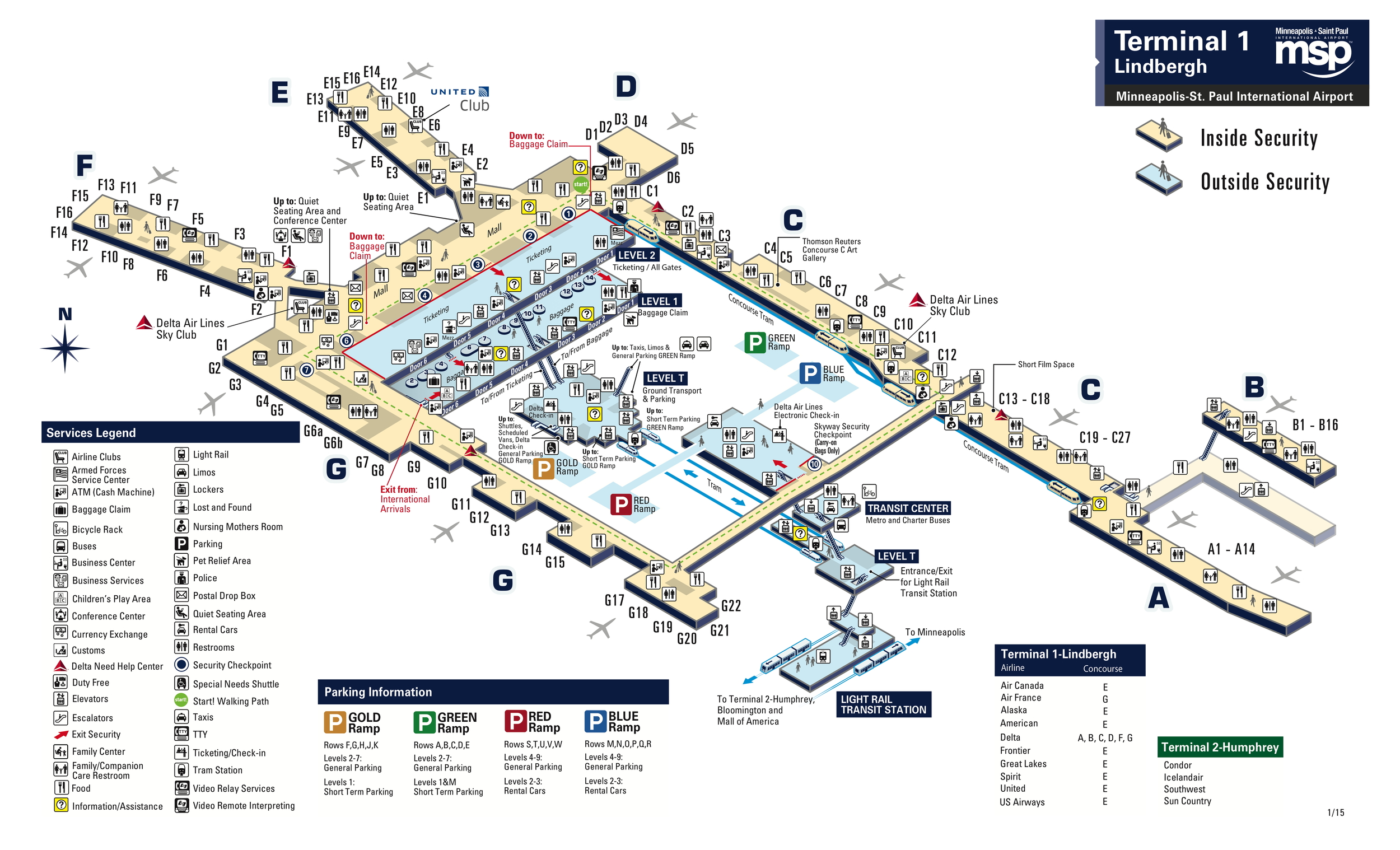
Terminal 1: The Primary Gateway
Terminal 1 is the larger of the two and serves as the primary operational hub for most major airlines, including Delta Air Lines, which has a significant presence here. This terminal is a city within a city, featuring a complex layout designed for efficiency and passenger comfort. It comprises multiple concourses (A, B, C, D, E, F, G) branching off from a central core. Each concourse houses a significant number of gates, supporting a continuous flow of departures and arrivals. The sheer volume of passenger traffic processed through Terminal 1 is a testament to its immense scale. It handles the majority of the airport’s annual passenger movements, making it one of the busiest terminals in the United States.
The scale of Terminal 1 is also evident in its amenities. Beyond the gates and security checkpoints, it features a wide array of dining options, retail stores, lounges, and services. Navigating this terminal can involve considerable walking, a physical manifestation of its extensive footprint. The parking facilities associated with Terminal 1 are also vast, comprising multiple parking ramps and a large economy lot, further underscoring the physical real estate dedicated to serving the airport’s needs.
Terminal 2: A Focused Operation
Terminal 2, primarily serving low-cost carriers and charter flights, is a more compact, though still substantial, facility. It features a single concourse with its own set of gates. While smaller than Terminal 1, Terminal 2 still processes millions of passengers annually and is a critical component of the airport’s overall capacity. It offers a streamlined experience for travelers on airlines like Southwest Airlines and other carriers utilizing this terminal.
The interconnection between the two terminals is also a measure of the airport’s scale. While a short light rail ride or shuttle bus connects them, the separation necessitates a planned approach for travelers needing to transfer, highlighting the logistical challenges inherent in managing a dual-terminal airport.
Land Area and Infrastructure
Beyond the passenger-facing terminals, the true immensity of Minneapolis–Saint Paul International Airport becomes apparent when considering its total land area and the vast infrastructural network that supports its operations. The airport occupies a significant tract of land, a necessity for accommodating runways, taxiways, maintenance facilities, cargo operations, and future expansion.
Runways and Air Traffic Management
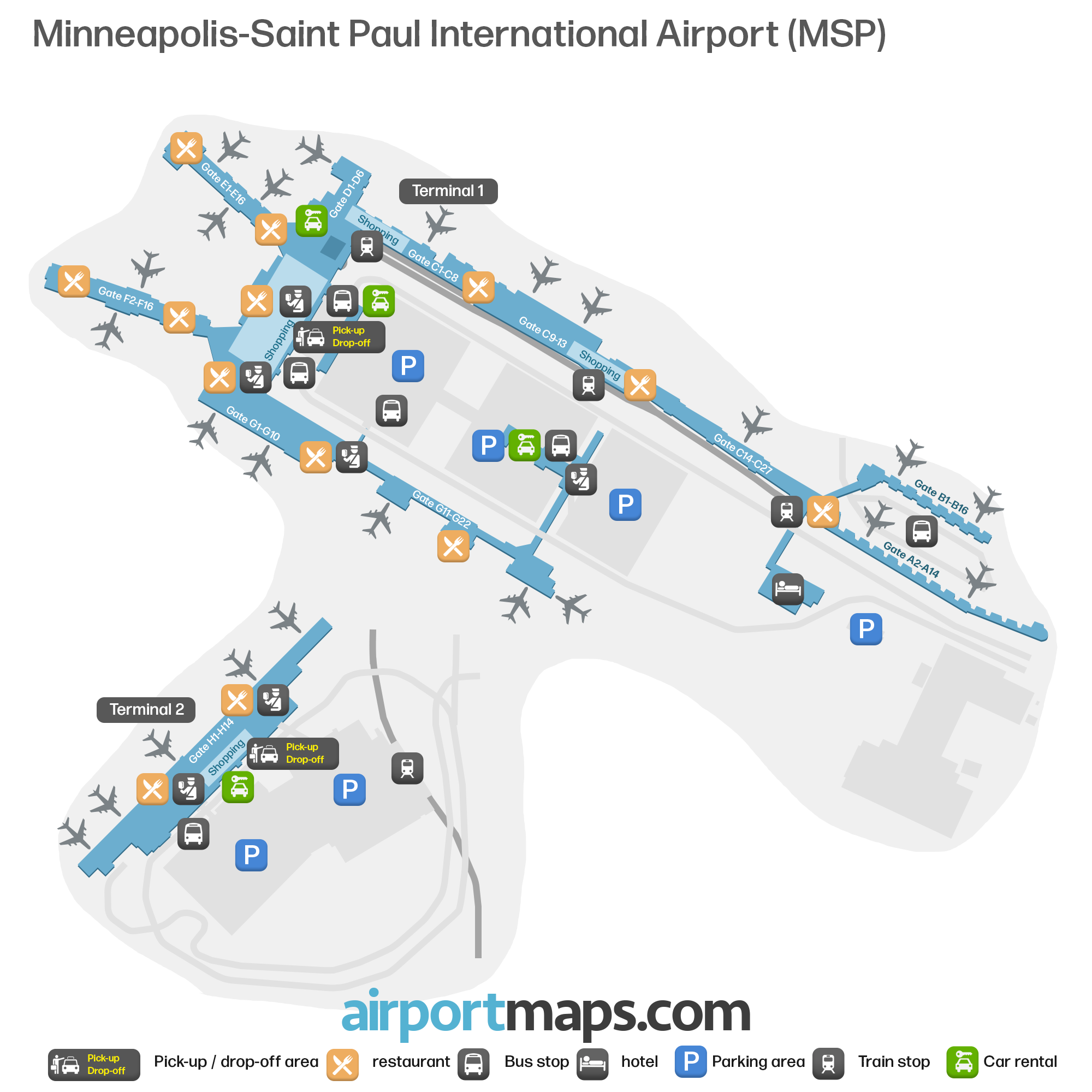
The airport features multiple runways, each of varying lengths and orientations, designed to handle the diverse range of aircraft that utilize the facility. The length and number of runways are critical factors in an airport’s capacity, allowing for simultaneous operations and efficient air traffic flow. The complex system of taxiways that connect these runways to the terminals and maintenance areas represents miles of paved surfaces, a massive undertaking in construction and maintenance.
Air traffic control at a facility of this magnitude is a marvel of modern technology and human coordination. The air traffic control tower, a prominent feature of the airport’s skyline, oversees the constant ballet of aircraft in the air and on the ground. The airspace managed by the controllers extends far beyond the airport’s physical boundaries, encompassing the approach and departure corridors for hundreds of daily flights.
Cargo and Support Facilities
The scale of Minneapolis–Saint Paul International Airport extends to its significant cargo operations. Dedicated cargo facilities handle a substantial volume of freight, supporting the economic activity of the Minneapolis–Saint Paul metropolitan area and beyond. These facilities include specialized warehouses, aircraft parking aprons, and access points for ground transportation.
Furthermore, a vast network of support infrastructure is essential for the airport’s daily functioning. This includes maintenance hangars, fuel farms, fire stations, administrative buildings, and extensive utility networks. These often-unseen components contribute significantly to the overall physical footprint and operational complexity of the airport.
Economic Impact and Operational Scope
When assessing the “bigness” of Minneapolis–Saint Paul International Airport, its economic impact and operational scope are equally crucial metrics. The airport is not merely a transit point; it is a major economic engine and a critical piece of infrastructure for the region.
Employment and Business Activity
MSP Airport is one of the largest employers in the Twin Cities region. Thousands of individuals are directly employed by the airport authority, airlines, concessionaires, car rental agencies, and security firms. Beyond direct employment, the airport generates substantial indirect employment through its supply chains and the businesses it supports.
The presence of the airport stimulates a wide range of economic activity. It facilitates business travel, connects local companies to global markets through its cargo operations, and supports the tourism industry by bringing visitors to the region. The economic ripple effect of the airport is profound, contributing billions of dollars to the regional and state economies annually.
Connectivity and Passenger Volume
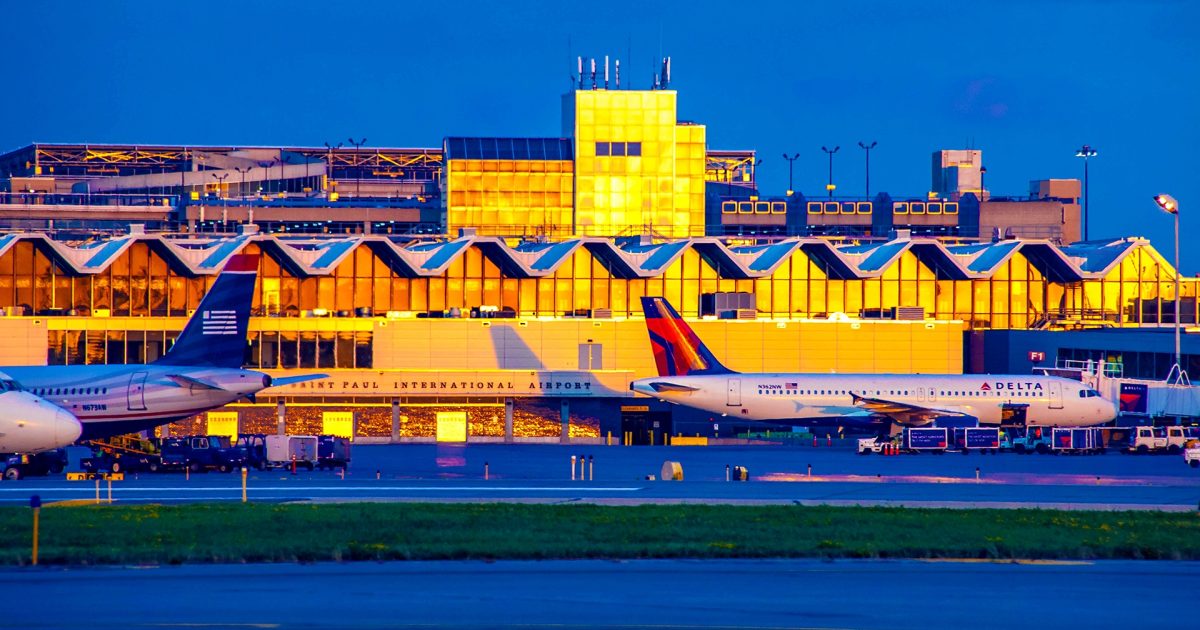
The sheer volume of passengers that move through Minneapolis–Saint Paul International Airport each year is staggering. Millions of travelers rely on MSP for domestic and international flights, making it a crucial gateway for the region. This high passenger volume necessitates a robust and efficient operational framework, from baggage handling and security screening to passenger services and aircraft turnarounds.
The connectivity offered by MSP is also a measure of its significance. As a hub for major airlines, it provides a vast network of direct flights to destinations across the United States, Canada, and international locations. This extensive network makes it a vital component of the global travel infrastructure.
In conclusion, the size of Minneapolis–Saint Paul International Airport is a multifaceted concept. It is a physical behemoth of terminals, runways, and support facilities. It is an operational powerhouse that manages complex air traffic and passenger flows. And it is a significant economic driver that fuels employment and business activity. Understanding this multifaceted “bigness” provides a greater appreciation for the vital role MSP plays in facilitating travel, commerce, and connectivity for the Upper Midwest and beyond.
LifeOutOfTheBox is a participant in the Amazon Services LLC Associates Program, an affiliate advertising program designed to provide a means for sites to earn advertising fees by advertising and linking to Amazon.com. Amazon, the Amazon logo, AmazonSupply, and the AmazonSupply logo are trademarks of Amazon.com, Inc. or its affiliates. As an Amazon Associate we earn affiliate commissions from qualifying purchases.