
The Seattle-Tacoma International Airport, often referred to by its IATA code SEA, is a colossal transportation hub that serves the greater Seattle metropolitan area and the Pacific Northwest region. Its sheer scale is impressive, encompassing vast tracts of land and facilitating millions of passenger movements annually. Understanding its size requires looking beyond mere square footage, delving into its operational capacity, geographical footprint, and its significant role in regional and international travel.
A Physical Behemoth: Land Area and Infrastructure
When we ask “How big is the [Seattle Airport]?”, one of the most direct answers lies in its physical size. The airport occupies a substantial land area, designed to accommodate its expansive infrastructure and future growth. Spanning over 14,000 acres, this immense property is a testament to the planning and foresight required to manage a major international airport. This vast acreage is not just empty space; it is meticulously utilized for runways, taxiways, terminals, concourses, cargo facilities, parking structures, and essential support services.

Runways and Airfield Operations
The operational heart of any airport is its airfield, and SEA boasts an impressive array of runways. It features four parallel runways, a configuration that significantly enhances its capacity for takeoffs and landings, especially during peak travel times. These runways are not merely strips of asphalt; they are highly engineered structures, equipped with advanced lighting and navigation systems to ensure safe and efficient operations under all weather conditions. The sheer length and width of these runways are designed to accommodate the largest commercial aircraft in operation today. The strategic placement and length of these runways are critical to the airport’s ability to handle a high volume of air traffic without significant delays. The complex network of taxiways connecting these runways to the terminal buildings further underscores the scale of the airfield, allowing for swift and organized movement of aircraft between gates and runways.
Terminals and Concourses: The Passenger Experience
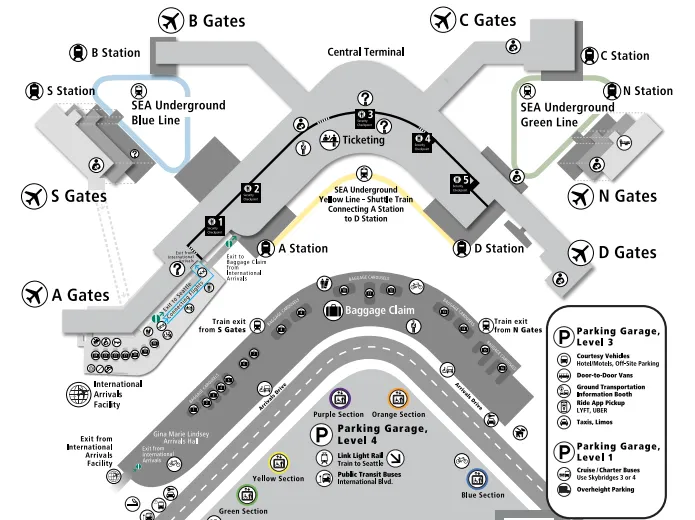
The passenger-facing side of the airport, the terminals and concourses, is where the scale is most palpable to travelers. SEA is comprised of two main terminals: the North Satellite Terminal and the South Satellite Terminal, connected by the Airport Rail system. The main terminal building itself is a sprawling structure that houses ticketing, baggage claim, security checkpoints, and a vast array of amenities. This main terminal is further segmented into several concourses, each serving a multitude of gates.
The entirety of the terminal complex is designed to manage the flow of millions of passengers each year. The physical dimensions of these spaces are considerable, featuring expansive lobbies, lengthy corridors, and a wide distribution of gates. Walking between gates can often feel like a considerable journey, illustrating the sheer spread of the terminal facilities. The seating areas, dining establishments, retail outlets, and other passenger services are all integrated within this expansive framework, catering to the diverse needs of travelers from around the globe. The architecture and design of the terminals, while functional, also contribute to the perception of size, with high ceilings and wide open spaces creating an impression of vastness.
Parking and Ground Transportation
Supporting the airside and terminal operations is an equally substantial ground infrastructure. The parking facilities at SEA are designed to accommodate tens of thousands of vehicles. This includes multi-story parking garages, outdoor lots, and dedicated areas for rental cars and ride-sharing services. The sheer volume of vehicles that can be parked on-site speaks to the airport’s capacity and its role as a gateway for both local and distant travelers.
Furthermore, the ground transportation network is extensive. This includes direct access to major freeways, a Link Light Rail station connecting the airport to downtown Seattle and surrounding areas, and numerous bus routes. The integration of these various transportation modes highlights the airport’s significance as a multimodal hub, requiring substantial physical space to facilitate seamless connections for passengers.
Operational Capacity: More Than Just Square Miles
While the land area and physical infrastructure provide a tangible sense of size, the true measure of an airport’s magnitude lies in its operational capacity. This is reflected in the number of passengers it serves, the number of flights it handles, and its economic impact.
Passenger Throughput

SEA is one of the busiest airports in the United States, consistently ranking among the top ten in terms of passenger traffic. In a typical pre-pandemic year, it handled well over 50 million passengers. This staggering number translates into an average of over 137,000 passengers passing through the airport daily. Managing such a colossal volume of people requires an intricate logistical operation, from efficient check-in and security processes to seamless baggage handling and boarding procedures. The sheer scale of passenger movement necessitates extensive staffing, advanced technology, and well-defined operational protocols to maintain order and efficiency.
Air Traffic Volume
The number of flights operated at SEA further illustrates its size and importance. The airport serves as a major hub for Alaska Airlines, which operates a significant portion of the daily departures and arrivals. In addition to Alaska Airlines, numerous other domestic and international carriers utilize SEA as a destination or transit point. The airport handles hundreds of thousands of flight operations annually, making it a critical node in the global air transportation network. This high volume of air traffic necessitates sophisticated air traffic control systems and meticulous scheduling to ensure safety and minimize delays.
Cargo Operations
Beyond passenger traffic, SEA also plays a vital role in air cargo operations. While perhaps less visible to the average traveler, the airport’s cargo facilities are substantial, handling a significant volume of freight. This includes dedicated cargo terminals, apron space for cargo aircraft, and warehousing facilities. The efficient movement of goods by air is crucial for regional and international commerce, and the scale of SEA’s cargo operations contributes to its overall significance as an economic engine.
Geographical Significance and Connectivity
The size of Seattle Airport is intrinsically linked to its geographical location and the connectivity it provides. Situated in SeaTac, Washington, it serves as the primary international gateway for the state and a crucial gateway to Alaska.
Regional Reach
As the busiest airport in the Pacific Northwest, SEA is the linchpin for travel within the region. It connects travelers to numerous domestic destinations across the United States, facilitating business travel, tourism, and family visits. Its extensive network of flights makes it an indispensable part of the regional economy and social fabric.
International Gateway
The international routes offered from SEA are a significant indicator of its global standing. The airport connects passengers to major cities across Asia, Europe, and Canada, among other international destinations. This global connectivity is vital for trade, tourism, and diplomatic relations, positioning Seattle as a player on the world stage. The scale of its international operations reflects the city’s growing importance as a global economic and cultural center.
Economic Impact and Future Growth
The sheer size of Seattle-Tacoma International Airport translates into a colossal economic impact on the region. It is a major employer, directly and indirectly supporting tens of thousands of jobs. The economic activity generated by the airport extends far beyond its immediate operational footprint, influencing sectors such as hospitality, retail, logistics, and technology.
Expansion and Development
To maintain its status as a leading international airport and to accommodate projected growth in passenger and cargo traffic, SEA is continually undergoing expansion and development projects. These initiatives involve significant investments in infrastructure, including terminal upgrades, new concourses, improved baggage systems, and enhanced airfield capacity. Such ongoing development projects are a clear indication of the airport’s dynamic nature and its commitment to meeting the evolving demands of air travel. Understanding these expansion plans provides further insight into the long-term vision for the airport’s increasing scale and importance.
In conclusion, the question “How big is the [Seattle Airport]?” opens a window into a complex and expansive operation. It is a physical entity of immense proportions, a hub of ceaseless activity, and a critical piece of global connectivity. Its size is measured not just in acres or square feet, but in the millions of lives it touches, the goods it transports, and the economic vitality it generates for the Pacific Northwest and beyond.
LifeOutOfTheBox is a participant in the Amazon Services LLC Associates Program, an affiliate advertising program designed to provide a means for sites to earn advertising fees by advertising and linking to Amazon.com. Amazon, the Amazon logo, AmazonSupply, and the AmazonSupply logo are trademarks of Amazon.com, Inc. or its affiliates. As an Amazon Associate we earn affiliate commissions from qualifying purchases.