
Navigating the process of obtaining a liquor license in Florida can seem daunting, but for many aspiring entrepreneurs in the hospitality sector, it’s a crucial step towards establishing a successful business. Whether you’re envisioning a bustling restaurant in Miami, a charming wine bar in St. Augustine, or a lively entertainment venue in Orlando, understanding the licensing requirements is paramount. This guide aims to demystify the journey, offering a comprehensive overview of what’s involved in securing the necessary permits to serve alcoholic beverages legally within the Sunshine State.
Understanding Florida’s Alcoholic Beverage Laws
Florida’s alcoholic beverage laws are primarily governed by the Division of Alcoholic Beverages and Tobacco (ABT), part of the Department of Business and Professional Regulation (DBPR). The ABT is responsible for licensing, regulating, and enforcing all laws and rules relating to alcoholic beverages and tobacco. It’s essential to grasp the fundamental principles that underpin these regulations, as they dictate the types of licenses available, the qualifications required, and the operational standards businesses must adhere to.
Types of Liquor Licenses
Florida offers a diverse range of licenses, each tailored to specific business models and consumption methods. The classification of these licenses is often based on the type of alcoholic beverages a business intends to sell and whether consumption is permitted on the premises.
-
1. Beer and Wine Licenses: These are generally the most common and often the least complex to obtain.
- 4COP/SRX (Quota License): This is the most comprehensive license available, allowing for the sale of liquor, beer, and wine for consumption on or off the premises. These licenses are subject to a quota system, meaning the number available in each county is limited based on population. The cost can be significant, and they are often purchased through auctions or from existing license holders. This is the license typically sought by full-service restaurants and bars.
- 2COP: This license permits the sale of beer and wine for consumption on or off the premises. It does not allow for the sale of liquor. This is a suitable option for establishments primarily focused on serving beer and wine, such as cafes or certain types of casual dining spots.
- 1COP: This license allows for the sale of beer only, for consumption on or off the premises.
-
2. Full Liquor Licenses: These licenses permit the sale of all types of alcoholic beverages, including liquor, beer, and wine.
- 4COP (for Restaurants): This is a full liquor license specifically for restaurants that meet certain seating and food service requirements. The primary purpose of the business must be the sale of food, with alcohol sales being secondary.
- 4COP (for Package Stores): This license is for establishments that sell alcoholic beverages for off-premise consumption only, commonly known as liquor stores.
-
3. Special Licenses and Permits: Beyond the primary categories, Florida also offers specialized licenses for various situations.
- 3PS (Special Tenant): This license allows for the sale of beer and wine in specially designated areas within larger establishments, such as convention centers or stadiums.
- 2APS (Special On-Premise Consumption): This permit allows for the sale of beer and wine for consumption on the premises of specific venues like bowling alleys or theaters.
- Club Licenses: Private clubs and fraternal organizations may obtain specific licenses to serve alcohol to their members.
- Temporary Permits: For special events, temporary permits can be obtained, allowing for the sale of alcohol for a limited duration.
The choice of license hinges entirely on the business model and the specific offerings. It is imperative to consult the ABT directly or work with a licensing specialist to determine the most appropriate license type for your venture.
Eligibility and Application Requirements
Securing a liquor license in Florida is not simply a matter of filling out a form; it involves meeting stringent eligibility criteria and providing comprehensive documentation. The ABT meticulously reviews each application to ensure compliance with state laws and public interest standards.
Applicant Qualifications
- Age and Residency: Applicants must be at least 21 years of age. While not strictly a residency requirement for the license itself, a substantial presence or business operation in Florida is usually implied.
- Criminal Background: A clean criminal record is crucial. Certain felony convictions, particularly those related to alcohol, gambling, or moral turpitude, can disqualify an applicant. The ABT conducts thorough background checks on all principals of the business.
- Financial Stability: While not always explicitly stated as a strict requirement for all license types, demonstrating financial responsibility can be beneficial. Lenders or partners may require proof of financial stability.
- Business Structure: The license is typically issued to a legal business entity, such as a corporation, LLC, or partnership. The ownership structure must be clearly defined and disclosed.
Required Documentation
The application process demands a significant amount of paperwork. Accuracy and completeness are vital to avoid delays. Common documentation includes:
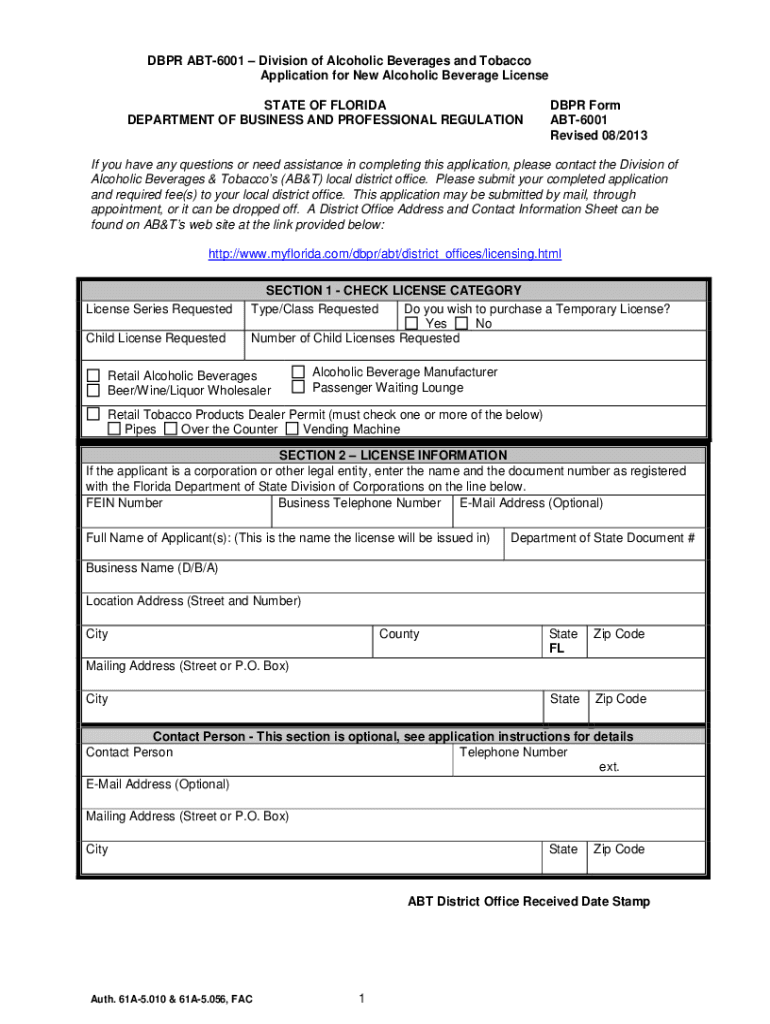
- Application Forms: The specific forms vary depending on the license type. These are available on the DBPR website.
- Proof of Business Formation: Articles of incorporation, operating agreements, or partnership agreements.
- Lease Agreement or Proof of Property Ownership: Documentation proving the legal right to occupy the business premises.
- Floor Plans: Detailed diagrams of the establishment, indicating the areas where alcohol will be stored, served, and consumed.
- Federal Employer Identification Number (FEIN): A unique number assigned by the IRS.
- Sales Tax Registration: Confirmation of registration with the Florida Department of Revenue.
- Zoning and Land Use Approval: Confirmation that the proposed business location is zoned for the sale of alcoholic beverages and meets all local land use requirements. This often involves obtaining permits from the local city or county government.
- Background Check Authorization: Consent for the ABT to conduct criminal background checks on all principals.
- Financial Disclosures: In some cases, financial statements or proof of funds may be requested.
- Food Service Requirements (for restaurant licenses): Proof of adherence to health department regulations and, for certain licenses, a minimum percentage of sales from food.
The Application and Approval Process
Once you have identified the appropriate license and gathered all necessary documentation, the formal application process begins. This is often the most time-consuming phase, and diligence is key.
Step-by-Step Application Journey
- Determine License Type and Location: As discussed, this is the foundational step. Research local zoning ordinances and any special requirements imposed by the city or county where your business will operate.
- Gather All Required Documentation: This cannot be overstated. Missing or incorrect documents are the most common cause of application delays.
- Complete and Submit the Application: Applications can typically be submitted online through the DBPR portal or by mail. Ensure all fields are accurately completed.
- Pay Application Fees: There are various fees associated with the application process, including application fees, fingerprinting fees, and license fees. The exact amounts vary by license type.
- Background Checks and Investigations: The ABT will conduct thorough background checks on all individuals listed on the application. They may also conduct an on-site inspection of the proposed business location.
- Public Notice: For certain license types, particularly quota licenses, a period of public notice is often required, allowing for any objections from the community.
- License Approval or Denial: If the application is approved, the license will be issued. If it is denied, the applicant will be notified of the reasons and may have the opportunity to appeal.
Navigating Quota Licenses (4COP)
The acquisition of a 4COP quota license presents a unique challenge due to its limited availability. These licenses are allocated based on population, and the number available in each county is fixed.
- Purchasing from a Current Holder: The most common method is to purchase a license from an existing owner. This can be a significant investment, with prices varying widely based on the county and market demand. A real estate or business attorney experienced in liquor license transfers is highly recommended.
- License Quota Draw: In some instances, when the available quota is exhausted and the population grows, new licenses may become available through a draw. This is a lottery-style system, and the odds can be slim.
The transfer of a quota license involves a separate process managed by the ABT, which includes due diligence on both the buyer and seller, as well as the premises.
Maintaining Your License
Obtaining the license is only part of the equation. Maintaining it requires ongoing compliance with Florida’s alcoholic beverage laws and ABT regulations.
- Renewal: Licenses must be renewed annually. Failure to renew on time can result in significant penalties or even the loss of the license.
- Compliance with Regulations: This includes adhering to hours of operation for alcohol sales, rules regarding advertising, preventing sales to minors and intoxicated persons, and maintaining proper record-keeping.
- Inspections: The ABT conducts regular and unannounced inspections to ensure compliance. Businesses must be prepared for these visits at all times.
- Notification of Changes: Any significant changes to the business, such as a change in ownership, location, or business structure, must be reported to the ABT in a timely manner and may require a new application or amendment to the existing license.
Tips for a Smoother Application Process
While the process can be intricate, a proactive and informed approach can significantly streamline the acquisition of your Florida liquor license.
- Consult with Professionals: Engaging an attorney specializing in alcoholic beverage law or a dedicated liquor license consultant can be invaluable. They possess in-depth knowledge of the regulations, can help navigate complex paperwork, and may even assist in acquiring quota licenses.
- Start Early: The application process can take several months, and in some cases, over a year. Begin your research and application well in advance of your planned opening date.
- Thoroughly Review All Requirements: Visit the DBPR website and carefully read all guidelines and checklists pertaining to your desired license type.
- Be Meticulous with Documentation: Double-check every document for accuracy, completeness, and proper signatures. Any errors can lead to delays.
- Understand Local Ordinances: Do not overlook local city and county regulations. These can include additional requirements for zoning, signage, and operating hours that are separate from state regulations.
- Budget Accordingly: Factor in all associated costs, including application fees, license fees, legal consultation, potential quota license purchase, and any necessary upgrades to your premises to meet requirements.
Securing a liquor license in Florida is a significant undertaking, but it is an achievable goal with careful planning and diligent execution. By understanding the nuances of the law, preparing thoroughly, and seeking expert guidance when needed, entrepreneurs can successfully navigate this critical step and lay the foundation for a thriving business serving the vibrant communities across the state, from the beaches of Clearwater to the cultural hubs of Tampa.
LifeOutOfTheBox is a participant in the Amazon Services LLC Associates Program, an affiliate advertising program designed to provide a means for sites to earn advertising fees by advertising and linking to Amazon.com. Amazon, the Amazon logo, AmazonSupply, and the AmazonSupply logo are trademarks of Amazon.com, Inc. or its affiliates. As an Amazon Associate we earn affiliate commissions from qualifying purchases.