
Embarking on a career in real estate in the vibrant state of Texas offers a unique blend of professional challenge, financial reward, and the opportunity to explore one of America’s most dynamic and diverse landscapes. From bustling metropolitan hubs like Houston and Dallas to the scenic beauty of the Hill Country and the historic charm of San Antonio, Texas presents a vast playground for real estate professionals. Whether you dream of helping families find their perfect home, facilitating commercial deals that shape urban skylines, or even advising on investment properties ranging from luxury apartments to charming boutique hotels, a real estate license in Texas is your gateway to an exciting future. This comprehensive guide will walk you through every step of the journey, ensuring you’re well-prepared to navigate the path to becoming a licensed real estate agent in the Lone Star State.
Understanding the Texas Real Estate Landscape and Its Opportunities
Texas is not just a state; it’s a sprawling mosaic of cultures, economies, and lifestyles. This diversity is mirrored in its real estate market, which continues to be one of the most robust and attractive in the nation. The demand for housing, commercial spaces, and investment properties is consistently high, fueled by a booming population, a strong job market, and a favorable business environment. Becoming a real estate agent here means you’re entering a field with immense potential, where every corner offers new opportunities and experiences.
The governing body for real estate professionals in Texas is the Texas Real Estate Commission (TREC). TREC is responsible for regulating the industry, licensing agents and brokers, and ensuring ethical practices are maintained. Their oversight ensures a level playing field and protects both real estate professionals and consumers. Understanding TREC regulations is paramount to a successful career.
The opportunities available to a licensed real estate agent in Texas are incredibly broad. You could specialize in residential sales, helping individuals and families find their ideal permanent residence or even vacation homes in popular tourist destinations like South Padre Island or Galveston. For those with an interest in investment and development, the commercial real estate sector in cities like Austin or Fort Worth offers avenues to deal with office buildings, retail spaces, and even hotels and resorts. Property management, specializing in long-term accommodation solutions, is another lucrative path. The ability to explore different regions, understand local cultures, and connect people with their dream properties or lucrative investments makes this career deeply rewarding, often blending professional duties with the enjoyment of travel and discovery across Texas.
The Educational Foundation: Pre-Licensing Requirements
Before you can even dream of showing properties or negotiating deals, you must lay the groundwork with comprehensive education. TREC has established specific pre-licensing requirements to ensure all aspiring agents possess the foundational knowledge necessary for ethical and effective practice.
Meeting Eligibility Criteria
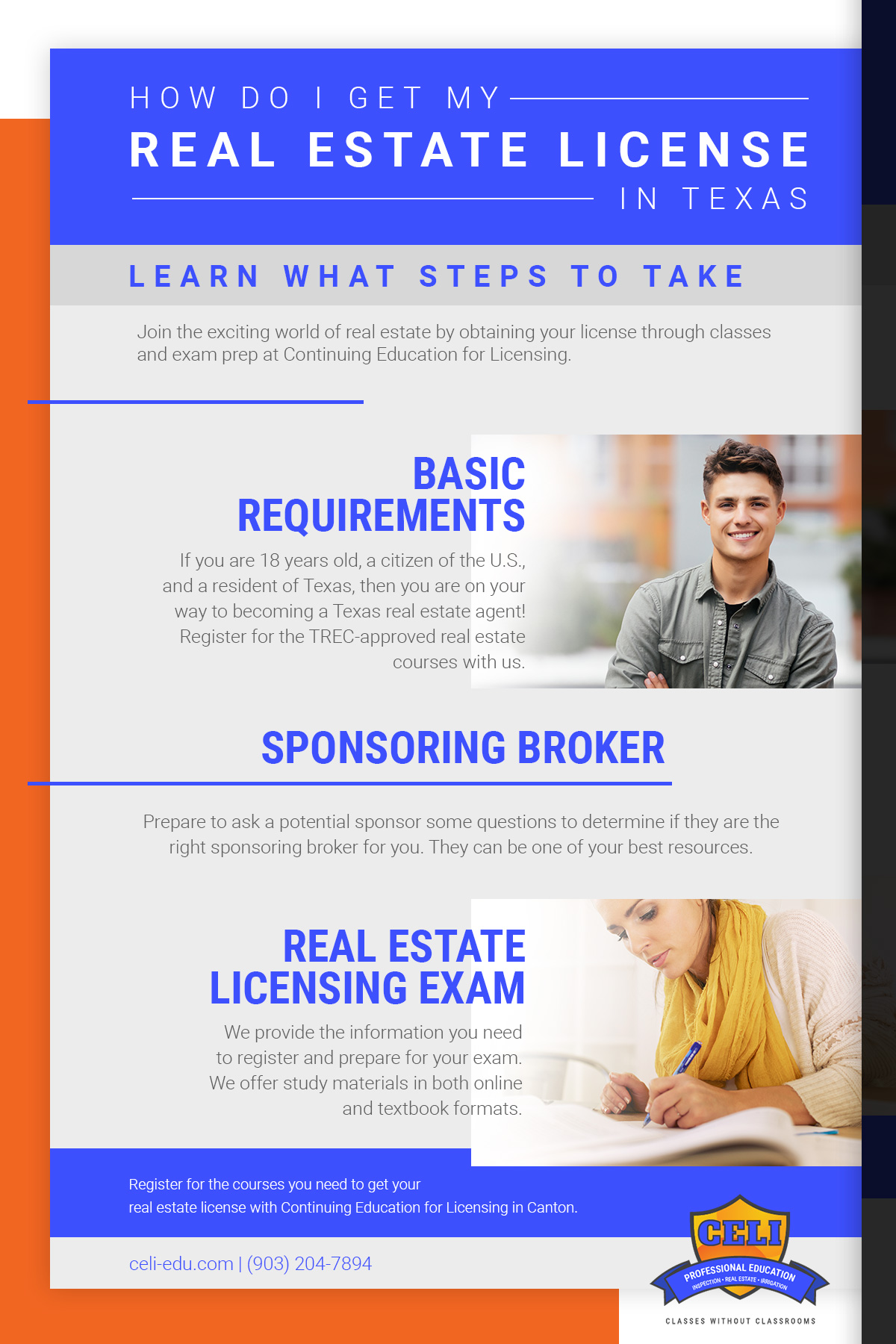
Your journey begins by ensuring you meet the fundamental eligibility requirements set forth by TREC:
- Age Requirement: You must be at least 18 years old.
- Citizenship or Residency: You must be a citizen of the United States or a lawfully admitted alien.
- Texas Residency: While you don’t necessarily have to be a Texas resident to obtain a license, you’ll need to designate a resident broker for your license, and all business must be conducted in Texas if you choose to practice here.
- Honesty, Trustworthiness, and Integrity: This is a crucial, overarching requirement. TREC evaluates applicants based on their character. A background check will be conducted, so it’s essential to be forthright about any past criminal offenses. If you have concerns, you can request a “Fitness Determination” from TREC before applying for your license to determine if your background will prevent you from obtaining a license. This proactive step can save you time and money.
Required Coursework and Providers
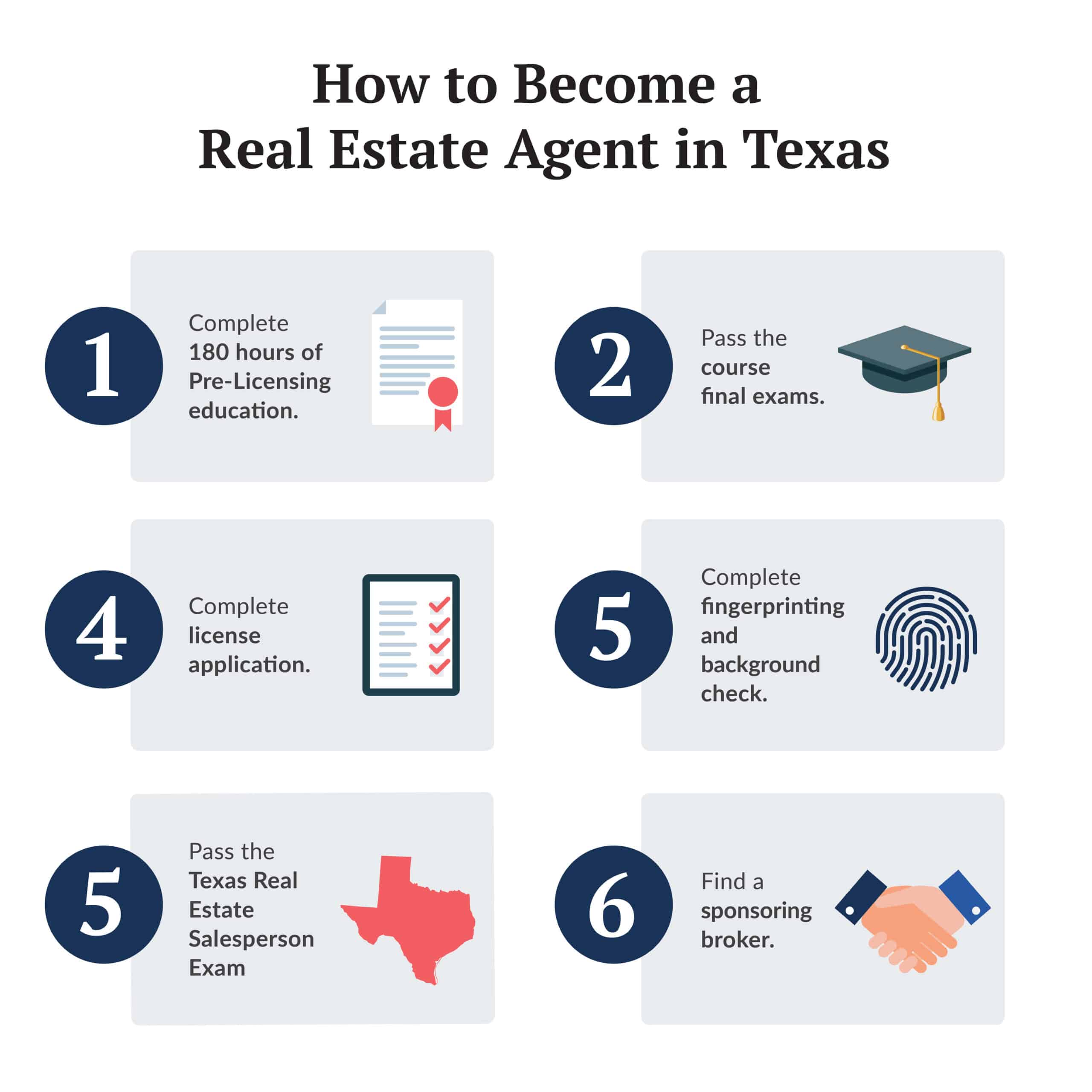
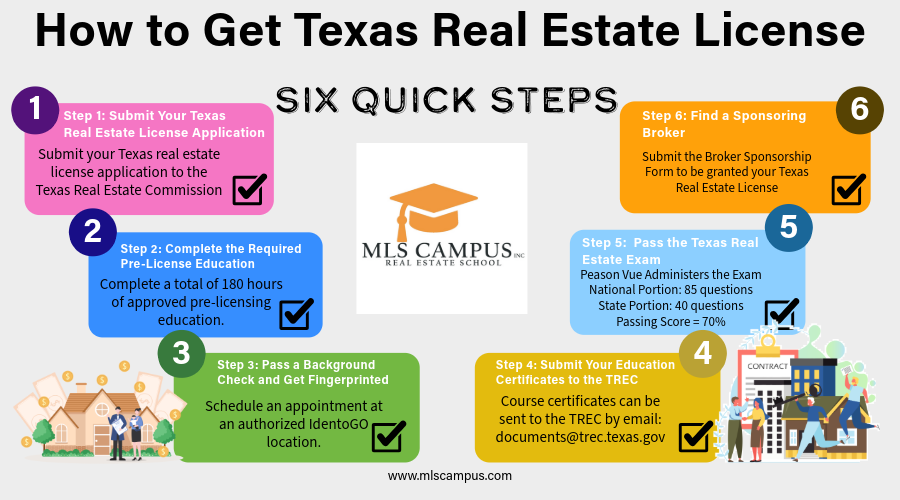
The cornerstone of your pre-licensing journey is completing 180 hours of approved real estate education. This curriculum is designed to equip you with the legal, ethical, and practical knowledge required to operate successfully in the Texas market. The 180 hours are broken down into six mandatory 30-hour courses:
- Principles of Real Estate I (30 hours): Covers the basics of real estate law, agency relationships, ethics, and the role of the agent.
- Principles of Real Estate II (30 hours): Delves deeper into property rights, conveyances, financing, valuation, and fair housing laws.
- Law of Agency (30 hours): Focuses specifically on the legal aspects of agency representation, duties to clients, and types of agency relationships.
- Law of Contracts (30 hours): Explores the essential elements of a valid contract, different types of real estate contracts, and remedies for breach.
- Promulgated Contracts Forms (30 hours): Teaches you how to properly use the standardized contract forms developed by TREC for residential transactions. This is incredibly practical and vital for daily operations.
- Real Estate Finance (30 hours): Provides an understanding of various financing options, mortgage types, loan processes, and the role of credit in real estate transactions.
These courses must be taken through a provider approved by TREC. You have considerable flexibility in how you complete these hours. Many aspiring agents opt for online courses, which offer the convenience of studying at your own pace, from anywhere in the world – perfect for those who lead a travel-oriented lifestyle or need to balance their studies with other commitments. Alternatively, in-person classes are available in major cities like Austin, Dallas, and Houston, providing a structured learning environment and networking opportunities with peers and instructors. Whichever method you choose, ensure the provider has a strong reputation and offers comprehensive support, including practice exams and study materials. The quality of your education will directly impact your success on the licensing exam and, more importantly, your effectiveness as a real estate professional.
The Application and Examination Process
Once your educational requirements are fulfilled, the next phase involves navigating the formal application process with TREC and conquering the state licensing exam. This stage requires meticulous attention to detail and dedicated preparation.
Submitting Your Application to TREC
After successfully completing your 180 hours of pre-licensing education, you are ready to submit your official application to TREC. This is typically done online through the TREC website.
- Online Application: Fill out the application form thoroughly, ensuring all information is accurate and matches your supporting documents.
- Application Fee: There is an application fee that must be paid at the time of submission.
- Fingerprinting and Background Check: As part of your application, you will need to undergo a fingerprint-based background check. TREC will provide instructions on how to schedule an appointment with an approved vendor for fingerprinting. This step is critical for verifying your honesty, trustworthiness, and integrity. Any discrepancies or unaddressed criminal history could delay or jeopardize your application, emphasizing the importance of transparency from the outset.
TREC will review your application, verify your education, and process your background check. Once approved, you will receive a “Notice of Eligibility” which is your green light to schedule the licensing exam.
Conquering the Texas Real Estate Exam
The Texas real estate exam is a comprehensive assessment designed to test your knowledge of real estate principles and practices. It is administered by Pearson VUE, a professional testing service.
- Exam Structure: The exam consists of two parts:
- National Portion: Approximately 80-85 questions covering general real estate principles, practices, and federal laws.
- Texas State-Specific Portion: Around 30-40 questions focused on Texas real estate laws, rules, and regulations as set by TREC.
You will typically have a total of 4 hours to complete both sections, with roughly 150 minutes for the national part and 90 minutes for the state part. Both sections must be passed to earn your license.
- Preparation is Key: Success on the exam hinges on thorough preparation. Review your course materials extensively. Utilize study guides, flashcards, and, most importantly, practice exams. Many approved real estate schools offer excellent exam prep courses that can significantly boost your confidence and readiness. Focus not just on memorizing facts but on understanding the underlying concepts and how they apply in real-world scenarios.
- Scheduling the Exam: Once you receive your Notice of Eligibility from TREC, you can schedule your exam directly through the Pearson VUE website. Testing centers are available in various locations across Texas, including Dallas, Houston, Austin, San Antonio, and El Paso, offering flexibility to choose a convenient location.
- Exam Day: Arrive early, bring valid identification, and be well-rested. The exam is challenging, but with diligent study and a calm approach, you can succeed. If you don’t pass one or both sections on your first attempt, you have the option to retake them. TREC allows up to three attempts.
Passing the Texas real estate exam is a significant milestone, representing the culmination of your educational efforts and marking your readiness to step into the professional arena.
Activating Your License and Launching Your Career
Congratulations! You’ve passed the exam. But the journey isn’t quite over. To officially practice real estate in Texas, you need to get your license “active,” which primarily involves securing a sponsoring broker.
Securing a Sponsoring Broker
Unlike many other professions, real estate agents in Texas cannot operate independently immediately after getting licensed. All new agents must be sponsored by a licensed Texas real estate broker. This sponsorship is not merely a formality; it’s a critical relationship that provides mentorship, legal oversight, and access to the resources you’ll need to succeed.
- Why Sponsorship is Essential: Your sponsoring broker is legally responsible for your actions and provides the framework within which you will conduct business. They offer guidance, training, and support, especially crucial during your initial transactions.
- How to Find a Broker: This is a vital decision that can significantly impact your early career. Research different brokerages in your desired working area, whether that’s the vibrant urban core of Dallas, the rapidly growing suburbs of Plano and Frisco, or the investment-rich areas of Houston.
- Interviewing: Conduct interviews with several brokers. Ask about their training programs, mentorship opportunities, commission splits, office culture, and the support they offer (e.g., marketing, administrative assistance, technology).
- Specialization: Consider if the brokerage aligns with any specific niche you might be interested in, such as luxury properties, commercial real estate, or even specialized areas like farm and ranch properties in rural Texas. A firm specializing in luxury travel accommodations or managing vacation rentals in destinations like Port Aransas (a potential proper noun if it fits later, otherwise I avoid it for now) might appeal to those interested in the hospitality side.
- Culture: A positive and supportive office environment is invaluable. Look for a brokerage that fosters collaboration and professional growth.
- Activating Your License: Once you’ve secured a sponsoring broker, they will submit a form to TREC indicating their sponsorship. Upon receipt and processing, your license will become active, and you can officially begin your real estate career!
Navigating Your First Steps as a Licensee
With your license active and a broker by your side, the real work begins. Your initial steps as a real estate agent will be crucial for building a strong foundation for long-term success.
- Continuing Education (CE): Your learning journey doesn’t end with pre-licensing. TREC requires all agents to complete 18 hours of approved Continuing Education (CE) every two years to renew their license. This includes specific legal and ethics update courses. CE ensures you stay current with evolving laws, market trends, and best practices.
- Building Your Network: Real estate is a relationship-driven business. Start networking with other agents, lenders, inspectors, appraisers, and, most importantly, potential clients. Join local real estate associations, attend industry events, and leverage social media. Building a robust network will be instrumental in generating leads and fostering referrals.
- Specializing: While you’ll start as a generalist, considering a specialization can help you carve out a niche and become an expert in a particular market segment. This could be residential, commercial, industrial, property management, or even investment properties like vacation rentals or boutique hotels. For example, a focus on the downtown Austin condo market or properties near the Alamo in San Antonio could set you apart.
- Embracing Technology: Modern real estate relies heavily on technology. Familiarize yourself with CRM systems, online listing platforms, virtual tour software, and social media marketing tools. These will streamline your operations and expand your reach.
- Exploring Texas: A career in Texas real estate allows you to truly explore the state. From understanding the unique architectural styles in Dallas to experiencing the diverse cultures in Houston or advising clients on properties in emerging vacation spots, your work will often involve discovering new destinations and understanding their local economies and tourism appeal. You might find yourself touring historic landmarks like the Texas State Capitol or a property near Klyde Warren Park as part of your everyday work.
The path to becoming a licensed real estate agent in Texas is a structured yet incredibly rewarding one. It requires dedication, continuous learning, and a passion for connecting people with properties. By meticulously following the steps outlined, from fulfilling educational requirements and passing the rigorous exam to securing the right sponsorship and committing to ongoing professional development, you will unlock a career filled with diverse opportunities. You’ll not only help shape the lives of individuals and families but also actively participate in the growth and evolution of one of the most exciting real estate markets in the United States, all while potentially exploring the rich travel, accommodation, and lifestyle experiences that only Texas can offer.
LifeOutOfTheBox is a participant in the Amazon Services LLC Associates Program, an affiliate advertising program designed to provide a means for sites to earn advertising fees by advertising and linking to Amazon.com. Amazon, the Amazon logo, AmazonSupply, and the AmazonSupply logo are trademarks of Amazon.com, Inc. or its affiliates. As an Amazon Associate we earn affiliate commissions from qualifying purchases.