
The question “How close are Russia and Alaska?” often conjures images of vast, frozen expanses, yet the reality is strikingly intimate. These two immense landmasses, representing two of the world’s most powerful nations, are separated by a mere sliver of water, an ancient gateway that has witnessed millennia of migration, exploration, and geopolitical intrigue. For travelers, historians, and those simply curious about the world’s geographical marvels, the proximity of Russia and Alaska offers a unique perspective on human history, natural wonders, and the ever-present allure of the unknown. This article delves into the fascinating relationship between these two neighbors, exploring their geographical connection, historical ties, and the unique travel and lifestyle opportunities that arise from their proximity.
A Geographical Glance Across the Bering Strait
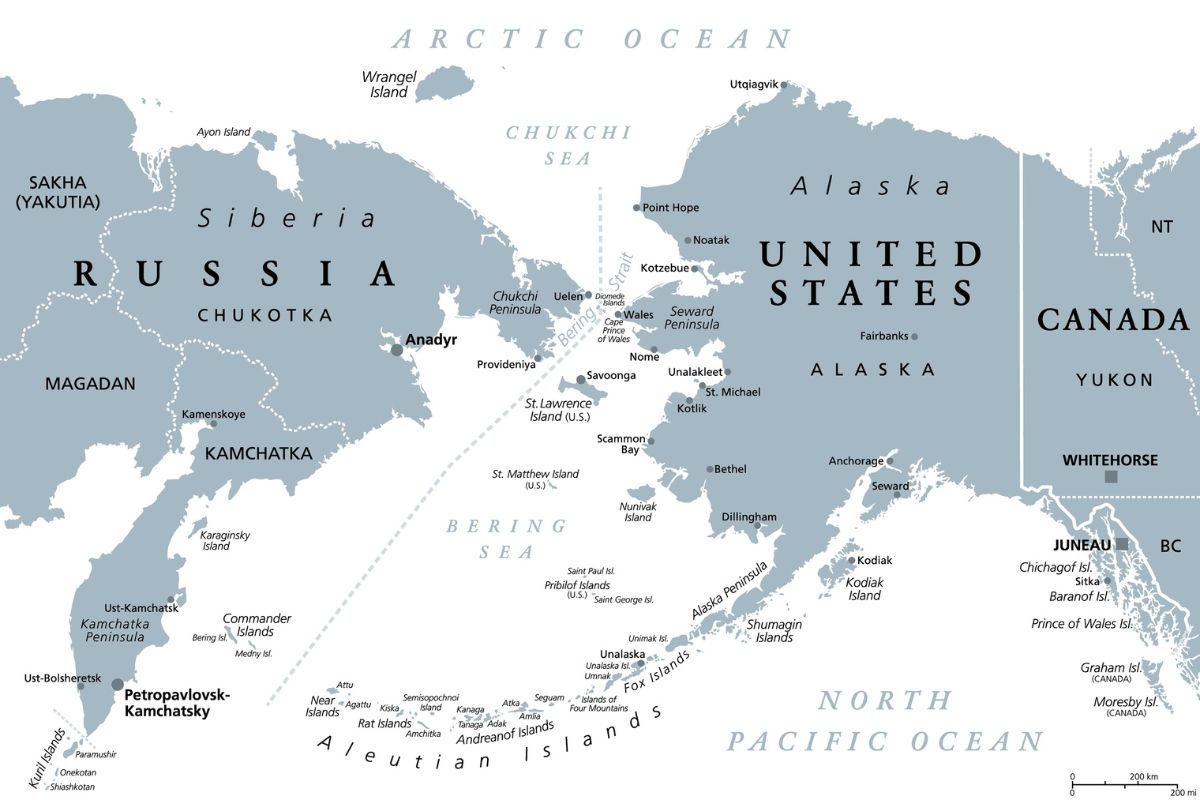
At the heart of the connection between Russia and Alaska lies the Bering Strait, a maritime passage that is both a physical divide and a historical bridge. This narrow waterway, connecting the Chukchi Sea (part of the Arctic Ocean) to the Bering Sea (part of the Pacific Ocean), is one of the most strategically significant and ecologically rich regions on Earth. Its waters are icy, often unforgiving, and yet teeming with life, attracting diverse wildlife and challenging human endeavors.
The Narrowest Divide: The Bering Strait and the Diomede Islands
The true proximity of Russia and Alaska is best understood when focusing on the Diomede Islands. These two rocky outcroppings stand as sentinels in the middle of the Bering Strait, providing a tangible illustration of how close these two continents truly are. Big Diomede, also known as Ratmanov Island, belongs to Russia, while Little Diomede is part of the United States and administered by Alaska. The distance between these two islands at their closest point is a mere 3.8 kilometers (2.4 miles). On a clear day, it is entirely possible to see one country from the other – a truly remarkable sight that underscores the unique geography of this region.
Adding another layer of intrigue, the International Date Line passes between Big Diomede and Little Diomede. This means that not only are the islands separated by a political border, but also by an entire day. When it’s Saturday morning on Little Diomede (USA), it’s Sunday morning on Big Diomede (Russia). This temporal paradox has earned Little Diomede the nickname “Tomorrow Island” and Big Diomede “Yesterday Island.” For travelers and adventure seekers, this geographical and temporal quirk presents a compelling reason to consider exploring the extreme northwestern reaches of Alaska, where towns like Nome serve as gateways to this fascinating frontier.

Bridging Continents: An Ancient Land Bridge and Modern Implications
Beyond the immediate proximity of the Diomede Islands, the entire region of the Bering Strait has profound historical significance. During various ice ages, when global sea levels were much lower, a vast land bridge known as Beringia emerged, connecting what is now Siberia to Alaska. This enabled the migration of animals and, crucially, early human populations from Asia into the Americas, shaping the demographic and cultural landscape of the entire Western Hemisphere. This ancient pathway is a powerful reminder of how interconnected the continents truly are, despite their modern political divisions.
Today, while the land bridge is submerged, the idea of bridging the continents persists in various forms. While direct travel between the Chukotka Autonomous Okrug in Russia and Alaska is largely restricted due to political and logistical challenges, the geographical closeness continues to inspire. The potential for a future tunnel or bridge, often dubbed the “Intercontinental Peace Bridge,” has been a recurring dream, promising to revolutionize trade, tourism, and cultural exchange between East and West. Though such grand projects remain aspirational for now, the sheer possibility highlights the enduring significance of this unique geographical juncture.
Echoes of History: From Russian America to the Alaska Purchase
The relationship between Russia and Alaska is not merely one of geographical proximity but is deeply intertwined with a rich, complex history. For over a century and a half, Alaska was indeed Russian America, a vast colonial outpost of the Russian Empire that stretched across the North Pacific. This period left an indelible mark on the land and its people, the echoes of which are still visible today.
The Czars’ Last Frontier: Russian Exploration and Settlement
The story of Russian America begins in the early 18th century with the explorations commissioned by Czar Peter the Great. The legendary Danish navigator, Vitus Bering, led expeditions that confirmed the separation of Asia and North America and charted much of the Alaskan coast in the 1740s. These voyages opened the floodgates for Russian fur traders, known as promyshlenniki, who sought the lucrative pelts of sea otters and other fur-bearing animals.
Over the subsequent decades, Russian settlements began to dot the Alaskan coastline. Posts were established in key locations like Kodiak Island and later Sitka, which became the capital of Russian America. The Russian Orthodox Church played a significant role, sending missionaries who built churches and converted many indigenous peoples, including the Aleuts and some Tlingit communities. Today, the enduring presence of Russian Orthodox churches, with their distinctive onion domes, and the strong faith among many indigenous Alaskan communities, serve as powerful cultural landmarks, testifying to this fascinating period of shared history. Visitors to Sitka can explore the beautifully restored St. Michael’s Cathedral, a prominent symbol of Russian American heritage.
A Strategic Sale: The Alaska Purchase and Shifting Sovereignty
Despite its initial promise, maintaining Russian America became an increasing burden for the Russian Empire by the mid-19th century. Faced with financial difficulties, the logistical challenges of governing such a remote territory, and the fear of losing it to rival powers like Great Britain, Czar Alexander II decided to sell Alaska to the United States.
On October 18, 1867, the Alaska Purchase was finalized, with the United States acquiring the territory for $7.2 million, or about two cents an acre. Initially ridiculed by some as “Seward’s Folly” (referring to then-Secretary of State William H. Seward), the purchase proved to be one of the greatest real estate deals in history, unlocking vast natural resources and securing a strategic foothold in the North Pacific for the United States. This transfer of sovereignty profoundly impacted the diverse indigenous populations, who suddenly found themselves under new governance, and the few remaining Russian settlers, many of whom opted to return to Russia or relocate elsewhere in North America. The Alaska Purchase marked the end of Russian America but cemented the close, if often complex, geopolitical relationship that defines the Bering Strait region to this day.
Travel, Tourism, and Lifestyle on the Edge of the World
For the modern traveler, the geographical and historical ties between Russia and Alaska offer a backdrop for some of the most unique and challenging travel experiences on Earth. While crossing the Bering Strait directly remains largely impractical for tourists due to political restrictions and extreme conditions, exploring either side promises unparalleled adventures and insights into life at the planet’s northern frontier.
Experiencing Alaska: Wilderness, Culture, and Adventure
Alaska, the largest state in the United States, is a destination synonymous with raw wilderness and epic adventure. Its proximity to Russia contributes to its remote, untamed character, particularly in its western and northern regions. For those drawn to the allure of the Arctic, Alaska offers a wealth of tourism opportunities.
Cruises are a popular way to explore the stunning coastline, fjords, and glaciers, often passing through waters that historically served as transit routes for Russian explorers. Many itineraries venture into the Bering Sea, offering glimpses of the remote communities and breathtaking landscapes near the international border. Inland, landmarks like Denali National Park boast North America’s highest peak, Denali (Mount McKinley), and a chance to spot grizzly bears, moose, and caribou in their natural habitat. Adventure tourism thrives here, from backcountry hiking and glacier trekking to dog sledding and fishing in pristine rivers.
The lifestyle in remote Alaskan communities, particularly those in the west near the Bering Strait, is characterized by self-sufficiency, resilience, and a deep connection to indigenous cultures. Towns like Nome, famous for the Iditarod Trail Sled Dog Race, and Kotzebue offer a glimpse into the vibrant traditions of the Inupiat and Yup’ik peoples. Accommodation in these areas ranges from cozy local hotels and bed-and-breakfasts to more rustic lodges and cabins, providing a comfortable base for exploring the surrounding wilderness. In larger cities like Fairbanks or Anchorage, visitors can find a wider array of hotels, from boutique options to well-known chains, catering to various budgets and preferences for luxury travel or family trips.

Russia’s Far East: A Glimpse into the Untamed Frontier
On the Russian side of the Bering Strait lies the vast and incredibly remote Chukotka Autonomous Okrug, a region of Russia’s Far East that is even less accessible than western Alaska for international tourism. This rugged land of tundra, mountains, and pristine coastline offers a glimpse into one of the world’s last true wildernesses. Travel here is typically highly regulated, requiring special permits, and is often limited to organized expeditions.
For those intrepid few who manage to visit, Chukotka promises an unparalleled experience. It is home to diverse indigenous groups, including the Chukchi and Yupik peoples, who maintain traditional reindeer herding, hunting, and fishing lifestyles. The landscape is rich in wildlife, including polar bears, walruses, and migratory birds. Adventure tourism here leans heavily towards expedition cruises along the coast, offering wildlife viewing and visits to isolated indigenous villages. Accommodation is extremely basic, often involving guesthouses in small towns like Anadyr, the regional capital, or expedition ship cabins, making it a destination for truly dedicated explorers seeking off-grid experiences. The stark beauty and cultural authenticity of Chukotka underscore the unique lifestyle forged in such extreme environments.
The Dream of a Bridge: Imagining Future Connections
The geographical proximity of Russia and Alaska has long sparked ambitious visions of physical connections. From early 20th-century proposals for a Trans-Siberian-Alaska railway to more recent discussions about a Bering Strait tunnel or bridge, the idea of linking the continents remains a powerful symbol of potential global connectivity. Such projects, if ever realized, would not only facilitate trade and resource transport but also open up unprecedented opportunities for tourism. Imagine a journey that seamlessly connects the landscapes of North America with the vastness of Eurasia, offering a truly intercontinental travel experience.
While the political and economic hurdles for such a mega-project are immense, the very concept highlights the significance of the Bering Strait as a symbolic crossroads. For now, the allure of journeying to the edge of Alaska, to stand on the westernmost point of the United States and gaze across at Russia, remains one of the most compelling reasons for adventurous travelers to explore this remote and historically resonant region.
Accommodation and Planning Your Bering Strait Adventure
Embarking on a journey to the regions closest to the Bering Strait requires careful planning, especially regarding accommodation and logistical considerations. These are not typical tourist destinations, but rather gateways to extraordinary experiences.
Where to Stay in Alaska’s Closest Points
For those aiming to get as close as possible to Russia from the Alaskan side, towns like Nome, Kotzebue, and Unalaska serve as primary access points. While these are not bustling tourist hubs, they offer essential services and unique local charm.
- Nome: Famous for its gold rush history and as the finish line of the Iditarod, Nome offers a handful of local hotels and guesthouses. These accommodations, while perhaps not luxurious, provide comfortable stays with genuine local hospitality. Expect options like the Aurora Inn or Nome Nugget Inn, which cater to both short-term visitors and those on longer assignments. Booking in advance is crucial, especially during peak seasons like the Iditarod finish or summer months.
- Kotzebue: Situated north of the Arctic Circle, Kotzebue is a cultural hub for the Inupiat people. Accommodation here is limited but functional, often found in locally-owned hotels or inns that offer a window into Arctic community life. It’s an excellent base for experiencing native Alaskan traditions and exploring the nearby Kobuk Valley National Park or Cape Krusenstern National Monument.
- Unalaska/Dutch Harbor: Located in the Aleutian Islands, this port city is known for its rugged beauty and as a major fishing hub. Hotels like the Grand Aleutian Hotel offer more extensive amenities, serving both business travelers and tourists interested in the area’s World War II history or its incredible wildlife, including the world’s largest bald eagle population.
When planning for these remote Alaskan destinations, remember that travel logistics often involve flights from major hubs like Anchorage or Fairbanks, and weather can significantly impact schedules. Comparing booking options and reading reviews is highly recommended to ensure a smooth and comfortable experience in these extraordinary locales.
Navigating the Geopolitical Waters for Cross-Border Exploration
While the geographical closeness of Russia and Alaska is undeniable, current geopolitical realities make direct tourist travel across the Bering Strait virtually impossible. The border is heavily controlled, and there are no regular ferry services or designated crossing points for civilians. Visa requirements for both countries are stringent, and the concept of a “cross-border” trip for tourism purposes is not currently supported by either government.
For most travelers, the adventure involves exploring one side at a time. Focus on the rich cultural heritage and stunning natural beauty of western Alaska, or for the exceptionally intrepid, participate in highly specialized and legally compliant expeditions to Russia’s Chukotka region, typically through experienced tour operators who handle all necessary permits and logistics.
Regardless of which side you explore, responsible tourism is paramount. Respect local cultures, protect the fragile Arctic environment, and adhere strictly to all local laws and regulations. The close proximity of Russia and Alaska offers a unique lens through which to view history, geography, and human endeavor. While a direct handshake across the border might remain a dream, the opportunity to explore these incredible frontier lands, each with its own distinct charm and challenges, is a journey well worth taking for any true adventurer.
LifeOutOfTheBox is a participant in the Amazon Services LLC Associates Program, an affiliate advertising program designed to provide a means for sites to earn advertising fees by advertising and linking to Amazon.com. Amazon, the Amazon logo, AmazonSupply, and the AmazonSupply logo are trademarks of Amazon.com, Inc. or its affiliates. As an Amazon Associate we earn affiliate commissions from qualifying purchases.