
The name Chicago evokes images of towering skyscrapers, bustling cultural scenes, and a vibrant history. Yet, for many, the origins of this iconic city’s name remain an intriguing mystery. Far from being a modern invention, the name “Chicago” carries centuries of history, echoing the voices of indigenous peoples, French explorers, and early American settlers. Delving into its etymology is not merely a linguistic exercise; it is a journey into the very soul of the city, revealing layers of ecological richness, cultural encounters, and the enduring spirit that shaped one of America’s greatest urban centers. Understanding how Chicago got its name provides a foundational insight into its unique identity, illustrating how a natural landscape, Indigenous languages, and European exploration converged to christen a future metropolis. This historical exploration uncovers the fascinating narrative behind a name that has become synonymous with resilience, innovation, and an indomitable Midwestern spirit.
The Indigenous Roots: “Shikaakwa” and Its Meanings
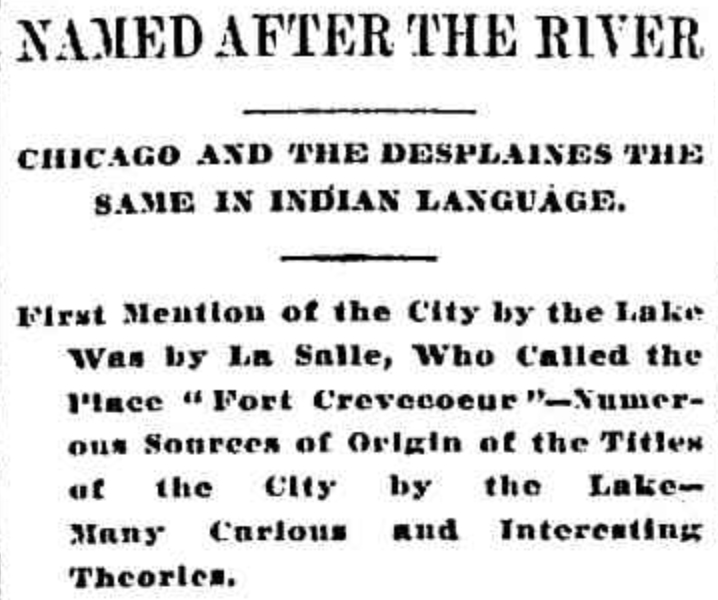
The earliest known references to the area now known as Chicago come from the native peoples who inhabited the region long before European arrival. The story of Chicago’s name fundamentally begins with the Miami-Illinois language, a dialect spoken by the Indigenous tribes, including the Miami and Illinois peoples, who were prominent in the Great Lakes region. Their term for the area, or at least a significant feature within it, was “shikaakwa” or similar phonetic variations. This single word, rich in ecological detail, would eventually be translated, misinterpreted, and adapted into the name we recognize today. The significance of understanding this Indigenous origin cannot be overstated, as it roots Chicago’s identity deeply in the natural environment and the cultures that first thrived there. It reminds us that the land was not an empty wilderness but a vibrant ecosystem known and named by its first stewards.
The Allure of Wild Onions
One of the most widely accepted and enduring interpretations of “shikaakwa” is its connection to the wild onion or wild garlic. Specifically, the term is believed to refer to Allium tricoccum, commonly known as wild leeks or ramps, which grew in abundance along the marshy banks of what is now the Chicago River. These plants were not only a staple food source for Indigenous communities but also possessed a strong, pungent odor, characteristic of the allium family. The Miami-Illinois word for these pungent plants was phonetically captured by early European explorers, who sought to understand and map the new territories they encountered. The sheer prevalence and distinct aroma of these wild onions would have made them a prominent natural feature, making it entirely logical for the Indigenous name of the place to derive from this botanical characteristic. This interpretation paints a vivid picture of the landscape, where the scent of wild garlic filled the air, marking a particular, fertile spot along the waterways. It speaks to a time when human settlements were inextricably linked to the immediate environment and its natural offerings.
Alternative Interpretations: Skunk and Beyond
While the wild onion theory holds considerable sway, historical and linguistic scholars have also explored alternative interpretations of “shikaakwa.” One notable theory suggests that the term could refer to the skunk (Mephitis mephitis). The sound of the Miami-Illinois word for skunk is phonetically similar to “shikaakwa,” leading some to believe that the area might have been named after these common, odiferous animals. Skunks, like wild onions, are known for their strong scent, providing a thematic link to the dominant interpretation. However, the botanical explanation generally finds more support due to direct historical accounts and the clear presence of wild leeks. Other less prominent theories have surfaced over time, including connections to “great,” “powerful,” or even a specific chief or tribe. Nevertheless, the prevailing scholarly consensus leans towards the wild onion, largely due to the ecological consistency and the direct accounts of early French explorers who noted the abundance of these plants in the region. These alternative interpretations, though less widely accepted, highlight the complexities of translating Indigenous languages and the challenges of reconstructing historical linguistic meanings across centuries and cultures.
European Encounters: Mapping and Mispronouncing a New World
The arrival of European explorers in the 17th century marked a pivotal moment in the naming of Chicago. These explorers, primarily French, were tasked with mapping vast, uncharted territories of North America and establishing trade routes. As they navigated the intricate network of rivers and lakes, they relied heavily on the knowledge and guidance of Indigenous peoples. It was through these interactions that the Miami-Illinois name for the wild onion-rich area began its transformation into the Europeanized “Chicago.” The process was one of phonetic approximation, cultural interpretation, and gradual standardization on maps and in official records. The French, with their distinct linguistic conventions, rendered the Indigenous sounds into something comprehensible within their own phonology, inadvertently shaping the future pronunciation and spelling of the city’s name. This period represents the crucial bridge between the Indigenous naming traditions and the subsequent establishment of a colonial presence, laying the groundwork for the city that would eventually rise from the marshlands.
Jolliet and Marquette’s Pivotal Expedition
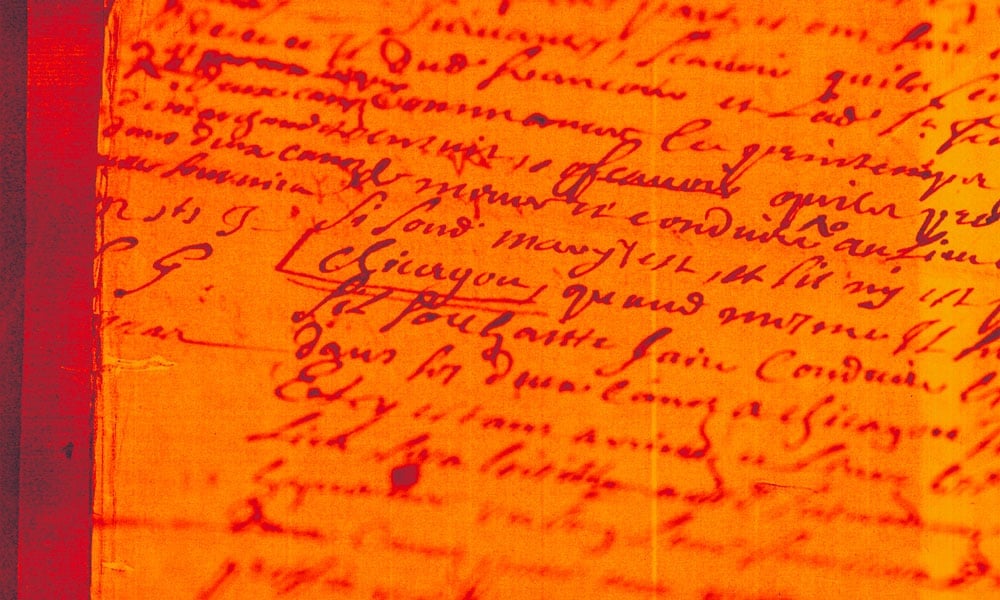
The earliest documented European use of a name resembling “Chicago” comes from the expedition of Louis Jolliet and Father Jacques Marquette in 1673. These two Frenchmen embarked on a journey to explore the Mississippi River and its tributaries, seeking a Northwest Passage. On their return journey, guided by Indigenous knowledge, they passed through the area where Lake Michigan meets the Chicago River. Marquette’s journals and maps explicitly mention a “Portage de Checagou” or “Checagou,” referring to the critical portage route that connected the Great Lakes basin to the Mississippi River system via the Chicago River. He described the area as rich in “garlic, wild onions, and other plants,” providing direct evidence that the French recognized the abundance of these specific plants and associated the Indigenous name with them. This early mapping and documentation by Jolliet and Marquette are foundational to understanding the name’s trajectory, solidifying its presence in the European consciousness and establishing the phonetic base for what would become Chicago. Their careful observations and records provide invaluable historical anchors for the narrative of the city’s naming.
From “Chécagou” to “Chicago”: A Linguistic Evolution
Following Jolliet and Marquette’s initial accounts, the name “Chécagou” (and various similar spellings like “Checagu,” “Chicagou,” “Chicagoux”) began appearing on French maps and in subsequent explorer narratives throughout the late 17th and 18th centuries. The spelling variations reflect the challenges of transliterating an Indigenous oral tradition into a written European language without a standardized phonetic system. Over time, as more French traders, missionaries, and settlers arrived, the spelling gradually converged towards “Chicago.” The “ou” ending, common in French transliterations of Indigenous words, eventually gave way to the simpler “o,” and the “c” took on its familiar English pronunciation. This linguistic evolution was not an instantaneous event but a gradual process influenced by different scribes, cartographers, and speakers. By the early 19th century, particularly as American settlers began moving into the territory after the Louisiana Purchase, the spelling “Chicago” became increasingly consistent. This standardization was crucial for official documents, land deeds, and the eventual incorporation of the town. The transformation from “Shikaakwa” to “Chécagou” to “Chicago” illustrates a profound linguistic journey, embedding the echoes of Indigenous heritage into the very foundation of an emerging American city.
The Enduring Legacy: Formal Recognition and Urban Identity
As the area transitioned from a Native American and French trading post to an American settlement, the name “Chicago” became officially recognized and enshrined in nascent governmental structures. This period marked the formalization of the name, moving it beyond mere geographical description to a designation of a burgeoning community. The choice to retain and adapt the Indigenous name, rather than imposing an entirely new European one, speaks volumes about the historical continuity and the deep connection to the land’s original inhabitants. As the settlement grew, the name “Chicago” would grow with it, becoming a symbol of its rapid expansion, its resilience in the face of adversity, and its unique cultural identity. The name, derived from humble wild onions, would come to represent a powerful urban center, a testament to the unforeseen trajectories of history and the lasting impact of early encounters.
From Fort Dearborn to City Incorporation
The establishment of Fort Dearborn in 1803 at the mouth of the Chicago River signaled the first permanent American presence in the area. Although the fort itself bore an American name, the surrounding region and the river were consistently referred to as “Chicago” in official military dispatches and early governmental records. This demonstrated the name’s widespread acceptance and practical utility. The true formalization of the name occurred with the laying out of the town of Chicago in 1830 and its subsequent incorporation as a town in 1833. The final legal act that cemented the name came with its incorporation as a city in 1837. Each of these steps officially recognized “Chicago” as the proper designation for the growing settlement. This period was characterized by a rapid influx of settlers, spurred by the prospect of the Illinois and Michigan Canal, which would connect the Great Lakes to the Mississippi River. The consistent use of “Chicago” throughout this explosive growth ensured its permanent place in the geographical and political lexicon, anchoring the city’s future to its Indigenous past.
The Name as a Reflection of Resilience
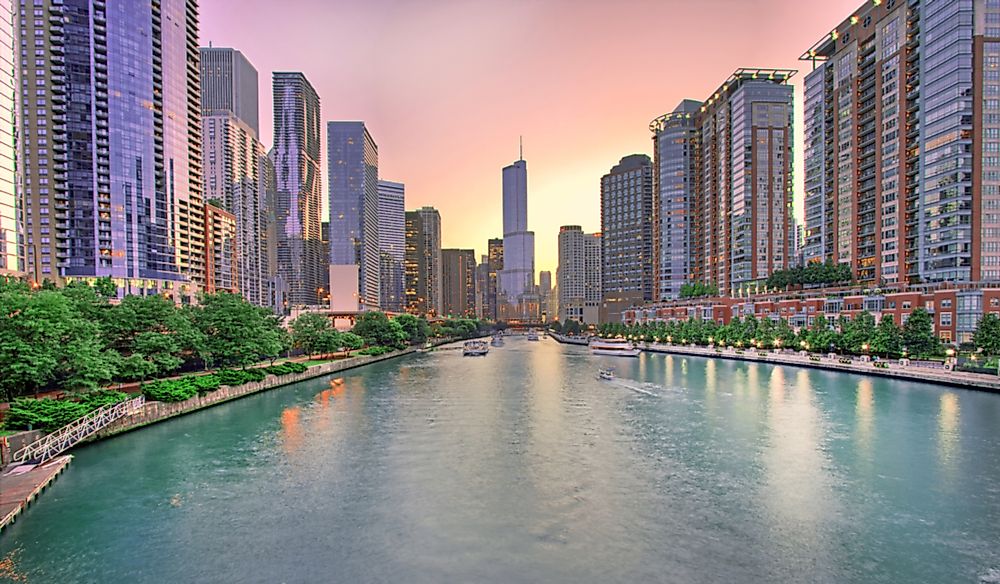
Beyond its linguistic origins, the name “Chicago” has grown to embody the spirit of the city itself. From its humble beginnings as a marshy outpost named after wild onions, the city has faced numerous challenges—from the devastation of the Great Chicago Fire in 1871 to the economic downturns of the 20th century. Yet, each time, Chicago has rebuilt, innovated, and thrived, earning a reputation for resilience and determination. The simple, earthy roots of its name—a connection to abundant, hardy plants—can be seen as a metaphor for the city’s own enduring strength and ability to flourish even in difficult conditions. The name evokes a sense of place that is deeply connected to its natural environment, yet capable of extraordinary transformation. Today, when people refer to “Chicago,” they are not consciously thinking of wild onions, but the historical lineage of the name contributes to the city’s unique narrative and sense of self. It is a name that links a modern global metropolis back to its ancient, Indigenous landscape, reflecting a continuous history of adaptation, growth, and vibrant life.
The journey of Chicago’s name is a captivating blend of linguistics, ecology, and human history. From the Indigenous term “shikaakwa,” reflecting the wild onions that once thrived along its riverbanks, through the phonetic adaptations of French explorers like Jolliet and Marquette, to its eventual formalization as an American city, the name “Chicago” has evolved considerably. Yet, its essence remains rooted in its origins, a constant whisper of the land’s first inhabitants and its abundant natural resources. Understanding this historical thread enriches our appreciation of Chicago not just as a landmark of modern architecture and culture, but as a place with a profound and continuous narrative, shaped by centuries of interaction between humanity and nature. The name itself is a historical artifact, carrying the echoes of prairies, rivers, and the enduring spirit of a land destined for greatness.
LifeOutOfTheBox is a participant in the Amazon Services LLC Associates Program, an affiliate advertising program designed to provide a means for sites to earn advertising fees by advertising and linking to Amazon.com. Amazon, the Amazon logo, AmazonSupply, and the AmazonSupply logo are trademarks of Amazon.com, Inc. or its affiliates. As an Amazon Associate we earn affiliate commissions from qualifying purchases.