
The story of Hawaii becoming the 50th state of the United States is a rich tapestry woven with tales of ancient kingdoms, European exploration, economic ambition, political maneuvering, and ultimately, the will of its people. Beyond the pristine beaches and vibrant aloha spirit that draw millions of visitors to this Pacific Ocean paradise today, lies a complex history that profoundly shaped its identity and its place in the modern world. Understanding this journey not only illuminates the geopolitical forces at play but also enhances appreciation for the unique culture, resilient spirit, and the many landmarks and attractions that stand as testaments to its past. From a remote archipelago ruled by powerful chiefs to a sovereign kingdom, then a republic, and finally a state, Hawaii’s path to statehood is a compelling narrative for anyone interested in history, travel, and the evolution of a truly singular destination.
The Kingdom of Hawaii: A Paradise Forged in Tradition
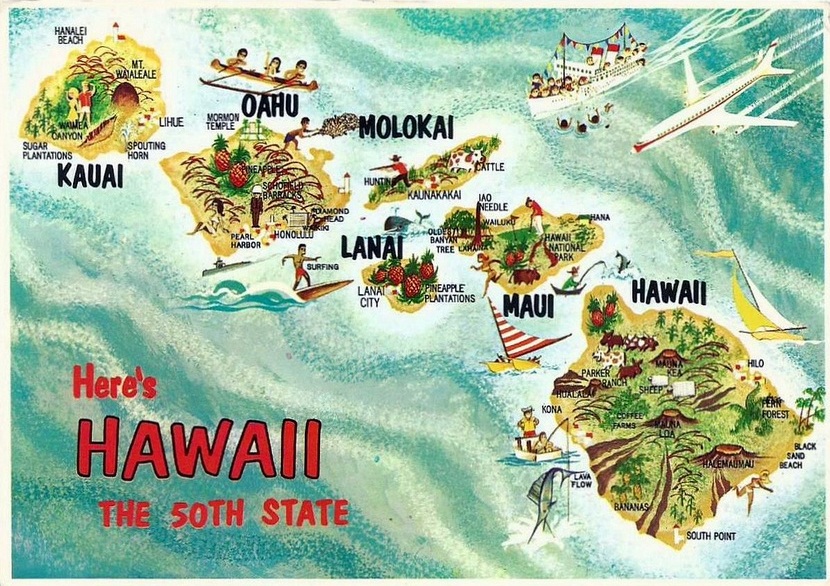
For centuries before Western contact, the Hawaiian Islands thrived under a sophisticated feudal system, with various chiefdoms governing the distinct islands of Oahu, Maui, Kauai, Molokai, Lanai, and the Big Island (also known as Hawaii Island). The indigenous Hawaiians developed a rich culture deeply connected to the land and sea, characterized by intricate social structures, advanced agricultural practices, and profound spiritual beliefs. Their knowledge of navigation, oral traditions, hula, and complex resource management allowed these isolated communities to flourish, establishing a self-sustaining way of life that endured for generations. The legacy of this ancient wisdom is still palpable in the islands today, influencing everything from local cuisine and ecological conservation efforts to the welcoming hospitality found at many resorts and accommodation options that strive to integrate Hawaiian values. Many historical sites, such as the Pu’uhonua o Honaunau National Historical Park on the Big Island, offer a glimpse into this powerful past, inviting travelers to explore the very foundations of Hawaiian society.
Early Encounters and Western Influence
The year 1778 marked a pivotal moment with the arrival of British explorer Captain James Cook. While Cook’s initial interactions were often fraught with misunderstandings, his voyages opened Hawaii to the wider world, ushering in a period of dramatic change. Within decades, firearms and Western political ideas profoundly reshaped the islands’ internal power dynamics. This shift culminated in the rise of King Kamehameha I, a visionary leader from the Big Island who, through strategic alliances and military prowess, unified the warring chiefdoms to establish the Kingdom of Hawaii by 1810. Kamehameha’s reign brought an unprecedented era of peace and stability, allowing the kingdom to engage with foreign powers on its own terms.
The 19th century saw increasing numbers of missionaries, whalers, and traders arriving in Hawaii, bringing with them new religions, diseases, and economic systems. Sugar plantations, in particular, became a dominant force, attracting a diverse influx of immigrant laborers from China, Japan, the Philippines, and Portugal. This multicultural arrival laid the groundwork for the incredibly diverse population that defines Hawaii today, a vibrant blend of cultures reflected in its local cuisine, festivals, and the welcoming spirit of its people. While the economic boom brought prosperity for some, it also created a powerful class of foreign businessmen who exerted growing influence over the kingdom’s politics and land. The beautiful Iolani Palace in Honolulu, the only official residence of royalty in the United States, stands as a magnificent testament to this era, offering visitors a rare glimpse into the opulent yet complex life of the Hawaiian monarchs during a time of immense external pressure.

The Overthrow and the Republic: A Shifting Tide
By the late 19th century, the Kingdom of Hawaii found itself increasingly vulnerable to the ambitions of foreign powers, particularly the United States. American businessmen, many descendants of missionaries, held significant sway over the Hawaiian economy through their sugar and pineapple interests. They viewed the monarchy as an impediment to their economic goals and desired closer political ties, or even annexation, to the United States to secure favorable trade agreements and protect their investments. The strategic importance of Hawaii as a coaling station and naval base in the Pacific Ocean also grew in the eyes of American military strategists.
The final monarch, Queen Liliʻuokalani, ascended to the throne in 1891 with a firm commitment to restore power to the Hawaiian monarchy and its people, largely by enacting a new constitution that would revoke the voting rights of many non-native residents. Her efforts were met with strong opposition from the “Committee of Safety,” a group of primarily American and European businessmen and residents. In a controversial move in January 1893, supported by armed U.S. Marines (ostensibly to protect American lives and property), the Committee of Safety orchestrated the overthrow of the Kingdom of Hawaii, forcing Queen Liliʻuokalani to abdicate. This event remains a deeply sensitive and significant moment in Hawaiian history, marked by a palpable sense of loss and injustice among many native Hawaiians, who view it as an illegal act of aggression. Today, many cultural tours and educational experiences in Hawaii delve into this complex period, offering a more nuanced perspective on the island’s past that goes beyond the popular image of a tropical paradise, encouraging visitors to engage with the deeper historical currents that shaped the islands.
The Annexation by the United States
Following the overthrow, the Committee of Safety established a provisional government, which soon declared itself the Republic of Hawaii with Sanford B. Dole, a prominent American lawyer and businessman (and cousin of James Dole of Dole Food Company fame), as its president. Their primary goal was immediate annexation by the United States. However, this was not a straightforward process. President Grover Cleveland initially opposed annexation, viewing the overthrow as an act of injustice and offering to restore the Queen to her throne, an offer she declined due to political complexities. The debate over Hawaii’s fate continued for several years, becoming a contentious issue in American domestic politics.
The geopolitical landscape shifted with the Spanish-American War in 1898. The strategic value of Hawaii as a naval base and a stepping stone to Asia became acutely apparent to the United States military. With strong lobbying from the annexationists and increasing public support spurred by expansionist sentiments, President William McKinley signed the Newlands Resolution, effectively annexing Hawaii as a U.S. territory on July 7, 1898, without a public referendum in Hawaii. This marked the end of Hawaii’s independence and ushered in a new chapter under American governance. The former Iolani Palace became the territorial capitol, a powerful symbol of the transition from monarchy to territory, and now stands as a prominent historical landmark for visitors in Honolulu to explore and reflect upon.

Towards Statehood: War, Tourism, and a New Era
As a U.S. territory, Hawaii experienced significant development, particularly in its agricultural sector and military infrastructure. Honolulu grew into a bustling port city, and the influx of diverse immigrant groups continued to shape its unique demographic and cultural landscape. Despite becoming a territory, the desire for statehood was not immediate or universal. Many sugar plantation owners preferred territorial status as it allowed them to import contract labor more easily, while a segment of the native Hawaiian population harbored hopes for the restoration of the monarchy. However, over time, the advantages of full statehood, including greater political representation, federal funding, and the full rights of U.S. citizenship, began to gain wider appeal. The growing popularity of Hawaii as a tourist destination in the early 20th century, with iconic locales like Waikiki Beach beginning to attract affluent travelers, also contributed to its increasing visibility and integration into the American consciousness. Early hotels, many of which were grand wooden structures, laid the foundation for the luxury accommodations and vibrant tourism industry that define the islands today.
The Impact of Pearl Harbor and Post-War Development
The attack on Pearl Harbor on Oahu on December 7, 1941, was a devastating event that propelled the United States into World War II and dramatically altered the trajectory of Hawaii’s path to statehood. The attack underscored Hawaii’s critical strategic importance in the Pacific Ocean and galvanized American public opinion. During the war, Hawaii served as a vital military hub, with its population demonstrating unwavering loyalty and resilience despite facing martial law. The sacrifices made and the contributions of its multi-ethnic population to the war effort strengthened the argument for statehood, proving Hawaii’s full integration into the American fabric. The Pearl Harbor National Memorial now stands as a somber yet powerful reminder of this turning point, drawing millions of visitors annually to pay their respects and learn about its profound impact on both Hawaii and the world. Many Honolulu hotels offer guided tours to this significant site, making it a central part of the historical travel experience in Oahu.
After World War II, the push for statehood gained unstoppable momentum. Veterans who had fought for the United States returned home demanding full citizenship rights and political representation. The post-war economic boom also fueled the growth of Hawaii’s tourism industry, making it an increasingly desirable and accessible destination for mainland Americans. The development of larger airplanes and more affordable air travel made the islands less remote, transforming them from an exotic retreat for the ultra-wealthy into a more attainable holiday destination for a broader demographic. This era saw the construction of numerous iconic hotels along Waikiki Beach, shaping the modern skyline and offering diverse accommodation options for every type of traveler, from budget-friendly stays to luxury resorts.
The Road to the 50th State: A People’s Choice
Despite the growing support, the journey to statehood was still met with various obstacles, including concerns in Washington, D.C. about Hawaii’s racial diversity and its relatively small population. However, key figures like Delegate John A. Burns tirelessly championed Hawaii’s cause in Congress. The political climate also shifted; the Cold War era emphasized the importance of demonstrating American democracy to the world, making the inclusion of a diverse territory like Hawaii a powerful symbol.
Finally, in 1959, Congress passed the Hawaii Admission Act, which was then put to a popular vote in Hawaii. The results were overwhelmingly in favor of statehood, with 94.3% of the votes cast supporting the measure. This decisive mandate from the people of Hawaii sealed its fate. On August 21, 1959, President Dwight D. Eisenhower signed the proclamation admitting Hawaii as the 50th state of the United States. The news was met with jubilation across the islands, marking the culmination of decades of political struggle and a profound transformation from an ancient kingdom to a modern American state. This milestone opened the floodgates for mass tourism, leading to unprecedented development in infrastructure, hotels, and airlines, cementing Hawaii’s reputation as a premier global travel destination.
Modern Hawaii: A Vibrant Travel Destination
Today, Hawaii stands as a testament to its incredible journey. Its unique blend of indigenous traditions, Asian influences, and American culture creates a rich tapestry that captivates millions of visitors each year. The state’s economy is largely driven by tourism, with its unparalleled natural beauty – from the volcanic landscapes of the Big Island to the lush cliffs of Kauai and the iconic Diamond Head on Oahu – serving as its main draw. The state’s long history, particularly its path to statehood, provides a fascinating backdrop for understanding its contemporary identity and cultural dynamics.
Exploring Hawaii’s Unique Culture and Natural Wonders
For travelers seeking a deeper connection to the islands, understanding Hawaii’s history is essential. Honolulu, the state capital and largest city, serves as a hub for both historical exploration and modern lifestyle experiences. Visitors can spend their mornings at Iolani Palace or the Pearl Harbor National Memorial, reflecting on the past, and their afternoons enjoying the vibrant atmosphere of Waikiki Beach, experiencing the luxurious amenities of a five-star hotel or indulging in local food at a diverse array of restaurants.
Beyond Oahu, each island offers its own distinct flavor and historical significance. Maui beckons with its historic whaling town of Lahaina, once a capital of the kingdom, now a charming destination for boutique hotels and cultural strolls. The Big Island boasts the active volcanoes of Hawaii Volcanoes National Park, where the earth’s raw power has shaped the land for millennia, providing a direct link to the ancient Hawaiian reverence for nature. Kauai, the “Garden Isle,” offers breathtaking natural beauty, much of which remains untouched, allowing visitors to imagine the pristine landscapes that greeted Captain Cook centuries ago.
The infrastructure supporting tourism in Hawaii has grown exponentially since statehood. The Honolulu International Airport (now Daniel K. Inouye International Airport) is a major gateway, connecting the islands to the world. A wide spectrum of accommodation options, from expansive resorts and family-friendly hotels to intimate villas and long-term stays, caters to every budget and preference. Tourism guides and local experts provide insights into everything from the best surf spots to the most authentic cultural experiences, ensuring that every traveler can find their ideal way to engage with the islands. Whether one is drawn by the allure of adventure travel, the serenity of a beach holiday, or a deep dive into its fascinating history, Hawaii’s journey from an isolated kingdom to a global icon has created a truly unparalleled and unforgettable destination for all.
LifeOutOfTheBox is a participant in the Amazon Services LLC Associates Program, an affiliate advertising program designed to provide a means for sites to earn advertising fees by advertising and linking to Amazon.com. Amazon, the Amazon logo, AmazonSupply, and the AmazonSupply logo are trademarks of Amazon.com, Inc. or its affiliates. As an Amazon Associate we earn affiliate commissions from qualifying purchases.