
The story of how Mexico lost California is a complex tapestry woven from geopolitical ambition, economic pressures, and military conflict, profoundly shaping the modern landscape of North America. It’s a narrative that speaks to the transient nature of borders and the enduring impact of historical events on the physical and cultural landmarks we know today. To truly understand this pivotal moment, one must journey back to the early 19th century, exploring the aspirations of a young independent nation and the burgeoning expansionist zeal of its powerful northern neighbor, the United States. The vast territory of Alta California, stretching from the Pacific Ocean eastward into arid deserts and mountainous terrain, was a prize whose significance was initially underestimated but ultimately redefined the continent.

The Dawn of Mexican California: A Vast Frontier
Following its hard-won independence from Spain in 1821, Mexico inherited an immense and largely undeveloped northern frontier, including the territory of Alta California. For decades under Spanish rule, the region had been seen primarily as a defensive buffer against Russian and British encroachment, sparsely populated by a mix of indigenous peoples, Spanish missionaries, soldiers, and a small number of settlers. The missions, presidios, and pueblos established by figures like Father Junípero Serra were the primary markers of European presence in a land still largely wild and untamed.
From Spanish Colony to Mexican Territory
With independence, the newly formed Mexican Republic found itself in control of a territory that, while strategically important, was geographically distant and challenging to govern from Mexico City. The new government abolished the mission system, secularizing its vast landholdings and distributing them as ranchos to prominent Mexican citizens. This led to the emergence of the Californios, a distinct regional culture of landowners and ranchers who built impressive estates, often centered around bustling haciendas that became local economic and social hubs. These ranchos, though impressive in scale, were still isolated pockets in an enormous landmass, connected by rudimentary trails rather than established infrastructure. Landmarks like the presidio of Monterey and the pueblo of Los Angeles were small but significant centers of activity.
The Sparse Presence and Growing Interest
Despite its vastness and potential, Mexico’s hold on Alta California remained tenuous. Limited resources, political instability at home, and the sheer distance made it difficult to send troops or settlers in sufficient numbers to effectively integrate the territory. This sparse presence, coupled with rich natural resources, began to attract the attention of other nations. American and European whalers, traders, and trappers became increasingly common along the coast and in the interior. American merchants, in particular, established thriving trade routes, exchanging manufactured goods for California hides and tallow. These interactions introduced foreign influences and created networks that would prove crucial in the coming years, laying the groundwork for a burgeoning American presence in the region’s nascent towns and settlements.
Manifest Destiny and American Ambition
As Mexico grappled with its post-colonial challenges, the United States was gripped by a fervent belief in “Manifest Destiny”—the idea that it was divinely ordained to expand across the entire North American continent, from the Atlantic to the Pacific. This expansionist ideology, fueled by a growing population and economic ambitions, set the stage for an inevitable clash with Mexico.
Westward Expansion and Geopolitical Tensions
The lure of fertile lands, potential trade routes to Asia, and strategic ports along the Pacific coast made California an irresistible prize for American policymakers. The annexation of Texas in 1845, after its successful war of independence from Mexico, further exacerbated tensions between the two nations. The United States sought to purchase California and New Mexico from Mexico, but its overtures were rejected, seen as insulting and a prelude to further territorial grabs. President James K. Polk, a staunch advocate of Manifest Destiny, was determined to acquire these lands, by diplomacy if possible, but by force if necessary. This period saw increased surveying and exploration of the western territories by Americans, often with thinly veiled military objectives, further signaling American interest in the Mexican frontier.
Early American Incursions and Settler Influence
Even before formal conflict, American settlers, traders, and adventurers began to trickle into Alta California. Figures like John C. Frémont, an American explorer and military officer, led expeditions into the territory that were ostensibly scientific but often carried significant military implications, mapping routes and assessing the land’s potential. These growing American communities, particularly in the northern parts of California, became focal points of discontent with Mexican rule. They often felt little loyalty to a distant government and were receptive to the idea of American annexation or even independence. The stage was set for a local uprising that would precipitate wider conflict, turning remote ranchos and nascent towns into battlegrounds of shifting allegiances.
The Mexican-American War: A Fateful Conflict
The long-simmering tensions between the United States and Mexico finally erupted into full-scale war in 1846. The immediate catalyst was a border dispute over Texas, specifically the boundary between the Nueces River and the Rio Grande. However, the underlying motive for the United States was undeniably the acquisition of vast Mexican territories to the west, including California.
The Spark of War and California’s Role
When American troops under General Zachary Taylor advanced into the disputed territory along the Rio Grande, clashes with Mexican forces ensued, providing President Polk with the pretext he needed to declare war. While the main theaters of war were in Mexico proper, the Pacific theater, specifically California, became a critical objective. The US strategy involved securing California to prevent any European power from gaining a foothold and to fulfill the vision of westward expansion. Naval forces were dispatched to blockade Mexican ports along the California coast, while ground forces prepared for an overland invasion.
The Bear Flag Revolt and Local Resistance
Even before the official declaration of war reached California, local events were unfolding. In June 1846, a group of American settlers, supported by John C. Frémont’s mapping expedition, initiated the Bear Flag Revolt in Sonoma. They declared an independent California Republic, raising a hastily designed flag featuring a bear and a star. This act of rebellion, though short-lived, effectively undermined Mexican authority in northern California. Prominent Californios, such as Mariano Guadalupe Vallejo, a respected military commander and landowner, were arrested, further destabilizing the region. While some Californios initially resisted the American incursions, the uncoordinated nature of their defense and the overwhelming force of the US military ultimately proved insurmountable.
US Military Campaigns and Conquest
The US military quickly consolidated its control over California. Naval Commodore John D. Sloat captured Monterey and raised the American flag, effectively claiming the territory. Other key ports and settlements, including San Francisco and Los Angeles, soon fell to American forces. Despite some fierce resistance, notably during the siege of Los Angeles and the Battle of San Pasqual, the Californios, under leaders like Andrés Pico, were ultimately outmatched. By January 1847, with the signing of the Treaty of Cahuenga, organized Mexican resistance in California effectively ceased, placing the vast territory firmly under American control, even as the larger war raged on in central Mexico.
The Treaty of Guadalupe Hidalgo: A Defining Loss
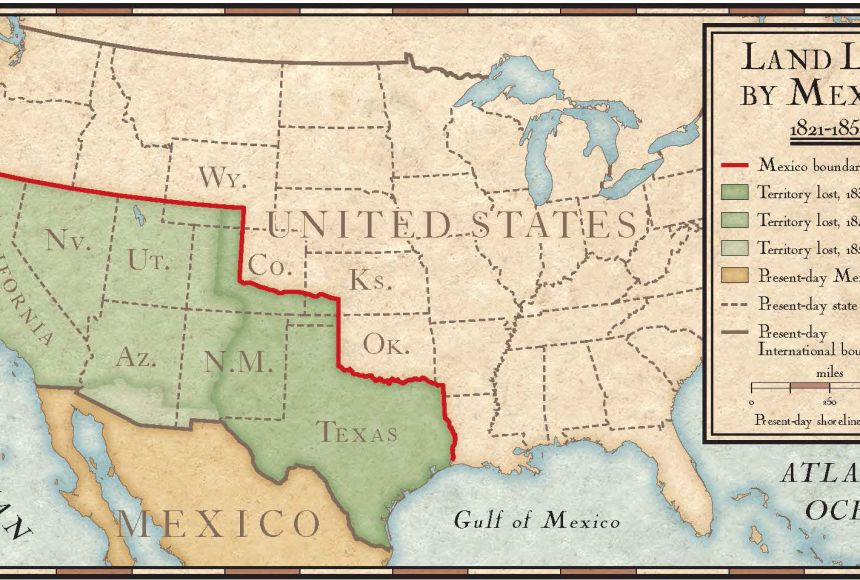
The Mexican-American War concluded with the signing of the Treaty of Guadalupe Hidalgo on February 2, 1848. This treaty, signed in Guadalupe Hidalgo (now a part of Mexico City), marked the official end of the conflict and a devastating territorial loss for Mexico. For the United States, it was a monumental triumph, securing an empire of land that transformed its geographical footprint.
The Terms of Cession
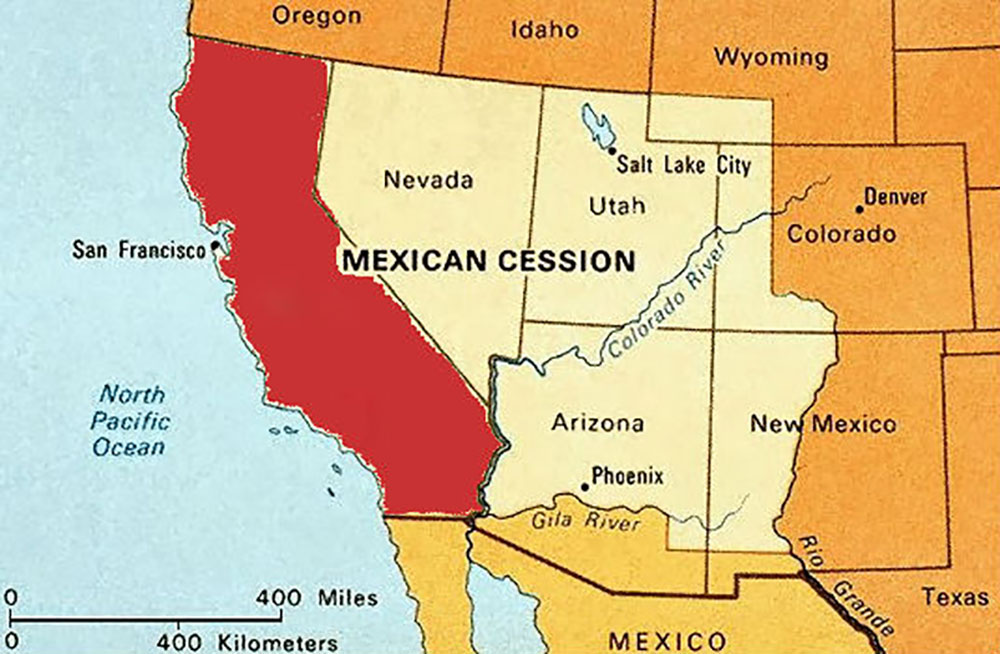
Under the terms of the treaty, Mexico ceded over 500,000 square miles of territory to the United States. This vast expanse included not only California but also what would become Arizona, Nevada, Utah, and parts of Colorado, New Mexico, and Wyoming. In return, the United States paid Mexico $15 million and assumed $3.25 million in debts owed by Mexico to American citizens. This transaction dramatically altered the geopolitical map of North America, extending the United States’ territory to the Pacific and solidifying its position as a transcontinental power. The formal landmarks of this new border, though initially abstract lines on a map, would soon become tangible markers of national identity and sovereignty.
The Aftermath: Redrawing Borders and Lives
The immediate aftermath of the treaty was profound for the inhabitants of the ceded territories. Mexican citizens living in these lands were given the option to either retain their Mexican citizenship and relocate south of the new border or become US citizens. Many chose the latter, but their rights and property claims, though ostensibly protected by the treaty, were often challenged and undermined in the ensuing decades. The gold rush in California, discovered just days before the treaty was signed, rapidly accelerated American settlement, further marginalizing the Californios and their cultural legacy. This sudden influx of population transformed the land, quickly developing infrastructure and new settlements where Mexican ranchos once stood. The physical landscapes became sites of rapid change, as American towns and cities sprang up, often overlaying or displacing existing Mexican landmarks and communities.
Legacy and Lasting Impact on the Landscape
The loss of California by Mexico was more than just a territorial shift; it was a foundational event that continues to shape the cultural, historical, and physical landscapes of both nations. The history of this period is etched into the very fabric of the American Southwest, visible in its architecture, place names, and demographic makeup.
Cultural Intersections and Enduring Heritage
Today, the legacy of Mexican California is evident in countless ways. Spanish and Mexican place names dot the map, from Los Angeles to San Francisco, Santa Barbara to San Diego. The distinctive mission-style architecture, a direct descendent of the Spanish colonial period, remains a beloved and iconic feature across the state. Cuisine, music, and traditions also bear the indelible imprint of Mexican culture. Many historical landmarks, such as the surviving California missions or preserved adobe buildings, stand as tangible reminders of the period before American annexation, offering windows into a vibrant past where Californios thrived and built a unique society on the frontier. Understanding how Mexico lost California provides crucial context for appreciating this rich cultural layering.
The Modern Face of a Contested Past
The narrative of Mexico losing California is a powerful reminder of how historical events shape contemporary identity and international relations. It underscores the fluidity of national boundaries and the enduring impact of conquest and settlement. For tourists and historians alike, exploring sites such as the Presidio of San Francisco or the historic Old Town of San Diego offers a tangible connection to this transformative era. These landmarks, whether preserved Spanish missions, remnants of Mexican ranchos, or sites commemorating the battles of the Mexican-American War, serve as silent witnesses to a critical juncture when one nation’s vast frontier became another’s burgeoning empire. The question of how Mexico lost California is not just a historical inquiry; it’s an invitation to understand the deep roots of a diverse and complex region.
LifeOutOfTheBox is a participant in the Amazon Services LLC Associates Program, an affiliate advertising program designed to provide a means for sites to earn advertising fees by advertising and linking to Amazon.com. Amazon, the Amazon logo, AmazonSupply, and the AmazonSupply logo are trademarks of Amazon.com, Inc. or its affiliates. As an Amazon Associate we earn affiliate commissions from qualifying purchases.