
The Pacific Northwest of the United States is a region steeped in natural beauty, rich history, and compelling narratives. At its heart lies the vibrant state of Oregon, a land of dramatic coastlines, towering forests, and fertile valleys. But beyond the stunning landmarks and the allure of its diverse destinations, a fundamental question lingers: how did Oregon get its name? The origin of the name is not as straightforward as one might expect, weaving a tale of cartographic confusion, linguistic evolution, and historical interpretation. This exploration delves into the most widely accepted theories and the fascinating journey of how this captivating state came to be known as Oregon.
Tracing the Roots: Early Mentions and Cartographic Clues
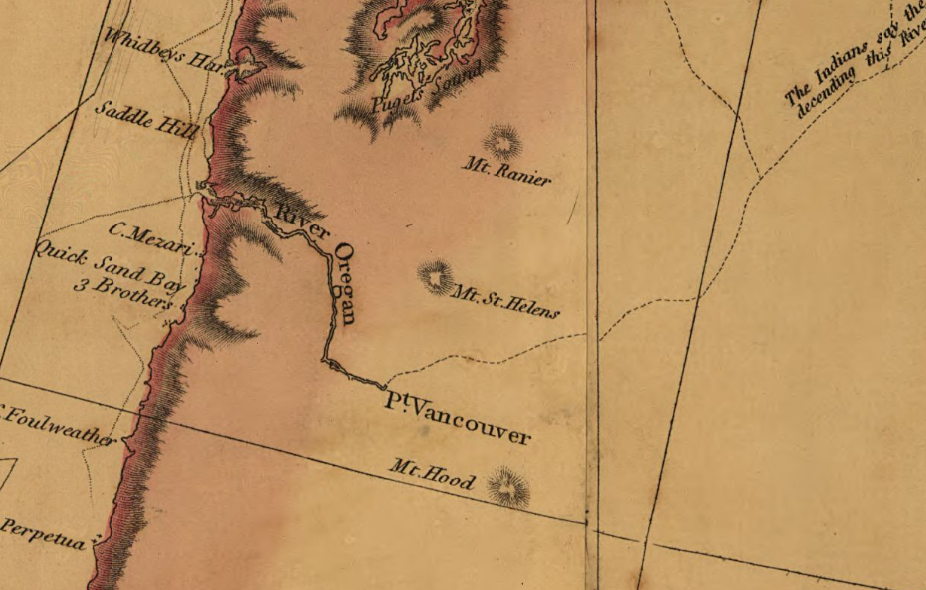
The story of Oregon‘s name begins not with a definitive declaration, but with a gradual emergence on maps and in written accounts. The earliest known printed reference to “Oregon” appeared in a 1765 publication by Jonathan Carver, a British explorer. Carver’s Travels Through the Interior Parts of North America described a river he called the “Ourigan” or “Ourigana,” which he believed flowed from a large lake or series of lakes in the western part of the continent. This river, he surmised, was a major waterway that eventually led to the great western ocean.
Carver’s account, though based on information gathered from Indigenous peoples he encountered, was not based on his own direct exploration of the river itself. He never actually visited the region he described as “Oregon.” Instead, his writings reflect the geographical knowledge and oral traditions of the Sioux and other tribes, who spoke of a great river to the west. The exact source of Carver’s “Ourigan” remains a subject of debate, but it’s widely believed he was referring to a river that would eventually become known as the Columbia River.
The mystery deepens when we consider how this name, “Ourigan,” made its way onto influential maps. Thomas Jefferson, in his extensive planning for the Lewis and Clark Expedition, was aware of Carver’s writings. He included a reference to the “River Oregon” in his instructions for Meriwether Lewis, urging him to explore its potential as a passage to the Pacific Ocean. This endorsement by a figure of Jefferson’s stature significantly contributed to the name’s broader recognition.
Subsequent cartographers began incorporating the name “Oregon” onto their maps, albeit with variations in spelling and placement. Early maps often showed a vast, unnamed territory in the west, and as explorers and settlers began to chart the region, the name “Oregon” started to gain prominence, often attached to the great river flowing to the sea. This period was characterized by considerable cartographic uncertainty, with the boundaries and names of geographical features still being fluid and contested. The name “Oregon” gradually solidified its association with the entire region, not just a single river, as more of the territory was explored and documented.
Linguistic Theories and Indigenous Connections
The most compelling theories regarding the origin of the name “Oregon” point towards Indigenous languages. The name likely has roots in the Chinook Jargon, a trade pidgin language that developed among the Indigenous peoples of the Pacific Northwest and early European traders. This jargon was a vital tool for communication and commerce, and it incorporated words from various Indigenous languages, as well as from English and French.
One prominent theory suggests that “Oregon” is derived from the Chinook word “wal-la-ma-ttem-ma,” which was the name of a Chinookan tribe living in the Willamette Valley. Some scholars propose that “Oregon” is a corruption or anglicized version of this tribal name or a related term. The Chinook people, with their extensive trade networks, would have been among the first to have their language influence the names of the region’s features.
Another strong contender for the name’s origin comes from the Algonquian language family. It is theorized that “Oregon” might be an anglicized form of an Algonquian word, perhaps “oligan” or “oregon,” meaning “beautiful river” or “place of the gathering of waters.” This theory is supported by the fact that Algonquian words were also incorporated into the geographical nomenclature of other parts of North America. The Ohio River, for instance, is believed to have Algonquian roots.
It’s also possible that the name “Oregon” is a blend of influences, a composite that evolved over time through interaction between different linguistic groups. The exact translation and pronunciation of many Indigenous words can be challenging for outsiders, leading to variations and adaptations that eventually become the accepted names. The process of naming geographical features in a new territory is rarely a singular, definitive act; it’s often a dynamic process shaped by the languages, cultures, and interactions of the people who inhabit and explore that land. The enduring presence of the name “Oregon” suggests that it resonated with the early explorers and settlers, likely due to its phonetic qualities and potential connection to the significant waterways of the region.
The Name Solidifies: From River to Territory
The progression of the name “Oregon” from a single river to an entire territory and eventually a state was a gradual process, heavily influenced by exploration, settlement, and political maneuvering. Following Jonathan Carver‘s initial mention and Thomas Jefferson‘s interest, the Lewis and Clark Expedition (1804-1806) played a crucial role in solidifying the name’s association with the region. While Lewis and Clark themselves may not have definitively named the river “Oregon” in their journals, their expedition mapped and explored the vast territories of the Louisiana Purchase and beyond, bringing greater geographical clarity to the western frontier. Their detailed accounts and maps further disseminated the name and the geography of the region to a wider audience.
The establishment of the Oregon Territory in 1848 by the U.S. Congress was a pivotal moment. This act officially recognized and formalized the name “Oregon” as designating a large geographical and administrative entity. The territory encompassed not only present-day Oregon but also much of what is now Washington, Idaho, and parts of Montana and Wyoming. The naming of the territory was a significant step in the American westward expansion, marking the formal incorporation of this vast and strategically important region into the United States.

The Journey to Statehood and Enduring Legacy
The naming conventions of the 19th century were often a reflection of the explorers, surveyors, and politicians who were charting and claiming new lands. The persistence of the name “Oregon” can be attributed to its adoption by these influential figures and its eventual incorporation into official government designations. The early settlers and fur traders operating in the region also played a role in popularizing the name through their daily interactions and communications.
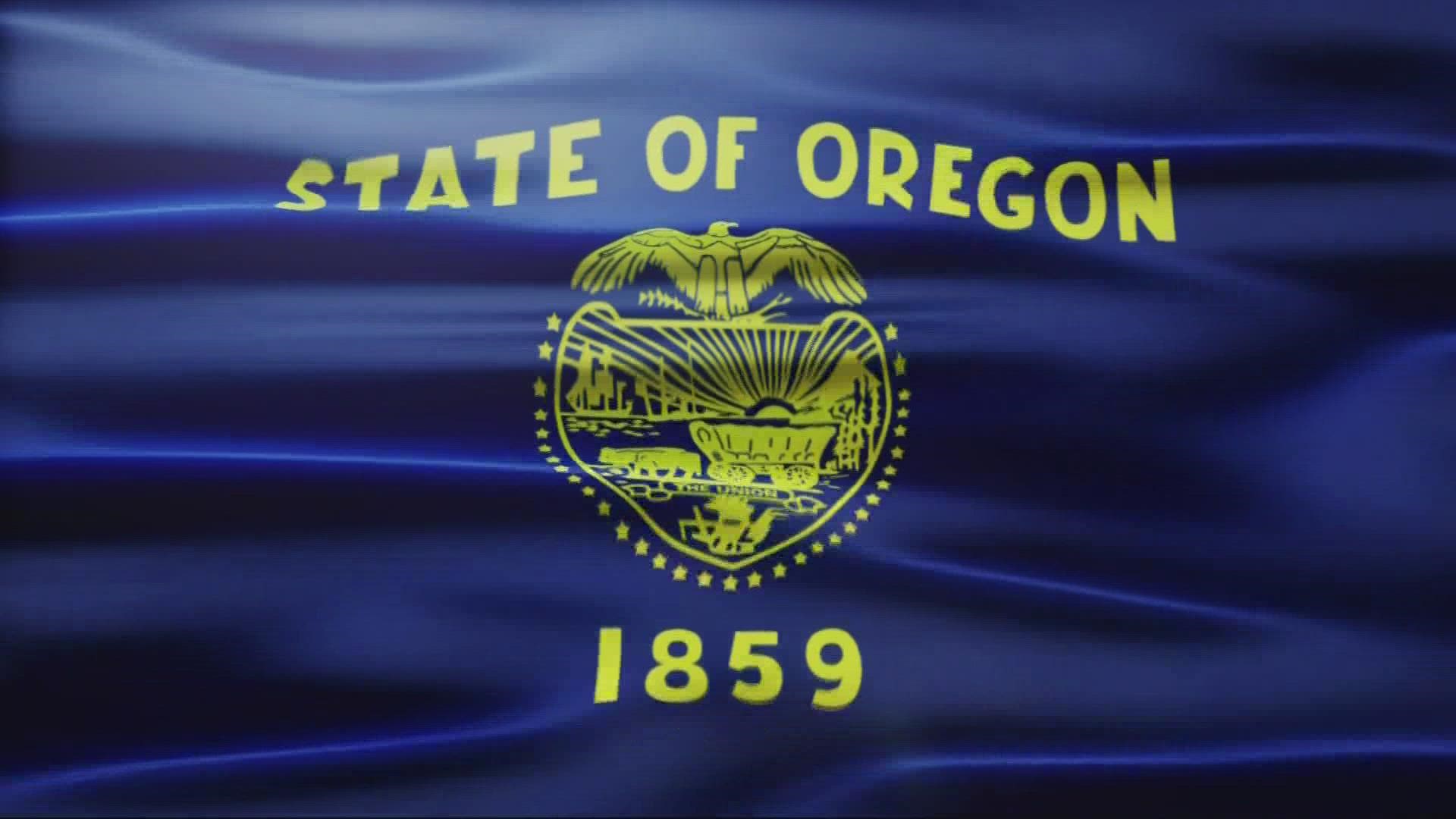
When Oregon officially became the 33rd state on February 14, 1859, the name had already become deeply ingrained in the identity of the land and its people. The state’s founders and citizens embraced the name, recognizing its historical connections, even if the precise etymology remained somewhat elusive. The name “Oregon” evokes a sense of the wild, the expansive, and the beautiful, characteristics that continue to define the state today.
From the whispers of ancient Indigenous languages to the definitive stroke of a pen on a congressional act, the journey of the name “Oregon” is a testament to the dynamic nature of geographical nomenclature. It is a name that carries echoes of exploration, linguistic evolution, and the enduring spirit of the Pacific Northwest. Whether exploring its captivating destinations, staying in its unique hotels and resorts, or immersing yourself in its vibrant local culture, the name “Oregon” serves as a constant reminder of the rich and complex history embedded within this remarkable American state. The legacy of its naming continues to inspire curiosity and a deeper appreciation for the stories that shape our world.
LifeOutOfTheBox is a participant in the Amazon Services LLC Associates Program, an affiliate advertising program designed to provide a means for sites to earn advertising fees by advertising and linking to Amazon.com. Amazon, the Amazon logo, AmazonSupply, and the AmazonSupply logo are trademarks of Amazon.com, Inc. or its affiliates. As an Amazon Associate we earn affiliate commissions from qualifying purchases.