
The annexation of Hawaii by the United States in 1898 was not merely a territorial acquisition; it was a pivotal moment that profoundly shaped and accelerated the trajectory of American imperialism. This act, fraught with political maneuvering and driven by a confluence of economic interests and strategic ambitions, served as a powerful catalyst, emboldening the United States to assert its influence on a global stage. The implications rippled far beyond the Hawaiian archipelago, setting precedents and forging pathways that would define American foreign policy and its role in world affairs for decades to come. Understanding the impact of Hawaii’s annexation requires an examination of the prevailing geopolitical climate, the economic drivers, and the ideological justifications that underpinned this significant historical event.
The Shifting Sands of Geopolitical Power
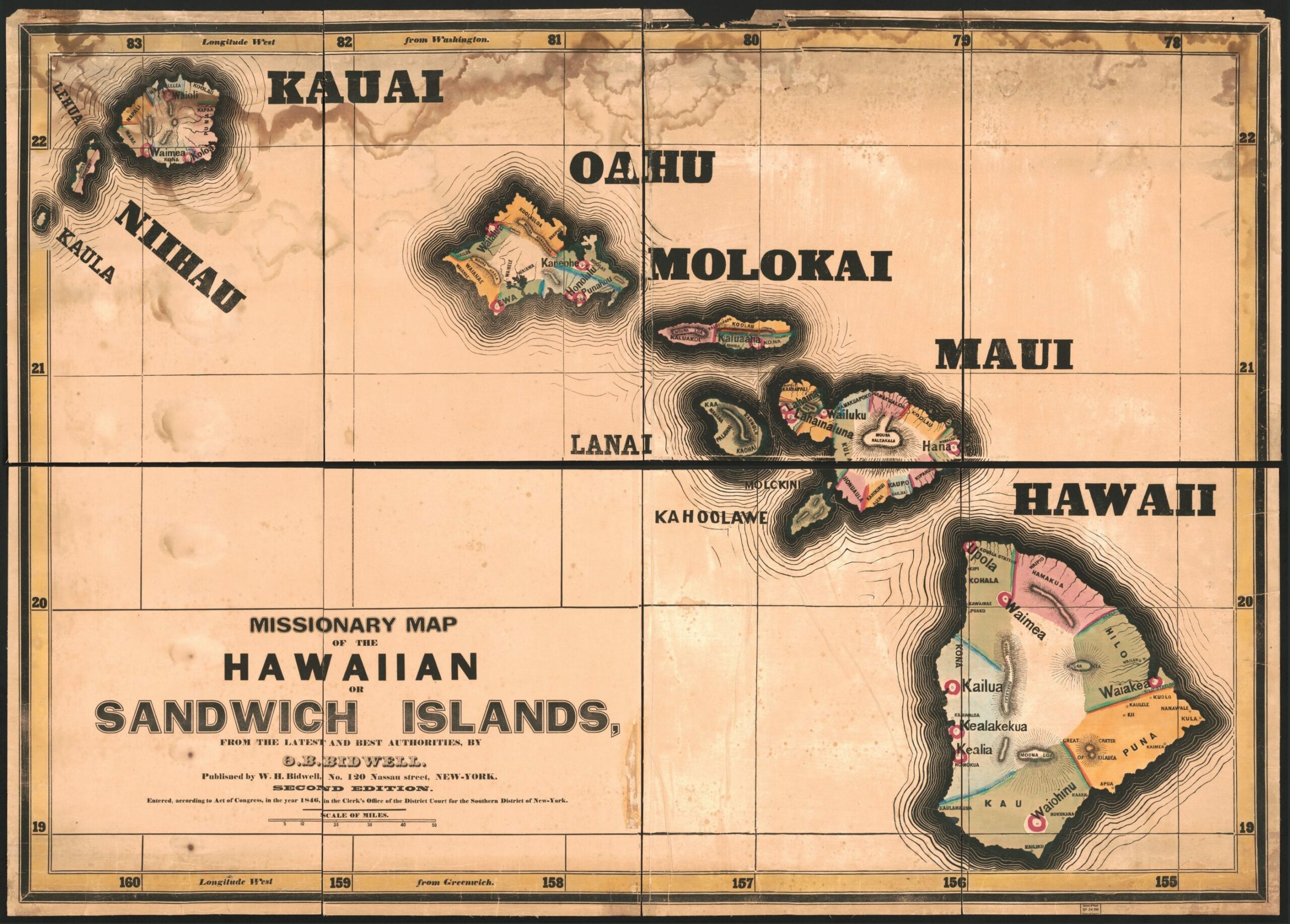
The late 19th century was a period of intense global competition among established European powers and emerging nations like the United States. The concept of “the White Man’s Burden” provided a convenient, albeit ethically dubious, rationale for expansion, while the pursuit of resources, markets, and strategic naval bases became paramount. For the United States, the annexation of Hawaii was a calculated move to secure a vital coaling station and naval stronghold in the Pacific, a region rapidly becoming a theater for international rivalries.
A Strategic Gateway to Asia
The Pacific Ocean, with its burgeoning trade routes and vast potential, was a focal point of imperial ambitions. Possessing territories across this expanse offered a distinct advantage. Hawaii, situated roughly halfway between North America and Asia, represented an unparalleled strategic asset. Its acquisition provided the United States with a crucial maritime outpost, essential for projecting naval power and protecting its growing commercial interests in Asia.
- Naval Dominance: The U.S. Navy recognized the immense strategic value of Pearl Harbor as a sheltered deep-water port. Securing this location allowed the U.S. to maintain a formidable presence in the Pacific, capable of supporting military operations and commerce far from its continental shores. This was particularly important in light of the growing Japanese influence and the scramble for concessions in China.
- Trade Route Security: As American trade with Asia expanded, particularly in sugar and later manufactured goods, safeguarding these routes became a national priority. Annexing Hawaii ensured that this crucial waypoint remained under American control, preventing potential disruption by rival powers and facilitating the flow of goods.
The Spanish-American War Context
The annexation of Hawaii was inextricably linked to the unfolding events of the late 1890s, most notably the Spanish-American War. While the war itself was ostensibly about Cuban independence, it provided the impetus and the justification for the final push to annex the islands.
- A Springboard for Operations: The strategic location of Hawaii proved invaluable during the Spanish-American War. It served as a critical staging ground for American naval forces dispatched to the Philippines to engage Spanish colonial forces. The ability to resupply and refuel ships in Hawaii significantly enhanced the operational reach of the U.S. Navy.
- Manifest Destiny and Public Opinion: The prevailing atmosphere of nationalism and expansionist fervor, often framed within the doctrine of “Manifest Destiny,” created a favorable environment for annexation. The success of American arms in the Spanish-American War further fueled this sentiment, making the acquisition of overseas territories seem not only desirable but a natural progression of American power and influence.
Economic Engines of Annexation
Beyond strategic considerations, powerful economic forces were at play, driving the desire for annexation. American businessmen, particularly those involved in the lucrative sugar industry, saw their investments and profits tied to the political status of the islands. The shift from a republic to a territory of the United States was seen as the ultimate guarantee of economic stability and prosperity.
The Dominance of the Sugar Industry

For decades prior to annexation, American planters had established a formidable presence in Hawaii, cultivating vast sugar plantations. The fertile volcanic soil and favorable climate made the islands ideal for sugar production, which became the backbone of the Hawaiian economy. However, the fluctuating political landscape and the threat of changing trade policies created an environment of uncertainty for these powerful business interests.
- Reciprocity Treaty and its Fallout: The Reciprocity Treaty of 1875 had granted Hawaiian sugar duty-free access to the United States market. This was a significant boon for American planters, but it also made the Hawaiian economy heavily reliant on the U.S. Congress, which could alter or revoke the treaty. The McKinley Tariff of 1890, which removed duties on all foreign sugar, effectively eliminated the preferential treatment for Hawaiian sugar, causing significant economic hardship and increasing calls for annexation to ensure permanent free access.
- Investment and Land Ownership: American entrepreneurs and corporations invested heavily in land, infrastructure, and sugar mills in Hawaii. Annexation was seen as the ultimate protection for these investments, securing their property rights and ensuring continued access to the vast American consumer market. The overthrow of the Hawaiian monarchy in 1893 by American-backed businessmen was a direct precursor to the annexation, demonstrating the extent to which economic interests were intertwined with political aspirations.
Access to American Markets and Labor
The desire for unrestricted access to the lucrative American market was a primary driver for the annexationist movement. American planters feared that any disruption to this access would cripple their businesses. Furthermore, the annexation provided a framework for regulating labor, with implications for the supply and cost of workers on plantations.
- Ensuring Continued Profitability: With annexation, Hawaiian sugar producers could compete on an equal footing with domestic producers, eliminating tariffs and securing a stable and profitable market. This guaranteed a continued flow of wealth from the islands to the United States, further integrating Hawaii into the American economic system.
- Labor Dynamics and Control: The Hawaiian sugar industry relied heavily on imported labor from various parts of the world, including China, Japan, and the Philippines. While the annexation did not immediately alter these labor dynamics, it brought Hawaii under U.S. immigration laws and regulations, which would have long-term consequences for the demographic makeup and labor conditions of the islands.
The Ideological Underpinnings of Expansion
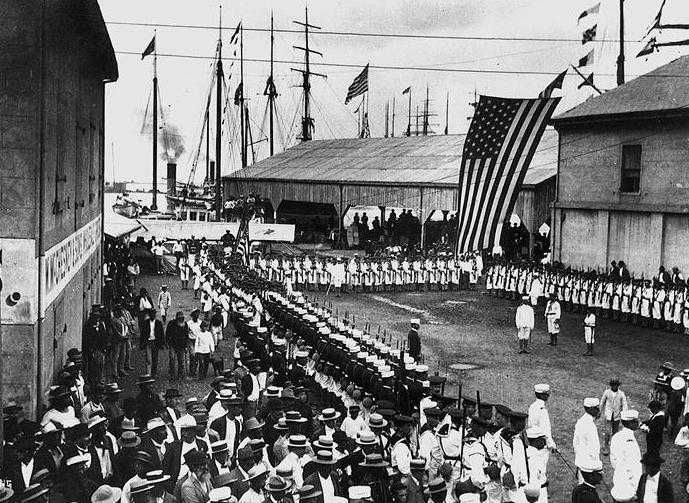
The annexation of Hawaii was not solely driven by pragmatism; it was also fueled by a potent mix of ideologies that championed American exceptionalism and the nation’s supposed destiny to spread its influence and institutions. This ideological framework provided a moral and intellectual justification for territorial expansion.
The Doctrine of Manifest Destiny
The concept of “Manifest Destiny,” the 19th-century belief that American settlers were destined to expand across North America, began to morph and extend its reach across the oceans. In the context of the late 19th century, this idea evolved to encompass the notion that the United States had a divine or historical mission to spread its civilization, democracy, and capitalism to other parts of the world.
- Civilizing Mission: Proponents of annexation often argued that they were bringing progress, Christianity, and superior governance to the Hawaiian people, who were portrayed as needing American tutelage. This paternalistic view, deeply rooted in racial and cultural biases, served to legitimize the dispossession of native Hawaiian sovereignty and the imposition of foreign rule.
- American Exceptionalism: The idea of American exceptionalism posits that the United States is unique and possesses a special role in the world. Annexing Hawaii was seen by many as a natural expression of this exceptionalism, a demonstration of America’s growing power and its responsibility to lead and uplift other nations.
The Role of Social Darwinism and Racism
Underlying much of the expansionist rhetoric of the era was the pervasive influence of Social Darwinism and prevailing racist ideologies. These theories, misapplying Darwin’s biological concepts to human societies, suggested a hierarchy of races and civilizations, with Anglo-Saxon peoples at the apex.
- Racial Justifications: The annexationist argument often relied on the notion that the native Hawaiian population was incapable of self-governance and that their culture was inferior. This racist framing provided a convenient justification for dispossessing them of their lands and political autonomy, as it was argued that American rule would ultimately benefit them by bringing them into the fold of a supposedly more advanced civilization.
- Imperialist Competition: In a world where European powers were actively engaged in colonial expansion, the United States felt compelled to participate in this global competition to avoid being left behind. The annexation of Hawaii was a clear signal that the U.S. was now a player on the imperial stage, capable of acquiring and managing overseas territories just like its European counterparts. This competitive impulse, fueled by a sense of national pride and a desire for international recognition, was a significant factor in the decision to annex.
In conclusion, the annexation of Hawaii was a watershed moment for American imperialism. It consolidated strategic interests, solidified economic gains, and was legitimized by a powerful blend of expansionist ideology and prevailing racist beliefs. The acquisition of these Pacific islands not only bolstered America’s naval capabilities and opened new avenues for trade but also fundamentally altered the nation’s self-perception and its role in global affairs, ushering in a new era of American dominance and interventionism.
LifeOutOfTheBox is a participant in the Amazon Services LLC Associates Program, an affiliate advertising program designed to provide a means for sites to earn advertising fees by advertising and linking to Amazon.com. Amazon, the Amazon logo, AmazonSupply, and the AmazonSupply logo are trademarks of Amazon.com, Inc. or its affiliates. As an Amazon Associate we earn affiliate commissions from qualifying purchases.