
The relationship between the United States and Puerto Rico is a unique and often complex one, forged through historical events that dramatically reshaped the island’s destiny. For travelers exploring this vibrant Caribbean gem, understanding this history isn’t just an academic exercise; it’s a key to appreciating the rich cultural tapestry, the architectural heritage, and the distinct identity that makes Puerto Rico such a captivating destination. From its ancient indigenous roots to its centuries under Spanish rule, and finally to its modern status as a U.S. territory, Puerto Rico’s story is one of resilience, transformation, and enduring allure.

This article delves into the historical circumstances that led to the United States’ acquisition of Puerto Rico, tracing the pivotal moments that shaped its trajectory. Beyond the historical narrative, we will also explore how this rich past has influenced the island’s present, making it a compelling spot for those seeking unique travel experiences, from exploring ancient landmarks to indulging in its vibrant local culture and enjoying world-class accommodations.
A Glimpse into Puerto Rico’s Pre-Colonial and Colonial Past
Before its modern designation, Puerto Rico had a vibrant history stretching back millennia. Its story is one of successive waves of inhabitants and colonizers, each leaving an indelible mark on the island’s identity.
The Indigenous Taíno and European Arrival
Long before European explorers set foot on its shores, Puerto Rico was home to the indigenous [Taíno](https://lifeoutofthebox.com/taino people), a subgroup of the Arawak people who had migrated from South America. The Taíno were skilled farmers, navigators, and artisans, living in organized villages and cultivating crops like cassava, maize, and sweet potatoes. They called their island “Borikén,” meaning “land of the brave lord,” a name that resonates deeply with Puerto Ricans today, who often refer to themselves as “boricuas.”
The arrival of Christopher Columbus in 1493, during his second voyage to the Americas, marked a dramatic turning point. He landed on the island, initially naming it San Juan Bautista (Saint John the Baptist). Within a few decades, Spanish colonization began in earnest under figures like Juan Ponce de León, who established the first permanent Spanish settlement in 1508. The island’s name eventually evolved to Puerto Rico, meaning “rich port,” while the capital city retained the name San Juan.
Centuries of Spanish Rule
For over four centuries, Puerto Rico remained a strategic Spanish colony, serving as a vital military outpost and a crucial port for transatlantic trade. Its strategic location made it a target for rival European powers, leading to the construction of impressive fortifications that still stand as magnificent landmarks today. These include the formidable El Morro and Castillo de San Cristóbal in San Juan, which are now UNESCO World Heritage Sites and must-see attractions for any history enthusiast or casual tourist.
During this long period, Spanish culture, language, and religion deeply permeated the island. The economy largely revolved around agricultural exports, initially gold mining, then sugar, tobacco, and coffee, often relying on enslaved African labor. Despite the tight control from Spain, a distinct Puerto Rican identity began to emerge, characterized by a unique blend of Taíno, Spanish, and African influences. Towards the end of the 19th century, calls for greater autonomy from Spain grew stronger, mirroring similar movements across Latin America. Just prior to its acquisition by the United States, Puerto Rico had even gained a measure of self-governance under a new Spanish charter, a fleeting period of autonomy that was soon to be overshadowed by international conflict.
The Spark of Change: The Spanish-American War
The late 19th century was a period of significant geopolitical shifts, with declining European empires and the rise of new global powers. It was in this volatile environment that the stage was set for Puerto Rico’s transition from Spanish to U.S. control.
Tensions Rise and Conflict Erupts
The primary catalyst for the change was the Spanish-American War of 1898. Tensions had been simmering between the United States and Spain for years, fueled by American expansionist desires, economic interests in Cuba, and humanitarian concerns over Spain’s brutal suppression of Cuban independence movements. The mysterious explosion and sinking of the USS Maine in Havana Harbor in February 1898 served as the immediate trigger, igniting public outrage in the United States and leading to a declaration of war in April.
Though the conflict largely centered on Cuba and the Philippines, Puerto Rico, as one of Spain’s last remaining colonies in the Western Hemisphere, quickly became a target. The war, famously dubbed a “splendid little war” by then-Secretary of State John Hay, was brief but decisive, marking the end of Spain’s colonial empire and the emergence of the United States as a global power.
The Invasion of Puerto Rico and the Treaty of Paris
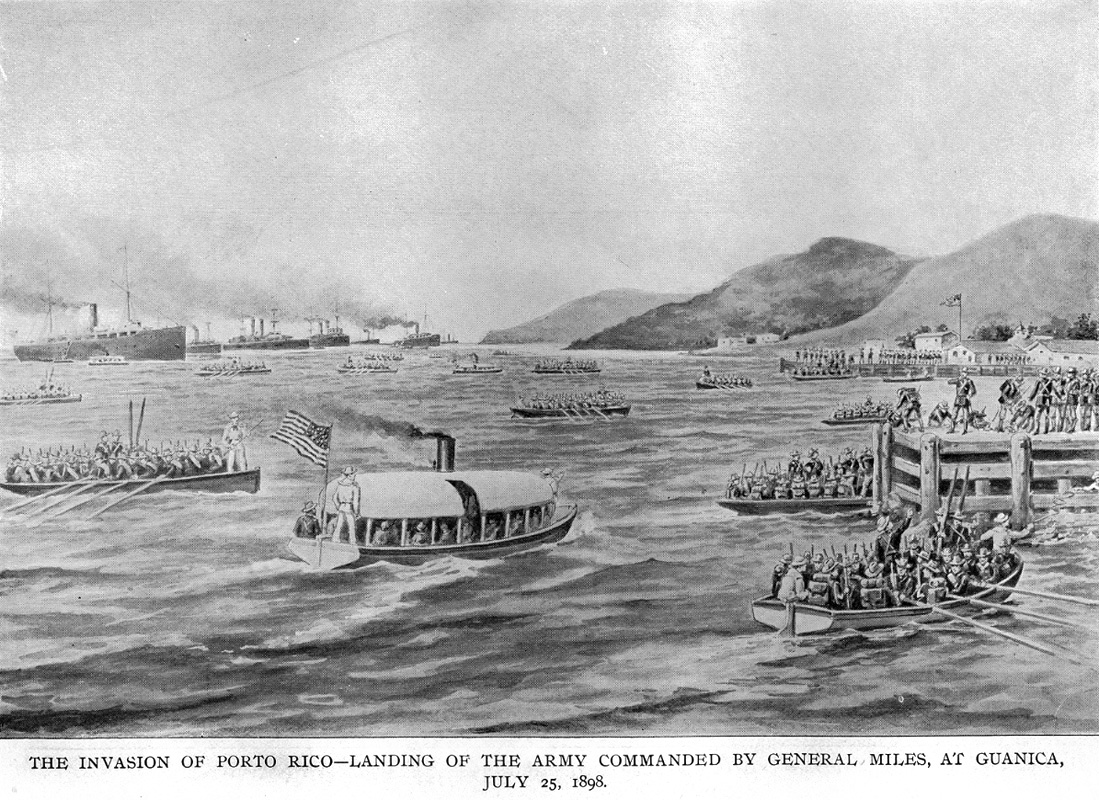
In July 1898, U.S. forces, led by General Nelson A. Miles, launched an invasion of Puerto Rico, landing at Guánica on the island’s southwest coast. The invasion was met with some resistance, but it was largely successful, and within a few weeks, American control was established across the island.
The formal transfer of sovereignty occurred later that year with the signing of the Treaty of Paris on December 10, 1898. Under the terms of this treaty, Spain ceded Cuba (which gained nominal independence but remained under significant U.S. influence), and directly transferred Puerto Rico and Guam to the United States. Spain also sold the Philippines to the U.S. for $20 million. This act fundamentally altered Puerto Rico’s political status, transforming it overnight from a Spanish province on the cusp of autonomy into an unincorporated territory of the United States.
Forging a New Relationship: Puerto Rico Under U.S. Sovereignty
The immediate aftermath of the Spanish-American War saw the United States grapple with how to govern its newly acquired territories. For Puerto Rico, this meant a period of significant political and social adjustment.

Early Governance and the Foraker Act
Initially, Puerto Rico was governed under military rule. However, in 1900, the U.S. Congress passed the Foraker Act (officially the Organic Act of 1900), establishing a civilian government for the island. This act declared Puerto Rico an “unorganized” territory of the United States, meaning it was not destined for statehood but was under the direct control of Congress. It also created a system of government with a U.S.-appointed governor, an executive council, and a popularly elected House of Delegates. Crucially, the act established Puerto Rican citizenship but did not extend U.S. citizenship to island residents.
The Foraker Act also integrated Puerto Rico into the U.S. economic system, replacing the Spanish currency with the U.S. dollar and removing customs barriers between the island and the mainland. This had a profound impact on Puerto Rico’s economy, shifting its focus from Europe to the United States and encouraging the growth of large American corporations on the island.
Citizenship and Evolution: The Jones-Shafroth Act
The question of citizenship remained a contentious issue. Puerto Ricans continued to lobby for greater political rights and self-determination. These efforts culminated in the passage of the Jones-Shafroth Act in 1917. This landmark legislation granted U.S. citizenship to all Puerto Ricans, provided for a bill of rights, and established a locally elected Senate in addition to the House of Representatives. However, significant limitations remained; the U.S. President still appointed the governor, and the island still had no voting representation in the U.S. Congress.
The Jones-Shafroth Act was a significant step forward, but it also cemented Puerto Rico’s status as an “unincorporated organized territory.” This meant that while residents were U.S. citizens, they did not have all the same constitutional rights as citizens residing in a U.S. state, and the island remained subject to the plenary powers of the U.S. Congress.
Commonwealth Status and Political Debates
The relationship evolved further in 1952 when Puerto Rico adopted its own constitution and became a Commonwealth of the United States (Estado Libre Asociado in Spanish). This change granted the island a greater degree of self-governance over internal affairs, while foreign policy, defense, and trade remained under U.S. federal jurisdiction.
Today, the debate over Puerto Rico’s political status continues. Options include maintaining the current Commonwealth status, pursuing statehood, or achieving full independence. Each option has passionate advocates, reflecting the island’s complex identity and diverse political aspirations. For travelers, this ongoing dialogue adds another layer of intrigue, highlighting the deep sense of civic engagement and pride among Puerto Ricans.
Puerto Rico Today: A Vibrant Travel Destination Shaped by History
The compelling history of Puerto Rico is not confined to textbooks; it lives and breathes in its vibrant culture, stunning landmarks, and the spirit of its people. For modern travelers, the island offers a rich tapestry of experiences that blend its colonial past with its contemporary U.S. ties and unique Caribbean flair.
Exploring Historical Landmarks and Cultural Riches
Any visit to Puerto Rico must begin in Old San Juan. This historic district, with its cobblestone streets, colorful colonial buildings, and grand fortresses, is a living museum. Walking through Old San Juan, you can practically feel the centuries of history beneath your feet. The aforementioned El Morro and Castillo de San Cristóbal are not merely impressive structures but powerful reminders of the island’s strategic importance under Spanish rule. Nearby, La Fortaleza, the official residence of the Governor of Puerto Rico, is the oldest executive mansion in continuous use in the Americas and offers a glimpse into the island’s enduring political life.
Beyond the forts, explore the charming side streets, discover hidden plazas, and immerse yourself in the local art scene. The vibrant street art, particularly in areas like Santurce, tells contemporary stories while traditional music like salsa and bomba echoes through the streets. Culinary tourism is also a highlight, with a fusion of Spanish, African, and Taíno flavors creating a unique and delicious cuisine. From humble street food like mofongo and pasteles to upscale dining experiences, Puerto Rico’s food scene is a testament to its multicultural heritage.
From Pristine Beaches to Lush Rainforests: Natural Attractions
While history provides the backdrop, Puerto Rico’s natural beauty offers endless adventures. The island boasts some of the most stunning beaches in the Caribbean. Flamenco Beach on Culebra island is consistently ranked among the world’s best, renowned for its soft white sand and crystal-clear turquoise waters – perfect for a relaxing getaway. Other popular spots include the beaches of Luquillo and Condado, offering a mix of vibrant activity and serene escapes. For surfers, Rincón on the west coast is a mecca, known for its consistent waves and laid-back vibe.
Inland, the lush tropical rainforest of El Yunque National Forest provides a stark contrast to the coastal scenes. As the only tropical rainforest in the U.S. National Forest System, it’s a paradise for hikers, birdwatchers, and nature lovers. Waterfalls cascade into refreshing pools, and the calls of unique wildlife, including the coqui frog, fill the air. A truly magical experience can be found in Puerto Rico’s famous Bioluminescent Bays in Fajardo, Lajas, and Vieques, where microorganisms in the water glow at night, creating an ethereal spectacle.
Planning Your Visit: Accommodation, Cuisine, and Experiences
Puerto Rico caters to every type of traveler, from those seeking luxury travel to budget-conscious adventurers. The island offers a diverse range of hotels and accommodations. In San Juan and along the north coast, you’ll find upscale resorts like the Dorado Beach, a Ritz-Carlton Reserve, the historic Condado Vanderbilt Hotel, or modern boutique hotels offering world-class amenities and exquisite dining. For a more authentic experience, consider staying in charming guesthouses in towns like Ponce or Rincón, or exploring vacation rentals and apartments for a longer stay.
When it comes to food, be sure to explore the local lechoneras (pork roast restaurants) in the central mountains, enjoy fresh seafood along the coasts, and savor the famous café con leche that highlights the island’s coffee heritage. For activities, consider a snorkeling trip to Icacos Cay, a scenic drive along the Ruta Panorámica, or a visit to a coffee plantation to learn about the bean-to-cup process. Each experience provides a deeper connection to the island’s unique blend of cultures.
In conclusion, the story of how the United States acquired Puerto Rico is a captivating historical narrative that continues to shape the island’s identity. This rich past has bequeathed a vibrant cultural heritage and an array of historical landmarks that, combined with breathtaking natural beauty and a warm, inviting atmosphere, make Puerto Rico an unparalleled travel destination. Whether you’re drawn by the echoes of history, the call of the wild, or the allure of sun-drenched beaches, Puerto Rico promises an unforgettable journey.
LifeOutOfTheBox is a participant in the Amazon Services LLC Associates Program, an affiliate advertising program designed to provide a means for sites to earn advertising fees by advertising and linking to Amazon.com. Amazon, the Amazon logo, AmazonSupply, and the AmazonSupply logo are trademarks of Amazon.com, Inc. or its affiliates. As an Amazon Associate we earn affiliate commissions from qualifying purchases.