
Navigating the landscape of social support programs can feel daunting, but for many residents in Arizona, access to nutritional assistance is a crucial lifeline. The Supplemental Nutrition Assistance Program (SNAP), commonly known as food stamps, provides vital benefits to eligible low-income individuals and families, helping them purchase healthy food. This comprehensive guide will walk you through the process of applying for food stamps in Arizona, ensuring you have all the information needed to secure the support you or your family deserves.
Understanding the Arizona Food Stamp Program (SNAP)
The SNAP program is a federal initiative managed at the state level by the Arizona Department of Economic Security (DES). Its primary goal is to combat food insecurity by supplementing the food budget of eligible households. Benefits are provided on an Electronic Benefit Transfer (EBT) card, which works much like a debit card and can be used at authorized grocery stores and farmers’ markets to buy eligible food items. It’s important to remember that SNAP is not intended to cover an entire household’s food expenses but rather to serve as a supplement, empowering families to make healthier food choices and maintain a balanced diet.
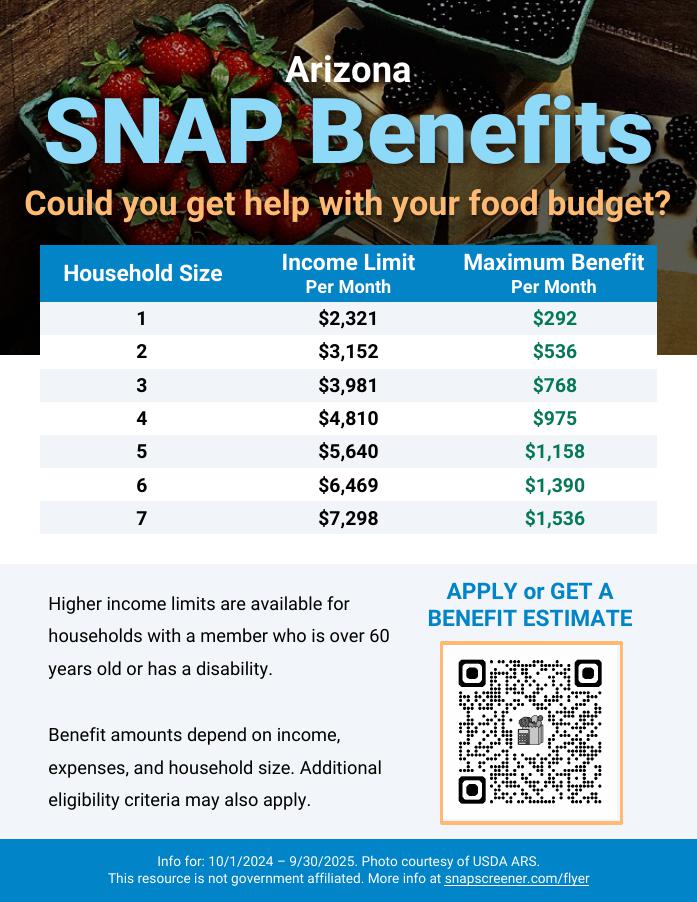
The program is critical for numerous reasons beyond simply providing food. It contributes to local economies by increasing demand for food products, supports agricultural producers, and plays a significant role in public health by improving nutritional outcomes, particularly for children and the elderly. For those experiencing temporary or long-term financial hardship, SNAP offers a sense of stability and relief, allowing them to redirect limited resources to other essential needs like housing, utilities, or healthcare.
The Role of DES in Administering SNAP
The Arizona Department of Economic Security (DES) is the central authority for administering SNAP benefits in the state. DES is responsible for receiving applications, determining eligibility, calculating benefit amounts, and managing the distribution of EBT cards. They also oversee ongoing case management, including periodic reviews to ensure recipients continue to meet program requirements. Understanding the role of DES is crucial, as they will be your primary point of contact throughout the application and benefit management process. Their website and local offices provide a wealth of information and support services.
Eligibility Requirements for SNAP in Arizona
To qualify for SNAP in Arizona, applicants must meet specific income, resource, and household criteria. These requirements are set by federal guidelines and administered by the state, with certain variations based on household composition and circumstances.
Income and Resource Limits
The most critical factor for SNAP eligibility is a household’s gross and net income. Gross income is the total income before any deductions, while net income is what remains after allowable deductions. Generally, a household’s gross monthly income must be at or below 130% of the Federal Poverty Level (FPL), and net monthly income must be at or below 100% of the FPL. These income limits are adjusted annually by the USDA Food and Nutrition Service.
Specific deductions can be applied to gross income to arrive at net income, including:
- Standard Deduction: A fixed amount based on household size.
- Earned Income Deduction: 20% of earned income.
- Dependent Care Deduction: Costs for childcare or care for other dependents necessary for work or training.
- Medical Expense Deduction: For elderly or disabled household members, medical expenses exceeding a certain threshold.
- Shelter Deduction: Housing costs (rent/mortgage, utilities) exceeding a certain percentage of the household’s income.
Resource limits also apply, though they are less restrictive than income limits for most households. Households without an elderly or disabled member generally have a resource limit of $2,750. Households with at least one elderly or disabled member have a higher resource limit of $4,250. Resources include cash, money in bank accounts, and certain vehicles, but exclude the primary residence and most retirement accounts.
Household Composition and Work Requirements
Eligibility also considers the composition of your household. A “household” for SNAP purposes is defined as a group of people who live together and customarily purchase and prepare food together. This can include individuals living alone, families, or roommates, provided they meet the food purchasing and preparation criteria.
For most adults between the ages of 16 and 59, SNAP includes work requirements. These typically involve registering for work, accepting suitable employment if offered, and not voluntarily quitting a job or reducing work hours without good cause. There are, however, numerous exemptions for individuals who are elderly, disabled, caring for a child or incapacitated person, participating in a drug or alcohol treatment program, or already working a certain number of hours. Specific rules apply to able-bodied adults without dependents (ABAWDs), who may have a time limit on benefits if they are not working or participating in qualifying work activities.
The Application Process: Step-by-Step
Applying for food stamps in Arizona involves several key steps designed to gather necessary information and verify eligibility. Being prepared with the right documents and understanding the process can significantly streamline your application.
Gathering Required Documents

Before you begin your application, collect the following essential documents for every member of your household:
- Proof of Identity: Driver’s license, state ID, birth certificate, or other government-issued identification.
- Proof of Residency: Utility bill, rent receipt, lease agreement, or mail showing your current Arizona address.
- Proof of Income: Pay stubs (for the past 30 days), employer statements, Social Security benefits, disability payments, child support, or unemployment benefits.
- Proof of Resources: Bank statements (checking and savings), and information on any other countable assets.
- Proof of Expenses: Rent or mortgage statements, utility bills (electricity, gas, water, trash), medical bills (for elderly/disabled members), and dependent care receipts.
- Social Security Numbers: For all household members applying for benefits (or proof of application for one).
- Immigration Status: If applicable, documentation regarding legal immigrant status.
Having these documents ready will make the application process smoother and prevent delays.
Submitting Your Application
In Arizona, there are several convenient ways to apply for SNAP benefits:
- Online: The easiest and most recommended method is to apply online through the Health-e-Arizona Plus portal. This portal allows you to apply for SNAP, AHCCCS (Medicaid), and other cash assistance programs simultaneously. You can upload required documents directly to your application.
- In Person: You can visit a local DES office to pick up a paper application, complete it, and submit it there. You can also get assistance from staff members if needed.
- By Mail or Fax: Download a paper application from the DES website, complete it, and mail or fax it to the appropriate DES office.
Once your application is submitted, you will typically receive a notification that it has been received. Remember to keep a copy of your application for your records.
What Happens After You Apply?
The application process doesn’t end with submission. There are a few more steps before benefits can be approved and issued.
The Interview and Verification Process
After receiving your application, a DES caseworker will schedule an interview with you. This interview can often be conducted over the phone, but in some cases, an in-person interview may be required. During the interview, the caseworker will review your application, ask clarifying questions about your household, income, expenses, and resources, and verify the information you provided. This is your opportunity to ask any questions you may have about the program or your specific situation.
Following the interview, the caseworker will verify the information using the documents you provided and potentially through other sources. It’s crucial to respond promptly to any requests for additional information or documentation to avoid delays in processing your application. Federal regulations mandate that DES make an eligibility decision within 30 days of receiving your application (or seven days for expedited processing, if you qualify for immediate need).
Receiving Your EBT Card and Benefits
If your application is approved, you will receive an approval letter detailing your benefit amount and when you can expect to receive your EBT card. The EBT card is typically mailed to your home address. Once you receive it, you’ll need to activate it according to the instructions provided. Your monthly SNAP benefits will then be automatically loaded onto this card on a specific date each month, depending on the last digit of your case number. You can check your balance online, through a mobile app, or by calling the customer service number on the back of your EBT card.
Maintaining Your SNAP Benefits
Receiving SNAP benefits is not a one-time event; it involves ongoing responsibilities to ensure continued eligibility.

Reporting Changes and Recertification
You are required to report certain changes in your household circumstances to DES within a specific timeframe (usually 10 days). These changes can include:
- Changes in income (e.g., getting a new job, losing a job, or a change in wages).
- Changes in household size (e.g., someone moves in or out).
- Changes in residency.
- Changes in resources (e.g., receiving a lump sum payment).
- Changes in shelter costs.
Failure to report these changes can lead to incorrect benefit amounts, potential overpayments that you might have to repay, or even benefit termination.
To continue receiving SNAP benefits, you must periodically recertify your eligibility. The recertification period varies, but it is typically every 6 to 12 months. DES will send you a notice when it’s time to recertify, usually with a form to complete. The recertification process is similar to the initial application, requiring you to provide updated information about your income, resources, and household circumstances. It may also involve another interview. Promptly completing your recertification is essential to avoid any interruption in your benefits.
Navigating the SNAP application process in Arizona can seem complex, but by understanding the requirements, preparing your documents, and staying in communication with DES, you can successfully access this vital support. Food stamps are more than just a benefit; they are a fundamental part of the safety net that helps individuals and families build stability and ensures access to nourishing food, allowing them to thrive and contribute positively to their communities in Arizona.
LifeOutOfTheBox is a participant in the Amazon Services LLC Associates Program, an affiliate advertising program designed to provide a means for sites to earn advertising fees by advertising and linking to Amazon.com. Amazon, the Amazon logo, AmazonSupply, and the AmazonSupply logo are trademarks of Amazon.com, Inc. or its affiliates. As an Amazon Associate we earn affiliate commissions from qualifying purchases.