
In a world increasingly valuing flexibility, autonomy, and the freedom to work from anywhere, the prospect of a career that supports a vibrant lifestyle out of the traditional office box holds immense appeal. For many aspiring digital nomads, remote workers, or simply those seeking to diversify their income streams while enjoying the freedom to travel, becoming a Notary Public in California presents a unique and surprisingly complementary opportunity. While often perceived as a conventional administrative role, the reality of a modern Notary Public can align beautifully with a lifestyle that prioritizes travel, international connections, and personal autonomy. Imagine having a portable skill set that allows you to assist individuals with critical paperwork, whether they’re finalizing an international property purchase, navigating visa applications for global adventures, or simply requiring authentication for important documents while living abroad or traveling extensively. This guide will illuminate the path to becoming a Notary Public in the Golden State, emphasizing how this role can be more than just a job – it can be a gateway to a more flexible, travel-enriched life.
Embracing a Flexible Lifestyle: Why Consider Becoming a Notary Public in California?
The concept of a “life out of the box” often conjures images of remote work from exotic destinations, spontaneous travel, and a schedule dictated by personal passions rather than corporate demands. Becoming a Notary Public in California offers tangible pathways to achieve such a lifestyle. Far from being confined to a desk, many notaries operate as mobile professionals, setting their own hours and choosing their client base. This flexibility is a significant draw for anyone aiming to weave work seamlessly into a life rich with travel, cultural exploration, and personal growth. The role of a notary, though rooted in legal formalities, can empower individuals to build a business that not only provides a valuable public service but also supports their aspirations for a dynamic, unconstrained existence.
The Allure of Autonomy: Crafting Your Own Schedule
One of the most compelling reasons to pursue a notary commission in California is the unparalleled autonomy it offers. Unlike traditional employment, where schedules are often rigid and vacation days limited, a self-employed Notary Public has the power to design their own work-life balance. This means the freedom to accept assignments when it suits you, allowing for spontaneous weekend getaways, extended travel plans, or simply more time to explore local attractions and experiences. Whether you dream of spending a month exploring the wineries of Napa Valley or taking a last-minute flight to a new international destination, having control over your work schedule makes such adventures possible.
A notary can choose to work part-time as a supplement to other income, or build a full-time mobile notary service, catering to diverse clients ranging from individuals to small businesses and even large corporations. This flexibility is especially attractive to those seeking to escape the monotony of a 9-to-5 job and embrace a more adaptable “digital nomad” or “remote work” friendly lifestyle. Imagine offering your services in the bustling financial districts of Los Angeles one week, and the next, providing notarizations from a laptop-friendly cafe in San Diego, all while maintaining the ability to pack up and embark on a new travel experience whenever the opportunity arises. The ability to craft your own schedule is not just a perk; it’s a fundamental aspect of a lifestyle focused on personal freedom and enriching experiences.
Bridging Gaps: Serving Travelers and International Clients
The demand for notary services extends far beyond local real estate transactions. In an increasingly globalized world, where individuals frequently travel, relocate, and engage in international business, the need for properly authenticated documents is paramount. A California Notary Public is uniquely positioned to bridge these gaps, offering essential services to a diverse clientele involved in global affairs.
Consider the needs of expatriates or individuals purchasing property abroad, requiring notarized documents for transactions in their home country or a foreign nation. These “accommodation” related needs often involve intricate paperwork that demands the precision and authority of a notary. Similarly, international travelers applying for visas, students pursuing education overseas, or business professionals engaging in cross-border ventures frequently require notarized letters, affidavits, or powers of attorney. Your role as a notary could involve assisting someone finalize documents for a new villa in Tuscany or authenticate paperwork for an important business deal unfolding across different time zones.
Furthermore, with the rise of remote work and a globalized workforce, many individuals and companies in California are dealing with international contracts, agreements, and legal mandates. A notary who understands the nuances of these global requirements can become an invaluable asset, facilitating seamless transactions and ensuring legal compliance. By catering to this international and travel-oriented demographic, a Notary Public can build a specialized niche, attracting clients who specifically seek out professionals with an understanding of global lifestyles and cross-border needs. This specialized service not only provides a stable income but also offers a unique insight into the diverse and often fascinating world of international travel, business, and human connection, truly embodying a “tourism” of paperwork.

Charting Your Course: Essential Requirements for California Notary Applicants
Becoming a Notary Public in California is a structured process designed to ensure that individuals entrusted with this public duty possess the necessary qualifications, integrity, and knowledge. The California Secretary of State oversees this commissioning process, setting forth clear criteria that all applicants must meet. These requirements are not merely bureaucratic hurdles; they are fundamental safeguards designed to protect the public, ensuring that every notarized document holds true legal weight and is executed by a competent and trustworthy individual. For those envisioning a flexible career that supports a travel-centric lifestyle, understanding and fulfilling these initial requirements is the crucial first step on their journey.
Age, Residency, and Legal Standing: The Foundational Criteria
To embark on the path to becoming a California Notary Public, several foundational criteria must be met, establishing the applicant’s eligibility and trustworthiness. Firstly, you must be at least 18 years of age. This age requirement ensures that applicants possess the maturity and legal capacity to undertake the responsibilities of a public officer.
Secondly, you must be a legal resident of California. This residency requirement is critical as it ties the notary’s jurisdiction and accountability directly to the state. While you might serve clients from anywhere in the world, your operational base and legal adherence will always be rooted in California.
Thirdly, applicants must be able to read, write, and understand English. Given that all notary laws, forms, and official documents in the United States are in English, proficiency is essential for accurate execution of duties and proper communication with the California Secretary of State.
Perhaps most importantly, a clean legal background is mandatory. Applicants must not have been convicted of a felony or a disqualifying misdemeanor. The role of a Notary Public involves a high degree of public trust, dealing with sensitive personal and financial documents. Any criminal history that could compromise this trust, such as fraud, forgery, or perjury, would disqualify an applicant. This stringent background check is a vital component in maintaining the integrity of the notarization process, which is especially important for international documents where trust and authenticity are paramount. Ensuring a spotless record establishes credibility, not only with the state but also with potential clients, particularly those requiring notarizations for critical travel, residency, or business transactions that cross international borders.
Education and Training: A Prerequisite for Professionalism
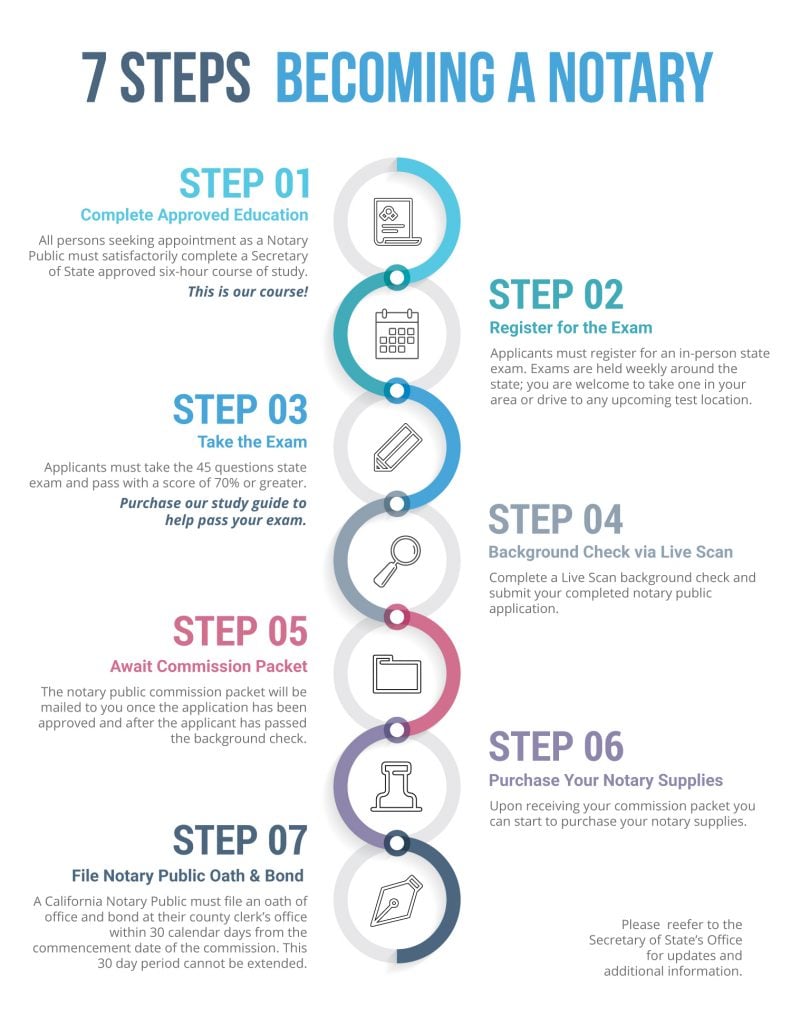
Beyond the foundational criteria, a significant aspect of becoming a Notary Public in California involves comprehensive education and training. This requirement underscores the state’s commitment to professionalism and accuracy in notary services. All new applicants are mandated to complete a minimum of a six-hour course of study approved by the California Secretary of State. This course is designed to equip aspiring notaries with a thorough understanding of California notary law, ethical practices, proper identification procedures, and the various types of notarial acts.
For those seeking to renew their commission, a shorter three-hour refresher course is required. These educational programs are typically offered by state-approved vendors, available in various formats including in-person seminars and convenient online courses. The flexibility of online learning further aligns with a travel-oriented lifestyle, allowing individuals to complete their training from virtually anywhere with an internet connection – whether from a tranquil beach in Maui during a working vacation or a quiet corner of a bustling hotel lobby in New York City.
The importance of this training cannot be overstated. It ensures that every notary public understands their legal obligations, liability, and the gravity of their role in preventing fraud. For a notary aspiring to serve a diverse clientele, including those involved in complex international property deals, visa applications, or foreign business ventures, a deep understanding of notary law is crucial. It builds confidence, enhances service quality, and protects both the notary and the public. Investing in this education is not just a regulatory step; it’s an investment in a professional skill set that can underpin a flexible and rewarding career for years to come.
The Path to Commission: Application, Examination, and Beyond
Once the eligibility requirements are met and the mandatory training completed, the journey to becoming a commissioned Notary Public in California progresses through several vital administrative steps. This phase involves navigating the application process, successfully passing a state-administered examination, and fulfilling the crucial requirements of the oath and bond. Each step is meticulously designed by the California Secretary of State to ensure that only qualified and trustworthy individuals are granted the authority to perform notarial acts. Successfully completing this phase is the direct route to unlocking the potential for a flexible, autonomous career that can truly support a “life out of the box.”
Navigating the Application: Documentation and Fees
The formal application process begins with completing and submitting the official Notary Public Application to the California Secretary of State. This detailed form requires personal information, confirmation of eligibility, and a declaration of any past criminal convictions, which will be cross-referenced with your background check. Along with the application, you’ll need to provide a passport-style photograph.
A critical component of this step is the Live Scan fingerprinting process. This involves having your fingerprints digitally scanned and submitted to the California Department of Justice and the Federal Bureau of Investigation (FBI) for a thorough background check. This comprehensive screening further reinforces the public trust placed in Notary Publics, ensuring that individuals with disqualifying criminal histories are not commissioned. The Live Scan form and instructions are typically provided by your notary education vendor or available on the California Secretary of State’s website.
Accompanying your application and Live Scan, a non-refundable application fee must be paid. While the fee itself is modest, meticulous attention to detail during this stage is paramount. Errors or omissions in the application can lead to delays, postponing your ability to begin your flexible notary career. Ensuring all documentation is correctly completed and submitted promptly streamlines the process, bringing you closer to earning your commission and the lifestyle freedom it can afford. This careful handling of administrative tasks is part of the professionalism expected from a notary, reflecting the precision required in all notarial acts, especially those involving sensitive international documents.
Conquering the Exam: Preparing for Success
Following the submission of your application and background check, the next significant hurdle is the state-mandated Notary Public exam. This examination is administered by an independent testing agency approved by the California Secretary of State and typically takes place at designated testing sites across the state, such as those found in major cities like Sacramento, San Francisco, or Los Angeles. The exam is a comprehensive assessment of your knowledge of California notary law, procedures, and ethical responsibilities, all covered in your mandatory training course.
The exam format typically consists of multiple-choice questions, and a passing score is required to proceed with your commission. Preparation is key to success. Thoroughly reviewing your course materials, studying the Notary Public Handbook provided by the California Secretary of State, and utilizing practice exams are highly recommended strategies. Understanding the nuances of identifying signers, verifying documents, and maintaining proper journal entries will be crucial.
Passing the exam is a significant milestone, validating your competence and readiness to serve the public. For those envisioning a notary career that offers flexibility and supports a travel-friendly lifestyle, this step is a definitive move towards achieving that goal. A successful outcome means you’ve demonstrated the expertise required to handle crucial documents, providing confidence to clients, especially those requiring notarization for significant international endeavors like property acquisitions abroad or complex business travel arrangements.
The Oath and Bond: Securing Your Commission
Upon successfully passing the Notary Public exam and having your background check cleared, the final steps to securing your commission involve taking the official oath of office and obtaining a surety bond. These elements are critical for formalizing your role as a public officer and providing financial protection to the public.
In California, a Notary Public is required to obtain a $15,000 surety bond. This bond is not insurance for the notary; rather, it’s a consumer protection measure. It ensures that if a notary commits negligence or misconduct that results in financial harm to a member of the public, the bond provides a means for the affected party to seek recovery up to the bond amount. This requirement significantly enhances public trust, as clients know they have recourse in the unlikely event of notary malpractice. For individuals engaged in international transactions, where large sums of money or critical legal implications are often at stake, this bond offers a crucial layer of security and credibility.
Once you have secured your bond, you must then visit your county clerk’s office (in the county where your principal place of business is located) to take your official oath of office and file both your oath and your original bond. This must be done within 30 days of the commencement date of your commission, which is printed on your commission certificate. Failing to do so within this timeframe will result in your commission being cancelled, and you’ll have to restart the entire application process.
The filing of the oath and bond officially activates your commission, granting you the authority to perform notarial acts. This moment marks your official entry into a flexible and rewarding profession, one that can be tailored to complement a dynamic “lifestyle” that embraces travel, autonomy, and serving a diverse range of clients, from local community members to global citizens navigating complex international paperwork.
Sustaining Your Notary Journey: Responsibilities and Renewal
Earning your commission as a Notary Public in California is an accomplishment, but it also marks the beginning of your professional journey. Sustaining your notary status involves ongoing adherence to legal responsibilities and understanding the renewal process. For those who view this role as a cornerstone of their flexible, travel-enabled lifestyle, maintaining a current and compliant commission is paramount. It ensures that you can continue to offer valuable services, uphold public trust, and enjoy the autonomy that this unique profession provides, consistently aligning your work with a life “out of the box.”
Upholding Integrity: Key Duties and Record-Keeping
As a commissioned Notary Public, you assume significant responsibilities that demand meticulous attention to detail, unwavering integrity, and strict adherence to California notary law. Your primary duty is to verify the identity of signers, ensure they understand the documents they are signing, and administer oaths or affirmations when required. This impartiality and vigilance are crucial in preventing fraud and protecting the public.
Central to these duties is the requirement to maintain a detailed Notary Public journal. This journal is a chronological record of every notarial act you perform, documenting the date and time, type of act, character of the document, signature of the signer, and the type of identification used to verify their identity. Maintaining an accurate and complete journal is not just a legal obligation; it’s a vital tool for accountability and protection, both for you and your clients. For clients involved in international business or property transactions, the integrity of your journal can be critical evidence if a notarized document is ever challenged.
Furthermore, proper handling of sensitive documents and maintaining confidentiality are non-negotiable. Notaries often deal with highly personal or financial information, and safeguarding this data is a testament to your professionalism. Ethical conduct, including avoiding conflicts of interest and refraining from providing legal advice, solidifies your reputation as a trustworthy public servant. Upholding these standards ensures the enduring value of your commission and strengthens your ability to attract and retain clients, especially those who require a highly reliable professional for their travel or business-related document authentication needs.
Renewing Your Commitment: Continuing the Notary Lifestyle
A Notary Public commission in California is valid for a term of four years. To continue serving the public and maintain the flexible income stream that supports your desired lifestyle, it’s essential to understand and execute the renewal process diligently. This isn’t just a formality; it’s an opportunity to refresh your knowledge and reaffirm your commitment to the standards of the profession.
The California Secretary of State recommends beginning the renewal process approximately six months before your current commission expires. This allows ample time to complete all the necessary steps without risking a lapse in your commission. The renewal process is similar to the initial application, involving a few key components:
- Refresher Course: You will need to complete a mandatory three-hour Notary Public refresher course, approved by the California Secretary of State. This course updates your knowledge on any recent changes to notary law and reinforces best practices.
- Application and Exam: You must submit a new application, undergo another Live Scan background check, and successfully pass the Notary Public exam again.
- Oath and Bond: Once you’ve passed the exam and cleared the background check, you will need to obtain a new $15,000 surety bond and file your oath of office and bond with the county clerk, just as you did for your initial commission.
Proactive renewal ensures that your notary commission remains active, allowing you to seamlessly continue offering your services. For individuals leveraging their notary status to fund or facilitate a travel-rich “lifestyle,” consistent renewal is key to maintaining a portable, autonomous career. It’s an investment in continued freedom, providing the peace of mind that your specialized skill set will always be there to support your adventures, whether you’re working from a charming boutique hotel in Santa Monica or planning your next international escape.
Becoming a Notary Public in California is more than just obtaining a legal designation; it’s about gaining a versatile skill that can truly empower a flexible and travel-centric lifestyle. From the initial requirements and rigorous training to the ongoing responsibilities and renewal process, each step is an investment in autonomy. By embracing this role, you can craft a career that provides not only a valuable public service but also the freedom to live a life “out of the box,” constantly exploring, learning, and connecting with the world on your own terms.
LifeOutOfTheBox is a participant in the Amazon Services LLC Associates Program, an affiliate advertising program designed to provide a means for sites to earn advertising fees by advertising and linking to Amazon.com. Amazon, the Amazon logo, AmazonSupply, and the AmazonSupply logo are trademarks of Amazon.com, Inc. or its affiliates. As an Amazon Associate we earn affiliate commissions from qualifying purchases.