
Navigating the business landscape in Texas involves understanding various legal structures and requirements. For entrepreneurs looking to operate a business under a name different from their own legal name, filing a “Doing Business As” (DBA) is a crucial step. A DBA, also known as a fictitious name or assumed name, allows an individual or a business entity to conduct operations under a trade name. This is particularly common for sole proprietorships, partnerships, and even corporations or LLCs that wish to operate specific brands or services under a distinct identity. Understanding the process in Texas is essential for compliance and to establish legitimacy for your venture.
Understanding the DBA in Texas
A DBA in Texas is not a separate legal entity. Instead, it’s a legal designation that associates a business name with its owner(s). This is vital for several reasons:
Purpose and Benefits of a Texas DBA
- Consumer Transparency: A DBA informs the public and relevant government agencies about who is actually behind a particular business name. This prevents deception and allows for proper identification of business owners for legal and financial purposes.
- Banking and Financial Transactions: Most banks require a DBA to open a business bank account in the trade name. Without it, you’d have to use your personal name for all business financial dealings, which can lead to confusion and complicate accounting.
- Credibility and Professionalism: Operating under a well-chosen business name can enhance your brand’s image and make it appear more established and professional to customers, suppliers, and partners.
- Separating Business and Personal Identity: While not a legal separation like an LLC or corporation, a DBA helps create a clear distinction between your personal affairs and your business operations.
- Branding and Marketing: It allows you to brand and market your business effectively under a memorable and relevant name, distinct from your personal name or the parent company’s name.
Who Needs a Texas DBA?
- Sole Proprietors: If you operate a business as an individual and use a business name other than your own legal name, you need a DBA. For example, if “Jane Doe” wants to open a bakery called “Sweet Delights,” she needs a DBA.
- General Partnerships: If a partnership operates under a business name that doesn’t include the last names of all general partners, a DBA is required.
- Limited Partnerships (LP) and Limited Liability Partnerships (LLP): If these entities operate under a name different from the one stated in their formation documents, they need to file an assumed name certificate.
- Limited Liability Companies (LLC) and Corporations: While LLCs and corporations are already separate legal entities, they may need to file a DBA if they wish to operate a specific brand, product line, or service under a name different from their registered legal name. For instance, a large corporation like “Google” might have numerous subsidiaries or brands, each potentially operating under its own DBA.
Filing a DBA in Texas: Step-by-Step
The process for filing a DBA in Texas involves a few key steps, primarily managed at the county level. Unlike some states that have a central state filing, Texas requires you to file an Assumed Name Certificate with the county clerk in the county where your principal place of business is located.
Step 1: Determine Your Business Structure and Name Availability
Before you file, confirm your business structure. Are you a sole proprietor, partnership, LLC, or corporation? Then, brainstorm potential business names. It’s crucial to ensure the name you choose is available and doesn’t infringe on existing trademarks. You can conduct a preliminary search through the Texas Secretary of State’s business database to see if a similar corporate or LLC name is already registered. While this doesn’t guarantee availability for a DBA in your county, it’s a good starting point.
Step 2: Identify the Correct County Clerk’s Office
The primary filing location for a DBA in Texas is the county clerk’s office where your business is physically located or where you intend to conduct business. If your business operates in multiple counties, you may need to file in each county where you have a physical presence or conduct significant business operations. For example, if you run a mobile catering service that frequently operates in both Harris County and Dallas County, you would likely need to file separate DBA certificates in each.
Step 3: Obtain and Complete the Assumed Name Certificate Form
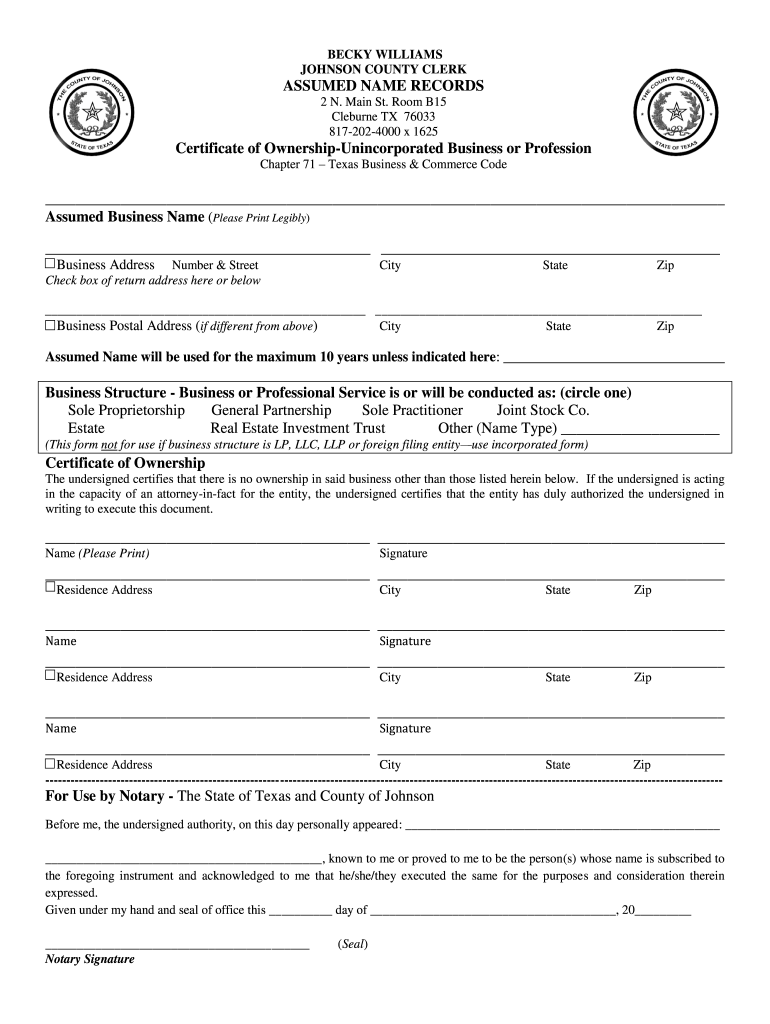
Each county clerk’s office may have its own specific form for the Assumed Name Certificate, though they generally contain similar information. You can typically download this form from the county clerk’s website or request it in person. The form will require:
- Your Legal Name(s): The full legal name(s) of the individual owner(s) or the registered name of the business entity (e.g., corporation, LLC).
- Your Address: The principal business address.
- The Assumed Business Name: The DBA you wish to use.
- The Nature of the Business: A brief description of the goods or services your business provides.
- The Effective Date: The date the DBA will become effective (usually the filing date).
- Signatures: Your signature or the authorized representative’s signature for a business entity.
Step 4: File the Certificate with the County Clerk
Once the form is completed accurately, you will submit it to the county clerk’s office. This is typically done in person or by mail. There will be a filing fee associated with this process, which varies by county. The fee is generally modest, often ranging from $10 to $30, but it’s advisable to check the specific county’s fee schedule. The county clerk will then record your certificate.

Step 5: Publication Requirements (Optional but Recommended)
In Texas, there is no mandatory statewide requirement to publish your DBA in a newspaper. However, it is often a good practice for added transparency and to notify the general public. Some attorneys or business advisors may still recommend it, especially if you want to ensure maximum public awareness. If you choose to publish, you’ll need to do so in a newspaper of general circulation in the county where you filed your DBA.
Maintaining and Renewing Your Texas DBA
A DBA in Texas does not automatically expire, but it does have certain requirements for renewal or amendment.
Amending or Cancelling Your DBA
If you make changes to your business name, your business structure, or your principal address, you will need to file an amendment to your Assumed Name Certificate with the county clerk. If you cease operating your business under a particular DBA, you must file a Certificate of Termination with the county clerk to formally cancel the assumed name. This prevents potential confusion or liability issues down the line.
Re-filing Considerations
While not a strict renewal in the sense of a state license, it’s good practice to review your DBA status periodically. If your business undergoes significant changes, like a change in ownership or a major shift in operations, it might be prudent to re-file your Assumed Name Certificate to ensure all information is current and accurate. This proactive approach can save you headaches if legal or financial matters arise.
Important Considerations and Best Practices
Filing a DBA is a foundational step, but several other aspects should be considered to ensure your business operates smoothly and legally.
Legal Advice and Professional Guidance
While the process of filing a DBA in Texas is generally straightforward, it’s always wise to consult with an attorney or a business advisor, especially if you have a complex business structure or are unsure about any legal implications. They can help ensure your DBA is filed correctly and that you are compliant with all other relevant state and local regulations. For instance, a business dealing with specific regulated industries might have additional requirements beyond a simple DBA filing.
Business Bank Accounts
As mentioned earlier, a DBA is critical for opening a dedicated business bank account. This separation is vital for financial management and tax purposes. When you go to open an account, you’ll need your filed Assumed Name Certificate and proof of your legal identity (e.g., a driver’s license or passport).
Tax Identification
A DBA does not change your tax obligations. Your business will still be taxed based on its underlying legal structure (sole proprietorship, partnership, LLC, or corporation). If you are a sole proprietor or partnership operating under a DBA, you will generally use your Social Security Number (SSN) or your Employer Identification Number (EIN) for tax filing. If you’re an LLC or corporation, you’ll use your EIN. Obtaining an EIN from the Internal Revenue Service (IRS) is often necessary for businesses with employees or those structured as corporations or partnerships, even if you’re a sole proprietor wanting to separate business and personal finances.

Trademark Considerations
While a DBA establishes your right to use a business name within a specific county in Texas, it does not grant you exclusive rights nationwide or prevent others from using similar names in different regions or industries. For broader protection of your brand, consider registering a trademark with the United States Patent and Trademark Office (USPTO). This offers significant advantages in protecting your brand identity and preventing infringement.
By understanding and diligently completing the DBA filing process in Texas, you lay a solid groundwork for your business’s legal and financial operations. This seemingly simple step is a powerful tool for establishing legitimacy, fostering consumer trust, and ensuring your business can operate effectively under its chosen identity.
LifeOutOfTheBox is a participant in the Amazon Services LLC Associates Program, an affiliate advertising program designed to provide a means for sites to earn advertising fees by advertising and linking to Amazon.com. Amazon, the Amazon logo, AmazonSupply, and the AmazonSupply logo are trademarks of Amazon.com, Inc. or its affiliates. As an Amazon Associate we earn affiliate commissions from qualifying purchases.